In This Article
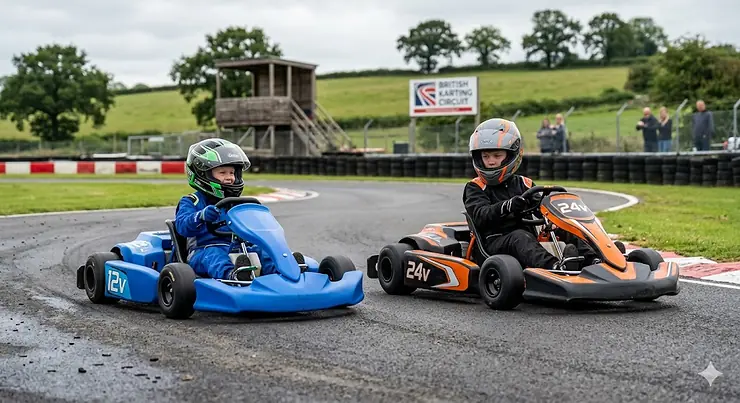
Watching your child’s face light up behind the wheel of their first go kart is genuinely one of those brilliant parenting moments. But here’s the thing — step into the world of electric go karts for kids, and you’ll quickly encounter a fundamental choice that shapes everything else: 24v vs 12v go kart models. Which voltage is better? The answer isn’t quite as straightforward as picking the bigger number.
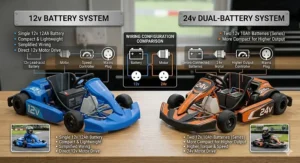
The voltage difference between 12v and 24v go karts isn’t just about raw power. It fundamentally changes the entire driving experience, from how quickly your child accelerates away to how long they can race around before needing a recharge. In the UK market, where our drizzly weather and compact gardens present unique challenges, understanding this distinction becomes rather important. According to research on children’s development, matching toy capabilities to developmental stages ensures both safety and enjoyment. A 12v model might seem adequate until you realise your eight-year-old has outgrown its capabilities within six months, whilst a 24v kart could provide years of enjoyment — assuming your five-year-old can handle the extra oomph safely.
Throughout this guide, we’ll examine seven real models available on Amazon.co.uk, breaking down the practical differences that actually matter to British families. No marketing fluff, just honest assessments of what each voltage offers, who they’re suited for, and which specific models represent the best value in the £150-£500 range. Whether you’re shopping for a cautious beginner or a speed-hungry young thrill-seeker, you’ll find clarity on the 24v vs 12v go kart decision by the end.
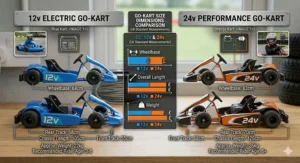
Quick Comparison: 12v vs 24v Go Karts at a Glance
| Feature | 12V Go Karts | 24V Go Karts |
|---|---|---|
| Typical Speed | 3-5 km/h (2-3 mph) | 6.5-13 km/h (4-8 mph) |
| Age Range | 3-8 years | 6-12+ years |
| Battery Life | 30-50 minutes | 40-90 minutes |
| Weight Capacity | 25-30 kg (55-66 lbs) | 50-70 kg (110-154 lbs) |
| Motor Power | 35-70W | 150-600W (dual motors) |
| UK Price Range | £120-£200 | £200-£450 |
| Terrain Capability | Smooth surfaces | Multi-terrain including grass |
| Best For | Younger children, beginners | Older kids, experienced drivers |
💬 Just one click — help others make better buying decisions too! 😊
Top 7 Go Karts: Expert Analysis for UK Buyers
1. HOMCOM 12V Electric Drift Kart — Best Budget Option for Young Beginners
The HOMCOM 12V Electric Drift Kart represents exceptional value for parents seeking their child’s first taste of electric karting. With its dual-speed settings ranging from 3-5 km/h and a reliable 12V 7Ah battery, this model delivers up to 50 minutes of continuous use — enough for multiple garden laps before needing a recharge.
What sets this kart apart for British families is its thoughtful design for our climate. The EVA wheels provide decent grip on damp patio slabs, whilst the compact dimensions (100L x 58W x 58.5H cm) make it manageable for storage in typical UK garages and sheds. The two-point safety belt and supportive backrest offer adequate protection for children aged 3-8, though the 30 kg maximum load means larger seven-year-olds might find it rather snug.
In practice, this kart works brilliantly on flat surfaces but struggles on even slight inclines — something to consider if your garden has any gradient. The forward and reverse functionality adds play value, though don’t expect impressive reverse speed. For British weather, the plastic construction holds up reasonably well, though we’d recommend storing it indoors during winter to preserve the electronics.
Pros:
✅ Excellent value in the £140-£160 range
✅ 50-minute battery life suits extended play sessions
✅ Compact storage footprint for UK homes
Cons:
❌ Limited power on slopes or grass
❌ Maximum load restricts use for larger children
UK reviewers consistently praise its build quality and battery life, with one parent noting it’s “absolutely ace fun” for their children. Available on Amazon.co.uk with free delivery for Prime members, this represents a solid entry point into electric go karting.
2. AIYAPLAY Aston Martin Licensed 12V Go Kart — Premium Brand Appeal
For families seeking something beyond basic functionality, the AIYAPLAY Aston Martin Licensed 12V Go Kart delivers official F1 branding alongside practical features. This licensed Aston Martin Cognizant Aramco F1 Team AMR23 model transforms a child’s ride into a genuine racing experience, complete with authentic team livery.
The dual control system proves particularly valuable for British parents — choose between letting your child drive independently or taking control via the 2.4GHz remote. Speeds range from 3-5 km/h, which might seem modest but provides appropriate velocity for 3-6 year olds navigating typical UK gardens and driveways. The four-wheel spring suspension system smooths out the bumps on brick driveways and short grass, whilst the soft-start mechanism prevents those heart-stopping lurches that cheaper models inflict.
Interactive features extend beyond basic driving. Bluetooth connectivity allows your young racer to soundtrack their laps with their favourite tunes, whilst the horn, lights, and realistic start-up sounds create an immersive experience. The two-point seat belt and backrest prioritise safety, though as with most 12v models, the 25-30 kg weight limit means this is genuinely for younger children rather than primary school age kids.
Pros:
✅ Official Aston Martin F1 licensing adds prestige
✅ Parental remote control provides safety oversight
✅ Bluetooth and interactive features enhance enjoyment
Cons:
❌ Premium pricing (around £180-£220 range)
❌ Age 3-6 limitation means shorter usage period
The high-strength metal frame and plastic body construction withstands typical childhood enthusiasm, whilst UKCA compliance ensures it meets British safety standards. For families willing to invest extra for brand cachet and parental control features, this represents a worthwhile step up from basic 12v models.
3. RiiRoo MaxDriftz 550 12V Electric Go Kart — Best All-Rounder for Under-8s
The RiiRoo MaxDriftz 550 earns its place through sheer versatility. Equipped with dual 35W motors and a 12V 7Ah battery, this kart delivers up to 90 minutes of runtime — exceptional amongst 12v models and genuinely useful for British families where charging opportunities might be limited during long garden play sessions.
Speed modes toggle between low and high settings, with a top speed around 8 km/h (5 mph). That’s noticeably quicker than most 12v competitors, bridging the gap towards 24v performance whilst maintaining appropriate safety margins for 6-year-olds. The sporty bucket seat and centre driving position create an authentic racing feel, whilst the integrated media console lets kids play music via USB or AUX — no Bluetooth fiddling required.
What British parents will appreciate: the front functioning lights mean your child can safely continue racing as daylight fades during those long summer evenings, whilst the adjustable speed modes let you dial back performance as they learn. The 15.5-inch oversized seat accommodates growing children better than many competitors, though the overall weight limit still caps out around 30-35 kg.
Pros:
✅ Exceptional 90-minute battery life
✅ Higher top speed bridges gap to 24v performance
✅ Functioning headlights extend usable hours
Cons:
❌ Higher speed requires careful supervision
❌ Some UK buyers reported assembly challenges
Customer reviews from British buyers highlight strong build quality, with one Preston-based parent praising both the product and delivery service. The price point sits in the mid-£100s to low-£200s range depending on sales, positioning it as premium amongst 12v options but still considerably more affordable than entry-level 24v karts.
4. Aosom 24V Electric Drift Go Kart — Best Entry-Level 24v Model
Stepping into 24v territory, the Aosom 24V Electric Drift Go Kart represents the sweet spot for families upgrading from 12v models or starting with older children. The dual-drive 24v motor system delivers speeds between 3.7-8.1 mph — the upper end genuinely thrilling for 8-12 year olds whilst remaining manageable for responsible young drivers.
The 12V 7Ah battery (running in 24v configuration) provides approximately 40 minutes of runtime, which sounds less impressive than some 12v models until you consider the significantly higher power draw. In practice, 40 minutes proves ample for most play sessions before natural breaks occur. What truly distinguishes this from 12v alternatives: the ability to actually drift. Those PU front wheels and PE rear wheels aren’t just marketing speak — they genuinely enable controlled slides on appropriate surfaces, teaching children vehicle dynamics in a safe, low-speed environment.
For British conditions, this kart handles cement, asphalt, and brick surfaces admirably. Short grass remains manageable, though waterlogged lawns after typical British rainfall will challenge any electric kart. The two-point safety belt and backrest provide adequate restraint, whilst soft-starting technology prevents those alarming jack-rabbit launches that can startle younger riders.
Pros:
✅ Genuine drifting capability on appropriate surfaces
✅ 24v power tackles slopes and varied terrain
✅ 154 lbs weight capacity suits older/larger children
Cons:
❌ 40-minute runtime shorter than some alternatives
❌ Higher speeds demand appropriate supervision space
Available on Amazon.co.uk typically in the £220-£280 range, this kart delivers proper 24v performance without the £400+ price tags of premium models. UK parents consistently rate it 4.6 stars, praising the balance between power and value.
5. Blitzshark 24V Kids Go Kart — Best for Terrain Versatility
The Blitzshark 24V addresses a specific British challenge: our gardens rarely resemble smooth racetrack tarmac. With its 2x150W motors delivering 300W total power and a 7Ah battery, this kart conquers terrain that leaves 12v models whimpering. The four silent EVA wheels provide excellent shock absorption — crucial when navigating uneven British lawns, gravel driveways, or those inevitable bumpy patches where tree roots disrupt otherwise flat surfaces.
Maximum speed reaches 7.5 mph across a range of 6.5-12 km/h depending on mode selection. That might not sound extraordinary until you experience how confidently it maintains speed across grass or climbs modest slopes that would halt lesser karts. The three-level length adjustment proves genuinely useful for British families, extending the kart’s usable life as children grow from ages 6 through 12.
The dual-pedal system — separate accelerator and brake — teaches proper driving habits early. Rather than the crude “pedal to go, release to stop” approach of cheaper models, children learn the muscle memory that will serve them when they eventually graduate to actual vehicles. For British weather, the all-steel frame construction provides reassuring durability, though as always, indoor storage during winter preserves electronics and battery life.
Pros:
✅ Excellent multi-terrain performance
✅ Three-level adjustment grows with your child
✅ Separate brake pedal teaches proper driving
Cons:
❌ 110 lbs weight limit lower than some 24v alternatives
❌ 1-2 hour runtime varies significantly with conditions
Priced in the £250-£320 range on Amazon.co.uk, the Blitzshark represents solid value for families with varied terrain or multiple children at different ages who’ll use it sequentially.
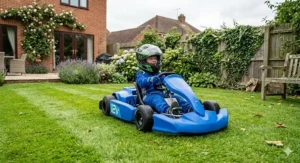
6. Nasitip 24V Go Kart with 300W Dual Motors — Best for Power and Speed
For families with older children or those seeking maximum performance, the Nasitip 24V delivers genuinely impressive specifications. Dual 300W brushless motors provide 600W total output — roughly double what entry-level 24v karts offer. Combined with a substantial 9Ah battery, this creates a kart that genuinely performs rather than merely functioning.
Top speed reaches 8.1 mph (13 km/h), which sits at the upper limit of what’s appropriate for children’s ride-on toys. The 9Ah battery capacity translates to longer runtime than standard 7Ah alternatives, particularly valuable during British summer holidays when children want extended outdoor play. EVA front tyres paired with nylon rear tyres create an interesting hybrid: shock absorption where needed, wear resistance where it matters.
The music and horn features might seem frivolous, but they genuinely enhance the experience — children adore cruising around whilst their favourite tracks play. The 175 lbs maximum load capacity accommodates not just larger children but potentially lighter adults too, making this one of the few children’s karts that genuinely works for teenage riders.
Pros:
✅ 600W total power provides exceptional performance
✅ 9Ah battery extends runtime significantly
✅ 175 lbs capacity suits teenagers
Cons:
❌ Higher speeds require substantial safe space
❌ Premium pricing in £300-£380 range
UK availability through Amazon.co.uk remains consistent, with delivery typically via Prime next-day service in most mainland postcodes. For families with the space and budget, this represents the performance ceiling for children’s electric karts without venturing into specialist racing equipment territory.
7. TOBBI 24V Go Kart with Protective Equipment — Best Safety Package
The TOBBI 24V distinguishes itself through a comprehensive safety approach rarely seen in children’s ride-on toys. Whilst most karts expect you to source protective equipment separately, TOBBI includes an ASTM-certified protective suit comprising helmet with adjustable headgear, knee pads, elbow pads, and gloves. For British parents, this eliminates the hassle of tracking down appropriate safety gear and ensures everything arrives together, ready for immediate use.
Performance-wise, dual 24v motors deliver speeds up to 8 mph with dual-speed settings. The 24V 7Ah dual-battery configuration provides adequate runtime, though exact duration depends heavily on terrain and rider weight. What British families will particularly appreciate: the extended age range of 4-16 years. Whilst we’d query whether four-year-olds truly need 24v power, the upper age limit acknowledges that many teenagers still enjoy go karting, particularly in rural areas where outdoor entertainment options might be limited.
The five-point adjustable safety harness exceeds the two-point belts common in this market segment, whilst the durable plastic and reinforced steel construction suggests longevity. LED lights, music player, horn, and USB connectivity create a feature-rich package, though the real value lies in that included protective equipment — easily £40-£60 worth if purchased separately.
Pros:
✅ Complete protective equipment included
✅ Five-point harness exceeds typical safety standards
✅ Extended age range 4-16 years
Cons:
❌ Premium pricing reflects included safety gear
❌ Dual-battery configuration increases weight
Available on Amazon.co.uk in the £280-£350 range, the TOBBI represents excellent value when you factor in the included protective equipment. For safety-conscious British parents or those shopping for children who’ll use the kart for activities beyond gentle garden cruising, this package delivers peace of mind alongside performance.
Understanding the Voltage Difference: What It Actually Means
The 24v vs 12v go kart debate fundamentally comes down to power delivery, but not quite in the way most parents assume. Voltage doesn’t directly equal speed — it represents electrical potential, which motors convert into mechanical power. A 12v system running through a single motor might deliver 35-70 watts, whilst a 24v system typically powers dual motors totalling 150-600 watts. That’s where the real performance gap emerges.
Think of it like comparing a small petrol engine to a larger one. The 12v setup resembles a modest 1.0-litre engine — adequate for flat roads and light loads, struggling with hills or challenging terrain. The 24v configuration operates more like a 1.6-litre or 2.0-litre — noticeably more grunt for acceleration, inclines, and maintaining speed across varied surfaces. For British gardens with their typical slopes, dips, and transitions between paving and grass, that extra power transforms usability. As Wikipedia notes about electric motors, power output directly correlates with voltage and current capacity.
Battery capacity compounds these differences. Most 12v karts utilise 7Ah batteries, whilst 24v models range from 7Ah to 10Ah. However, the higher voltage draws more current, which is why runtime doesn’t automatically double despite the voltage increase. A 24v kart might deliver 40-60 minutes of runtime compared to 50-90 minutes for 12v alternatives, but during that time, it’s genuinely working rather than merely trundling along.
For British buyers, consider your specific circumstances. Flat tarmac driveway and patio? A 12v kart performs admirably. Garden with grass, gravel paths, or any slope steeper than barely noticeable? The 24v becomes borderline essential rather than merely desirable. The price premium — typically £80-£150 more — buys capability that actually gets used rather than theoretical performance that sounds impressive in specifications.
Age Appropriateness: Matching Voltage to Your Child
The which voltage go kart is better question pivots substantially on your child’s age, size, and crucially, their temperament. Manufacturers provide age ranges, but these often reflect legal liability considerations rather than genuine developmental appropriateness. Let’s examine what actually matters.
For children aged 3-5 years, 12v karts represent the sensible choice almost universally. At this age, walking pace (3-5 km/h) feels genuinely fast to small children, whilst their developing motor skills benefit from manageable speeds that don’t overwhelm their reaction capabilities. Research on child motor development confirms that coordination and reaction times continue developing throughout early childhood. The lower power also means less dramatic consequences if they misjudge a corner or fail to brake promptly. British parents with compact gardens particularly appreciate how 12v speeds allow supervision from a kitchen window without requiring constant physical proximity.
Ages 6-8 occupy the transition zone where either voltage might suit, depending on individual maturity and experience. A cautious six-year-old or one new to ride-on toys benefits from starting with 12v, building confidence before upgrading. Conversely, an experienced seven-year-old who’s been riding basic toys for years will likely find 12v underwhelming within months. Consider your specific child: do they approach new activities cautiously, or do they immediately push limits? That temperament guides voltage selection more reliably than age alone.
Children aged 8-12 years genuinely need 24v power to maintain engagement. At this age, they’re capable of higher speeds, actively seeking thrills rather than merely experiencing novelty, and often larger/heavier than 12v weight limits accommodate. The go kart power comparison UK perspective matters here — British children this age are cycling, scootering, and engaging in activities that make 3-5 km/h feel glacially slow. A 24v kart maintains relevance through this crucial developmental period, potentially serving them until teenage years.
Physical size deserves equal consideration to age. A large seven-year-old might exceed 12v weight limits (typically 25-30 kg), whilst a petite nine-year-old remains well within them. Check actual weight capacity specifications rather than assuming age guidelines accommodate your specific child. For British families, where children’s growth rates increasingly reflect our diverse population, individual assessment trumps one-size-fits-all age recommendations.
Battery Performance: Runtime and Charging Reality
Battery capacity comparison between 12v and 24v go karts reveals complexities that marketing materials conveniently gloss over. Both voltage systems commonly utilise 7Ah batteries, yet their actual runtime can vary dramatically based on factors British parents encounter daily.
A 12v 7Ah battery theoretically provides 84 watt-hours of energy (12 volts × 7 amp-hours). In practice, you’ll extract perhaps 60-70% of that capacity before voltage drops sufficiently to noticeably affect performance. On flat tarmac with a lightweight child, expect 50-90 minutes. Add grass, slopes, or a heavier rider, and runtime contracts to 30-50 minutes. British weather introduces another variable — cold temperatures reduce battery efficiency by 10-20%, meaning that October half-term garden session won’t last as long as the July equivalent. This temperature effect on batteries is well-documented in battery chemistry research.
The 24v configuration drawing from the same 7Ah battery delivers 168 theoretical watt-hours, but those dual motors consume power considerably faster. Realistic runtime settles around 40-60 minutes on mixed terrain with moderate use. However, that 40 minutes involves genuinely moving across grass and up slopes rather than crawling along with labouring motors. The speed difference go karts exhibit between voltages means a 24v kart might cover 3-4 times the distance of a 12v model during equivalent runtime.
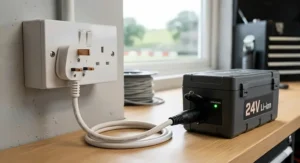
Charging presents its own considerations. Most models require 8-12 hours for full recharge — essentially overnight. Some British parents report frustration when children expect immediate reuse after flattening the battery during morning play. The solution: establish charging routines (overnight recharge becomes standard) or consider purchasing a spare battery for extended play sessions during school holidays, though spare batteries typically cost £30-£60.
Winter storage deserves mention for UK buyers. Our damp climate and cold garages accelerate battery degradation. Store karts indoors where feasible, and maintain battery charge during winter months through monthly top-ups even when not in use. This preserves capacity far better than letting batteries sit depleted for months, which permanently reduces their ability to hold charge. A well-maintained battery should provide 2-3 years of reasonable performance before noticeably declining, whilst neglected ones might struggle after a single winter.
Speed and Performance: Real-World Differences
The speed difference go karts exhibit between 12v and 24v systems extends well beyond simple numerical comparisons. Yes, specifications claim 3-5 km/h for 12v versus 6.5-13 km/h for 24v, but those numbers obscure the actual driving experience differences that British families encounter.
Consider acceleration — an aspect rarely discussed yet immediately apparent when children drive these karts. A 12v model with its single low-wattage motor accelerates gently, almost leisurely. From a safety perspective with very young children, this proves ideal. They ease into motion, build speed gradually, and rarely surprise themselves or their parents with sudden lurches. The drawback emerges with older children who actively want that thrilling acceleration punch.
The 24v go kart with dual motors delivers dramatically different acceleration characteristics. Press the pedal, and there’s immediate thrust — not dangerously violent, but noticeably purposeful. This distinction matters enormously on British terrain. Approaching a slight slope on grass, a 12v kart gradually loses momentum, sometimes grinding to a halt if the incline proves too steep. The 24v maintains speed or even accelerates up the same slope, transforming what would be frustrating into genuinely enjoyable.
Maximum speed tells only part of the story. A 12v kart might claim 5 km/h top speed on flat tarmac, but what speed does it actually maintain on your garden’s grass? Probably closer to 2-3 km/h, if it manages continuous progress at all. The 24v claiming 8 km/h on tarmac might maintain 5-6 km/h on grass — still genuinely moving rather than crawling. For British lawns, particularly those with the lush, dense grass our climate encourages, this performance gap becomes the difference between “rides occasionally when conditions are perfect” and “rides whenever they fancy.”
Braking deserves equal consideration. Higher speeds demand better braking systems. Quality 24v karts incorporate dedicated brake pedals rather than simple “release accelerator to coast to a stop” approaches. This teaches proper driving habits whilst providing more controlled deceleration. Cheaper models of both voltages sometimes skimp on braking quality, which proves genuinely dangerous at higher 24v speeds. When comparing models, examine braking systems carefully — a dedicated brake pedal represents a genuine safety feature, not merely a luxury addition.
Terrain Capability: British Garden Realities
The upgrade path electric kart consideration inevitably confronts British garden realities. Our outdoor spaces rarely resemble smooth karting circuits — they’re lawns, gravel paths, patio slabs with uneven joints, and all manner of slopes that estate agents describe as “gently undulating” but children’s karts experience as mountainous terrain.
A 12v go kart performs admirably on what we might call “optimum” surfaces: smooth tarmac driveways, flat patio areas, and perhaps short-cut, dry grass on perfectly flat ground. Venture onto anything more challenging, and limitations become apparent quickly. Gravel? The motors labour audibly, speed drops dramatically, and battery drains noticeably faster. Grass after rainfall (which describes most British grass most of the year)? Forget it — wheels spin, progress becomes intermittent, and frustration mounts for both child and parent.
The 24v configuration genuinely transforms terrain capability. Those dual motors providing 2-4 times the power don’t just increase speed — they enable the kart to actually work on surfaces that would defeat 12v alternatives. Gravel paths that halt 12v models become navigable, albeit with reduced speed. Grass that’s merely damp rather than waterlogged remains accessible. Modest slopes that require a running start in a 12v kart get climbed confidently with 24v power.
British parents living in rural areas or properties with larger, more varied gardens will find the 24v considerably more usable. If your outdoor space includes different surfaces — perhaps transitioning from paved patio to gravel path to lawn — the 24v navigates these changes far more successfully. Conversely, families with purely paved courtyards or small urban gardens featuring only flat paving might question whether they’ll utilise the extra capability sufficient to justify the cost premium.
Wheel design compounds voltage differences. Many 12v models utilise basic plastic wheels, adequate for hard surfaces but offering minimal grip on grass or gravel. Quality 24v karts typically feature EVA or rubber wheels with actual tread patterns, vastly improving traction. When comparing specific models, examine wheel specifications alongside voltage — a well-wheeled 12v kart might outperform a poorly-wheeled 24v model on challenging terrain, though generally the 24v’s power advantage prevails.
Cost Analysis: Initial Investment and Long-Term Value
The go kart power comparison UK buyers conduct inevitably arrives at cost considerations. Entry-level 12v karts on Amazon.co.uk start around £120-£140, whilst basic 24v models begin nearer £200-£220. Premium examples of each category can reach £200 and £450 respectively. That £80-£300 price differential deserves scrutiny beyond the immediate sticker shock.
Consider usable lifespan — how long will your child actually use this kart? A well-chosen 12v model might serve a three-year-old until they’re six or seven, providing 3-4 years of use before they outgrow it physically or lose interest due to limited performance. That £150 investment delivers roughly £40-£50 annual value. A 24v kart purchased for a six-year-old could remain engaging until they’re 12 or even beyond, offering 5-7 years of use. A £300 model providing six years of service represents £50 annually — remarkably similar cost-per-year despite the higher upfront investment.
The upgrade path electric kart question often resolves itself through this calculation. Buying a 12v kart for a young child, then upgrading to 24v as they age, means purchasing twice with minimal resale value recovery (used electric ride-on toys sell for perhaps 30-40% of original cost if you’re fortunate). Total outlay reaches £270-£350 across both purchases. Buying the 24v initially — assuming your child’s age and maturity suit it — involves one purchase at £250-£350 that serves them through to adolescence.
Ongoing costs deserve consideration too. Both voltage systems consume roughly similar electricity for charging — negligible in practical terms, perhaps £5-£10 annually. Battery replacement becomes necessary every 2-3 years depending on usage and maintenance. Replacement batteries for either voltage cost £30-£60, making this a minor factor. Tyre wear affects both equally, though 24v models experiencing more adventurous use might require replacement sooner.
For British families, factor in our tendency towards compact storage solutions. A kart that gets used frequently justifies its space in the garage or shed. One that languishes unused because it’s underpowered for your child’s age or your garden’s terrain represents poor value regardless of initial cost. The “cheaper” option that barely gets used delivers worse value than the pricier model that becomes a daily feature of outdoor play.
Safety Considerations: UK Regulations and Best Practices
Children’s electric go karts occupy an interesting regulatory position in the UK. Under the Toy Safety Regulations 2011, electric ride-on vehicles for children under 14 must meet specific electrical safety requirements and carry appropriate UKCA marking (which replaced CE marking post-Brexit for products placed on the British market). Most reputable models available through Amazon.co.uk comply with these standards, but verification proves worthwhile when comparing options.
According to UK government guidance, the regulations don’t permit children to drive these karts on public roads, pavements, or cycle lanes — they’re restricted to private land with the landowner’s permission. For British families, this typically means your own garden, driveway, or perhaps a neighbour’s property with their explicit consent. Parks and public spaces remain off-limits regardless of how empty they might appear, and local council wardens can enforce this strictly.
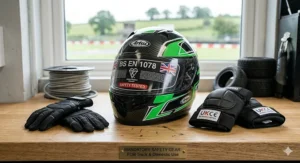
Safety equipment recommendations, whilst not legally mandated, deserve serious consideration particularly with faster 24v models. A properly fitted helmet represents the absolute minimum — bicycle helmets work perfectly well and cost £20-£40 from UK retailers. For 24v karts capable of 8+ mph, knee and elbow pads add worthwhile protection. Some premium models like the TOBBI include complete protective equipment, eliminating the hassle of sourcing appropriate gear separately.
Supervision requirements vary with child age and kart capabilities. A six-year-old on a 12v kart in a small enclosed garden might need only periodic visual checks from a nearby adult. A ten-year-old on a 24v kart capable of 8 mph requires more attentive oversight, particularly initially as they learn the kart’s capabilities. British parents should assess their specific garden layout — are there hazards like ponds, greenhouses, or gates leading to roads? These necessitate stricter supervision regardless of voltage.
Two-point seat belts come standard on most models, though five-point harnesses featured on some premium karts provide superior restraint. Ensure belts are properly adjusted and actually used — children have a remarkable ability to “forget” to fasten them when adults aren’t watching. The soft-start technology available on quality models prevents dangerous jack-rabbit launches that can surprise riders and cause loss of control.
Choosing Between 12v and 24v: Decision Framework
Right, let’s cut through the specifications and reviews to address the fundamental question: which voltage go kart suits your specific circumstances? The answer depends on several factors that British families should weigh carefully.
Choose a 12v go kart if:
Your child is under 6 years old — younger children genuinely don’t need or benefit from higher speeds that might overwhelm their developing coordination and reaction capabilities. The modest pace of 12v models feels appropriately thrilling without becoming frightening.
Your available space consists primarily of flat, hard surfaces — if your child will predominantly ride on patios, driveways, or other paved areas, the 12v delivers perfectly adequate performance without the premium cost of 24v power you won’t fully utilise.
Budget constraints matter significantly — when £80-£150 represents meaningful money in your household budget, the 12v provides genuine value and proven enjoyment for younger children without stretching finances uncomfortably.
This is a first ride-on experience — children new to electric vehicles benefit from starting with more manageable power, building confidence and skills before potentially upgrading to something more capable later.
Choose a 24v go kart if:
Your child is 6+ years and has prior ride-on experience — older children with developed motor skills and understanding of speed/braking appreciate the enhanced performance 24v provides, maintaining engagement for years rather than months.
Your garden includes varied terrain — grass, slopes, gravel paths, or uneven surfaces benefit enormously from the extra power 24v delivers, transforming borderline-unusable surfaces into actually navigable terrain.
You want a single purchase lasting multiple years — the broader age range and higher capabilities mean a well-chosen 24v kart serves children from roughly 6 through 12 or beyond, eliminating the need for mid-childhood upgrades.
Multiple children will use it sequentially — for families with children of different ages, the 24v spans a wider range, allowing younger siblings to grow into it after older ones move on.
Space for proper supervision exists — 24v speeds demand adequate room to safely operate. If your garden provides sufficient open space for 8 mph driving without hazards, the extra performance becomes enjoyable rather than concerning.
The British context adds specific considerations: our wet climate means grass remains challenging terrain much of the year, favouring 24v power. Our compact living spaces mean any purchase must justify its storage footprint through regular use. Our shorter winter daylight hours mean functioning headlights (featured on some models) extend usable time during autumn and spring.
Maintenance and Care: Keeping Your Kart Running
British weather presents unique challenges for electric go kart longevity. Our combination of damp air, occasional cold snaps, and general year-round moisture creates an environment that accelerates wear if you’re not proactive about maintenance.
Battery care represents the single most important factor determining long-term performance. Lead-acid batteries (standard in most children’s karts) deteriorate rapidly if stored partially discharged in cold, damp conditions — precisely what British garages provide. The solution: indoor storage when feasible, and monthly charging cycles even during winter when the kart sits unused. Understanding proper battery maintenance significantly extends battery lifespan. A battery maintainer (£15-£25 from UK retailers) provides trickle charging that preserves capacity without overcharging risks.
Cleaning after use might seem excessive, but British grass contains more moisture than you’d expect. Driving on damp lawns deposits enough water on electrical components and motor housings to cause gradual corrosion. A simple wipe-down with a dry cloth after grass use, plus occasional detailed cleaning with a barely-damp cloth, prevents build-up that accelerates wear. Never pressure-wash or hose these karts — the electronics aren’t designed for that level of moisture exposure.
Wheel inspection should occur monthly. EVA and plastic wheels develop flat spots if karts sit stationary in storage for extended periods. Rotating the kart position periodically prevents this. Check tread wear on rubber tyres — smooth tyres reduce traction dramatically on grass or gravel. Replacement wheels cost £20-£40 per set from UK suppliers, making preventive care worthwhile.
Storage location matters enormously in our climate. Ideally, store karts indoors in a house, conservatory, or heated garage. Unheated garages prove acceptable if the kart gets regular use and the battery receives monthly charging. Garden sheds often prove too damp for long-term storage unless exceptionally well-ventilated and dry. During winter, consider bringing the battery indoors even if the kart itself remains in garage storage.
Pre-season checks each spring should include: battery charge test (does it hold charge overnight without use?), wheel spin test (do motors engage smoothly without grinding noises?), belt inspection (any fraying or looseness?), and general hardware tightness (have screws worked loose over winter?). Addressing minor issues early prevents mid-summer breakdowns when children want to use their kart most.
For British buyers, factor in parts availability. Models from established brands like HOMCOM, Aosom, and RiiRoo (all with UK presence) typically offer replacement parts through their websites or Amazon.co.uk. Lesser-known brands might require sourcing parts from generic suppliers or contacting Chinese manufacturers directly — potentially adding weeks to repair times and complications with international shipping.
Frequently Asked Questions
❓ Are 24v go karts worth the extra money compared to 12v models?
❓ What's the actual speed difference between 12v and 24v go karts in real conditions?
❓ Can you upgrade a 12v go kart to 24v by changing the battery?
❓ How long do go kart batteries last in the UK climate?
❓ Are electric go karts legal to use on UK pavements or roads?
Conclusion: Making the Right Choice for Your Family
The 24v vs 12v go kart decision ultimately reflects your child’s specific needs, your garden’s characteristics, and your willingness to invest upfront for long-term value versus minimising immediate cost. There’s no universally “better” option — both voltages serve their intended purposes admirably when properly matched to circumstances.
For British families with younger children (3-6 years), limited budgets, or predominantly flat paved spaces, quality 12v models like the HOMCOM Electric Drift Kart or RiiRoo MaxDriftz 550 deliver genuine enjoyment and excellent value. They’re safer for developing skills, appropriately thrilling without overwhelming, and considerably more affordable than 24v alternatives.
Families with older children (6-12+ years), varied garden terrain including grass and slopes, or seeking a single purchase spanning multiple years will find 24v models like the Aosom 24V Electric Drift Go Kart or Blitzshark 24V justify their premium pricing through extended usability and genuine performance. The extra power transforms challenging British terrain from obstacle to opportunity, whilst higher speeds maintain engagement through crucial developmental years.
Whichever voltage you choose, prioritise models available through Amazon.co.uk with Prime delivery — this ensures reliable UK-specific customer service, straightforward returns if issues arise, and typically faster delivery than importing directly. Check actual weight capacities against your child’s current size, verify UKCA marking for safety compliance, and read UK reviewer feedback rather than relying solely on international reviews that might not reflect British conditions.
The right go kart becomes a cherished part of childhood — the vehicle that teaches coordination, builds confidence, and creates those brilliant outdoor play memories British gardens were made for. Choose wisely based on your specific circumstances, maintain it properly, and you’ll have made an investment in genuine childhood joy rather than merely purchased another toy.
Recommended for You
- Best 24v Electric Go Kart UK 2026: 7 Racing Karts for Kids
- 7 Best 12V Go Kart for Kids UK 2026
- All Terrain Quad for Kids UK 2026: 7 Best Options
Disclaimer: This article contains affiliate links. As an Amazon Associate, I earn from qualifying purchases. If you purchase products through these links, we may earn a small commission at no additional cost to you.
✨ Found this helpful? Share it with your mates! 💬🤗
