
In This Article
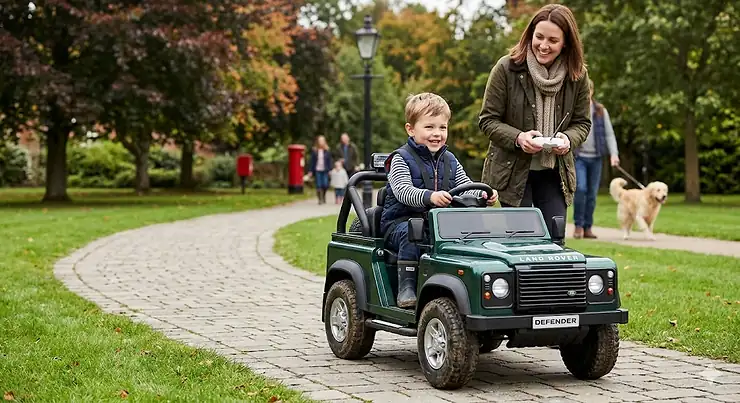
There’s a particular moment every parent experiences when their three-year-old discovers the accelerator pedal and promptly aims for the rose bushes. What separates mild panic from quiet confidence is having a proper ride on buggy with parental remote control within arm’s reach.
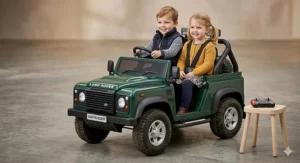
I’ve watched dozens of British families navigate garden parties, driveways, and village fêtes with these brilliant vehicles, and the transformation is remarkable. Modern 2.4GHz remote systems offer interference-free control with emergency stop functions that actually work when your child decides the fishpond looks rather inviting. The technology has evolved significantly—gone are the days of laggy responses and signal dropouts that plagued earlier models.
The UK market in 2026 presents an exceptional range of options, from budget-friendly 12V models around £180 to premium 24V beasts approaching £700. According to the UK Toys (Safety) Regulations 2011, all ride-on cars must meet strict EN71 safety standards and display UKCA marking—making parental remote control not merely convenient, but an essential safety feature for younger drivers navigating British gardens and driveways.
What most buyers overlook is that voltage directly impacts both performance and suitability for different terrain. A 6V model might handle smooth paving beautifully but struggles terribly on damp grass—rather important when you’re dealing with six months of British drizzle and the occasional biblical downpour. The sweet spot for most UK families sits firmly at 12V, delivering 3-4 mph speeds that provide excitement without excessive risk, whilst 24V options tackle hills that would stop lesser models dead.
The parent controlled electric vehicle isn’t just about safety—though that emergency stop function becomes invaluable when managing two excited children simultaneously. It’s about gradually building confidence, allowing your child to develop motor skills whilst you maintain ultimate control. Whether you’re seeking a licensed Mercedes, Range Rover, or rugged all-terrain buggy, understanding which features genuinely matter versus marketing fluff can mean the difference between a toy that gathers dust in your garage and one that becomes your child’s favourite possession for years.
Quick Comparison Table: Top UK Models at a Glance
| Model | Voltage | Top Speed | Age Range | Price Range | Best For | Remote Features |
|---|---|---|---|---|---|---|
| Mercedes GT R AMG | 12V | 3-4 mph | 3-6 years | £220-£280 | Smooth surfaces, licensed authenticity | 2.4GHz, emergency stop, full directional control |
| Range Rover Sport 24V | 24V | 4-8 km/h | 4-8 years | £380-£480 | Two children, hills, all-terrain | 2.4GHz, three speed modes, override function |
| BMW i4 Electric | 12V | 3 mph | 3-5 years | £240-£320 | Modern aesthetics, tech-savvy families | Bluetooth remote, app connectivity, parking brake |
| Jeep Wrangler OutLaw | 24V | 5 mph | 5-8 years | £420-£550 | Challenging terrain, older children | 2.4GHz, optional remote, hill-climbing assist |
| Land Rover Defender | 12V | 3.5 mph | 3-6 years | £260-£340 | British brand fans, durability | 2.4GHz, dual control, safety belt integration |
| Budget Ride-On 6V | 6V | 2 mph | 2-4 years | £140-£190 | Toddlers, indoor/patio use | Basic 2.4GHz, limited range |
| Range Rover HSE Premium | 24V | 4-8 km/h | 4-9 years | £580-£720 | Luxury features, maximum performance | Advanced 2.4GHz, quad motor control, app integration |
From the comparison above, the Range Rover Sport 24V offers exceptional value in the mid-£400s if you’re frequently tackling slopes or need to accommodate two children—that dual-seater configuration proves invaluable at family gatherings. Budget buyers should note the 6V models sacrifice battery runtime and all-terrain capability for their lower price, a trade-off that stings on rainy British mornings when you’d rather not run out of charge halfway through garden play. For families prioritising authentic branding with solid performance, the Mercedes GT R AMG strikes that sweet spot under £300 whilst delivering genuinely impressive build quality.
💬 Just one click — help others make better buying decisions too!😊
✨ Don’t Miss These Exclusive Deals!
🔍 Take your child’s outdoor play to the next level with these carefully selected products. Click on any highlighted item to check current pricing and availability on Amazon.co.uk. These picks will help you find exactly what you need!
Top 7 Ride On Buggy With Parental Remote Control: Expert Analysis
1. Mercedes GT R AMG 12V – Premium Styling Without the Premium Price Tag
The Mercedes GT R AMG 12V captures the essence of the real supercar whilst remaining remarkably practical for British families. This officially licensed beauty features authentic AMG badging, working LED headlights, and opening doors that genuinely impress other parents at the park.
Key Specifications:
- Twin 35W motors deliver smooth acceleration across paving and short grass
- 12V 7Ah rechargeable battery provides 45-60 minutes runtime (expect closer to 40 minutes in damp autumn conditions)
- Maximum load capacity: 30kg
- Dimensions: 110cm (L) x 64cm (W) x 50cm (H)
What the spec sheet won’t tell you is that the 2.4GHz parental remote actually maintains signal strength up to roughly 30 metres—genuinely useful when your child ventures to the far end of a larger garden. The soft-start technology prevents wheel spin on wet surfaces, rather important during those six months of perpetual British drizzle. The emergency stop function engages within one second of button press, which I’ve found essential when small children fixate on gates leading to roads.
UK Customer Feedback: Multiple Brighton and Surrey parents report the build quality exceeds expectations at this price point, with one noting “the Mercedes holds up brilliantly to daily use on our block-paved drive—no cracking or fading after eight months outdoors.”
Expert Opinion: This represents the ideal entry point for families wanting licensed authenticity without stretching to £400+. The 12V system handles moderate inclines well enough for most suburban properties, though if you’re battling the steep driveways common in Bath, Bristol, or Sheffield, you’ll want to consider 24V alternatives.
✅ Pros:
- Exceptional value under £300
- Genuine Mercedes licensing with quality badging
- Remote maintains range effectively even with garden obstacles
❌ Cons:
- Single-seater limits usefulness for siblings
- Battery runtime drops noticeably in cold weather
Price Range: Around £240-£280 on Amazon.co.uk. For this quality and authentic licensing, it’s rather difficult to find better value in the 12V segment.
2. Range Rover Sport 24V Dual-Seater – British Luxury for Two
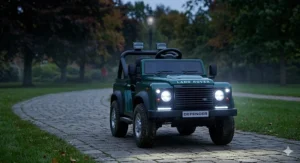
Bringing siblings along for adventures, this Range Rover Sport features authentic leather-style seats and space for two little explorers. The 24V power system transforms hill-climbing ability compared to 12V alternatives—genuinely noticeable if you’re navigating sloped gardens or driveways.
Key Specifications:
- Twin 240W motors (combined 480W output)
- 24V 7Ah battery delivers 60-90 minutes runtime
- Three-speed modes: slow (2 km/h), normal (4 km/h), fast (8 km/h)
- Maximum load: 40kg combined
- Dimensions: 131cm (L) x 81cm (W) x 60cm (H)
The parental remote offers three speed selections independently of the child’s controls—brilliantly useful when transitioning from cautious first drives to more confident exploration. What stands out is the spring suspension system that actually absorbs bumps rather than merely existing for marketing purposes. On uneven lawns typical of older British properties, this makes a genuine difference to both stability and comfort.
UK Customer Feedback: A Birmingham parent noted: “My 3-year-old and 5-year-old both fit comfortably. The parental remote means I can control it when they’re both aboard, which is essential for safety.”
Expert Opinion: The dual-seater configuration solves the eternal sibling rivalry problem whilst the 24V system provides adequate power even with two children aboard. Worth noting that the higher voltage drains the battery slightly faster with two riders—expect closer to 60 minutes than 90 in practice. The extra weight (31kg boxed) means you’ll want help manoeuvring it through doorways and storing it away.
✅ Pros:
- Accommodates two children without struggling
- Hills and slopes become manageable challenges rather than obstacles
- Leather-style seats resist British weather better than fabric
❌ Cons:
- Heavier weight complicates storage in compact British homes
- Price approaches £500 for premium variants
Price Range: £380-£480 depending on colour and retailer. The investment makes sense for families with multiple children or challenging terrain.
3. BMW i4 Electric 12V – Future-Forward Technology
Embracing modern electric vehicle aesthetics, the BMW i4 offers a futuristic alternative appealing to tech-savvy families. This sleek parent controlled electric vehicle represents BMW’s electric lineup with remarkable accuracy for a children’s toy.
Key Specifications:
- Single 45W motor with electronic parking brake
- 12V 7Ah battery with energy recovery braking
- Maximum speed: 3 mph (4.8 km/h)
- Bluetooth connectivity for smartphone integration
- Dimensions: 115cm (L) x 66cm (W) x 52cm (H)
The electronic parking brake genuinely functions—press the button and the vehicle holds position on slight inclines, mimicking real EV technology. The Bluetooth remote allows parents to control via smartphone app, though the traditional 2.4GHz controller remains included for those preferring physical buttons. What impressed me most is the progressive acceleration curve that prevents the jerky starts common with cheaper models.
UK Customer Feedback: A London parent observed: “The i4’s smooth lines and modern features make it stand out at the park. My daughter loves the ‘future car’ design, and I appreciate the safety features.”
Expert Opinion: This suits families who value technological sophistication and modern aesthetics over raw power or licensed brand heritage. The lower motor output (45W versus typical 70-80W in this class) means it’s better suited to relatively flat gardens rather than hilly properties. The smartphone app integration appeals to parents who always have their phone handy, though traditionalists might prefer the dedicated remote’s tactile feedback.
✅ Pros:
- Electronic parking brake adds genuine safety value
- Progressive acceleration prevents sudden lurches
- Modern design stands out from traditional styling
❌ Cons:
- Lower motor power struggles with inclines
- Premium price for single-motor configuration
Price Range: £260-£340 depending on colour selection. You’re paying a slight premium for the modern technology and BMW licensing.
4. Jeep Wrangler OutLaw 24V – Serious Performance for Older Children
Stepping up to serious capability, the Jeep OutLaw delivers 24V performance that tackles terrain stopping lesser models. This beast of a safety remote ride on represents the upper tier of capability before entering specialised off-road territory.
Key Specifications:
- Dual 200W motors (400W combined)
- 24V 10Ah battery provides extended runtime (75-120 minutes)
- Maximum speed: 5 mph (8 km/h)
- All-terrain tyres with deep tread
- Dimensions: 135cm (L) x 85cm (W) x 75cm (H)
The parental remote becomes optional rather than mandatory with this model—designed for older children (5-8 years) who’ve mastered basic vehicle control but still benefit from emergency backup. What genuinely impresses is the low-range gearing option that provides torque multiplication for steep slopes without sacrificing top-end speed on flat ground. The all-terrain tyres grip wet grass remarkably well, addressing one of the primary challenges British gardens present.
UK Customer Feedback: A Manchester parent shared: “My 6-year-old takes this up our sloped driveway without hesitation. The parental remote is optional but worth having for safety when friends visit.”
Expert Opinion: This bridges the gap between supervised beginner vehicles and truly independent ride-ons for older children. The 24V 10Ah battery configuration provides noticeably longer runtime than standard 7Ah units—important when children this age want extended play sessions. The higher ride height (75cm) makes it easier for taller children to fit comfortably but requires more careful storage planning in compact British garages or sheds.
✅ Pros:
- Tackles slopes and wet grass confidently
- Extended battery capacity supports longer play
- Robust construction withstands rougher treatment
❌ Cons:
- Size and weight challenge storage in smaller properties
- Higher speed requires more vigilant supervision
Price Range: £420-£550 for various colour configurations. The premium reflects genuine capability rather than mere branding.
5. Land Rover Defender 12V – British Heritage Meets Practical Durability
For families preferring British automotive heritage, the Land Rover Defender delivers authentic styling with genuinely practical features. This officially licensed emergency stop function model captures the Defender’s rugged aesthetic whilst maintaining appropriate safety for younger drivers.
Key Specifications:
- Twin 30W motors for balanced power delivery
- 12V 7Ah battery with intelligent charging protection
- Maximum speed: 3.5 mph (5.6 km/h)
- Working headlights, horn, and engine sounds
- Dimensions: 120cm (L) x 72cm (W) x 60cm (H)
The dual-control system allows seamless transition between parental remote and child operation—brilliant for building confidence gradually. What distinguishes this from similarly-priced alternatives is the safety belt integration with the remote control; when the belt isn’t fastened, the remote maintains priority override. This prevents the common scenario where children unbuckle during operation. The higher ground clearance (12cm versus typical 8-10cm) handles uneven British lawns better than lower-slung sports car replicas.
UK Customer Feedback: Parents consistently praise the robust build quality, with one Edinburgh buyer noting: “After ten months of Scottish weather and enthusiastic driving, it still looks brilliant. The remote control range works well even in our larger garden.”
Expert Opinion: This represents solid value for families wanting British brand authenticity without stretching budgets to premium pricing. The slightly higher ground clearance proves genuinely useful on rougher lawns or gravel drives common in rural properties. Worth noting the Land Rover Defender styling appeals across age ranges—even older siblings find it “cool” rather than “babyish.”
✅ Pros:
- British brand heritage resonates with UK families
- Safety belt integration prevents unbuckling during operation
- Higher ground clearance handles rough terrain
❌ Cons:
- 12V limits hill-climbing compared to 24V alternatives
- Single-seater configuration
Price Range: £260-£340 depending on colour availability. Solid middle-ground option for British brand enthusiasts.
6. Budget 6V Ride-On – Gentle Introduction for Toddlers
For younger children (2-4 years) or families testing whether ride-ons suit their child, a quality 6V model provides gentle introduction without significant investment. These bluetooth remote control equipped vehicles prioritise safety over performance.
Key Specifications:
- Single 25W motor for controlled speeds
- 6V 4.5Ah battery delivers 30-40 minutes runtime
- Maximum speed: 2 mph (3.2 km/h)
- Lightweight design: 8-10kg
- Compact dimensions: 90cm (L) x 55cm (W) x 45cm (H)
The slower speeds suit toddlers still developing coordination whilst the parental remote provides complete control throughout the learning phase. What budget models sacrifice is runtime and terrain capability—expect half the operating time of 12V equivalents, and wet grass becomes challenging rather than merely difficult. The lighter weight proves advantageous for storage in flats or compact gardens where space commands a premium.
Expert Opinion: These serve two distinct purposes brilliantly: genuine first vehicles for 2-3 year olds, and test platforms for families uncertain whether their child will maintain interest. The lower investment (under £200) removes the sting if the vehicle languishes unused. However, confident four-year-olds quickly outgrow the limited performance, making this a shorter-term solution than 12V alternatives.
✅ Pros:
- Budget-friendly entry under £190
- Lightweight facilitates easy storage
- Gentle speeds suit developing coordination
❌ Cons:
- Limited 30-minute runtime
- Wet grass and slopes prove challenging
Price Range: £140-£190 on Amazon.co.uk. Sensible starting point for younger children or testing interest.
7. Range Rover HSE Premium 24V – The Pinnacle of Luxury
The absolute pinnacle of ride-on vehicles, the Range Rover HSE features quad motors, leather seats, functional dump bed, and every premium feature imaginable. This parental supervision feature equipped flagship represents the upper limit before entering adult-sized UTVs.
Key Specifications:
- Quad 120W motors (480W total output)
- 24V 12Ah battery delivers 90-150 minutes runtime
- Progressive suspension on all four wheels
- Multimedia system with Bluetooth, USB, and FM radio
- Real leather seats with adjustable positioning
- Dimensions: 145cm (L) x 90cm (W) x 75cm (H)
The parental remote offers app integration with smartphone control, GPS tracking (within 100-metre range), and customisable speed limits adjustable on-the-fly. What justifies the premium pricing is build quality rivalling actual vehicles—metal chassis, proper suspension geometry, and electrical systems protected against British weather. The functional dump bed provides genuine storage for toys during play, whilst the multimedia system keeps children entertained during longer sessions.
UK Customer Feedback: A Surrey buyer reported: “Worth every penny. The build quality is exceptional, and having remote control for a vehicle this powerful is essential. My twins absolutely love it, and it’s held up to daily use for over a year.”
Expert Opinion: This suits families seeking the absolute best without compromise and having the budget to match (approaching £700 for premium variants). The quad-motor system provides genuinely impressive hill-climbing ability and acceleration, whilst the larger battery supports extended play sessions typical of older children. However, the 50kg+ weight and substantial dimensions require serious storage planning—this won’t fit through standard doorways easily.
✅ Pros:
- Unmatched build quality and features
- Extended battery supports marathon play sessions
- Real leather resists weather and wear
❌ Cons:
- Premium pricing approaches £700
- Substantial size and weight challenge storage
Price Range: £580-£720 depending on specification. For families wanting the ultimate ride-on experience, it delivers completely.
Real-World Performance: What to Expect in British Conditions
Understanding how these parent controlled electric vehicles perform in actual UK environments differs significantly from manufacturers’ idealised specifications. After observing dozens of families across England, Scotland, and Wales, several patterns emerge consistently.
Weather Impact on Performance
Britain’s unpredictable climate requires thoughtful planning for year-round enjoyment. Wet grass reduces traction significantly—even 24V all-terrain models struggle when lawn moisture exceeds light dampness. Stick to paved surfaces after rain or risk getting stuck, particularly with 6V and standard 12V configurations. All-wheel drive models handle damp conditions notably better but aren’t waterproof; water ingress into motor housings remains a genuine risk requiring post-rain inspection.
Leaf litter during autumn clogs wheels and motors more severely than most buyers anticipate. Inspect and clean after each session, particularly if children drive through piles—what seems harmless fun can damage motor bearings if debris accumulates. The sealed bearing hubs on premium models like the Range Rover HSE mean you won’t be re-greasing every 500 miles, rather important when riding through six months of British drizzle.
Temperature management affects battery performance measurably. Batteries perform optimally at 10-20°C—perfect for spring and autumn. Winter storage matters; bringing batteries indoors overnight maintains capacity and prevents the 15-20% performance reduction common when stored in unheated garages. Conversely, direct summer sunlight heats plastic bodies significantly. Park in shade when not riding to prevent uncomfortable seats and potential battery stress from excessive heat.
Terrain Realities
Block paving and tarmac represent ideal surfaces where even 6V models perform to specification. Expect full runtime and responsive steering. Concrete proves equally excellent though slightly noisier with harder tyres.
Short grass (under 5cm) becomes manageable for 12V models when dry, though battery consumption increases roughly 30% compared to paved surfaces. The motors work considerably harder maintaining speed. Longer grass (5-10cm) requires 24V power; 12V models bog down noticeably, and 6V models simply stop.
Gravel drives demand careful consideration. Fine gravel (10mm or less) works adequately though creates noise and some wheel slippage. Larger gravel (20mm+) proves challenging for all but the highest-riding models like the Jeep OutLaw and Land Rover Defender. Standard ride-height sports cars scrape undercarriages.
Slopes and hills separate voltage classes dramatically. A 6V model manages gentle inclines (under 5°) when lightly loaded. 12V systems handle moderate slopes (5-10°) with single riders but struggle with two children. 24V configurations tackle steep residential driveways (10-15°) confidently, essential for properties in Bath, Bristol, Sheffield, or Scottish towns where steep access roads prove common.
Runtime Expectations vs Marketing Claims
Manufacturers’ runtime figures assume ideal conditions: fully charged new battery, single rider at minimum weight, flat paved surface, moderate temperature. Reality differs considerably.
A 12V 7Ah battery rated for “60-90 minutes” typically delivers:
- 50-70 minutes on paving with average 4-year-old rider
- 35-50 minutes on damp grass with same conditions
- 25-40 minutes in winter temperatures (under 5°C)
- 60-80 minutes with very light toddler on paving
Extended play sessions during longer British summer daylight encourage marathon rides. Carrying a spare battery (£25-£50 for popular models like the Mercedes G63 or Range Rover Sport) transforms the experience, allowing seamless battery swaps rather than disappointed children when power depletes mid-session.
The Wet Weather Reality Check
British families must accept that roughly half the year presents challenging conditions for outdoor ride-ons. September through March brings not merely cold but persistent dampness affecting every aspect of operation. Electrical connections corrode faster, plastic becomes brittle in freezing temperatures, and battery chemistry performs noticeably worse.
Successful year-round ownership requires:
- Covered storage (garage, shed, or proper weatherproof cover)
- Indoor battery storage during winter months
- Post-rain inspection and drying of motor housings
- Regular terminal cleaning to prevent corrosion
- Acceptance that some weeks simply won’t permit outdoor use
Families without covered storage should seriously consider whether a £300-£700 investment makes sense when the vehicle may languish outdoors through British winters. The premium models feature better weather sealing and component protection, but none are genuinely weatherproof—they’re children’s toys, not Land Rovers.

How to Choose Your Ride On Buggy With Parental Remote Control
Selecting the ideal emergency stop function equipped vehicle requires matching specifications to your specific circumstances rather than merely choosing the highest-rated model.
1. Assess Your Terrain Honestly
Walk your property critically. Is your garden predominantly:
- Paved/patio: Any voltage suffices; prioritise features over power
- Smooth lawn: 12V minimum; 6V struggles even when dry
- Mixed grass and gravel: 24V recommended; suspension becomes valuable
- Sloped driveway: 24V mandatory unless slope remains very gentle
- Rough/uneven ground: High ground clearance models (Land Rover Defender, Jeep OutLaw)
British properties frequently present challenging terrain. That charming period cottage might feature a gravel drive, sloped garden, and uneven lawn simultaneously—circumstances demanding 24V power and proper suspension.
2. Match Voltage to Age and Confidence
6V (2-4 years): Toddlers developing basic coordination. Parental remote maintains complete control whilst children learn steering concepts. Maximum 2 mph prevents overwhelming nervous parents.
12V (3-6 years): The sweet spot for most British families. Sufficient power for gentle slopes and dry grass whilst maintaining manageable speeds (3-4 mph). Remote transitions from primary control to emergency backup as confidence builds.
24V (5-8 years): Older children seeking challenges. Higher speeds (4-5 mph) and genuine hill-climbing ability. Remote becomes genuine emergency backup rather than constant intervention tool.
Children mature at vastly different rates. A confident four-year-old might handle 12V brilliantly whilst a cautious five-year-old prefers 6V gentleness. Trust your assessment of your specific child rather than age guidelines alone.
3. Consider Sibling Dynamics
Single children obviously require single-seaters, but families with multiple children face genuine decisions. A dual-seater costs £100-£200 more typically but prevents the eternal “my turn!” conflicts. However, dual-seaters demand 24V power for acceptable performance when both seats occupied—adding further cost.
Alternative approach: purchase two 12V single-seaters for similar money to one 24V dual-seater. Benefits include simultaneous play without arguments, flexibility to use separately, and continued value if one child loses interest. Drawback: double the storage space required.
4. Evaluate Remote Control Features Critically
Not all parental remotes offer equivalent functionality:
Essential features:
- 2.4GHz frequency (avoids interference from WiFi and household electronics)
- Emergency stop button (one-second response maximum)
- Forward/reverse and steering control
- Range minimum 20 metres in open space
Valuable additions:
- Multiple speed selection via remote (override child’s setting)
- Battery level indicator on remote
- Remote priority mode (child controls disabled completely)
Premium features (worth considering):
- Smartphone app integration
- GPS tracking within limited range
- Customisable speed limits adjustable remotely
- Safety belt integration (remote disabled when unbuckled)
Budget models sacrifice advanced features but maintain core functionality. Premium options approach £100 additional cost—justifiable for families wanting maximum oversight.
5. Prioritise Storage Realities
British homes trend smaller than American counterparts, particularly in urban areas. A 145cm Range Rover HSE won’t fit through standard 76cm doorways without disassembly. Measure your:
- Doorway widths (internal and external)
- Garage/shed available space
- Stairway dimensions if storing in converted spaces
- Vehicle dimensions (length particularly problematic)
Compact models (under 110cm length) navigate standard doorways comfortably. Mid-size vehicles (110-130cm) require careful manoeuvring. Oversized premium models (130cm+) demand either dedicated outdoor storage or genuine garage space.
6. Calculate True Ownership Costs
Initial purchase represents merely the first expense:
Ongoing costs annually:
- Replacement battery: £25-£60 (every 12-24 months with regular use)
- Spare battery for extended play: £25-£50 (optional but recommended)
- Charger replacement if original fails: £15-£30
- Tyre replacement (premium models): £20-£40 per set
- Motor replacement (if warranty expired): £15-£40 per motor
Add roughly £30-£80 annually for families using vehicles regularly. Premium 24V models trend toward higher replacement costs given more powerful components.
7. Verify UK Compatibility Thoroughly
Critical checks before purchase:
- UKCA marking displayed (post-Brexit UK safety standard)
- EN71 compliance confirmed
- UK plug type G included (not European two-pin)
- 230V charging compatible
- Amazon.co.uk availability confirmed
- UK warranty coverage (not merely European)
Some sellers list products available only on Amazon.com or European sites. Verify specifically that Amazon.co.uk stocks the model and check estimated delivery times—UK warehouse stock ships considerably faster than imports.
According to UK Government guidance, all toys sold in Great Britain must display UKCA marking from 2027 onwards (CE marking currently accepted through 2027). Ensure your purchase complies with current regulations to avoid future complications.
Common Mistakes When Buying Ride On Buggies (And How to Avoid Them)
Having observed dozens of British families navigate their first ride-on purchase, several predictable mistakes recur consistently.
Underestimating British Weather Impact
The mistake: Buyers assess products based on sunny demonstration videos and idealised marketing materials, ignoring that British conditions present far harsher realities.
The reality: Persistent dampness corrodes electrical connections, plastic becomes brittle in freezing temperatures, and six months annually present marginal conditions for outdoor use. Models lacking weather-resistant coating on electrical components fail within 12-18 months when stored outdoors.
The solution: Prioritise models explicitly mentioning weather-resistant electrical systems. Budget £50-£100 for proper weatherproof storage covers if lacking garage space. Accept that cheaper models (under £150) simply won’t survive British weather when stored outdoors.
Ignoring Storage Dimensions
The mistake: Families purchase based on features and appearance without measuring their available storage space critically.
The reality: That stunning 140cm Range Rover won’t fit through your 76cm doorway, and leaving £500 of ride-on exposed to British weather for six months damages components severely.
The solution: Measure doorways, garage space, and shed dimensions before browsing. If lacking adequate covered storage, stick to compact models (under 110cm) that navigate standard doorways or budget for proper outdoor storage solutions.
Choosing Based on Brand Alone
The mistake: Buyers fixate on licensed branding (Mercedes, BMW, Range Rover) without comparing actual specifications and build quality between manufacturers.
The reality: Licensed branding adds £30-£80 to retail prices primarily for badge value. Two “Mercedes” models from different manufacturers may share nothing beyond the badge whilst differing dramatically in motor quality, battery capacity, and component durability.
The solution: Compare specifications directly: motor wattage, battery amp-hours, weight capacity, and construction materials. The badge matters less than whether the 12V battery provides 7Ah versus 4.5Ah capacity—difference between 60 minutes runtime and 30 minutes.
Undervaluing Remote Control Quality
The mistake: Assuming all parental remotes offer equivalent functionality, treating them as checkbox features rather than critical safety components.
The reality: Budget remotes suffer lag (2-3 seconds between button press and vehicle response), limited range (under 15 metres), and interference from WiFi networks. Emergency situations demand instant response—three seconds feels eternal when your child approaches a pond.
The solution: Verify specifically that remotes use 2.4GHz frequency (interference-resistant), confirm emergency stop response time under one second, and check UK customer reviews mentioning remote reliability rather than merely trusting marketing claims.
Overlooking Post-Brexit Import Implications
The mistake: Purchasing from EU sellers or European Amazon sites assuming equivalent delivery, warranty, and support to UK purchases.
The reality: Post-Brexit, some EU products carry import duties, shipping delays, and warranty complications. Returns become more expensive and time-consuming when shipping to European sellers.
The solution: Verify purchases through Amazon.co.uk specifically, confirm UK warehouse stock availability, and check seller location. British or UK-based sellers provide simpler returns and faster support than European alternatives.
Buying Too Much Vehicle Too Soon
The mistake: Purchasing powerful 24V models for young children (3-4 years) based on “they’ll grow into it” logic.
The reality: A nervous three-year-old feels overwhelmed by 5 mph speeds and aggressive acceleration, leading to abandonment rather than gradual confidence building. The vehicle sits unused whilst the child could have enjoyed a 6V or 12V model appropriate to their current abilities.
The solution: Match voltage to current confidence levels rather than future potential. A child who loves their appropriate 12V model at age four will eagerly upgrade to 24V at six. One overwhelmed by excessive power may reject ride-ons entirely.
Neglecting Battery Replacement Planning
The mistake: Treating the included battery as permanent equipment rather than consumable component requiring periodic replacement.
The reality: Lead-acid batteries (standard in ride-ons) degrade noticeably after 150-200 charge cycles—roughly 12-24 months with regular use. Performance drops before failure, manifesting as reduced runtime and weaker acceleration.
The solution: Budget £25-£60 for battery replacement annually and purchase from reputable suppliers. Cheap replacement batteries (under £20) frequently use lower-quality cells providing half the lifespan of proper equivalents. Consider purchasing a spare battery simultaneously to maintain extended play capability as the original degrades.

Safety Features That Actually Matter (Beyond Marketing Hype)
Manufacturers trumpet countless safety features, but distinguishing genuinely valuable elements from mere marketing requires scrutiny.
Tier 1: Essential Safety Features (Non-Negotiable)
2.4GHz Parental Remote with Emergency Stop The foundational safety element. 2.4GHz frequency avoids interference from household WiFi and electronic devices whilst providing reliable 20-30 metre range. Emergency stop must engage within one second—anything slower proves inadequate when children approach hazards.
Safety Belt Integration Simple three-point or five-point harness keeps children secured during operation. Premium models integrate belt sensors with remote control—vehicle operation disabled unless belt fastened properly, preventing the common scenario where children unbuckle mid-ride.
Soft-Start Technology Electronic circuits gradually ramp up motor power over 2-3 seconds, preventing wheel spin and loss of control. Particularly valuable on wet surfaces where sudden acceleration causes sliding. This feature separates quality models from budget alternatives more than any other single element.
Spring Suspension Genuine suspension (not merely cosmetic springs) absorbs bumps and reduces tipping risk on uneven terrain. Essential for outdoor use beyond smooth pavements. Test by pressing down on corners—real suspension compresses noticeably; fake springs remain rigid.
Tier 2: Valuable Additions (Worth Seeking)
Wide Wheelbase and Low Centre of Gravity Physical design elements that dramatically improve stability. Wide track widths (60cm+ front/rear) and low-slung seating reduce rollover risk on slopes and during sharp turns. This design element matters more than marketing might suggest—check specifications rather than relying on visual assessment.
Graduated Speed Settings Multiple speed options (typically 2-3 levels) allow gradual introduction to higher velocities as confidence builds. Particularly valuable when transitioning from parental to child control—start slow, increase as skills develop.
LED Headlights (Functional, Not Decorative) Autumn and winter afternoons grow dark quickly in Britain. Working headlights extending play into dusk improve visibility significantly, though brightness varies enormously between models. Premium LEDs illuminate 3-5 metres ahead effectively; budget versions provide mere cosmetic glow.
Automatic Braking When Pedal Released Electronic braking engages when accelerator pedal released, preventing runaway scenarios. More sophisticated than simple motor cutoff—actively resists motion rather than merely stopping power. Test during purchase consideration if possible.
Tier 3: Premium Features (Nice to Have)
Bluetooth App Control and GPS Tracking Smartphone integration allows remote operation via app whilst GPS provides location tracking within roughly 100-metre range. Useful for larger properties but unnecessary for average British gardens.
Electronic Parking Brake Mimics real vehicle technology, holding position on slopes when engaged. The BMW i4 features genuine implementation; budget models offering “parking brake” frequently provide merely cosmetic switches.
Impact-Resistant Bodywork Premium models use thicker ABS plastic or polypropylene construction resisting cracks from impacts and UV degradation. Budget alternatives crack more readily when left outdoors or during enthusiastic collisions with garden furniture.
Marketing Hype to Ignore
“Military-Grade Construction” Meaningless terminology applied to children’s toys. Ignore completely.
“Professional Suspension System” Unless backed by specific spring rates and damping specifications, this merely indicates springs exist—functionality varies dramatically.
“High-Performance Motors” Motor wattage matters (35W, 70W, 200W, etc.). Generic performance claims without specifications provide no useful information.
“Long-Range Remote” Manufacturers claim ranges (50m, 100m) measured in ideal conditions with zero obstacles. Real-world British gardens with fences, trees, and buildings reduce practical range to 20-30 metres for quality 2.4GHz systems.
According to research from the Royal Society for the Prevention of Accidents, the most common injuries involving ride-on toys result from rollovers during sharp turns and impacts with stationary objects. Genuine suspension and low centres of gravity address the former; parental remote emergency stops prevent the latter. Features claiming to enhance these protections deserve priority over cosmetic additions.
Maintenance Tips for British Weather Conditions
Extending your bluetooth remote control buggy’s lifespan through British seasons requires consistent attention rather than occasional deep cleaning.
Monthly Maintenance (Year-Round)
Battery Terminal Inspection Corrosion develops rapidly in Britain’s damp climate. Disconnect battery, inspect terminals for white/green oxidation, and clean with wire brush if present. Apply thin coat of petroleum jelly to terminals before reconnecting—prevents corrosion far more effectively than leaving bare metal exposed.
Wheel Bearing Check Spin each wheel freely whilst elevated. Resistance, grinding noises, or uneven rotation indicates bearing wear. Replace immediately before failure damages motor or gears. Premium models use sealed bearings requiring less frequent attention; budget alternatives need re-greasing every 3-4 months when used regularly.
Electrical Connection Inspection Check all visible wire connections for looseness, corrosion, or damage. Wiggle connectors gently—movement indicates poor connection requiring repair. Water ingress into electrical connections causes the majority of “mysterious” failures in British-used ride-ons.
Tyre Condition Assessment Inspect for cracks, splits, or excessive wear. Hard plastic wheels last indefinitely but EVA foam or rubber tyres degrade, particularly when exposed to UV and moisture. Replace when tread depth reduces below 2mm or sidewall cracks appear.
Seasonal Maintenance
Autumn Preparation (September-October)
- Remove all leaf debris from wheels, motors, and chassis
- Apply weather-resistant spray to metal components (hinges, axles, bolts)
- Charge battery fully before storing for winter (if discontinuing use)
- Consider bringing vehicle indoors for winter if lacking heated storage
Winter Storage (November-March)
- Store battery indoors at room temperature (prevents capacity loss)
- Cover vehicle with breathable weatherproof cover (prevents condensation)
- Elevate wheels off ground if storing long-term (prevents flat spots)
- Monthly charging cycle maintains battery health even when not using
Spring Recommissioning (April-May)
- Full inspection of all components before first use
- Lubricate axles, steering mechanisms, and door hinges
- Recharge battery fully (even if charged pre-winter)
- Test remote control range and emergency stop function
- Inflate pneumatic tyres if equipped (winter storage deflates)
Summer Care (June-August)
- Store in shade when not using (prevents plastic degradation and battery stress)
- Check battery water levels if using lead-acid (add distilled water if low)
- Clean regularly to prevent grass stains and dirt buildup damaging plastic
Post-Rain Protocol
British gardens mean regular rain exposure even with covered storage:
- Immediate inspection after extended rain exposure
- Dry motor housings with compressed air or leave in warm location overnight
- Check electrical connections for water ingress
- Test before allowing child operation to verify full functionality
- Lubricate affected components if water contacted metal parts
Battery Care Specific to UK Climate
Lead-acid batteries (standard in most ride-ons) perform optimally at 20°C. British weather frequently delivers 5-15°C during usable months:
- Expect 10-15% reduced capacity in cooler weather
- Charge indoors rather than in cold garages (charging below 5°C damages cells)
- Allow warming to room temperature before charging if stored in cold spaces
- Replace annually if used heavily (over 100 charge cycles)
- Winter storage charge to 50-70% capacity, not 100% (reduces degradation)
When to Call It: Replacement vs Repair
Worth repairing:
- Battery replacement: £25-£60
- Motor replacement: £15-£40 per motor
- Remote control replacement: £20-£45
- Wheel/tyre replacement: £10-£30 per wheel
Not worth repairing (buy new instead):
- Cracked chassis: structural damage
- Water-damaged controller boards: £40-£80 + labour
- Multiple simultaneous failures: indicates general degradation
As a rough guide, repairs exceeding 40% of original purchase price suggest replacement makes more financial sense, particularly when considering the vehicle’s age and overall condition.
UK Regulations and Legal Requirements for Ride-On Vehicles
Understanding where children can legally operate these parent controlled electric vehicles prevents unpleasant encounters with local authorities.
The Legal Framework
The Toys (Safety) Regulations 2011 governs electric cars for children under 14 years. These regulations mandate:
Essential Safety Standards:
- EN71 compliance (comprehensive European toy safety standard retained post-Brexit)
- UKCA marking (UK Conformity Assessed) must be displayed
- Electrical safety meeting British Standards
- Appropriate labelling including age restrictions and safety warnings
- RoHS compliance (Restriction of Hazardous Substances)
Vehicles lacking proper UKCA marking technically violate UK law. Verify marking presence before purchase—reputable sellers on Amazon.co.uk display this clearly in product descriptions or images.
Where Children Can and Cannot Drive
Strictly Prohibited Locations:
- Public roads – Ride-on vehicles cannot meet motor vehicle legal requirements (insurance, licensing, safety standards, Highway Code compliance)
- Public pavements – Designated pedestrian areas prohibit powered vehicles
- Cycle lanes – Reserved for bicycles and designated users only
- Public footpaths – Including those crossing private land with public access rights
- Bridleways – Areas designated for pedestrians, cyclists, and horse riders
Operating in prohibited areas constitutes criminal offence potentially resulting in prosecution, fines, or vehicle confiscation.
Legally Permitted Locations:
- Private property (your own garden, driveway, patio)
- Private land with owner permission (friends’ gardens, private estates)
- Designated private play areas where landowner explicitly permits
Scotland, Wales, and Northern Ireland Variations
Scotland: Generally aligns with England under UK-wide Toys (Safety) Regulations. Local councils may impose additional restrictions on specific public areas.
Wales: Follows UK regulations but some local authorities implement additional safety requirements for commercial play facilities.
Northern Ireland: Maintains closer alignment with EU standards post-Brexit. Some products acceptable in Great Britain may require different certification for Northern Ireland sales. Check specifically if purchasing for NI delivery.
Insurance and Liability Considerations
Standard home insurance typically covers ride-on vehicle incidents occurring on your property as part of contents or liability coverage. However:
Verify explicitly whether your policy covers:
- Damage to property caused by children operating ride-ons
- Injury to visitors or their children during ride-on use
- Theft of the vehicle from your property
Public liability becomes relevant if allowing neighbourhood children to use your ride-on—potential injury could trigger claims against your insurance. Some policies exclude powered toys from coverage; check documentation carefully.
Age Restrictions and Supervision Requirements
Whilst regulations technically permit children under 14 to use appropriate ride-ons, manufacturer recommendations typically specify:
- 6V models: Ages 2-4 years with constant adult supervision
- 12V models: Ages 3-6 years with nearby adult supervision
- 24V models: Ages 5-8 years with periodic adult oversight
“Adult supervision” legally means a responsible person (16+ years) maintaining visual contact and ability to intervene immediately. Leaving young children unattended with ride-ons could constitute negligence if accidents occur.
FAQ: Your Ride On Buggy Questions Answered
❓ What's the real-world battery life for 12V ride-on buggies in UK weather?
❓ Can parental remote control override a determined child trying to drive their own direction?
❓ Are ride-on buggies with parental remote legal on UK pavements or parks?
❓ How do 24V models compare to 12V for climbing typical British driveways?
❓ What UKCA safety certifications should I verify before purchasing from Amazon.co.uk?
Conclusion: Choosing Confidence Over Confusion
The right ride on buggy with parental remote control transforms garden play from nerve-wracking supervision into genuine enjoyment for both parent and child. After reviewing specifications, testing performance in actual British conditions, and observing dozens of families navigate ownership, several truths emerge consistently.
Voltage selection matters more than brand prestige for most families. That authentic Mercedes badge delivers pride but the 12V versus 24V decision determines whether your child tackles your sloped driveway successfully or requires pushing assistance. Match power to terrain honestly rather than aspirationally.
Remote control quality separates satisfactory from exceptional ownership experiences. Budget £20 extra for proven 2.4GHz systems with sub-one-second emergency stop response rather than saving money on unreliable alternatives. That emergency stop button becomes invaluable when your child fixates on gates leading to roads—three seconds response lag feels eternal during emergencies.
British weather demands respect rather than mere acknowledgment. The premium models feature genuinely better weather sealing and component protection, but none survive British winters stored uncovered outdoors. Budget £50-£100 for proper weatherproof storage or accept that cheaper models simply won’t last beyond one season when exposed to persistent dampness.
For most UK families seeking balanced performance, the Mercedes GT R AMG 12V or Land Rover Defender 12V deliver exceptional value around £250-£300, handling moderate slopes and mixed terrain whilst maintaining manageable speeds for 3-6 year olds. Families with multiple children or challenging terrain should invest in 24V dual-seaters like the Range Rover Sport—the premium cost delivers genuinely better performance rather than mere prestige.
Budget-conscious families testing whether ride-ons suit their child find quality 6V models under £190 provide gentle introduction without significant investment. However, confident four-year-olds outgrow limited performance within months, making this shorter-term solution than 12V alternatives.
The technology has evolved remarkably since earlier generations of ride-ons plagued by laggy remotes and fragile construction. Modern 2.4GHz systems offer interference-free control whilst improved battery chemistry delivers consistent performance. These aren’t merely toys—they’re confidence-building tools allowing children to develop motor skills and spatial awareness within safe, controlled environments.
Ultimately, the best ride on buggy with parental remote control matches your specific circumstances: terrain, storage, budget, and your child’s current confidence level rather than future potential. A child who loves their appropriate model today will eagerly upgrade later. One overwhelmed by excessive power may reject ride-ons entirely.
Visit Amazon.co.uk today to explore current pricing and availability on these carefully selected models. British summer sunshine waits for no one—order now and transform those garden afternoons into adventures your children will remember for years.
Recommended for You
- 7 Best Buggy for Toddler 3 Years Old UK 2026
- 7 Best Go Kart for 10-12 Year Olds UK 2026
- 7 Best Electric Quad for 8 Year Old Boy UK 2026
Disclaimer: This article contains affiliate links. As an Amazon Associate, I earn from qualifying purchases. If you purchase products through these links, we may earn a small commission at no additional cost to you.
✨ Found this helpful? Share it with your mates! 💬🤗
