In This Article
Children grow in sudden, inconvenient spurts. Scooters don’t. Buy a fixed-height model in September and by next summer your five-year-old is steering it like a hunched commuter on a rush-hour bus. That’s the quiet genius of an adjustable 3-wheel scooter: the handlebar rises with the child, two front wheels keep the ride steady while balance develops, and the whole thing stays useful long after a fixed-height rival has been banished to the shed.
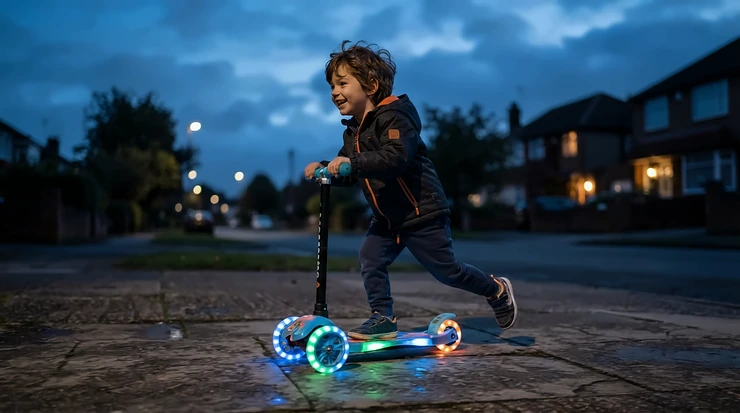
There’s a bigger reason to care, too. The NHS guidelines recommend that children and young people aged 5 to 18 average at least 60 minutes of moderate or vigorous activity a day, and scooting to school is a surprisingly painless way to bank some of it. Wobbly, ill-fitting kit turns that habit into a chore. The right adjustable 3-wheel scooter makes it the best part of the morning.
Below you’ll find seven genuinely different options, from a budget starter to a family-sized model adults can borrow. Expect a quick comparison table, a proper height range chart to match handlebars to children, a plain-English look at how a telescopic handlebar really works, and a cost-per-year value breakdown showing what each scooter costs over its useful life. Everything rests on manufacturer specifications, UK retailer listings and aggregated parent feedback. None of it comes from invented hands-on testing.
Quick Comparison: The Best Adjustable 3-Wheel Scooters at a Glance
Here’s the 30-second version. Prices are ranges at the time of research, so check current price before you buy.
| Scooter | Handlebar Range | Maker’s Age Guide | Price Range | Folds? | Best For |
|---|---|---|---|---|---|
| EVO Mini Cruiser | 62-72cm | 2-5 years | £20-£40 | No (bar removes) | First scooter on a tight budget |
| Globber Primo Foldable Lights | 67.5-77.5cm | 3+ years | £60-£70 | Yes | Nervous beginners |
| Banwood Eco Scooter | 70-80cm | 3+ years | £80-£90 | No (bar detaches) | Eco-minded, design-led families |
| Mini Micro Deluxe | approx. 48-68cm | 2-5 years | £85-£95 | No (bar removes) | Smallest riders, sibling hand-me-downs |
| Globber Ultimum | 76-101cm | 5+ to adult | £90-£120 | Yes | Tall kids, teens, family sharing |
| smarTrike Xtend Ride-On Plus | 63-89cm (scooter mode) | 12 months-12 years | £100-£130 | Yes | One purchase, baby to tween |
| Maxi Micro Deluxe Foldable | 67-91cm | 5-12 years | £150-£160 | Yes | Daily school runs for older kids |
Looking at the table, the EVO Mini Cruiser wins on upfront cost, while the Globber Ultimum and smarTrike Xtend Ride-On Plus stretch furthest across the years. Premium picks like the Mini Micro Deluxe and Maxi Micro Deluxe Foldable cost more up front but are built for hand-me-downs. We’ll unpack the numbers in the height range chart and cost-per-year value sections below.
💬 Just one click — help others make better buying decisions too!😊
What Is an Adjustable 3-Wheel Scooter?
An adjustable 3-wheel scooter is a kick scooter with two wheels at the front, one at the back and a handlebar that can be raised or lowered, so it fits as a child grows. Most riders steer by leaning, and the wide stance makes it steadier than a two-wheeler for beginners.
Most pair a low deck with lean-to-steer: tilt the handlebar and the front wheels follow. A rear brake sits over the back wheel, and some models add a steering lock that keeps the front end straight while beginners find their feet. The “adjustable” bit is where models diverge. Some, like the Globber Primo Foldable Lights, click into three preset heights. Others use a clamp for finer steps, and a few, notably the smarTrike Xtend Ride-On Plus, lengthen both bar and footboard.
Whichever mechanism, a telescopic handlebar (one tube sliding inside another and locked in place) does the heavy lifting, which is why we dig into it shortly. Three wheels work best from toddlerhood to around the end of primary school. After that, plenty of kids pivot to two wheels.
Top 7 Adjustable 3-Wheel Scooters: Expert Analysis
Much of the real-world feedback below comes from parent testers in Mumsnet’s kids’ scooter guide, plus retailer review pages. Where reviews couldn’t be verified, I say so rather than fill the gap.
1. EVO Mini Cruiser — cheapest way into three-wheel scooting
The EVO Mini Cruiser is the scooter equivalent of a starter pack: small, cheerful and priced so low that nobody weeps when it’s abandoned on the patio.
The handlebar adjusts between 62cm and 72cm, with two 120mm front wheels and a smaller 76mm rear wheel. Retailer specs put it at around 2kg with lean-to steering, light enough for a toddler to hoist after a tumble. That 10cm adjustment window is modest, though. Treat this adjustable 3-wheel scooter as a two-to-three-year loan rather than a forever scooter.
Based on the spec comparison, it suits parents who want to find out whether a child actually enjoys scooting before spending serious money. The removable wooden-look basket is adorable and a magnet for pebbles, but it eats into handlebar space.
Reviewers on retail listings note that learning to turn by leaning takes a little while, and that the basket can crowd the handlebars slightly. Mumsnet’s testers call it a great-value starter scooter.
Pros:
- ✅ Very low price for a three-wheeler
- ✅ Lightweight and easy for toddlers to handle
- ✅ Removable handlebar for easy storage
Cons:
- ❌ Short 10cm handlebar adjustment window
- ❌ Doesn’t fold for travel
Expect roughly £20-£40 depending on retailer. Unbeatable upfront, though the short growth window means its cost-per-year value is good rather than outstanding.
2. Globber Primo Foldable Lights — steering lock for nervous first-timers
The Globber Primo Foldable Lights is the scooter for the child who hovers at the top of the drive muttering “I’m not sure.” A button locks the front steering, so early sessions become kick-and-glide rather than kick-and-veer-into-the-hedge.
The T-bar clicks into three heights (67.5cm, 72.5cm and 77.5cm), with a 50kg rider limit and a folding system. The light-up wheels run on dynamo technology, so there are no batteries to replace. In practice, three notches across 10cm is a modest range, but combined with the steering lock it carries a child comfortably from first wobble to confident school-run cruising.
The trade-off is weight. Mumsnet lists it at about 3kg, roughly a kilo more than the lightest rivals, which you’ll notice when it’s handed to you at the school gate.
Mumsnet’s tester found assembly quick and raising the handlebar easy. The listed downsides are the extra weight and a more child-like look than pricier rivals.
Pros:
- ✅ Steering lock builds early confidence
- ✅ Folds for boots and hallways
- ✅ Battery-free light-up wheels
Cons:
- ❌ Heavier than premium alternatives
- ❌ Only three handlebar positions
Around £60-£70 at the time of research. Solid cost-per-year value for beginners, so check current price.
3. Banwood Eco Scooter — recycled build that shrugs off siblings
The Banwood Eco Scooter looks like it wandered out of a Scandinavian design studio, and it happens to be built from recycled materials too.
The T-shaped handlebar offers three heights (70cm, 75cm and 80cm), a spring pin lets the bar detach quickly, and the deck is 29.3cm long by 10cm wide. The frame weighs around 2.5kg. That narrow deck suits under-sevens nicely but gets snug for bigger feet.
Here’s what most buyers overlook: because the bar detaches, it stores almost as neatly as a folder, even though it doesn’t fold flat. Mumsnet notes that it struggles on gravel and rough ground, and that the basket is sold separately. It’s a pavement-and-playground machine.
One Mumsnet tester reported over a year of use by two boys aged four and five, with the scooter remaining impressively sturdy and stable. That durability story is exactly what premium buyers are paying for.
Pros:
- ✅ Sturdy, premium-feeling construction
- ✅ Made from recycled materials
- ✅ Handlebar detaches for storage
Cons:
- ❌ Doesn’t fold flat
- ❌ Struggles on gravel and rough paths
Roughly £80-£90 in the retailer ranges I found. Pricier per year than the Globber Primo Foldable Lights, but a stylish hand-me-down candidate.
4. Mini Micro Deluxe — featherlight lean-to-steer classic
The Mini Micro Deluxe is the scooter other brands are quietly benchmarked against, and it earns its reputation through sheer lightness.
European retailer specs give a handlebar range of roughly 48-68cm, a 35kg limit and wheels of 120mm and 80mm, with a safety system preventing the bar from being pulled out. Other listings quote slightly different figures, so check the exact range. Mumsnet lists a 2kg weight and a simple footbrake, which is why toddlers can actually lift it.
The honest catch is the window. Ages two to five means the adjustable T-bar covers a short stretch, so this adjustable 3-wheel scooter makes financial sense mainly if it’s handed down.
A Mumsnet parent tester praised the smooth, well-engineered lean-to-steer, while one forum parent said their children rode theirs “into the ground” with no problems. The listed downsides are the price and the lack of a fold.
Pros:
- ✅ Lightest scooter in this round-up
- ✅ Smooth, intuitive lean-to-steer action
- ✅ Simple foot brake toddlers can master
Cons:
- ❌ Expensive for a two-to-five window
- ❌ Doesn’t fold
Typically £85-£95. Cost-per-year value only shines if a second child inherits it.
5. Globber Ultimum — the one adults can borrow
The Globber Ultimum is the scooter that makes parents say “Can I have a go?”
The handlebar sits at six heights from 76cm to 101cm, with a 100kg rider limit. Retailer specs list 125mm front wheels, a 90mm rear wheel, ABEC 9 bearings and a weight of 4.79kg. A knob on the deck adjusts the front wheels’ turning radius, and an elliptic folding system enables trolley mode. For beginners, that dial acts like stabilisers for steering.
The 76cm minimum means it’s not for three-year-olds, and nearly 5kg is a lot to carry. On paper, though, it has the longest useful life here.
Independent, parent-tested coverage is thinner than for the Micro or Globber Primo Foldable Lights, so I can’t offer verified long-term durability data. A retailer-listed review simply notes that the adjustable height and weight rating let the whole family ride it.
Pros:
- ✅ Six handlebar heights across 25cm
- ✅ 100kg limit shares between kids and adults
- ✅ Steering angle knob eases beginners
Cons:
- ❌ Heavy to carry at nearly 5kg
- ❌ Too tall for under-fives
Retailers listed it from around £90 up to roughly £120 depending on version. Strong cost-per-year value if used for years. Check current price.
6. smarTrike Xtend Ride-On Plus — baby ride-on to tween scooter
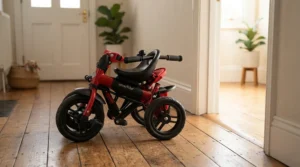
The smarTrike Xtend Ride-On Plus is the Swiss Army knife of this list: one purchase, five stages.
It starts as a parent-pushed ride-on from 12 months, becomes a foot-powered ride-on at two-plus, then a scooter from three that extends up to age twelve. In scooter mode the height runs from 63cm to 89cm, and it folds to a compact 63cm by 25.5cm by 15.5cm. That extendable telescopic handlebar plus footboard combination is genuinely unusual.
Here’s the wrinkle: Mumsnet lists it at 4.75kg, and its three-year-old tester found it trickier to manoeuvre than a lightweight Mini Micro. The same review also warns that older children may outgrow the three-wheel design.
Testers found it stable and secure, loved the LED wheels and appreciated the roomy under-seat storage.
Pros:
- ✅ Grows from baby ride-on to tween scooter
- ✅ Extendable footboard and handlebar
- ✅ Handy under-seat storage compartment
Cons:
- ❌ Heaviest scooter in this round-up
- ❌ Older kids may want two wheels
Around £100-£130 across retailers. Excellent cost-per-year value if you use the ride-on stages.
7. Maxi Micro Deluxe Foldable — school-run champion for 5-12s
The Maxi Micro Deluxe Foldable is what the Mini Micro Deluxe grows into, and it’s the one that makes school-gate parents nod approvingly.
The handlebar spans 67-91cm, with 120mm and 80mm wheels and a 33cm by 14.2cm deck. Micro’s UK page recommends it for children between 110cm and 152cm tall, with a weight of 2.5kg. The one-click fold and 50kg rider limit make it practical for daily carrying.
What the spec sheet won’t tell you is how much that light weight matters: at roughly two kilos less than the Globber Ultimum, it’s the one you’ll actually carry.
A Mumsnet tester’s six-year-old rated the steering and brake, while her four-year-old found it easier to control at speed than the Mini. The recurring complaint is cost, though reviewers frame it as built to last.
Pros:
- ✅ Light yet tough anodised-aluminium T-bar
- ✅ One-click fold and removable T-bar
- ✅ Strong hand-me-down durability reports
Cons:
- ❌ Premium price tag
- ❌ Bar tops out at about 91cm
Around £150-£160. Higher per-year than rivals, but a strong pick for sibling hand-me-downs.
✨ Don’t Miss These Exclusive Deals!
🔍 Take your family’s scooting to the next level with these carefully selected picks. Click on any highlighted product name to check current pricing and availability. The right scooter will help your child build balance, confidence and a lasting love of the outdoors!
Height Range Chart: Which Adjustable 3-Wheel Scooter Fits Your Child?
Matching a scooter to a child comes down to two numbers: the lowest handlebar setting and the highest. Too tall at the bottom and your toddler is reaching for the sky. Too short at the top and your tween is folded in half. Mumsnet’s guide suggests handlebars at about chest height with slightly bent elbows, and some makers publish rider heights directly. Use this height range chart as a cheat sheet, then confirm with your child standing beside the scooter.
| Scooter | Handlebar Height Range | Adjustment Style | Maker’s Age Guide | Max Rider Weight | Best For |
|---|---|---|---|---|---|
| Mini Micro Deluxe | approx. 48-68cm | Adjustable T-bar | 2-5 | 35kg | Smallest riders |
| EVO Mini Cruiser | 62-72cm | Adjustable T-bar | 2-5 | around 35kg | Budget first scooter |
| smarTrike Xtend Ride-On Plus | 63-89cm (scooter mode) | Extendable bar and footboard | 3-12 | 50kg | Longest lifespan |
| Maxi Micro Deluxe Foldable | 67-91cm | Adjustable T-bar | 5-12 | 50kg | Daily school runs |
| Globber Primo Foldable Lights | 67.5-77.5cm | 3 steps | 3+ | 50kg | Nervous beginners |
| Banwood Eco Scooter | 70-80cm | 3 steps | 3+ | 50kg | Eco-minded families |
| Globber Ultimum | 76-101cm | 6 steps | 5+ to adult | 100kg | Teens, family sharing |
Reading the height range chart, the spans tell the story. The EVO Mini Cruiser, Globber Primo Foldable Lights and Banwood Eco Scooter each adjust by only about 10cm, while the Maxi Micro Deluxe Foldable, Globber Ultimum and smarTrike Xtend Ride-On Plus stretch roughly 24-26cm. That wider span is what buys you years rather than seasons. If your child is under five, though, the Globber Ultimum‘s 76cm minimum is simply too tall.
Telescopic Handlebar Explained: How Height Adjustment Really Works
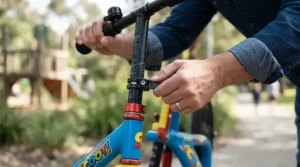
Every adjustable 3-wheel scooter relies on the same trick: a telescopic handlebar where one tube slides inside another and locks. How it locks decides how much you’ll trust it.
Pin systems click into pre-drilled holes, which is why the Globber Primo Foldable Lights offers three fixed heights. They’re simple and secure, but the steps are coarse. Clamp systems grip the tube anywhere in their range, which is how the Globber Ultimum achieves six positions. Its listing mentions a quick-release clamp with a safety lock. Extending systems, like the smarTrike Xtend Ride-On Plus, lengthen the bar and the footboard together.
Here’s the failure mode to watch for. Cheaper telescopic handlebar designs can twist. One buyer reviewing a budget light-up scooter (not one of our seven) complained that the post fixing twists often no matter how tight you make it. That’s a design flaw rather than user error.
Safety touches matter too. The Mini Micro Deluxe, for example, includes a safety system so children can’t pull the bar out. Before you buy any adjustable 3-wheel scooter, do the wobble test: stand the scooter upright, grip the bars, and try to twist them against the front wheels. Any slack means keep looking. And if the manual shows a maximum-height or minimum-insertion line, never raise the bar past it.
How to Choose an Adjustable 3-Wheel Scooter
Choosing well takes six steps, and none requires a degree in engineering.
- Start with height, not age. Age ranges are guesses; handlebar heights are facts. Compare your child’s height against the height range chart above.
- Check both ends of the adjustment range. The minimum must suit your child now, and the maximum decides how long the scooter lasts.
- Weigh up the carrying. At roughly 2kg the EVO Mini Cruiser is easy to lift, while the Globber Ultimum is nearly 5kg. If you’ll be carrying it, weight matters more than wheel size.
- Look at brakes and steering aids. A long rear brake and a steering lock or steering-angle dial make early rides far less frightening.
- Inspect the telescopic handlebar lock. RoSPA recommends trying scooters in person, checking fit and robustness, and its toy safety advice is worth a read. If you’re buying online, check return policies.
- Confirm safety marks and warranty. Look for the right standards on the packaging and a clear guarantee. Globber, for example, lists a two-year manufacturer’s guarantee on the Primo.
Features That Actually Matter (And Those That Don’t)
What matters: A reliable rear brake tops the list, because kids stop with their feet and a flimsy brake wears fast. Front wheel size matters too. Wheels of 120-125mm, like those on the Globber Ultimum and EVO Mini Cruiser, roll over pavement cracks with fewer jolts. Deck width is underrated: a narrow deck, like the Banwood Eco Scooter‘s 10cm one, is fine for small feet but snug for bigger ones. And weight is a daily factor you’ll feel at every kerb.
What doesn’t (as much as marketing suggests): LED wheels are fun, but they aren’t proper lighting. RoSPA advises avoiding scooters in the dark because they lack lights and reflectors, so treat glowing wheels as a bonus rather than a safety feature. Baskets look adorable but cut handlebar space. And a 5-in-1 conversion system, like the smarTrike Xtend Ride-On Plus, only pays off if you genuinely use the early ride-on stages.
Adjustable 3-Wheel Scooter vs Two-Wheel Scooter
Is three wheels the best choice, or just the most obvious one?
| Feature | Adjustable 3-Wheel Scooter | Two-Wheel Scooter |
|---|---|---|
| Stability | Wide stance, forgiving for beginners | Needs more balance and confidence |
| Steering | Mostly lean-to-steer | Turn-to-steer, like a bike |
| Age window | Roughly 2 to 12 depending on model | Typically older or more confident riders |
| Portability | 2-4.8kg, many fold or detach | Often light and fold-friendly |
| Best For | Toddlers, beginners, shared siblings | Confident riders, bike-savvy kids |
Mumsnet advises that two-wheeled metal-framed scooters suit children aged seven or eight and above, or those who’ve mastered a three-wheeler. It also notes that the Micro Sprite, a two-wheel folder for ages five to twelve, has small wheels that can feel bumpy on rough terrain. The takeaway is that three wheels are the right start for most children, and two wheels are a possible graduation later. For many families, a wide-range adjustable 3-wheel scooter like the Globber Ultimum delays that upgrade for years.
Cost-per-Year Value: What Each Scooter Really Costs
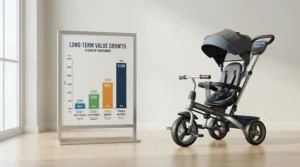
Sticker price is a terrible way to compare scooters. A £30 scooter outgrown in two years costs more per year of riding than a £100 one that lasts eight. So here’s a simple cost-per-year value method: take the midpoint of each price range, divide by a realistic number of years of use, and see who’s left standing. The year estimates are my own assumptions, based on each maker’s age guidance and handlebar range. They’re illustrative, not guarantees.
| Scooter | Price Range | Realistic Years of Use | Approx. Cost Per Year | Best For |
|---|---|---|---|---|
| EVO Mini Cruiser | £20-£40 | 2-3 | £10-£15 | Testing the water |
| Globber Primo Foldable Lights | £60-£70 | 3-4 | £16-£22 | Nervous beginners |
| Banwood Eco Scooter | £80-£90 | 3-4 | £21-£28 | Design-led hand-me-downs |
| Mini Micro Deluxe | £85-£95 | 2-3 | £30-£45 | Sibling hand-me-downs |
| Globber Ultimum | £90-£120 | 5-8 | £13-£21 | Long-term family use |
| smarTrike Xtend Ride-On Plus | £100-£130 | 6-9 | £13-£19 | Baby-to-tween value |
| Maxi Micro Deluxe Foldable | £150-£160 | 4-6 | £26-£39 | Daily school runs |
The cost-per-year value winners are clear. The EVO Mini Cruiser is cheapest if you accept re-buying, while the Globber Ultimum and smarTrike Xtend Ride-On Plus win if your child sticks with them for six-plus years. The Mini Micro Deluxe and Maxi Micro Deluxe Foldable look pricey per year, but a second child inheriting either one roughly halves the cost per child.
Running costs are small but real. Mumsnet notes that Micro offers spare parts and maintenance guides, and a replacement rear wheel is far cheaper than a new scooter. Helmets and pads aren’t included in these figures, so budget for them separately.
Setting Up and Maintaining Your Adjustable 3-Wheel Scooter
A good scooter set up badly is a bad scooter. Here’s a practical routine.
- Set the height. Adjust the telescopic handlebar so your child’s elbows are slightly bent when standing upright on the deck, then check the clamp or pin is fully seated.
- Use training aids early. For the first few sessions, engage any steering lock, like the Globber Primo Foldable Lights‘s button, or reduce the turning radius on the Globber Ultimum.
- Pick the right surface. Smooth, flat, quiet tarmac beats gravel for beginners.
- Gear up. RoSPA recommends a helmet (ideally a cycle helmet) plus knee pads, elbow pads and wrist guards, and says adults should set the example.
- Run a weekly check. Wiggle the handlebar, spin the wheels, test the brake and tighten any loose bolts.
- Store it dry and indoors.
Common first-30-day mistakes: setting the bar too high “to grow into”, over-tightening clamps until they strip, riding at dusk, and skipping the first-week recheck of the telescopic handlebar lock.
Real-World Scenarios: Which Scooter for Which Family?
Scenario 1: The tight budget. You’ve got a two-and-a-half-year-old, a small flat with no car boot, and about £30 to spend. Choose the EVO Mini Cruiser. It’s light, cheap and the bar detaches for storage, and you can plan to upgrade at five.
Scenario 2: Two kids, one scooter. Your six- and ten-year-old both want to scoot to a school a mile away, and you want one purchase for the pair. Choose the Globber Ultimum. Its 76-101cm span covers both, the 100kg limit handles growing riders, and trolley mode saves carrying. The ten-year-old may eventually want two wheels, so check the height range chart before buying.
Scenario 3: The hand-me-down plan. You’ve got three children aged two, four and six, a £250 budget and daily use. Buy a Mini Micro Deluxe for the youngest, then pass it up the line. Add a Maxi Micro Deluxe Foldable for the eldest, and the cost-per-year value improves with every child who inherits one.
Safety, Standards and UK Rules for Kids’ Scooters
Kids’ scooters aren’t toys in the playground sense, but they’re regulated as toys. Mumsnet explains that scooters are classified as toys, with EN 71 applying to younger-age scooters and EN 14619 to older-age ones, so check packaging or the maker’s website.
The legal backdrop is the Toys (Safety) Regulations 2011. Businesses can use either UKCA or CE marking to sell products in Great Britain, so either mark is acceptable on a UK shelf. Labels also carry warnings: the smarTrike listing, for instance, says protective equipment should be worn and the product shouldn’t be used in traffic.
Practical rules follow from that. Keep rides to pavements and play areas away from roads, take extra care on hills, and don’t ride in the dark. Whichever adjustable 3-wheel scooter you pick, a helmet is non-negotiable.
FAQ: Adjustable 3-Wheel Scooters Answered
❓ What age is an adjustable 3-wheel scooter suitable for?
❓ Is an adjustable 3-wheel scooter worth paying more for than a fixed-height one?
❓ Can adults ride an adjustable 3-wheel scooter?
❓ How tight should a telescopic handlebar clamp be?
❓ Which adjustable 3-wheel scooter has the best cost-per-year value?
Conclusion: Pick the Scooter That Grows With Your Child
The best adjustable 3-wheel scooter isn’t the cheapest or the fanciest. It’s the one that matches your child’s height today and still fits in a year or three. Start with the height range chart, then ask how long you realistically need it to last.
For a first scooter on a budget, the EVO Mini Cruiser is hard to beat. The Globber Primo Foldable Lights and Banwood Eco Scooter cover mid-range beginners with confidence aids or eco credentials. If hand-me-downs are the plan, the Mini Micro Deluxe and Maxi Micro Deluxe Foldable reward the extra spend. And if you want years of use from one purchase, the Globber Ultimum and smarTrike Xtend Ride-On Plus offer the strongest cost-per-year value, provided you’re comfortable with the extra weight.
Whatever you choose, check the telescopic handlebar for wobble, fit a helmet, and enjoy the school run. It might even become your child’s favourite part of the day.
✨ Don’t Miss These Exclusive Deals!
🔍 Take your family’s scooting to the next level with these carefully selected picks. Click on any highlighted product name to check current pricing and availability. The right adjustable 3-wheel scooter will help your child build balance, confidence and plenty of happy memories!
Recommended for You
- 3-Wheel Scooter For Balance And Confidence: 7 Proven Picks (2026)
- 3-Wheel Vs 2-Wheel Scooter For Kids: 7 Ultimate Picks (2026)
- Light-Up 3-Wheel Scooter: 7 Brilliant Picks For UK Kids (2026)
Disclaimer: This article contains affiliate links. As an Amazon Associate, I earn from qualifying purchases. If you purchase products through these links, we may earn a small commission at no additional cost to you.
✨ Found this helpful? Share it with your friends! 💬🤗
