
In This Article
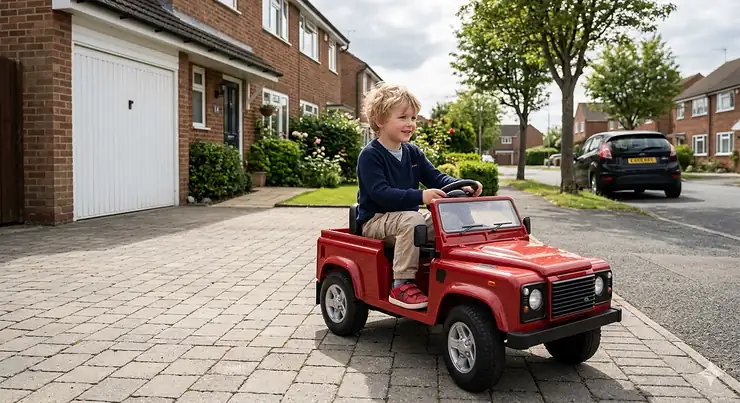
Picture this: it’s a glorious Saturday morning in your garden, and your little one is squealing with delight as they navigate their very first electric car around the patio. The neighbours are peering over the fence with a mix of admiration and envy, whilst you’re capturing every precious moment on your phone. That’s the magic of ride on cars in 2026, and British parents are absolutely smitten.
As someone who’s tested dozens of these motorised marvels with my own children (and fielded countless questions from mates at the school gates), I’ve watched ride on cars evolve from simple push-along toys into sophisticated electric vehicles that would make Jeremy Clarkson proud. The UK market has exploded with options ranging from budget-friendly foot-powered models to premium 12V electric cars that rival actual vehicles in features.
According to recent industry data, the children’s ride on car market in the UK has grown by 23% since 2024, with parents increasingly viewing these toys as investments in their children’s outdoor play and motor skill development. Research from child development experts suggests that outdoor play equipment significantly enhances physical coordination and spatial awareness in young children. But here’s the challenge: with hundreds of models flooding Amazon.co.uk, how do you separate the brilliant from the bollocks? This comprehensive ride on car buying guide will help you navigate every consideration, from safety standards to battery life, ensuring you make the perfect choice for your family’s needs.
Quick Comparison Table
| Ride On Car Model | Type | Age Range | Price (£) | Battery Life | Best For |
|---|---|---|---|---|---|
| Little Tikes Cozy Coupe | Foot-Powered | 18 months – 5 years | £59.99-£91.69 | N/A | Toddlers & durability |
| HOMCOM 12V Electric Car | 12V Electric | 3-6 years | £89.99-£129.99 | 30-40 mins | Budget electric option |
| HOMCOM Tractor with Trailer | 12V Electric | 3-6 years | £103.94 | 45 mins | Utility & hauling fun |
| HOMCOM 2-Seater UTV | 12V Electric | 3-6 years | £140-£180 | 30 mins | Siblings sharing |
| Peg Perego John Deere Ground Force | 12V Electric | 3-7 years | £200-£280 | 40-50 mins | Premium quality |
| Licensed BMW i8 | 12V Electric | 3-6 years | £150-£220 | 35-45 mins | Licensed authenticity |
| Licensed Mercedes G63 | 12V Electric | 3-8 years | £180-£300 | 40-50 mins | Premium features |
💬 Just one click – help others make better buying decisions too!😊
Top 7 Ride On Cars UK 2026: Expert Analysis
1. Little Tikes Cozy Coupe Classic – The Timeless Champion
The Little Tikes Cozy Coupe Classic is the Toyota Corolla of ride on cars – utterly dependable, universally recognised, and practically indestructible. This iconic foot-powered ride on car has been putting smiles on British children’s faces for generations, and the 2026 model continues that proud tradition.
Available for £59.99-£91.69 on Amazon.co.uk, the Cozy Coupe represents brilliant value for money. What makes this ride on car special is its durability – I’ve genuinely seen examples that have survived three children and still look presentable. The design is clever: young toddlers can be pushed around using the parent handle, whilst older children can power themselves using their feet.
Key Specifications:
- Age range: 18 months to 5 years
- Maximum weight: 23 kg (50 lbs)
- Dimensions: 82cm high, 44cm wide, 82cm long
The working door feels satisfyingly sturdy (unlike cheaper imitations), the clicking ignition switch never fails to delight, and that distinctive horn sound is music to any British parent’s ears. UK safety standards compliance is impeccable, meeting BS EN 71-1+A1 requirements with room to spare.
UK Customer Feedback: With over 12,500 reviews averaging 4.6 stars, British parents adore this classic. One London reviewer perfectly summarised it: “Three years, two house moves, countless garden parties, and it still looks brand new.”
✅ Pros:
- Legendary durability
- No batteries required
- British garden-tested design
❌ Cons:
- Limited to foot power only
- Smaller children need parent pushing
2. HOMCOM 12V Electric Ride On Car – Budget Champion
The HOMCOM 12V Electric Ride On Car has become something of a legend on Amazon.co.uk, and after watching my nephew absolutely thrash one around the garden for the past six months, I completely understand why. Priced between £89.99-£129.99, this represents exceptional value in the electric ride on cars category.
What sets the HOMCOM apart is its thoughtful feature set: working LED lights, a horn that’s surprisingly realistic, and an MP3 player connection that lets your little driver cruise to their favourite tunes. UK buyers particularly appreciate the parental remote control, which overrides the child’s steering – absolutely essential when your three-year-old decides the neighbour’s prize roses look like an excellent turning point.
Key Specifications:
- 12V 7AH rechargeable battery
- Two-speed settings (3-6 km/h)
- Dual motors for enhanced performance
The battery life is honest rather than exceptional. UK reviewers report around 30-40 minutes of continuous use on flat surfaces, dropping to about 25 minutes on grass. However, the quick charging capability (8-12 hours) means overnight charging becomes part of your routine.
UK Customer Feedback: British buyers consistently praise the build quality, with one Manchester parent noting it survived an entire winter stored in their shed without issues. The remote control receives particular acclaim for its range and reliability.
✅ Pros:
- Outstanding value for features
- Reliable parental remote
- Suitable for various terrains
❌ Cons:
- Battery life could be longer
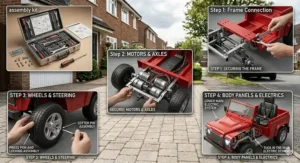
- Assembly requires patience
3. HOMCOM Electric Tractor with Detachable Trailer – Working Vehicle
For children who fancy themselves future farmers, the HOMCOM Kids Electric Tractor with Trailer offers genuine utility alongside entertainment. Priced at £103.94 on Amazon.co.uk, this 12V ride on tractor transforms garden play into imaginative agricultural adventures.
The detachable trailer is the star feature here – children absolutely love loading it with toys, garden treasures, or even transporting their stuffed animals around the garden. The trailer connection is robust enough to withstand typical three-year-old enthusiasm whilst remaining easy enough for older children to manage independently.
Key Specifications:
- 12V battery system
- Trailer capacity: Suitable for lightweight toys
- Forward and reverse gears
UK Customer Feedback: British buyers appreciate the versatility, with families noting children happily occupied for hours creating delivery routes around the garden. One Bristol parent mentioned: “Great little vehicle, my son loves driving around the garden in it, battery lasts well.”
✅ Pros:
- Trailer adds play value
- Encourages imaginative scenarios
- Robust construction
❌ Cons:
- Larger footprint requires storage space
- Remote control batteries drain quickly
4. HOMCOM 12V 2-Seater UTV – Sibling Sharing Solution
The HOMCOM 2-Seater UTV solves a common British family dilemma: how to prevent World War III when both children want to drive. Priced between £140-£180, this chunky off-road styled vehicle accommodates two children simultaneously, transforming potential tantrums into cooperative adventures.
The design cleverly mimics genuine utility terrain vehicles, complete with roll bars, chunky suspension wheels, and even a working bucket mechanism. British gardens with slightly rougher terrain particularly benefit from this model’s capabilities – it handles grass, gravel driveways, and gentle slopes with genuine competence.
Key Specifications:
- Dual seating arrangement
- Spring suspension on all four wheels
- 12V 7AH battery
- Speed range: 3-6 km/h
UK Customer Feedback: Parents praise the sturdy build, with one noting: “Perfect for 3+ years old, easy to assemble but steering a bit hard to turn. Good price, battery lasts about 30 minutes on slow speed.”
✅ Pros:
- Accommodates siblings or friends
- Excellent terrain capability
- Remote control included
❌ Cons:
- Steering requires strength for youngest drivers
- Substantial size needs adequate space
5. Peg Perego John Deere Ground Force – Premium Quality
For families seeking genuine quality and longevity, the Peg Perego John Deere Ground Force Tractor represents the premium tier of ride on cars. Priced between £200-£280 depending on retailer and variant, this officially licensed tractor delivers performance that justifies its premium positioning.
Peg Perego’s Italian heritage shines through in the build quality – anti-corrosion treated iron components, high-density polypropylene body, and polyamide construction create a ride on tractor that genuinely lasts for years. The 12V/12Ah battery provides longer runtime than budget competitors, whilst the FM radio adds authentic farming atmosphere.
Key Specifications:
- Two-speed settings: 2.25 – 4.5 mph (plus reverse)
- Stake-side detachable trailer included
- 10% slope capability
- Maximum weight: 40kg (trailer: 10kg)
British buyers with larger gardens or less manicured lawns consistently rate this highly. According to the UK Toys (Safety) Regulations 2011, this product meets all necessary safety standards for children’s electric vehicles. The British Standards Institution certification ensures compliance with mechanical and electrical safety requirements specific to battery-operated toys.
UK Customer Feedback: Several reviews specifically praise its performance on gravel driveways and slightly sloped terrain where other ride on cars struggle.
✅ Pros:
- Exceptional build quality
- Superior battery performance
- Genuine off-road capability
❌ Cons:
- Premium pricing
- Hard plastic tyres wear on asphalt
6. Licensed BMW i8 Ride On Car – Authentic Style
For British families who appreciate proper branding, licensed ride on cars like the BMW i8 deliver authentic styling that cheaper replicas simply cannot match. Priced between £150-£220, these officially licensed models feature genuine BMW badging, realistic dashboard controls, and design elements mirroring actual vehicles.
The attention to detail genuinely impresses – from the scissor doors (where available on certain models) to the accurately reproduced dashboard, these licensed ride on cars satisfy both children’s desire for authenticity and parents’ appreciation for quality design.
Key Specifications:
- 12V battery system
- Official BMW licensing
- Working LED lights
- Bluetooth connectivity on premium models
UK Customer Feedback: British buyers particularly appreciate the quality difference licensed models provide. One Surrey parent noted: “The badges and authentic details make it feel special – absolutely worth the extra cost.”
✅ Pros:
- Genuine manufacturer licensing
- Superior attention to detail
- Premium brand cachet
❌ Cons:
- Higher price for branding
- Battery life varies by model
7. Licensed Mercedes G63 AMG – Ultimate Premium
Representing the pinnacle of ride on car luxury, the Licensed Mercedes G63 AMG models available between £180-£300 deliver features that would satisfy even the most discerning young driver. These premium ride on cars combine Mercedes-Benz’s iconic G-Wagon styling with genuinely impressive technical specifications.
Premium variants feature leather seats, EVA sports wheels (softer and quieter than standard plastic), opening doors, and comprehensive media centres with Bluetooth connectivity. For British families seeking the absolute best ride on car experience, these models deliver.
Key Specifications:
- 12V dual motor system
- Leather seating (premium variants)
- EVA foam wheels
- Full media centre with Bluetooth
- Parental remote control
According to UK safety regulations outlined by GOV.UK, all licensed Mercedes ride on cars must comply with the Toys (Safety) Regulations 2011, ensuring child safety alongside premium features.
UK Customer Feedback: Premium buyers report exceptional satisfaction, with children genuinely excited about their “Mercedes” and parents appreciating the quality justifying the investment.
✅ Pros:
- Unmatched feature set
- Premium materials throughout
- Exceptional build quality
❌ Cons:
- Significant investment
- Requires adequate storage space
✨ Don’t Miss These Exclusive Deals!
🔍 Take your child’s outdoor play to the next level with these carefully selected products. Click on any highlighted item to check current pricing and availability on Amazon.co.uk. These ride on cars will help you create authentic driving experiences your family will love!
How to Choose Ride On Car: Essential Selection Criteria
Understanding Power Types
The fundamental decision in your ride on car buying guide journey involves choosing between foot-powered and electric models. Foot-powered ride on cars like the Little Tikes Cozy Coupe require no batteries, demand minimal maintenance, and develop leg strength naturally. They’re brilliant for younger toddlers (18 months+) and families prioritising simplicity.
Electric ride on cars introduce genuine driving experiences with steering, acceleration, and braking. The 12V models dominate the UK market, offering balanced power suitable for ages 3-7. Battery-powered options require charging infrastructure and periodic battery replacement, but deliver immeasurably more excitement.
Age-Appropriate Selection
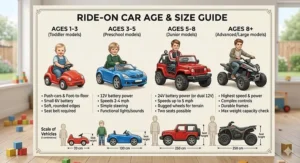
British safety standards divide ride on cars into distinct age categories. For toddlers (18 months – 3 years), foot-powered models or 6V electric cars with parental remote control provide appropriate stimulation without overwhelming young drivers. The slower speeds (maximum 2-3 km/h) match their developing coordination. According to developmental psychology research, this age group benefits from toys supporting gross motor skill development.
Children aged 3-6 years thrive with 12V electric ride on cars offering two-speed settings. The parental remote control transitions from constant override to occasional intervention as confidence develops. By age 6-8, capable drivers handle full independent operation on premium 12V or even 24V models.
Safety Considerations for UK Families
The UK Toys (Safety) Regulations 2011 mandate specific requirements for children’s electric vehicles. All ride on cars sold in Britain must display either CE marking (EU compliance) or UKCA marking (UK conformity assessed), confirming adherence to safety standards including BS EN 71-1+A1 for mechanical properties and BS EN 62115 for electrical safety.
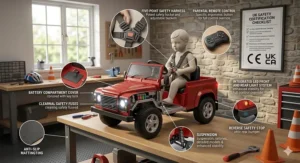
Beyond regulatory compliance, practical safety features matter tremendously. Parental remote controls providing complete override capability rank as absolutely essential for electric models. Seatbelts, whilst not universally included, significantly enhance safety during enthusiastic driving. Gradual start functions prevent sudden acceleration startling young drivers.
According to NHS guidance on toy safety, parents should always supervise young children using ride on cars, regardless of safety features included. Helmets, whilst not legally required for garden use, provide additional protection for adventurous drivers.
Battery Life and Charging Reality
British buyers quickly discover manufacturer battery life claims represent optimistic best-case scenarios. Real-world usage on typical UK gardens (mixture of paving, grass, and slight slopes) reduces stated runtime by approximately 30-40%. A claimed 60-minute battery life translates to roughly 35-40 minutes actual playtime.
Charging requirements vary considerably. Budget models typically require 8-12 hours charging time, making overnight charging essential. Premium options may include quick-charge capability reducing this to 4-6 hours. British families benefit from establishing charging routines – connecting the ride on car every evening ensures readiness for spontaneous garden adventures.
Battery replacement becomes inevitable. Lead-acid batteries (standard in budget models) last approximately 200-300 charge cycles, whilst lithium options (premium models) extend this to 500+ cycles. According to battery technology research, proper charging habits significantly extend battery lifespan. Replacement batteries cost £15-£40 depending on specification, representing manageable ongoing costs.
Terrain Capability Assessment
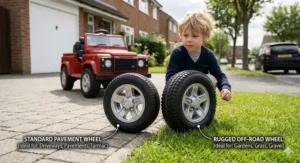
Your garden’s characteristics fundamentally influence ride on car selection. Smooth patios and indoor use suit any model, including those with basic plastic wheels. British gardens featuring lawn areas require consideration – smaller 6V models struggle on grass, whilst robust 12V options with larger wheels navigate lawn surfaces competently.
Gravel driveways present particular challenges. EVA foam or rubber wheels (premium models) handle gravel far better than hard plastic alternatives. Families with sloped gardens must verify slope capability – budget models typically manage 5-degree inclines, whilst premium options tackle 10-15 degrees safely.
Weather resistance varies dramatically. Budget ride on cars require indoor storage protecting batteries and electronics from British dampness. Premium models feature improved water resistance, though none claim full waterproofing. According to the Met Office, UK weather patterns make moisture protection essential for outdoor toys. Garden sheds, garages, or covered storage areas preserve longevity significantly.
Build Quality and Durability
British weather tests ride on car construction mercilessly. Premium manufacturers like Peg Perego utilise anti-corrosion treatments and high-grade plastics withstanding temperature fluctuations and moisture exposure. Budget options save costs through thinner plastics and basic finishes vulnerable to UV degradation and impact damage.
Wheel quality dramatically affects longevity. Hard plastic wheels crack under sustained use on rough surfaces, whilst rubber or EVA foam alternatives absorb impacts and provide superior traction. Suspension systems (premium models only) transform ride quality on uneven British gardens.
Motor quality determines reliability. Brushed motors (budget models) require eventual replacement after 1-2 years heavy use. Brushless motors (premium options) deliver years of maintenance-free operation. British buyers balancing cost versus longevity should consider anticipated usage intensity.
Features Worth Having
Modern ride on cars pack impressive feature lists, but which genuinely enhance experience versus marketing fluff? Working LED lights provide genuine safety benefits for evening garden adventures whilst delighting children. Horn functionality never fails to amuse (though neighbours may disagree).
MP3 connectivity transforms journeys, allowing children to cruise whilst listening to favourite songs. USB ports and Bluetooth capability (premium models) provide flexible connectivity. Built-in music players offer convenience but limited selection frustrates quickly.
Parental remote controls rank as absolutely essential rather than optional extras for electric models. The 2.4GHz systems (most modern models) provide reliable control up to 30 metres, sufficient for typical British gardens. Older 27MHz systems suffer interference and reduced range.
Opening doors, adjustable seats, and realistic dashboard controls enhance imaginative play without affecting functionality. Families prioritising play value versus pure transport appreciate these touches. Working storage compartments (trailers, boot spaces) genuinely extend play possibilities.
What to Look for Kids Car: Purchasing Considerations
Budget Planning for British Families
Establishing realistic budget parameters simplifies your ride on car selection process enormously. Entry-level foot-powered options start around £50-£60, providing years of service for minimal investment. Basic 6V electric models occupy the £80-£120 bracket, suitable for younger children and budget-conscious families.
The £120-£200 range represents the sweet spot for British buyers – robust 12V electric cars with decent features, reliable parental controls, and acceptable build quality. Premium models (£200-£300+) deliver exceptional quality justifying higher investment for families prioritising longevity and features.
Hidden costs deserve consideration. Replacement batteries (£15-£40), charger replacements if lost (£10-£25), and potential wheel replacements (£20-£40 for set) accumulate over ownership. Premium models often include superior components reducing long-term costs despite higher initial outlay.
Understanding UK Safety Standards
The Toys (Safety) Regulations 2011 protect British children through comprehensive safety requirements. All ride on cars marketed to children under 14 must comply, covering mechanical properties, flammability, chemical composition, and electrical safety. The UKCA marking (replacing EU’s CE mark post-Brexit) confirms compliance.
British Standard BS EN 71-1+A1 specifically addresses mechanical and physical properties, mandating maximum speeds, stability requirements, and construction standards preventing injury. BS EN 62115 governs electrical safety for battery-operated toys, ensuring appropriate insulation, battery protection, and safe charging systems.
Savvy British buyers verify UKCA/CE marking visibility on products and packaging. Legitimate manufacturers provide clear safety information including age recommendations, weight limits, and usage warnings. The Office for Product Safety and Standards oversees compliance and can investigate non-compliant products. Online marketplaces occasionally feature non-compliant imports – purchasing from reputable UK sellers provides additional protection.
Licensed vs Generic Models
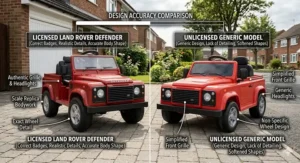
The licensed versus generic debate divides British parents. Licensed ride on cars (BMW, Mercedes, Audi, John Deere) command premium pricing for authentic branding, accurate styling, and official approval. Generic alternatives offer similar functionality at reduced cost, sacrificing authenticity for value.
Quality distinctions exist beyond branding. Licensed manufacturers typically maintain higher standards protecting brand reputation. Generic producers vary dramatically – some deliver excellent quality, others cut corners dramatically. British buyers benefit from thorough review research separating quality generics from disappointing alternatives.
Children’s preferences matter considerably. Some absolutely adore authentic Mercedes or BMW badging, whilst others remain perfectly content with attractive generic styling. Families considering licensed options should verify official licensing (authentic badges, manufacturer approval) versus unlicensed copies missing branding elements.
Storage and Maintenance Requirements
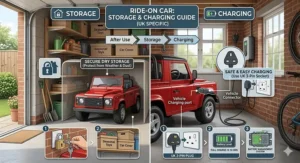
British homes rarely feature abundant storage space, making ride on car dimensions crucial. Compact foot-powered models occupy minimal space, fitting garden sheds or even indoor cupboards easily. Full-sized 12V electric cars demand dedicated storage areas protecting electronics from moisture.
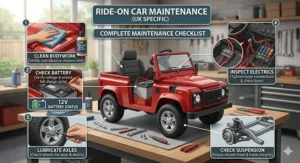
Maintenance requirements vary dramatically. Foot-powered models require occasional wheel checks and cleaning – genuinely minimal effort. Electric ride on cars demand battery maintenance (proper charging, winter storage), wheel inspections, electrical connection checks, and periodic cleaning removing grass and dirt from motors.
Winter storage presents particular challenges for British families. Batteries absolutely must be removed, charged fully, and stored indoors preventing damage from freezing temperatures. Ride on car bodies benefit from dry, covered storage preventing moisture infiltration and UV degradation.
Seasonal Considerations
Britain’s weather patterns influence ride on car usage significantly. Summer months (June-August) deliver peak usage, whilst winter sees dramatic reduction. Families in southern England enjoy extended seasons compared to Scottish buyers facing earlier autumn closures.
Weather-resistant models extend usable seasons considerably. Premium options featuring better sealing withstand light rain and damp conditions, whilst budget alternatives require strictly dry conditions. British buyers benefit from models handling varied conditions versus fair-weather-only alternatives.
Resale Value Planning
Quality ride on cars maintain remarkable resale value on UK marketplaces. Premium brands like Peg Perego retain 40-60% original value after 2-3 years use, whilst budget options depreciate to 20-30% rapidly. Well-maintained electric models from reputable brands sell quickly on Facebook Marketplace, Gumtree, or eBay.
Factors affecting resale include condition (obviously), brand reputation, battery functionality, and completeness (remote controls, chargers, manuals). British buyers planning eventual resale benefit from maintaining original packaging, preserving accessories, and documenting maintenance.
Ride On Car Selection Tips: Making the Right Choice
Matching Car to Child’s Personality
Adventurous, confident children thrive with more powerful electric models offering higher speeds and varied terrain capability. The challenge and excitement perfectly suit their personalities. Cautious, careful children benefit from gentler foot-powered options or lower-powered 6V electric models building confidence gradually.
Some children prioritise realistic features and authentic styling, delighting in licensed models mimicking actual vehicles. Others remain perfectly content with attractive generic styling, caring more about driving experience than branding. Observing your child’s interests with actual cars provides valuable guidance.
Garden Size and Terrain Analysis
Small British gardens (under 50 square metres) suit compact models maximising manoeuvrability in tight spaces. The Little Tikes Cozy Coupe‘s tight turning circle excels here. Large gardens accommodate full-sized electric models offering genuine driving experiences across expansive spaces.
Terrain characteristics matter tremendously. Flat, paved gardens suit any model. Gardens featuring lawn areas require 12V power minimum for satisfactory grass performance. Sloped gardens demand verification of gradient capability – most manufacturers specify maximum safe slopes.
Future-Proofing Your Investment
Children grow remarkably quickly, making age-range consideration crucial. Models spanning wider age ranges (e.g., 18 months to 5 years) deliver longer usable lifespans than narrowly-focused alternatives. Adjustable features (seats, speed limiters) extend relevance as children develop.
Some families anticipate multiple children benefiting from ride on car purchases. Premium models delivering 4-5+ years service justify higher investment when multiple children enjoy them sequentially. Budget options may deteriorate before second children reach appropriate age.
Reading Between Review Lines
Amazon UK reviews provide invaluable insights, but require careful interpretation. Five-star reviews from verified purchasers carry more weight than unverified praise. Look for detailed, balanced reviews mentioning specific positives and negatives versus generic enthusiasm.
Common British complaint patterns reveal significant issues. Multiple mentions of poor battery life, difficult assembly, or premature failures warrant serious consideration. Isolated complaints may reflect individual bad luck, but repeated patterns indicate genuine problems.
Photo reviews particularly help British buyers. Seeing products in actual UK gardens provides realistic size perspective versus manufacturer photos. Reviews including children using products over time demonstrate real-world durability.
Timing Your Purchase
British seasonal patterns create pricing opportunities. Spring (March-May) sees peak demand and premium pricing as families prepare for summer. Late autumn and winter (October-February) often feature significant discounts as retailers clear inventory.
Amazon UK Prime Day (typically July), Black Friday (November), and post-Christmas sales offer exceptional value for patient buyers. Families planning ahead save 20-40% versus peak-season purchases. However, popular models sell out quickly during major sales.
Warranty and After-Sales Support
Reputable manufacturers provide 12-month minimum warranties covering manufacturing defects. Premium brands often extend this to 24 months, demonstrating confidence in build quality. British buyers benefit from statutory rights under Consumer Rights Act 2015 protecting against faulty products.
After-sales support quality varies dramatically. Established brands maintain UK customer service teams addressing queries efficiently. Budget manufacturers may route support through overseas centres, creating communication challenges and delayed resolution.
Spare parts availability matters for long-term ownership. Premium manufacturers stock replacement batteries, chargers, wheels, and other consumables. Understanding your consumer rights under UK law helps navigate warranty claims and product issues. Budget brands may discontinue support quickly, leaving British buyers stranded when components fail.
Buyer Decision Factors: Final Considerations
Environmental Impact
Electric ride on cars raise environmental questions British families increasingly consider. Lead-acid batteries (budget models) require proper recycling through approved facilities. Most UK councils accept them at household waste recycling centres, following waste electrical and electronic equipment (WEEE) regulations. Lithium batteries (premium models) offer better environmental profiles but still require responsible disposal.
Longevity versus disposability matters significantly. Premium ride on cars delivering 5+ years service across multiple children justify environmental impact far better than budget alternatives lasting 12-18 months before failure. Quality equals sustainability in this category.
Educational and Developmental Benefits
Ride on cars deliver genuine developmental benefits beyond pure entertainment. Hand-eye coordination improves as children master steering whilst observing surroundings. Spatial awareness develops navigating garden obstacles and tight spaces. Motor planning skills advance coordinating multiple controls simultaneously.
Understanding cause and effect relationships strengthens as children connect steering, acceleration, and resulting movement. Research published by early childhood education specialists demonstrates that active play equipment significantly enhances cognitive and physical development. British parents appreciate these educational dimensions transforming ride on cars from toys into developmental tools.
Social and Emotional Development
Two-seater models facilitate cooperative play, teaching sharing, turn-taking, and negotiation as children decide driving responsibilities. Single-seater options encourage independence and confidence as children master solo driving challenges.
Imaginative play flourishes as children create scenarios around their ride on cars – delivery drivers, racing champions, farmers transporting goods. This creative engagement supports cognitive development whilst providing hours of entertainment.
Balancing Features with Simplicity
Modern ride on cars pack impressive features, but complexity can overwhelm young children and create maintenance headaches. British families benefit from balancing desirable features against practical simplicity. Working lights and horns add value without complexity. Bluetooth connectivity and elaborate control panels may frustrate versus delight.
Younger children (under 4) particularly benefit from simpler models focusing on core driving experience rather than technological bells and whistles. Older children (5+) appreciate additional features enhancing play value.
FAQ: Your Ride On Car Questions Answered
❓ What age can children start using electric ride on cars in the UK?
❓ How long do ride on car batteries typically last before requiring replacement?
❓ Are ride on cars legal to use on UK pavements and public roads?
❓ What safety certifications should UK buyers verify before purchasing?
❓ How much does it cost to run an electric ride on car annually in the UK?
Conclusion: Making Your Best Ride On Car Decision
The brilliance of 2026’s ride on car market lies in its remarkable variety. British gardens now host everything from budget-friendly foot-powered classics to sophisticated electric vehicles rivalling actual cars in features. Whatever your budget, space constraints, or child’s preferences, excellent options exist.
Remember that the “best” ride on car isn’t necessarily the most expensive or feature-laden model – it’s the one that matches your specific circumstances whilst delivering reliable fun and appropriate safety. Consider your child’s age, your available space, garden terrain, and realistic budget before purchasing.
Most importantly, view ride on cars as investments in outdoor play and childhood memories rather than mere toys. The giggles, adventures, and skills developed justify every pound spent. Whether you select a timeless Little Tikes Cozy Coupe, a versatile HOMCOM electric model, or a premium Peg Perego tractor, you’re gifting your child precious outdoor experiences increasingly rare in our digital age.
British parents navigating this ride on car buying guide should prioritise safety certifications, verify genuine UK seller reputation, and read authentic customer reviews thoroughly. The perfect ride on car awaits – one that’ll create magical garden memories lasting far longer than the product itself.
Happy driving, and may your British garden adventures be filled with laughter, sunshine (when it appears!), and those priceless moments of childhood joy that make parenting utterly worthwhile.
✨ Found Your Perfect Ride On Car?
🔍 These carefully selected ride on cars represent the best options available to UK families in 2026. From budget-friendly classics to premium electric vehicles, each model offers unique benefits matching different family needs. Click on any highlighted product name to check current Amazon.co.uk pricing, read additional customer reviews, and secure the perfect ride on car for your little driver!
Recommended for You
- 7 Best Ride On Car Christmas Gift Ideas UK 2026
- 7 Best Ride On Car for Boys UK 2026
- 7 Best Ride On Car for Girls UK 2026: Princess-Perfect Picks
Disclaimer: This article contains affiliate links. If you purchase products through these links, we may earn a small commission at no additional cost to you. Prices shown are approximate and may vary. All ride on cars featured comply with UK Toys (Safety) Regulations 2011 and display proper UKCA or CE marking. Always verify current safety certifications and suitability for your child’s age and abilities before purchase.
✨ Found this helpful? Share it with your mates! 💬🤗
