
In This Article
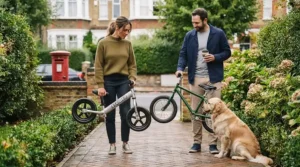
Stand in any UK soft-play car park on a Saturday morning and you’ll spot the tribal lines drawn in miniature: the Strider crowd, gliding their toddlers around on featherweight orange frames like tiny motocross prodigies, and everyone else, wobbling along on whatever balance bike Auntie bought from the catalogue. The Strider balance bike vs standard balance bike debate isn’t just marketing noise — it’s a genuinely useful question with a genuinely useful answer, because these two camps solve the “how do I stop carrying this bike everywhere” problem in very different ways. Strider built an entire ecosystem — bikes, accessories, even a global racing series — around one obsession: shaving grams off the frame. Standard balance bikes, from Frog to Puky to the budget supermarket names, take a broader approach, prioritising things like resale value, brake levers, or simply being cheap enough that you won’t cry when it gets abandoned in a hedge. Below, you’ll find honest, spec-grounded analysis of seven real bikes actually sold to UK families, a full breakdown of where Strider earns its premium and where it doesn’t, and enough practical detail to make the decision once and move on with your life.
Quick Comparison Table
| Bike | Type | Weight | Age Range | Price Range | Best For |
|---|---|---|---|---|---|
| Strider 12 Sport | Strider | ~3.0kg | 18 months–5 years | £100–£130 | Lightest all-rounder |
| Strider 14x Sport | Strider | ~3.4kg | 3–7 years | £150–£190 | Grows into a pedal bike |
| Strider 12 Pro | Strider | ~2.6kg | 1–5 years | £180–£210 | Serious racers, premium build |
| Hornit AIRO 12″ | Standard | ~3.2kg | 18 months–5 years | £130–£150 | Best all-round standard bike |
| Frog Tadpole | Standard | ~4.0kg | 2–4 years | £140–£195 | Resale value & brand pedigree |
| BTWIN Runride 100 | Standard | ~3.5kg | 10 months–3 years | £25–£40 | Rock-bottom budget entry |
| Puky LRM | Standard | ~3.5kg | 2.5–5 years | £90–£130 | European build quality, parts support |
Even before you dig into specs, the pattern is obvious: Strider wins on raw weight, standard bikes win on price spread and variety, and nobody in this table is bad — they’re just optimised for different households. A three-kilo difference sounds trivial until you’re the one hauling a strop-throwing two-year-old plus their bike up three flights of stairs, at which point every gram becomes a philosophical issue.
💬 Just one click — help others make better buying decisions too!😊
Top 7 Balance Bikes: Expert Analysis
1. Strider 12 Sport — the featherweight benchmark everyone else is compared to
The Strider 12 Sport is the bike that made “balance bike” a household phrase in the UK, and the reason is right there on the scale — a genuine 3kg. That figure isn’t a marketing flourish; it’s the difference between a toddler who confidently flings the bike around a corner and one who’s fighting the frame’s own momentum. Wheels use Strider’s own maintenance-free, cartridge-sealed hubs paired with solid EVA tyres, so there are no brake handles on this base model, which sounds like a downside until you realise most 18-month-olds have no functional grip strength anyway. This is the bike for parents who want the absolute lightest possible introduction to riding, particularly families with more than one small child who’ll be swapping the same bike between them. Aggregated review sentiment across UK parenting and cycling sites consistently praises the saddle’s low minimum height — it drops to 28cm, suitable from around 18 months — while a recurring theme in the same coverage is that the price feels steep for what is, mechanically, a fairly basic bike.
Pros:
- ✅ Genuinely one of the lightest balance bikes on the market
- ✅ Tool-free adjustments make sizing painless
- ✅ Puncture-proof tyres mean zero maintenance faff
Cons:
- ❌ No hand brake on the standard Sport model
- ❌ Premium pricing for relatively basic components
Expect to pay somewhere in the £100–£130 range depending on colourway and retailer promotions; at the time of research, this sits toward the top of the “starter bike” bracket, but the resale demand for used Striders keeps the effective cost lower than the sticker suggests.
2. Strider 14x Sport — the one that converts into a pedal bike
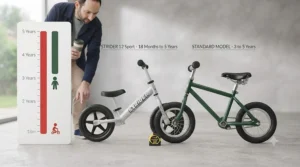
Where the 12 Sport is built for toddlers, the Strider 14x Sport is aimed squarely at the 3-to-7 crowd who’ve outgrown their first balance bike but aren’t quite ready for gears and derailleurs. The headline trick here is the conversion kit — buy the separate pedal attachment and the frame becomes a genuine first pedal bike, which is a clever bit of product engineering that standard brands rarely bother with. Air-filled 14-inch wheels give a noticeably smoother ride over kerbs and roots than the solid tyres on the smaller Strider models, and the wider footrests matter more than they sound like they would once a child starts coasting at speed. Reviewers on UK cycling forums repeatedly flag this as the bike that finally lets bigger kids skip stabilisers entirely, transitioning straight from balance to pedalling in a matter of weeks rather than months. On the flip side, that added capability comes with added bulk — this is not a bike you’re tucking under one arm at the school gates.
Pros:
- ✅ Genuine balance-to-pedal conversion option
- ✅ Air-filled tyres smooth out rough pavements
- ✅ Wide age range gets years of use from one frame
Cons:
- ❌ Noticeably heavier and bulkier than the 12″ models
- ❌ Conversion kit is sold separately, adding to total cost
Prices typically land in the £150–£190 range, and when you factor in the eventual pedal-bike conversion, the cost-per-year of ownership often beats buying two separate bikes.
3. Strider 12 Pro — the aluminium flagship built for racers
If the Sport is Strider’s crowd-pleaser, the Strider 12 Pro is its halo product — an aluminium-framed, further-lightened version that shaves off even more weight and adds a genuinely usable rear hand brake. This is the model you’ll see under kids lining up at Strider Cup heats, and the reasoning is straightforward: every fraction of a kilogram translates directly into acceleration a three-year-old can actually feel. The quick-release seat clamp and adjustable-reach brake lever are small touches, but they’re the kind of detail that separates a toy from a piece of sports equipment. Based on the spec sheet alone, this isn’t the bike for a family that just wants something for occasional park trips — the price premium only makes sense if your child is riding often enough, or competitively enough, to benefit from the marginal gains. Aggregated feedback from UK stockists and cycling communities routinely describes it as “the one serious families upgrade to,” with the most common criticism being that casual riders can’t feel the difference over the standard Sport.
Pros:
- ✅ Lightest Strider frame with a usable hand brake
- ✅ Aluminium build shrugs off years of driveway crashes
- ✅ Favoured bike among Strider Cup racing families
Cons:
- ❌ Significant price jump over the standard Sport
- ❌ Overkill for a child who’ll ride occasionally
Budget around £180–£210; this is firmly a premium purchase, and it’s worth pairing with the value-verdict section further down before committing.
4. Hornit AIRO 12″ — the standard bike built to beat Strider at its own game
The Hornit AIRO 12″ is a relative newcomer that’s been quietly topping UK “best balance bike” round-ups, and on paper it’s easy to see why — it undercuts Strider on price while staying close on weight. It’s been named best overall balance bike by parent-tested comparisons at around £139, which puts real competitive pressure on the Strider Sport’s positioning. Where it distinguishes itself is the footrest design and the steering limiter, a small mechanical stop that prevents the handlebars spinning a full 180 degrees and sending a toddler over the top — a feature Strider’s base models don’t include. What most buyers overlook about this bike is that it’s designed in-house rather than white-labelled from a generic factory, which shows up in the finish quality of the grips and saddle stitching. For families who want Strider-adjacent performance without the Strider-adjacent price tag, this is the honest alternative.
Pros:
- ✅ Steering limiter reduces over-rotation tumbles
- ✅ Competitive weight at a lower price point than Strider
- ✅ Strong recent reputation in independent parent testing
Cons:
- ❌ Newer brand with a shorter track record than Strider
- ❌ Resale value not yet proven the way Strider’s is
Typical pricing sits around £130–£150, occasionally dipping lower during promotional periods — always check current price before buying, as balance bike deals move quickly around Christmas and birthdays.
5. Frog Tadpole — the brand parents trust to hold its value
Few standard balance bike brands carry the cachet of Frog Bikes, a Welsh-manufactured company whose reputation was cemented when Prince Louis was photographed riding one to nursery on his first day in April 2021. The Frog Tadpole itself is a sturdy, air-tyred aluminium bike with a genuine rear hand brake and a steering lock, and while it weighs around 4.17kg on paper — heavier than any Strider on this list — testers have measured it closer to 3.86kg on real scales, and the difference on tarmac is less dramatic than the spec sheet implies. The real draw isn’t outright lightness; it’s what happens after your child outgrows it. Frog’s resale market is exceptionally strong in the UK, with used models regularly reselling for 60–70% of their original price, effectively turning the “premium” sticker into a short-term loan rather than a sunk cost. Parent community sentiment consistently ranks Frog alongside Islabikes as the two brands “you can’t go wrong with,” even if it costs more upfront than Strider’s equivalent 12-inch models.
Pros:
- ✅ Exceptional UK resale value cushions the upfront cost
- ✅ Genuine hand brake and anti-over-steer lock as standard
- ✅ UK-manufactured with a well-documented quality reputation
Cons:
- ❌ Heaviest bike on this list by a clear margin
- ❌ Among the pricier standard balance bikes available
Expect £140–£195 depending on which Tadpole size you choose; factor resale into your maths and the real cost often undercuts a Strider Pro.
6. BTWIN Runride 100 — proof you don’t need to spend big to start riding
At the opposite extreme sits the BTWIN Runride 100, Decathlon’s own-brand entry that has genuinely earned its reputation as the best budget balance bike in UK round-ups, priced around £30. This is not a bike built to win races or hold resale value — it’s built to answer one question cheaply: does your toddler actually want to ride a balance bike before you invest real money? The steel frame is heavier and the components are basic, but the fundamentals — a low, adjustable saddle and a manageable turning circle — are all present. Honest analysis here has to acknowledge the trade-off plainly: you’re sacrificing weight, tyre quality, and long-term durability for a price point that’s roughly a quarter of a Strider Sport. For a first bike bought purely to test the water, or as a spare for grandparents’ house, that trade makes complete sense.
Pros:
- ✅ Dramatically cheaper than every other bike on this list
- ✅ Low, easily adjustable saddle for very young toddlers
- ✅ Widely available with fast, predictable Decathlon stock
Cons:
- ❌ Noticeably heavier steel frame than Strider or Hornit
- ❌ Basic components won’t survive years of hard use
At £25–£40, this is close to impulse-buy territory, which is exactly the point — low risk, low commitment, decent reward.
7. Puky LRM — the quietly reliable European standard-bearer
German engineering has a reputation for outlasting fashion, and the Puky LRM is the balance bike equivalent of a decades-old dishwasher that simply refuses to die. Community sentiment on UK cycling forums is blunt but affectionate: “Puky terrible name, great bikes,” as one long-time parent put it, and that sentiment is echoed across secondhand marketplaces where Puky bikes routinely change hands two or three times before being retired. The steel frame keeps weight around 3.5kg — respectable, if not Strider-light — while Puky’s reputation for spare parts availability across Europe means a cracked grip or worn tyre rarely means buying a whole new bike. What most first-time buyers overlook about Puky is that it’s been making children’s ride-on toys since the 1950s, giving it a depth of design iteration that newer brands simply haven’t had time to match. This is the sensible-shoes choice for parents who value long-term reliability over headline weight figures.
Pros:
- ✅ Decades of design refinement behind every component
- ✅ Strong secondhand market and spare-parts availability
- ✅ Steel frame handles rough handling without complaint
Cons:
- ❌ Heavier than Strider’s lightest models
- ❌ Less visually flashy than Frog or Strider’s colour ranges
Prices generally sit in the £90–£130 range on the used and new markets combined, making it a genuine middle-ground option between Decathlon’s budget bike and Strider’s premium range.
Top 7 Products: Spec & Value Comparison
| Bike | Frame Weight | Brake | Tyre Type | Price Range | Best For |
|---|---|---|---|---|---|
| Strider 12 Sport | ~3.0kg | None | Solid EVA | £100–£130 | Lightest all-rounder |
| Strider 14x Sport | ~3.4kg | Optional | Pneumatic | £150–£190 | Convertible to pedal bike |
| Strider 12 Pro | ~2.6kg | Rear hand brake | Solid EVA | £180–£210 | Competitive racing |
| Hornit AIRO 12″ | ~3.2kg | Rear hand brake | Pneumatic | £130–£150 | Value-focused all-rounder |
| Frog Tadpole | ~4.0kg | Rear hand brake | Hybrid | £140–£195 | Resale value |
| BTWIN Runride 100 | ~3.5kg | None | Foam | £25–£40 | Absolute budget entry |
| Puky LRM | ~3.5kg | None | Pneumatic | £90–£130 | Long-term reliability |
Line these seven up and the story isn’t “Strider wins” or “standard bikes win” — it’s that weight and brakes trade off against each other almost everywhere except the Strider 12 Pro, which is the rare bike that manages both. If your child is riding on genuinely varied terrain — parks with slopes, pavements with kerbs — a hand brake earns its keep fast, which nudges the Hornit AIRO and Frog Tadpole ahead of the brakeless Strider Sport for anything beyond flat, controlled spaces.
What Is a Strider Balance Bike, and How Is It Different From a Standard Balance Bike?
A Strider balance bike is a pedal-less children’s bike made by Strider Sports International, engineered around minimum frame weight, maintenance-free wheels, and tool-free size adjustment. A “standard” balance bike is simply any competing pedal-less bike — from Frog to Puky to supermarket own-brands — that prioritises other trade-offs like braking, resale value, or price instead of weight above all else.
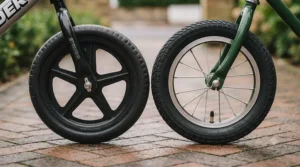
The practical difference shows up the moment you pick both bikes up. Strider’s own-brand wheels use maintenance-free ultralight construction with cartridge sealed bearings and an EVA polymer tyre, which explains why a Strider frame regularly undercuts standard-bike competitors by half a kilogram or more, even when the standard bike’s frame material looks identical on a spec sheet. Standard brands, meanwhile, tend to fit air-filled tyres and proper hand brakes as default, betting that grip and control matter more to most families than shaving off the last few hundred grams.
How to Choose Between a Strider Balance Bike and a Standard Balance Bike
- Weigh your carrying reality, not your child’s riding ability. If you’re regularly lifting the bike up stairs, onto buses, or into a car boot, Strider’s weight advantage compounds daily — it’s a “you” problem as much as a “them” problem.
- Check whether braking matters for your terrain. Flat parks and quiet cul-de-sacs rarely need a brake; hilly streets or busy pavements benefit hugely from the hand brakes standard bikes like Frog and Hornit fit as default.
- Factor in resale before comparing sticker prices. A £190 Frog that resells for £120 is cheaper than a £130 Strider that resells for £40 — always model the net cost, not the day-one cost.
- Match the bike to how long you’ll actually use it. A convertible model like the Strider 14x earns its premium if you’ll keep it for years; a budget bike like the BTWIN Runride 100 earns its low price if you’re testing interest first.
- Consider whether racing is genuinely on the cards. Only buy into Strider’s racing ecosystem — and its premium Pro-tier pricing — if you can see yourself actually attending a Strider Cup heat, not just liking the idea of it.
- Look at spare parts availability in your region. Brands with strong UK distribution (Strider, Puky, Frog) make replacing a worn tyre or cracked grip trivial; obscure imports often don’t.
- Don’t ignore secondhand markets for either category. Both Strider and premium standard bikes hold value well enough that buying used and reselling later is a legitimate cost-reduction strategy.
Strider Balance Bike vs Standard Balance Bike: The Detailed Comparison
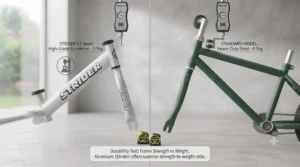
Strip away the marketing and the Strider-versus-standard argument comes down to a genuine engineering trade-off: mass versus control. Strider’s entire design philosophy, dating back to its founding, has been about removing weight wherever mechanically possible — no unnecessary brake hardware on entry models, solid tyres instead of air-filled ones, aggressively minimalist frames. That single-minded focus is why a Strider Sport can weigh a full kilogram less than a Frog Tadpole, and for a wobbly 18-month-old, a kilogram is enormous relative to their own body weight.
Standard balance bikes take the opposite bet. Brands like Frog and Puky assume most families care more about control, longevity, and resale value than they do about the final few hundred grams, so they fit proper hand brakes, air-filled tyres for better grip and comfort, and steering limiters to prevent full handlebar rotation. The Puky LRM and Frog Tadpole both lean into this philosophy, and the payoff is a bike that behaves more like scaled-down cycling equipment and less like a toy.
Where this comparison gets genuinely interesting is the middle ground — bikes like the Hornit AIRO 12″, which borrow Strider’s weight discipline while still fitting a hand brake, essentially trying to have both. It’s a sign the market is converging: expect future Strider ranges to lean harder into braking, and future standard brands to chase Strider’s weight numbers more aggressively.
Is a Strider Balance Bike Worth It?
Here’s the honest, unglamorous answer: it depends entirely on how much you value the last kilogram of weight versus everything else on offer elsewhere. If your child is an early, eager rider — under two, still building core strength — the weight advantage genuinely accelerates their progress, and that’s not marketing spin; lighter bikes are objectively easier for underdeveloped muscles to control. Strider is one of the oldest and most popular balance bike brands, having made pedal-less bikes since 2007, and has sold millions of bikes worldwide, which speaks to a track record that newer, flashier brands simply can’t match yet.
But worth is comparative, not absolute. If your child is closer to three or four and already has decent balance and leg strength, the difference between a 3kg Strider and a 3.5kg standard bike is much less consequential, and you may get more real-world value from a hand brake or better resale prospects than from shaving off half a kilogram. For families buying a first bike purely to gauge interest, a Strider’s premium is harder to justify than a £30 Decathlon Runride that does the essential job for a fraction of the outlay. Strider earns its keep for committed early riders and future racers; it’s a “nice to have” rather than a “must have” for everyone else.
Strider Balance Bike Price: What You’ll Actually Pay
Strider pricing in the UK spans a wider range than most shoppers expect, and understanding the tiers helps avoid overpaying for capability you won’t use. The entry-level Sport models sit around £100–£130, the convertible 14x range runs £150–£190, and the premium aluminium Pro tier tops out around £180–£210. Today, Strider’s three starter bikes generally sell for between £60 and £100 when comparing across historical pricing data, comparable to wooden Kiddimoto bikes and FirstBIKE models sold in a similar bracket, though current UK retail listings often run a little higher than that historical baseline — always check current price at the time of purchase, since balance bike pricing fluctuates with seasonal promotions and stock availability.
The smartest way to control what you pay is timing and channel. Strider bikes routinely appear in sales around the back-to-school period and Black Friday, and buying secondhand — Strider’s durability means used frames rarely show structural wear — can cut the effective price by 40–50% versus buying new. Bundling accessories (helmets, rocking bases for younger siblings) at purchase also tends to be cheaper than buying them separately later.
Brand Reputation: Strider vs the Standard-Bike Field
Reputation in this category isn’t built on advertising spend — it’s built on what happens to the bike after year one, and on that measure, the field splits into clear tiers. Strider has grown from modest beginnings into a global community, selling millions of balance bikes worldwide, and its name recognition among UK parents is arguably unmatched; ask any parent at a playground what a balance bike is called generically, and “Strider” is the answer nearly as often as the actual category name — the Hoover effect, essentially.
…Among standard brands, Frog Bikes has built a comparably strong reputation through UK manufacturing credentials — Frog moved its production to a Welsh factory and has been recognised by outlets like Wired for “quality do-it-all starter bikes” — and celebrity association, while Puky trades on decades of unglamorous German reliability.

The Competitive Racing Scene: Strider Cup and Beyond
If there’s one area where Strider has genuinely no standard-bike equivalent, it’s organised racing. Strider Bikes describes itself as the world’s leading manufacturer and marketer of children’s no-pedal balance bikes, and it backs that claim up with the Strider Cup, an annual World Championship that has drawn registrants from as many as 12 countries and 29 US states in a single season, with satellite events held in the USA, Russia, China, Chile, Japan, Canada, the UK, the Philippines and other nations. ..The UK has its own domestic leg of this scene — balance bike racing arrived in Britain in 2012 with a series opening at Nottingham’s Outlaws BMX track…
This matters practically, not just as trivia: if your child shows a genuine competitive streak, the Strider 12 Pro‘s weight and brake combination exists specifically to be race-legal and race-competitive within this ecosystem, and no standard-bike brand currently runs anything comparable in scale. For families with zero interest in racing, this entire section is irrelevant to the buying decision — but it’s worth knowing the option exists before you commit to a brand that has no path into organised events at all.
Warranty and Parts Availability Compared
Warranty terms are one of the more overlooked factors in this whole comparison, and they favour Strider clearly on paper. Every genuine Strider bike and accessory carries a two-year limited warranty against manufacturing defects, covering replacement or repair of any bike, accessory, or part that fails due to a defect in materials or workmanship, and crucially, Strider also backs new purchases from its own store with a 30-day, no-questions-asked money-back guarantee — a level of buyer protection few standard-bike brands match outright.
Parts availability tells a similar story in Strider’s favour for anyone buying new: handlebars, tyres, and stem adapters are all sold individually as genuine replacement parts, meaning a cracked frame component doesn’t mean binning the whole bike. Puky offers a comparable advantage through its long-established European parts network, which is why secondhand Puky bikes remain rideable years after purchase. Frog, by contrast, has a patchier reputation here — some UK owners on cycling forums have noted that its own warranty support shouldn’t always be relied upon, which is worth weighing against its otherwise strong resale credentials. Budget brands like BTWIN generally offer standard consumer-rights cover rather than an extended manufacturer warranty, which is a fair trade-off given the low upfront cost.
Practical Usage Guide: Setting Up and Getting the Most From Any Balance Bike
Getting the saddle height right is the single most important setup step, and it’s the one most parents rush. The correct starting position has your child’s feet flat on the ground with knees slightly bent — not fully extended — so they can push off powerfully without over-stretching. Most bikes, Strider included, use a tool-free quick-release clamp specifically so you can adjust this every few weeks as your child grows, and re-checking it monthly during a growth spurt is far more useful than any other maintenance task.
For the first thirty days, resist the urge to add pedals, stabilisers, or “helper” accessories — the entire point of a balance bike is letting a child discover balance through their own trial and error, and rushing this stage tends to produce shakier, less confident riders later. Do check tyre pressure weekly on any pneumatic model (the Hornit, Frog, and Puky all use air-filled tyres), since underinflated tyres make steering noticeably harder for small arms to manage. The most common early mistake is choosing a flat, boring surface for the first few sessions — a gentle, very slight slope actually teaches balance faster, since gravity does some of the work that a toddler’s leg strength can’t yet provide.
Real-World Scenarios: Matching the Bike to Your Family
Picture a family with an eighteen-month-old and a fourth-floor flat with no lift — every trip to the park means carrying the bike down, and back up, exhausted toddler in the other arm. This is the textbook case for the Strider 12 Sport: the weight saving isn’t a luxury here, it’s the difference between an achievable daily routine and a genuinely painful one.
Now picture a family with two children, aged two and five, who cycle to school along residential streets with a couple of junctions to navigate. Here, braking control matters more than shaving grams, making the Frog Tadpole or Hornit AIRO the stronger fit — both teach the hand-braking habit that transfers directly to a proper pedal bike later.
Finally, picture a cautious family who isn’t sure their reluctant three-year-old will take to cycling at all. This is exactly the scenario the BTWIN Runride 100 was built for — a low-risk, low-cost way to find out before spending Strider or Frog money on a child who might prefer scooters instead.
Common Mistakes When Buying a Balance Bike
Buying too big “to grow into” is the single most frequent error — a balance bike that’s too tall means your child can’t get their feet flat on the ground, which defeats the entire mechanism of learning balance through controlled pushing off. Equally common is fixating on weight alone and ignoring braking; a half-kilogram saving matters far less than confident stopping once a child starts building real speed on inclines. Parents also regularly underestimate resale value as a factor, treating balance bikes as disposable when brands like Strider, Frog, and Puky all sustain strong secondhand markets that can recoup 40–60% of the original outlay. Finally, many buyers skip checking the maximum rider weight limit — Strider’s own warranty is limited to riders under 27kg for its 12″ Classic, Sport, and Pro models, rising to 36kg for the 14x Sport range — which matters for taller, heavier toddlers who might outgrow a 12″ frame’s weight rating before they outgrow it physically.
Long-Term Cost & Maintenance
Total cost of ownership rarely matches the sticker price, and balance bikes are a particularly clean example of why. A £120 Strider Sport that resells for £50 after eighteen months has an effective cost of roughly £70 for a year and a half of near-daily use — better value than it first appears. A £30 BTWIN Runride, by contrast, typically isn’t built for resale and tends to be recycled or binned, so its £30 sticker price is close to its true cost, which is precisely the trade-off that makes it attractive for uncertain first purchases.
Maintenance costs stay low across the board for balance bikes generally, since there’s no drivetrain to service, but solid-tyre Strider models edge out air-filled competitors here — no punctures, ever, versus the occasional inner tube replacement on a Frog, Hornit, or Puky. Replacement parts availability tips this back the other way for anything requiring a specific component: genuine Strider parts are sold individually and shipped reliably, while some smaller standard brands can leave you hunting eBay for a matching handlebar.
Safety, Standards & Regulations Guide
All balance bikes sold legitimately in the UK must meet BS EN 71 toy safety standards where applicable, or relevant cycle safety standards for larger models — always check a listing specifies compliance before buying from an unfamiliar seller, particularly on third-party marketplaces. Helmets aren’t a legal requirement for balance bike riding in the UK, but every major brand, Strider included, strongly recommends one from the very first ride, and the NHS’s own physical activity guidance for under-fives explicitly lists riding a bike among the recommended active play activities that contribute toward the 180 minutes of daily movement children need. Beyond helmets, check the frame’s rider weight limit before buying secondhand — an older Strider or Puky bought well beyond its rated capacity is a safety risk regardless of how sturdy it looks, and steering limiters (fitted on the Hornit and Frog models here, but not Strider’s base range) meaningfully reduce the most common toddler tumble: over-rotating the handlebars mid-turn….For a deeper look at how different brands stack up on ride feel and componentry, Cycling UK’s independent balance bike group test is a useful cross-check before you buy.
Frequently Asked Questions
❓ Is Strider or a standard balance bike better for a first-time rider?
❓ How much does a Strider balance bike cost in the UK?
❓ Do Strider balance bikes have brakes?
❓ How long do children use a balance bike before moving to pedals?
❓ Do balance bikes hold their resale value?
Conclusion
There’s no single winner in the Strider balance bike vs standard balance bike debate, and honestly, anyone promising you one is oversimplifying a genuinely nuanced choice. Strider earns its reputation and its price premium through relentless focus on weight — a real, measurable advantage for very young or highly active riders, backed by a two-year warranty and a racing ecosystem no competitor currently matches. Standard bikes counter with braking control, stronger resale economics in cases like Frog, and price accessibility at the BTWIN end that Strider simply doesn’t offer. The right call comes down to your specific child, your specific stairs, and your specific tolerance for spending more upfront versus recouping it later on the secondhand market. Whichever direction you lean, buy based on your child’s actual size and confidence today, not the bike you imagine they’ll grow into — that single decision matters more than any brand name on the frame.
Recommended for You
- Strider Balance Bike For Toddlers: 7 Best Picks Tested (2026)
- Strider Balance Bike: 7 Best Picks; Smart Buying Tips (2026)
- Sturdy Steel Balance Bike For Toddlers: 7 Best UK Picks (2026)
Disclaimer: This article contains affiliate links. As an Amazon Associate, I earn from qualifying purchases. If you purchase products through these links, we may earn a small commission at no additional cost to you.
✨ Found this helpful? Share it with your friends! 💬🤗
