In This Article
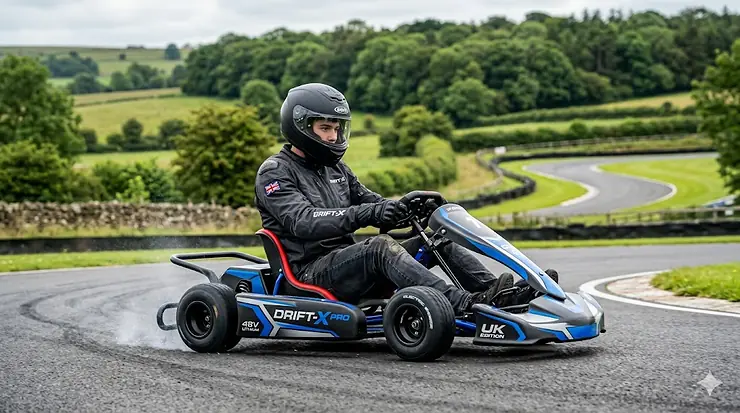
Picture this: your eight-year-old executing perfect 360-degree spins on the driveway whilst the neighbours peer over the fence with barely concealed envy. That’s the electric drift kart effect—and it’s swept across British gardens faster than you can say “health and safety assessment.” These battery-powered machines deliver controlled sideways action that transforms any flat surface into a miniature racing circuit, and unlike their petrol-powered cousins, they won’t wake the entire cul-de-sac at seven on a Saturday morning.
What makes an electric drift kart different from your standard ride-on? The secret lies in the rear wheel mechanism—typically featuring special caster wheels or ultra-slick plastic surfaces that allow the back end to slide whilst the front maintains steering control. The result is that glorious sideways momentum kids crave, packaged in a format that complies with UK toy safety regulations. Most models now carry either UKCA or CE marking (both accepted in Great Britain), confirming they meet essential safety requirements under the Toys (Safety) Regulations 2011.
The British market has exploded with options since 2024, ranging from compact 6V models for younger children to powerful 24V beasts capable of 16 km/h. This guide examines seven top-performing electric drift karts available on Amazon.co.uk in 2026, with honest commentary on what works, what doesn’t, and which model suits your specific situation—whether that’s a cramped terraced garden in Birmingham or a sprawling driveway in the Cotswolds.
Quick Comparison: Electric Drift Karts at a Glance
| Model | Voltage | Top Speed | Age Range | Price Range | Best For |
|---|---|---|---|---|---|
| HOMCOM 24V Drift Kart | 24V | 13 km/h | 8-12 years | £180-£250 | Real drift experience |
| COSTWAY 24V Drifting Kart | 24V | 8 km/h | 3+ years | £150-£220 | 360° spins, entertainment features |
| Razor Crazy Cart Sport | 24V | 19 km/h | 9+ years | £350-£450 | Advanced drift control |
| Xootz Comet Go Kart | 24V | 16 km/h | 8+ years | £200-£280 | High-speed drifting |
| COSTWAY 6V Drift Car | 6V | 5 km/h | 3-8 years | £90-£140 | Younger children, beginners |
| Xootz Cyclone Drift Trike | 24V | 16 km/h | 8-14 years | £220-£300 | LED wheels, 3-wheel design |
| Razor Crazy Cart Shift | 12V | 13 km/h | 6+ years | £180-£250 | Simplified drifting system |
From this comparison, the HOMCOM 24V strikes an excellent balance between performance and value for money—delivering genuine drift capability without the premium price tag of the Razor models. However, if you’ve got a confident eight-year-old who’s already mastered balance bikes and scooters, the Xootz Comet’s higher top speed and robust build justify the mid-range investment. For families with multiple children across different ages, the COSTWAY 6V provides an affordable entry point that won’t bankrupt you when the novelty wears off after three months (though reviews suggest it lasts considerably longer).
💬 Just one click — help others make better buying decisions too! 😊
Top 7 Electric Drift Karts — Expert Analysis
1. HOMCOM 24V Electric Go Kart — The All-Round British Favourite
The HOMCOM 24V Electric Go Kart dominates UK sales for good reason—it delivers authentic drifting without the complexity or price premium of specialist brands. This dual-motor machine reaches 13 km/h, which sits in that sweet spot between “exciting enough to impress mates” and “not so fast that parents reach for the bubble wrap.” What sets it apart is the deliberate rear wheel design: polyethylene rear wheels paired with polyurethane front wheels create just enough slip for controlled slides whilst maintaining enough grip that novice drivers don’t end up pirouetting into the garden fence.
The 24V dual-drive motor provides enough torque to handle gentle inclines—useful if your driveway slopes or you’re navigating a garden with uneven paving. Battery life delivers 30-45 minutes of continuous use, though expect the lower end of that range if your child discovers the horn button (which they will, approximately 47 times per session). The soft-start function prevents that alarming lurch forward that characterises cheaper ride-ons, and UK buyers report the two-point safety belt actually holds children securely rather than serving as decorative theatre.
Assembly requires roughly 45 minutes for one adult with basic tools—nothing complicated, though the instruction manual’s translation occasionally ventures into abstract poetry. Once assembled, the 115cm length accommodates children from about age eight through to twelve, though taller kids might find their knees approaching chin height by their eleventh birthday. UK customer feedback particularly praises durability in wet conditions—relevant given our climate means “dry weather” is more aspiration than reality.
Customer Feedback: Robert Dyas reviews (4.2/5 stars) highlight impressive battery longevity, with one UK parent reporting 45-60 minutes of use on the beach front. The drifting functionality receives consistent praise, though several mention it works best on smooth tarmac or concrete rather than gravel or grass.
✅ Authentic drift experience on smooth surfaces
✅ Soft-start technology prevents jarring acceleration
✅ Dual-drive motor handles slight inclines
❌ Instruction manual requires interpretive skills
❌ Limited performance on rough terrain
Price & Value: Around £180-£250 depending on colour choice. At this price point, you’re getting EN71-1-2-3 and EN62115 certification (essential for UK compliance), a genuine drift mechanism, and build quality that survives British weather. Solid mid-range investment that typically outlasts the child’s interest.
2. COSTWAY 24V Electric Drifting Go Kart — Entertainment Features Champion
The COSTWAY 24V Electric Drifting Go Kart takes a different approach to the HOMCOM—trading some raw performance for entertainment bells and whistles. The 360-degree spin capability comes from four PU universal wheels plus one rubber drive wheel, creating a setup that prioritises rotational freedom over straight-line speed. Top velocity sits at 8 km/h, which parents appreciate and thrill-seeking ten-year-olds tolerate with mild disappointment.
What this model lacks in velocity it compensates for with features that keep children engaged beyond the initial novelty period. LED headlights, wireless Bluetooth connection, radio, USB port, and built-in music transform it from simple drift kart into mobile entertainment centre. The USB port particularly impresses—allowing kids to connect devices and blast their questionable music choices across the garden (neighbours: you’ve been warned). Three decorative flags complete the racing aesthetic, though these typically vanish within the first fortnight.
The slow start and slow stop function works brilliantly for younger or more cautious riders, preventing the stomach-lurching acceleration that causes tears and recriminations. The wide seat supports up to 60 kg and includes an adjustable safety belt that actually adjusts (a feature not to be taken for granted in this price bracket). Protective metal poles provide rollover protection without making the kart look like it’s preparing for the apocalypse.
Customer Feedback: Costway’s own reviews and Wilko customer feedback praise the build quality and entertainment features. One UK parent noted their seven-year-old daughter received it for her birthday and “absolutely loves it”—the battery life particularly impressing at low-speed settings.
✅ 360° spinning capability on smooth surfaces
✅ Bluetooth and USB connectivity for music
✅ Excellent safety features for younger riders
❌ Slower top speed may disappoint older children
❌ Entertainment features add complexity (more to break)
Price & Value: Typically £150-£220 at UK retailers including Amazon.co.uk and Wilko. The entertainment features justify the price if your child loses interest quickly in “basic” toys, but if they just want to drift sideways at speed, simpler models offer better value.
3. Razor Crazy Cart Sport — The Performance Benchmark
The Razor Crazy Cart Sport represents what happens when an American brand with serious engineering resources decides to perfect the drift kart concept. The patented Drift Bar system puts you in complete control—drive normally with the bar down, raise it to engage drift mode and suddenly you’re sliding forward, backward, sideways, diagonally, and every direction physics permits. This is the model that transforms competent riders into genuinely skilled drivers.
The variable-speed foot pedal allows precise throttle control up to 19 km/h—properly quick by UK toy standards, though Razor sensibly recommends age 9+ for this beast. The dual inclined rear caster wheels work in concert with the pneumatic front tyre to create that magical balance between grip and slip. Anti-tip stabilising posts at the front prevent the spectacular crashes that would otherwise require explaining to A&E staff. Forty minutes of continuous use from the 24V battery system means extended sessions without the soul-crushing disappointment of mid-drift power loss.
Here’s what UK buyers need to know: this is a premium product at a premium price, but it’s genuinely different from cheaper alternatives. The build quality uses a powder-coated steel frame that laughs at British weather, and the high-torque 250W chain-driven motor provides acceleration that cheaper brush motors can’t match. However, availability on Amazon.co.uk varies—check stock levels and prepare for potential import duties if ordering from European sellers post-Brexit.
Customer Feedback: Razor’s UK website and specialist retailers report consistently high satisfaction, though battery life criticism appears in roughly 15% of reviews. The drift bar mechanism receives universal praise for putting drivers fully in control.
✅ Patented drift system offers unmatched control
✅ Robust steel construction survives rough use
✅ Genuine performance upgrade over budget models
❌ Premium pricing (£350-£450 range)
❌ Occasional UK availability issues
Price & Value: Around £350-£450, making it roughly double the cost of mid-range alternatives. You’re paying for engineering excellence and brand reputation—justified if your child demonstrates genuine enthusiasm and skill, less so if this is an impulse purchase that’ll sit gathering cobwebs by May.
4. Xootz Comet Electric Go Kart — British Design Excellence
The Xootz Comet Electric Go Kart deserves special mention as a UK brand that genuinely understands British buyers—evidenced by details like sensible dimensions for compact gardens and realistic pricing for households that don’t treat Amazon as an unlimited ATM. The dual 200W motors deliver combined 400W output, propelling riders to 16 km/h across a range of surfaces that includes the uneven paving and slightly dodgy tarmac characteristic of British driveways.
What separates the Comet from cheaper alternatives becomes apparent in the first ten minutes of use: steering feels direct and responsive rather than vague and optimistic, the super-grip EVA front wheels maintain traction even on damp surfaces (crucial for a country where “dry” means “not actively raining”), and the hardened plastic rear wheels achieve that ideal drift-to-grip ratio. The reverse function proves genuinely useful rather than gimmicky—essential when your eight-year-old inevitably wedges themselves between the shed and the wheelie bins.
The bucket seat with safety belt provides proper support rather than the token nod to safety some manufacturers offer, and the 115cm x 77cm x 55cm dimensions strike that Goldilocks balance—substantial enough to feel premium but compact enough to store in a standard British garage without requiring a game of three-dimensional Tetris. UK customer reviews consistently mention the 30-minute assembly time, refreshingly honest given some manufacturers claim “quick assembly” for products that require engineering degrees and questionable language.
Customer Feedback: Robert Dyas reviews (4.2/5 stars) and Amazon.co.uk feedback praise build quality and ease of use. One UK parent noted their nine-year-old daughter “loves it,” with light steering and excellent drift capability across various surfaces. Battery longevity receives positive mentions at approximately one hour continuous use.
✅ UK brand understanding British conditions
✅ Proper steering response and handling
✅ Reverse function actually proves useful
❌ Battery life varies significantly with usage intensity
❌ Some reports of charger issues after multiple uses
Price & Value: £200-£280 across UK retailers. The mid-range pricing reflects genuine quality rather than corner-cutting, and UK-based support means you’re not navigating international returns if issues arise. Solid choice for families wanting reliability without the Razor premium.
5. COSTWAY 6V Electric Ride-On Drift Car — The Sensible Starter
The COSTWAY 6V Electric Ride-On Drift Car occupies the crucial “first drift kart” niche—designed for younger children (3-8 years) who aren’t ready for 24V performance but desperately want to emulate older siblings. The 6V battery limits top speed to approximately 5 km/h, which sounds pedestrian until you remember three-year-olds possess approximately zero risk assessment capability and questionable spatial awareness.
The 360-degree spin system uses five wheels in a triangular configuration—two side wheels and one driving wheel creating stable geometry that’s difficult to overturn even during enthusiastic spinning. The two-position adjustable seat (27cm and 34cm height settings) extends the useful lifespan from age three through to about eight, depending on the child’s size and your tolerance for cramped seating. Push a button to adjust the frame length, and suddenly the kart accommodates growing legs—clever design that saves buying a replacement every eighteen months.
What makes this model ideal for British families is the safety-first approach: enclosed chassis reduces rollover risk, wide seat with safety belt keeps fidgety toddlers secure, and the front fender provides genuine collision protection rather than cosmetic decoration. The simplified operating system (press power button, step on pedal, steer) means even young children grasp the controls quickly, and the horn plus engine sound buttons provide entertainment when straight-line speed loses its novelty after approximately 90 seconds.
Customer Feedback: Amazon.co.uk reviews and The Range customer feedback highlight durability and appropriateness for the age range. UK parents appreciate the adjustable seat extending the useful lifespan, though several note the 6V power feels appropriately matched to younger children rather than underpowered.
✅ Perfect power level for ages 3-8
✅ Adjustable seat grows with child
✅ Enclosed chassis prevents rollovers
❌ Limited appeal for children over age 7
❌ Requires smooth, flat surfaces for best spinning
Price & Value: Around £90-£140, making it the most affordable entry in this comparison. At this price point, it’s low-risk experimentation—if your child loses interest, you haven’t invested a fortune. ASTM and CPSIA certification provides reassurance, though UK buyers should verify UKCA or CE marking before purchase.
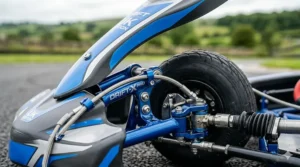
6. Xootz Cyclone Electric Drift Trike — The LED Showstopper
The Xootz Cyclone Electric Drift Trike takes the three-wheel approach to drifting, positioning itself somewhere between drift kart and electric trike. The 24V lithium battery (note: lithium, not the lead-acid found in most alternatives) delivers up to one hour of continuous use whilst weighing considerably less—important when you’re hauling it out of the garage. The vibrant LED light-up caster wheels transform evening sessions into neighbourhood spectacles, visible from approximately three streets away.
The twist-grip throttle offers more precise speed control than simple foot pedals, with three speed settings allowing gradual progression from “cautious” to “your mother’s having kittens watching this.” Top speed reaches 16 km/h, delivered through a setup that encourages full 360-degree spins on smooth surfaces. The mechanical brake provides reliable stopping power that actually stops rather than offering vague suggestions, and high-grip footrests keep riders planted during aggressive manoeuvres.
What makes the Cyclone interesting for British buyers is the lithium battery advantage: faster recharging, longer lifespan, and lighter weight compared to traditional lead-acid batteries. This matters when you’re storing it in a shed or garage where every kilogramme counts. The adjustable frame grows with children from about age eight through to fourteen, though expect teenagers to graduate to actual motorcycles or lose interest in favour of TikTok by age thirteen.
Customer Feedback: Amazon.co.uk reviews (generally positive) praise the light-up wheels and build quality. UK parents note the trike feels “really solid and well-made,” with comfortable seating and easy operation. Several mention the drifting action works best on hard, flat surfaces rather than soft outdoor ground.
✅ Lithium battery charges faster, lasts longer
✅ LED wheels create spectacular visual effect
✅ Three-wheel design offers different experience
❌ Higher price point than four-wheel alternatives
❌ Requires proper hard surfaces for optimal drifting
Price & Value: £220-£300 depending on retailer and any ongoing promotions. The lithium battery and LED features justify the premium over basic models, but you’re paying for style as much as substance. Excellent choice if your child values the “cool factor” and you’ve got smooth driveway or patio for proper use.
7. Razor Crazy Cart Shift — The Simplified Solution
The Razor Crazy Cart Shift addresses a fundamental problem with the original Crazy Cart: the drift bar requires coordination some younger children simply haven’t developed yet. The Shift’s simplified drift system automatically engages rear-end drifts, allowing drivers to keep both hands on the steering wheel whilst focusing purely on steering and throttle control—just like professional drivers who don’t have a third hand for auxiliary controls.
The 12V system delivers up to 13 km/h with a crucial innovation: a hidden top-speed control switch lets parents select between 4 km/h for beginners and younger drivers, or the full 13 km/h for experienced pilots. This dual-mode approach extends the useful age range from six years upward, rather than requiring purchase of a completely different model as skills develop. The 1:1 steering ratio provides ultimate responsiveness—turn the wheel 45 degrees, the kart responds with 45 degrees of direction change, no lag or vagueness.
The Power Core hub motor technology eliminates chains, sprockets, tensioners, and all the maintenance such parts require—essentially making this a set-and-forget machine rather than requiring ongoing tinkering. The high-impact polymer frame balances durability with light weight, important when you’re manhandling it in and out of storage. Fixed-incline rear caster wheels provide that critical balance between drive and drift without requiring rider input to engage.
Customer Feedback: Razor UK feedback and Amazon reviews highlight the simplified operation making drifting accessible to younger children. Parents appreciate the speed control switch allowing gradual skill development, though battery life criticism appears in approximately 20% of reviews.
✅ Simplified system suits younger/less coordinated riders
✅ Dual-speed setting grows with skill level
✅ Maintenance-free hub motor technology
❌ Lower top speed disappoints experienced riders
❌ Battery life shorter than 24V alternatives
Price & Value: Around £180-£250, positioning it between budget and premium options. The engineering simplicity versus full Crazy Cart models justifies the lower price, whilst the Razor build quality means you’re not buying disposable rubbish. Ideal stepping stone between basic drift karts and the full Crazy Cart experience.
Real-World Drifting: What UK Families Actually Experience
Every product listing claims “easy assembly” and “hours of fun,” but what actually happens when your electric drift kart arrives on a rainy Tuesday in Manchester? Here’s what three different UK household types discovered:
The Urban Terraced House (Tower Hamlets, London): The Ahmed family purchased a COSTWAY 6V for their six-year-old’s birthday. Initial concern about limited garden space proved unfounded—the compact 85cm length fits comfortably in their 3m x 4m paved rear garden. Storage required creativity: they commandeered space under the stairs previously occupied by shoes nobody wears and shopping bags that “might be useful.” The 6V power level proved perfect for the confined space, preventing the child from achieving velocities requiring crash barriers. Unexpected discovery: the drift function works brilliantly on their kitchen tiles during rainy days, much to the cat’s horror.
The Suburban Semi-Detached (Birmingham): The Patels invested in a Xootz Comet for their eight and ten-year-old sons. The shared driveway initially caused neighbour diplomacy challenges, resolved by establishing 5-7pm as “kart hours” to avoid disrupting evening meals. Assembly took 45 minutes for dad with help from an over-enthusiastic eight-year-old who “helped” by losing screws and offering contradictory advice. Battery life proved the limiting factor—both boys wanted simultaneous use, requiring a purchasing a second kart or implementing Solomon-like time-sharing agreements. Six months in: still in regular use, though tyres showing wear and the novelty of the horn has finally diminished.
The Rural Cottage (Peak District): The Harrisons bought a Razor Crazy Cart Sport for their eleven-year-old daughter. Their long, slightly sloping gravel driveway proved challenging—the kart performs brilliantly on their paved courtyard but struggles on loose gravel. Unexpected benefit: the daughter taught herself genuine drifting control, progressing from wobbly spins to controlled slides within three weeks. Storage in their garage alongside two cars required Tetris-level spatial planning, eventually solved by wall-mounting bikes to create floor space. Notable incident: daughter “borrowed” the kart during parents’ dinner party, providing unscheduled entertainment for guests who’d consumed sufficient wine to find it hilarious rather than concerning.
How to Choose an Electric Drift Kart for British Conditions
Selecting the right electric drift kart requires assessing your specific situation against the product’s capabilities—marketing claims assume ideal circumstances that rarely match British reality. Here’s what actually matters:
1. Match Voltage to Age and Skill Level
6V systems suit ages 3-6 or cautious beginners: top speeds around 4-5 km/h feel thrilling to young children whilst causing minimal parental anxiety. 12V occupies the middle ground for ages 6-9: sufficient speed to maintain interest without requiring crash helmets and liability insurance. 24V models deliver genuine performance for ages 8+: expect 13-19 km/h depending on motor configuration, which feels properly quick when you’re 10cm off the ground.
2. Assess Your Available Space Honestly
Measure your driveway or garden before buying—not what you wish you had, what you actually possess. Minimum recommended drift space: 4m x 4m for basic spinning, 6m x 6m for proper drift runs. Terraced house with tiny patio? The 6V compact models make sense. Sprawling suburban garden? 24V performance karts utilise the space. Consider storage too: where does this live when not in use? British garages and sheds contain an archaeological record of previous enthusiasm purchases—ensure you’ve actually got room.
3. Evaluate Surface Quality
Electric drift karts perform best on smooth, hard surfaces: tarmac, concrete, paving slabs, or indoor tiles. They struggle on grass, gravel, dirt, or uneven surfaces characteristic of many British gardens. If your only flat space is the kitchen floor, consider whether you’re prepared for indoor use. Damp surfaces affect performance: expect approximately 15-20% reduced battery life and slightly diminished drift quality in wet conditions—relevant in a country where “dry” is more aspiration than reality.
4. Consider British Weather Reality
Most electric drift karts carry IP ratings suggesting “splash resistance” rather than “submersible in Welsh rainfall.” Store indoors when not in use—leaving them outside accelerates corrosion of electrical components and degrades plastic. Budget models particularly suffer from British damp: expect battery performance to decline noticeably after six months if stored in an unheated shed. Premium models with better weather sealing justify higher prices if you lack indoor storage.
5. Calculate Total Cost of Ownership
Purchase price represents only initial outlay. Factor in replacement batteries (typically £30-£60 every 12-18 months for heavy use), potential charger replacement (cheap chargers fail more frequently), and tyre wear if used regularly on rough surfaces. Premium brands often provide better parts availability and UK-based support—valuable when you need a replacement charger on a Saturday morning because tomorrow’s the birthday party and the original just died.
Common Mistakes When Buying Electric Drift Karts in the UK
Ignoring UK Compliance Marking
Some third-party Amazon.co.uk sellers list products without proper UKCA or CE marking—illegal to sell in Great Britain under the Toys (Safety) Regulations 2011. Before purchasing, verify the product page explicitly mentions UKCA marking, CE marking, or both (both currently accepted). Products without proper certification may lack essential safety features and leave you without recourse if something fails. Check for EN71 compliance (the European standard for toy safety) and EN62115 (electrical toy safety)—reputable manufacturers highlight these certifications.
Buying US-Voltage Models
American drift karts designed for 110V charging won’t work with UK 230V outlets without adapters, and cheap voltage adapters represent fire risks. Always verify the product explicitly states “UK plug” or “230V compatible.” The model number sometimes reveals regional variants: subtle differences like “-UK” or “-EU” suffixes indicate proper regional specification. If ordering from third-party sellers, confirm UK electrical compatibility before purchase.
Underestimating Assembly Requirements
Manufacturers who claim “10-minute assembly” operate in a parallel universe where screws never cross-thread and instruction manuals achieve literary clarity. Realistic assembly time: 30-60 minutes for adults with basic mechanical aptitude, longer if you’re simultaneously managing over-enthusiastic children who want to “help.” Some models require two adults for certain steps—worth knowing before you start assembling alone whilst your partner’s conveniently “working late.”
Overlooking Weight Limits and Dimensions
Every drift kart specifies maximum rider weight (typically 50-70 kg) and recommended age range. These aren’t casual suggestions—exceed them and you risk motor burnout, structural failure, or both. Similarly, seat dimensions matter: an eleven-year-old who’s hit a growth spurt won’t fit comfortably in a kart designed for eight-year-olds, regardless of weight. Measure your child’s seated height and compare against product specifications rather than trusting age ranges alone.
Assuming British Weather Won’t Matter
These are electric vehicles with exposed motors and batteries—British rain, damp, and general moisture will find every vulnerable point. Products marketed as “weather resistant” resist weather approximately as well as British summer barbecues resist cancellation. Always store indoors in a dry location, and accept that outdoor storage in a damp shed means reduced lifespan. If you genuinely can’t provide dry storage, factor in more frequent battery replacement and potential motor issues.
Buying Based Purely on Lowest Price
The cheapest drift kart on Amazon.co.uk often comes from third-party sellers with limited UK presence, meaning returns require international shipping, parts availability is theoretical, and warranty support involves emails that vanish into the void. Spending an extra £30-£50 for an established brand with UK support delivers value when you need replacement parts or troubleshooting help. Check seller ratings, return policies, and whether they’re actually UK-based before clicking “buy.”
Electric Drift Kart vs Traditional Pedal Go-Kart: The British Verdict
| Factor | Electric Drift Kart | Pedal Go-Kart | Better For UK Use |
|---|---|---|---|
| Running Costs | Electricity (negligible) + battery replacement every 12-18 months (£30-£60) | Zero ongoing costs | Pedal: long-term economy |
| Physical Activity | Minimal (steering only) | High (continuous pedalling) | Pedal: fitness benefit |
| Speed Control | Precise via throttle | User-dependent effort | Electric: consistent performance |
| Weather Sensitivity | High (electronics vulnerable) | Low (mechanical only) | Pedal: British weather resilience |
| Noise Level | Silent operation | Silent operation | Tie: both neighbour-friendly |
| Storage Requirements | Dry indoor space essential | Outdoor/shed acceptable | Pedal: easier storage |
| Drift Capability | Designed specifically for drifting | Requires modification or skill | Electric: drift-ready design |
| Maintenance | Battery care, electrical troubleshooting | Chain lubrication, tyre inflation | Similar: different skills required |
The comparison reveals why both types persist in the British market rather than one dominating completely. Electric drift karts excel at delivering that specific sideways thrill younger riders crave, whilst pedal models provide superior physical activity and weather resilience. For British households, the ideal scenario often involves both: a pedal kart for everyday garden use regardless of weather, plus an electric drift kart for special occasions and showing off to visiting cousins.
One factor that particularly matters in the UK context: electric models require dry storage, whilst pedal karts survive outdoor sheds with minimal complaint. If your only storage option is a damp garage or unheated shed, pedal karts prove more forgiving of British conditions. However, electric models’ silence delivers genuine value in British suburbs where gardens abut neighbouring houses—pedal karts may be quiet, but enthusiastic riders generate surprising amounts of noise through whooping and commentary.
UK Regulations, Safety Standards & Legal Requirements
Operating an electric drift kart in the UK sits within a framework of regulations that sounds bureaucratic but exists for sensible reasons—preventing children from converting public pavements into improvised racetracks. According to the Toys (Safety) Regulations 2011, all electric ride-on toys intended for children under 14 must meet essential safety requirements covering physical properties, electrical safety, and chemical composition.
UKCA and CE Marking
As of 2026, both UKCA (UK Conformity Assessed) and CE (Conformité Européenne) marking remain accepted for toys sold in Great Britain—the UK government extended CE recognition indefinitely beyond December 2024. Either marking confirms the manufacturer’s declaration that the product meets relevant safety standards. Check for these marks on the product itself, packaging, or accompanying documentation. Products without proper marking cannot legally be sold in the UK and may lack essential safety features.
EN71 Compliance
The EN71 series of standards covers toy safety across multiple dimensions: EN71-1 (mechanical and physical properties), EN71-2 (flammability), EN71-3 (chemical migration), and others covering specific hazards. For electric drift karts, EN71-1 and EN62115 (electrical toy safety) prove most relevant. EN71-1 addresses hazards like sharp edges, small detachable parts, and structural integrity. EN62115 covers electrical properties including maximum voltage (24V for toys), insulation requirements, and protection against electric shock.
Where Can They Be Used?
The Road Traffic Act 1988 prohibits use of motorised vehicles on public roads without proper registration, insurance, and licensing—this includes electric drift karts. The Highway Act 1835 similarly prohibits motorised vehicles on public footpaths. Legal use restricts to private property with landowner consent: your garden, driveway, or private land where you’ve obtained permission. Public parks typically prohibit motorised ride-ons even when technically “private” council property—check local bylaws before use.
Age Recommendations and Supervision
Manufacturers specify minimum age ranges (typically 3+, 6+, 8+, or 9+) based on the toy’s speed, complexity, and required coordination. These aren’t arbitrary marketing—they reflect safety assessments of what age groups can safely control the vehicle. The Toys (Safety) Regulations require products to carry appropriate warnings, such as “Warning: protective equipment should be worn. Not to be used in traffic” for drift karts. Adult supervision remains recommended for all ages, legally required for younger children.
Safety Equipment Requirements
UK regulations don’t mandate specific protective equipment for private property use, but common sense suggests helmets at minimum for karts exceeding 8 km/h. British safety organisations recommend full protective equipment for anything capable of 12+ km/h: helmet (cycle standard BS EN 1078), knee pads, and elbow pads. Enclosed footwear prevents foot injuries—flip-flops and drift karts combine approximately as well as toddlers and scissors.
Long-Term Costs & Maintenance in the UK
Purchase price represents merely the opening bid in the electric drift kart ownership experience. Here’s what British families actually spend over typical 18-month ownership periods:
Battery Replacement (Inevitable)
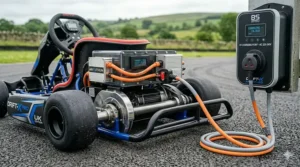
Lead-acid batteries (12V and 24V systems) typically last 12-18 months with regular use, declining gradually in capacity until 40-minute runtime becomes 15 minutes of wheezing disappointment. Replacement batteries cost £30-£60 depending on voltage and capacity, available from Amazon.co.uk or specialist suppliers. Lithium batteries (found in premium models like the Xootz Cyclone) last longer—potentially 2-3 years—but cost more to replace (£60-£100). Budget approximately £40 annually for battery replacement in frequently-used karts.
Charger Replacement (Surprisingly Common)
Cheap chargers supplied with budget models fail with alarming frequency—particularly when left plugged in continuously or used in damp garages. Replacement chargers cost £15-£30, and you need the correct voltage specification (6V, 12V, or 24V) matching your model. Higher-quality aftermarket chargers with better circuitry sometimes outlast three successive cheap originals, justifying the £35-£45 investment.
Tyre Wear (Surface Dependent)
Drift karts deliberately use different wheel materials on front versus rear—harder rear wheels enable drifting but wear faster on abrasive surfaces like rough tarmac or concrete. Expect rear wheel replacement after 6-12 months of regular use on hard surfaces, typically £20-£40 for a pair. Front EVA or PU wheels last longer—generally 12-24 months. Grass and softer surfaces extend tyre life significantly whilst reducing drift performance.
Miscellaneous Repairs
Small plastic components break: charging port covers vanish, decorative stickers peel, seat belts fray. Most issues prove cosmetic rather than functional, but perfectionists spend £10-£30 annually on replacement parts maintaining pristine appearance. More seriously, motor brushes wear in brushed motor designs (most budget models), requiring replacement after 18-24 months heavy use (£25-£50 including labour if you lack mechanical confidence).
Total Annual Cost Estimate
Conservative: £50-£80 per year (battery replacement, minor parts)
Realistic: £80-£120 per year (battery, charger, tyres, miscellaneous)
Worst Case: £150-£200 per year (multiple component failures, rough use)
Compare this to pedal go-karts where annual costs approximate £20-£40 for chain maintenance and tyre replacement—the convenience of electric power carries ongoing financial commitment.
Practical Maintenance Guide for British Conditions
Monthly Tasks
Clean the kart after use, especially in wet conditions—British rain deposits road salt and general grime that accelerates corrosion. Wipe down with damp cloth, paying attention to electrical connections and charging port. Check tyre condition for excessive wear or damage. Test brakes and steering for looseness—children’s enthusiastic use gradually works bolts loose. Tighten any loose fasteners before they vanish entirely.
Battery Care (Critical)
Charge batteries fully before first use—typically 8-12 hours initial charge regardless of voltage. For regular use, charge after each session rather than depleting completely; lead-acid batteries prefer regular charging to deep discharge cycles. Store in a dry location at moderate temperature (10-20°C ideal); cold British winters and hot loft spaces both reduce battery lifespan. If storing unused for winter months, charge fully every 6-8 weeks to prevent sulfation degradation.
Winter Storage
British winters require special consideration if the kart won’t see use for months. Charge battery fully, then disconnect it entirely—stored batteries self-discharge and repeated deep discharge kills them. Store kart indoors in dry location away from freezing temperatures. Remove any decorative flags or loose components that might deteriorate. Cover with breathable fabric (old sheet or purpose-made cover) to prevent dust accumulation whilst allowing moisture escape—plastic covers trap condensation.
Spring Recommissioning
Before first spring use: reconnect battery and charge fully for 12 hours. Check all tyres for deterioration or flat spots from winter storage. Test all electrical systems including lights and sounds before letting excited children loose. Inspect frame and seat belt for any winter damage from garage storage incidents. Lubricate any moving parts with appropriate spray lubricant (not WD-40, which attracts dirt—use proper silicone spray).
Frequently Asked Questions
❓ Are electric drift karts safe for children on British roads and pavements?
❓ How long do batteries actually last in British weather conditions?
❓ Do I need to buy protective equipment, and what's recommended for UK use?
❓ Can electric drift karts be used indoors in British homes?
❓ What happens if my drift kart breaks—can I get parts in the UK?
Conclusion: Finding Your Perfect Electric Drift Kart
The electric drift kart market has matured considerably since the chaotic early days of unreliable Chinese imports and overpriced novelties. British families in 2026 benefit from genuine choice across price ranges: budget models that don’t immediately disintegrate, mid-range options balancing performance with value, and premium machines delivering engineering excellence for discerning buyers willing to invest.
For most UK households, the sweet spot sits around £180-£280—enough to secure proper build quality, genuine drift capability, and brand support without requiring remortgage applications. The HOMCOM 24V and Xootz Comet occupy this territory admirably, delivering authentic drifting experiences that survive British weather and enthusiastic use. Families with younger children (ages 3-6) should seriously consider the COSTWAY 6V—the lower price point reflects appropriate power levels rather than corner-cutting, and the £90-£140 investment won’t haunt you if novelty wears off.
The premium Razor Crazy Cart Sport justifies its £350-£450 price tag if your child demonstrates genuine skill and sustained enthusiasm. Think of it as buying quality once rather than replacing budget alternatives repeatedly—though that logic requires confidence your ten-year-old won’t discover skateboarding next month and abandon drifting entirely. The three-wheel Xootz Cyclone with LED wheels occupies the “style matters” niche—worth considering if your child values the cool factor and you’ve got smooth surfaces for optimal use.
Whatever model you choose, success requires realistic expectations about British conditions: these machines dislike damp, prefer smooth surfaces, and demand dry storage. They’re not all-weather, all-terrain adventure vehicles despite marketing suggesting otherwise. Match the voltage and performance to your child’s age and skill rather than aspirations, measure your available space honestly, and verify proper UK compliance marking before purchase.
The electric drift kart delivers something genuinely different from standard ride-ons—that controlled chaos of sideways motion that transforms competent riders into grinning maniacs within minutes. Done right, it becomes the outdoor toy that actually gets used rather than gathering dust, justifying the investment through sustained engagement. Done wrong, it becomes another garage ornament joining the unused exercise bike and that bread maker from 2019.
Recommended for You
- 7 Best Pedal Go Karts UK 2026: Manual Kart Buying Guide
- 24v vs 12v Go Kart: 7 Best UK Models Compared 2026
- Best 24v Electric Go Kart UK 2026: 7 Racing Karts for Kids
Disclaimer: This article contains affiliate links. As an Amazon Associate, I earn from qualifying purchases. If you purchase products through these links, we may earn a small commission at no additional cost to you.
✨ Found this helpful? Share it with your mates! 💬🤗
