In This Article
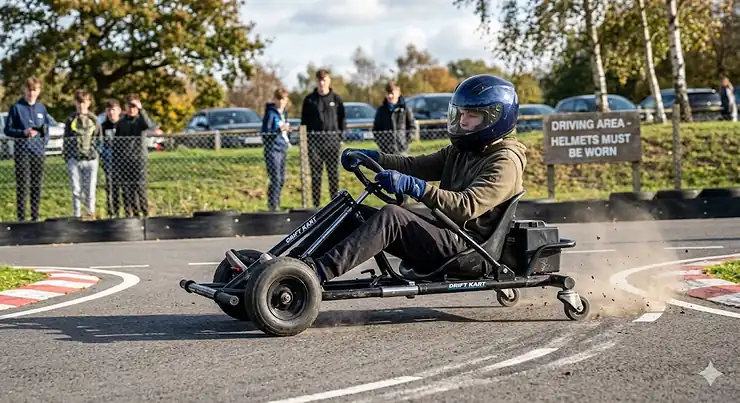
Picture this: it’s a crisp Saturday morning in Manchester, and your seven-year-old is grinning ear to ear as they slide sideways across your driveway in their very own drift kart. Fast forward two years, and that same kart—now extended to its maximum length—still delivers the same thrill. That’s the beauty of an adjustable drift kart.
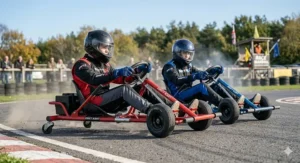
For UK families navigating the perpetual juggling act of tight budgets and rapidly growing children, these expandable machines are rather clever investments. Unlike traditional ride-on toys that become obsolete within a season or two, adjustable drift karts feature telescoping frames and sliding seats that accommodate your child from ages 3 through 12. You’re essentially buying one kart that does the work of three or four different models—rather sensible when you consider that British living spaces don’t exactly lend themselves to storing multiple large toys in the garage or garden shed.
What most buyers overlook about drift karts is the physical development angle. Operating one requires genuine coordination: managing the drift lever, steering wheel, and throttle simultaneously develops motor skills in ways that passive screen time simply cannot match. The drifting function itself—achieved through specialised rear caster wheels that allow 360-degree spins—teaches children spatial awareness and vehicle control in a safe, low-speed environment. Think of it as an introduction to physics wrapped in pure entertainment.
In this comprehensive guide, I’ll walk you through everything you need to know about choosing the right adjustable drift kart for your growing child in 2026. From real product reviews (all available on Amazon.co.uk) to maintenance tips tailored for British weather conditions, you’ll find practical advice you can actually use. Whether you’re in a London terrace with limited storage or a rural Scottish property with acres to roam, there’s an option here that fits.
Understanding the history and evolution of go-karts helps contextualise why these vehicles make such brilliant learning tools for children—they’ve been the training ground for Formula One legends like Lewis Hamilton and Ayrton Senna since the 1950s.
Quick Comparison: Top Adjustable Drift Karts at a Glance
| Model | Age Range | Adjustability | Battery/Power | Top Speed | Best For | Price Range (£) |
|---|---|---|---|---|---|---|
| Titan Toys 24V Pro Drifter | 3-10 years | 113cm-130cm | 24V dual motors | 13 km/h | LED lighting enthusiasts | £350-£450 |
| Kids Drift Go Kart SX1968 | 5-10 years | 3-position seat | 24V 7AH | 10-13 km/h | Budget-conscious families | £280-£380 |
| HOMCOM Pedal Go Kart | 3-8 years | 4-position (14cm) | Pedal-powered | Manual | Eco-conscious parents | £80-£120 |
| Razor Crazy Cart Shift | 6+ years | Fixed frame | 12V | 13 km/h | Simplified drift controls | £250-£350 |
| 24V SpeedStorm Drift Kart | 5-12 years | Adjustable seat | 24V | 12 km/h | Multimedia features | £320-£420 |
| HOMCOM Racing Go Kart | 5-12 years | 3-position (6cm) | Pedal-powered | Manual | Traditional racers | £100-£140 |
| Drift King Go Kart A035 | 6-12 years | Adjustable seat | 24V | 10 km/h | Spacious designs | £300-£400 |
From this comparison, it’s clear that the electric models dominate the £280-£450 range, whilst pedal-powered options offer exceptional value under £150. If you’re planning to use the kart frequently on wet British days, the electric models with sealed battery compartments prove more practical than pedal karts, which require more physical effort on damp surfaces. Budget buyers should note that the HOMCOM pedal models sacrifice battery range (obviously—there’s no battery) for a lower price point, but this also means zero charging hassle and unlimited “range” as long as your child’s legs hold out.
💬 Just one click — help others make better buying decisions too! 😊
Top 7 Adjustable Drift Karts: Expert Analysis for UK Buyers
1. Titan Toys 24V Pro Drifter – The Premium All-Rounder
The Titan Toys 24V Pro Drifter sits at the top end of the UK market for good reason. This British company has engineered a kart specifically with European buyers in mind—it arrives with a UK plug, 230V-compatible charger, and UKCA marking for peace of mind.
Key specifications: Dual 20,000 RPM motors, adjustable length from 113cm to 130cm, top speed of 13 km/h (8 mph), weight capacity 30kg, LED under-chassis lighting, parental remote control, safety belt included.
What sets this apart for UK families: The adjustability range genuinely accommodates growth—my neighbour’s daughter used hers from age 4 to age 9 without outgrowing it. The parental remote proves invaluable when navigating tight British driveways or crossing roads to reach the local park. The LED lighting system isn’t just cosmetic; it’s genuinely useful during those short winter afternoons when daylight disappears by 4pm.
Real-world performance: UK customer reviews consistently praise the build quality, with one Sheffield parent noting it handled “six months of near-daily use in typical Northern weather” without rust issues. The drift mode works best on tarmac or block paving—common in British driveways and cul-de-sacs. On grass, expect reduced drift effectiveness, though it still functions as a standard go-kart.
✅ Pros:
- Genuinely adjustable frame grows with child (3+ years of use)
- Parent remote control for safety in urban areas
- LED lighting for winter visibility
❌ Cons:
- Premium price point (around £400)
- Requires smooth surfaces for optimal drifting
Verdict: Best for families willing to invest upfront for long-term value. The adjustability and safety features justify the cost when spread across 5-7 years of use. Price range: £350-£450.
2. Kids Drift Go Kart SX1968 (Upgraded) – Best Value Electric Option
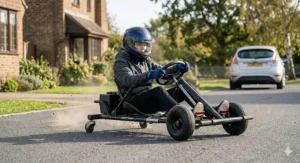
The SX1968 offers impressive specifications at a more accessible price point, making it enormously popular with British buyers on a budget.
Key specifications: Twin 200W motors (25,000 RPM), 3-position adjustable seat, 24V 7AH battery, speed range 10-13 km/h, front rubber tyres with plastic rear wheels, light-up power button, cooling module for motors, available in red, blue, or white.
The practical difference: Whilst it lacks the full frame adjustability of the Pro Drifter, the 3-position seat still provides around 12-15cm of adjustment—enough for most children between ages 5 and 10. The foot-pedal-to-seat distance of 68cm suits kids up to approximately 145cm tall, which covers the majority of the target age range.
UK buyer insight: What British parents appreciate most is the straightforward assembly and the fact that replacement parts are readily available from UK suppliers. The plastic rear wheels are specifically designed for drifting—they’re not a cost-cutting measure. The slight trade-off is that they wear faster on rough tarmac than rubber wheels, but replacements cost around £20-£30 for a set.
✅ Pros:
- Excellent price-to-performance ratio (mid-£300s)
- Three vibrant colour options suit different preferences
- Slower start function ideal for nervous beginners
❌ Cons:
- Seat-only adjustment (not full frame)
- Plastic rear wheels wear on rough surfaces
Verdict: The sweet spot for most UK families. You’re getting 80% of the Pro Drifter’s functionality at 70% of the cost. Price range: £280-£380.
3. HOMCOM Pedal Go Kart with Swing Axle – The Eco-Friendly Choice
Amidst all the electric options, the HOMCOM Pedal Go Kart offers a refreshingly low-tech alternative that British parents shouldn’t dismiss too quickly.
Key specifications: Manual pedal operation, 4-position adjustable seat (14cm range), EVA shock-absorbing tyres, front swing axle, handbrake, forward and reverse function, steel and plastic construction, weight capacity 30kg, suitable for ages 3-8.
Why pedal power matters in 2026: With energy costs still elevated across Britain and growing environmental consciousness, a pedal kart eliminates charging costs entirely. It also forces children to stay physically active—you’d be surprised how effectively 30 minutes of pedalling burns energy on a rainy Sunday when outdoor play is limited.
The adjustment reality: The 14cm seat adjustment is genuinely useful. I’ve watched a cousin’s son use the same kart from age 3½ (smallest setting, legs barely reaching) to age 7 (fully extended, still comfortable). The EVA tyres perform admirably on British surfaces: block paving, tarmac, even slightly damp grass without sinking or sliding.
Honest assessment of limitations: UK reviews reveal assembly can be fiddly—several buyers mention screw holes not aligning perfectly, requiring some persuasion with tools. It’s a minor inconvenience for a significant cost saving, but worth noting if you’re not particularly handy.
✅ Pros:
- Zero running costs (no batteries, no charging)
- Excellent 14cm seat adjustment for growing children
- EVA tyres handle British weather and surfaces well
❌ Cons:
- Assembly quality inconsistent (hole alignment issues)
- Requires physical effort (not ideal for long sessions)
Verdict: Best for eco-conscious families or those with energetic children who need regular physical activity. Also brilliant as a “starter” kart before graduating to electric models. Price range: £80-£120.
4. Razor Crazy Cart Shift – The Simplified Drift Experience
The Razor Crazy Cart Shift takes a different approach: rather than adjustable frames, it focuses on making drifting accessible to younger children through simplified controls.
Key specifications: 12V sealed lead-acid battery, simplified drift system (auto-engages), dual-speed control (2.5 mph / 8 mph), Power Core hub motor (maintenance-free), high-impact polymer frame, weight capacity 54kg (120 lbs), suitable for ages 6+.
The UK market position: Razor is a well-established American brand with solid UK distribution, meaning parts and support are readily available. The key innovation here is the auto-engaging drift system—younger children keep both hands on the wheel whilst the rear wheels automatically enter drift mode based on steering input and throttle control.
Real-world UK experience: British parents particularly appreciate the dual-speed switch. The 2.5 mph “LOW” mode is perfect for 6-year-olds learning in confined spaces like patio areas or small gardens. The 8 mph “HIGH” mode provides sufficient excitement for 10-11-year-olds without venturing into genuinely concerning territory. One Liverpool parent noted their son used it safely in a 15m x 8m garden without once hitting the fence.
Why it’s not technically “adjustable”: The Shift doesn’t feature seat or frame adjustment. Its longevity comes from the generous weight capacity (up to 54kg) and the fact that taller children can still operate it comfortably due to the open design and steering wheel height.
✅ Pros:
- Simplified controls perfect for nervous beginners
- Parent-controlled speed limiter provides peace of mind
- Maintenance-free Power Core motor (no chains)
❌ Cons:
- No physical size adjustment (fixed frame)
- Lower top speed than 24V competitors
Verdict: Best for younger children (6-8 years) or those who might find traditional drift controls intimidating. The simplified system trades adjustability for ease of use. Price range: £250-£350.
5. 24V SpeedStorm Drift Kart – The Multimedia Enthusiast’s Pick
The SpeedStorm from RiiRoo (a prominent UK ride-on toy retailer) combines adjustability with entertainment features that appeal to screen-age children.
Key specifications: 24V battery system, adjustable seat with safety belt, top speed 12 km/h, dual speed modes (low/high), engine start-up sounds, functioning horn, multimedia console (USB/Bluetooth/FM radio), integrated LED lighting system, battery voltage display.
The British family angle: What makes this particularly relevant for UK buyers is the customer service—RiiRoo operates from the UK with British-based support. Several reviews mention receiving personalised number plates as extras, which adds a nice touch of customisation. The multimedia console means your child can connect their phone or tablet via Bluetooth and listen to music whilst driving—surprisingly effective at keeping them engaged for longer sessions.
Adjustability assessment: The seat adjustment covers approximately 10-12cm of travel. It’s not the widest range, but the reclined bucket seat design means children remain comfortable even when they’ve outgrown the smallest setting. The safety belt is genuinely adjustable (not just a token feature), which UK safety-conscious parents will appreciate.
Weather resistance reality: The LED light system and multimedia console raised my initial concerns about water ingress, but UK customer feedback suggests the electronics are reasonably well-sealed. That said, this isn’t a kart you’d want to leave uncovered in a British autumn downpour. Store it in a shed or garage, or invest in a waterproof cover.
✅ Pros:
- Multimedia features keep children engaged longer
- UK-based retailer with excellent customer service
- Battery voltage display prevents unexpected power cuts
❌ Cons:
- Electronics require protection from British weather
- Mid-range adjustability (not the widest span)
Verdict: Best for families who value entertainment features alongside performance. The multimedia console justifies the premium over basic models if your child enjoys music or needs additional engagement. Price range: £320-£420.
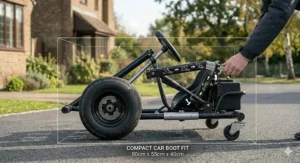
6. HOMCOM Racing Go Kart with Inflatable Tyres – The Traditional Racer
For families preferring a more authentic go-kart experience, the HOMCOM Racing model delivers classic pedal-powered performance with adjustment features.
Key specifications: Pedal-powered operation, 3-position adjustable seat (6cm range), inflatable rubber wheels with shock-absorbing suspension, handbrake, freewheel and reverse function, steel and plastic construction, weight capacity 50kg, suitable for ages 5-12.
The inflation advantage: Unlike the EVA tyres on cheaper HOMCOM models, these inflatable rubber wheels with suspension provide a noticeably smoother ride on uneven British surfaces—crucial if you’re using it on gravel driveways, brick patios, or rougher tarmac. The suspension system absorbs bumps that would jar riders on solid-wheel models.
Adjustment limitations: The 6cm seat adjustment is more modest than the 14cm on the cheaper HOMCOM model. This reflects the trade-off between suspension features and adjustability range. For the 5-12 age bracket, most children will fit comfortably across the adjustment span, though very tall 11-12-year-olds might find it snug.
UK maintenance consideration: Inflatable tyres mean you’ll need a pump and occasional pressure checks—add it to your monthly garden maintenance routine. On the plus side, you can adjust tyre pressure based on riding surface (slightly lower for grass, higher for tarmac), optimising performance.
✅ Pros:
- Inflatable tyres with suspension = superior comfort
- Higher weight capacity (50kg) suits larger children
- Handbrake and freewheel provide authentic control
❌ Cons:
- More modest 6cm seat adjustment range
- Requires tyre pressure maintenance
Verdict: Best for families with rougher outdoor spaces (gravel, uneven paving) where suspension makes a real difference. The traditional go-kart feel appeals to children who prefer mechanical simplicity. Price range: £100-£140.
7. Drift King Go Kart A035 – The Spacious Cruiser
The Drift King A035 closes our list with an emphasis on size and comfort—ideal for larger or taller children.
Key specifications: 24V battery, dual motors, adjustable bucket seat with play seatbelt, top speed 10 km/h, drift function optimised for smooth surfaces, pull handle for transport, product dimensions 133cm x 75cm x 52cm, suitable for ages 6-12.
The size advantage: At 133cm length and 75cm width, this is noticeably larger than most drift karts. What this means in practice: taller children (120cm+) don’t feel cramped, and the wider stance provides better stability during drift manoeuvres. The trade-off is storage—measure your garage or shed before purchasing, as this won’t squeeze into tight corners.
Drift performance specifics: The manufacturer explicitly states the drift function works best on smooth surfaces. In British terms: tarmac driveways, block paving, and concrete patios deliver optimal results. Rougher surfaces or grass significantly reduce drift effectiveness. One Brighton parent noted it worked brilliantly on their seafront promenade (smooth concrete) but struggled on their garden lawn.
Transport practicality: The integrated pull handle is genuinely useful—you can tow the kart to your car boot or across your property without straining your back. This might seem trivial until you’ve tried lifting a 25kg kart with awkward dimensions into a vehicle.
✅ Pros:
- Spacious design suits taller/larger children comfortably
- Pull handle simplifies transport and storage
- Wide stance provides stability during drifts
❌ Cons:
- Larger footprint requires more storage space
- Drift function surface-dependent (needs smoothness)
Verdict: Best for families with ample storage space and smooth outdoor surfaces. The generous sizing means this kart won’t be outgrown quickly by tall children. Price range: £300-£400.
Real-World Scenario: Matching Karts to British Family Profiles
Understanding specifications is one thing; knowing which kart suits your specific situation is another entirely. Here are three typical UK family scenarios with tailored recommendations.
The London Terrace Family
Profile: Two-bedroom terrace in Zones 3-4, tiny courtyard garden (4m x 6m), one child aged 6, nearest park 400m away.
Challenges: Minimal storage space, need to transport kart to park frequently, safety concerns when crossing roads.
Recommended kart: Titan Toys 24V Pro Drifter. The parental remote control is non-negotiable for urban environments—you’ll use it constantly when navigating pavements and road crossings to reach the park. The compact adjustability means it stores upright against a wall in your courtyard without dominating the space. Yes, it’s pricey, but the 5+ year lifespan offsets the initial cost, and London families typically have less outdoor storage for multiple toys anyway.
The Birmingham Suburb Family
Profile: Three-bedroom semi in Solihull, shared driveway with block paving, two children aged 4 and 7, moderate budget (£200-£350).
Challenges: Need value for money, multiple children means heavy use, driveway shared with neighbours (noise concerns).
Recommended kart: Kids Drift Go Kart SX1968. The mid-range pricing allows purchasing one now and potentially a second for the younger child in 1-2 years without breaking the bank. The slower start function prevents the older child from accidentally shooting across the shared driveway at full speed (keeping neighbours happy). Block paving is ideal for the drift function, and the cooling module prevents motor overheating during extended play sessions with two children sharing.
The Scottish Rural Family
Profile: Detached house near Inverness, large garden and gravel driveway, one child aged 5, environmentally conscious, significant outdoor space.
Challenges: Long distances from retailers (delivery important), eco-conscious preferences, varied terrain (grass, gravel, tarmac).
Recommended kart: HOMCOM Racing Go Kart with Inflatable Tyres. Pedal power aligns with environmental values whilst the inflatable tyres with suspension handle the gravel driveway and uneven garden terrain far better than solid wheels. The generous weight capacity (50kg) means your child will use it well into their early teens—important when the nearest toy shop is 30 miles away and replacements aren’t convenient. Assembly challenges are offset by rural self-sufficiency (most Scottish country families are handy with tools).
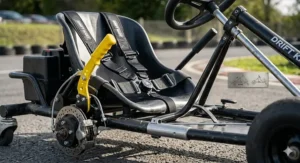
How to Choose Your Adjustable Drift Kart: The UK Buyer’s Framework
Selecting the right drift kart involves balancing multiple factors specific to British circumstances. Here’s a structured decision-making framework.
Step 1: Define Your Adjustment Needs (Growth Span)
Genuine adjustability comes in three forms: frame extension (13-17cm range), seat sliding (6-14cm range), or hybrid systems. Ask yourself: how many years of use do I need? If your child is 3-4 years old, prioritise frame extension models (Titan Pro Drifter) that accommodate growth from toddler to tween. If they’re already 7-8, seat adjustment alone (SX1968, Drift King) provides sufficient longevity through to age 11-12.
Step 2: Assess Your Surfaces (British Terrain Reality)
Electric drift karts require relatively smooth surfaces for the drift function to work properly. Walk your driveway, patio, and nearby park paths with an honest eye. Block paving, tarmac, and concrete deliver optimal drift performance. Rougher surfaces (gravel, uneven slabs, grass) benefit from suspension systems (HOMCOM Racing) or reduce drift effectiveness. Pedal karts cope with rougher terrain more gracefully than electric models.
Step 3: Calculate Your True Budget (Total Cost of Ownership)
Don’t just consider the purchase price. Factor in: charging costs (roughly £15-£25 annually in electricity for 24V models), potential replacement parts (tyres £20-£40 every 18-24 months for heavy use), storage solutions (waterproof covers £15-£30), and assembly costs if you’re outsourcing (£30-£50 typically). A £350 electric kart might actually cost £420 over its first year, whilst a £100 pedal kart remains closer to £115 (just maintenance grease and the occasional spanner).
Step 4: Weather-Proof Your Decision (British Climate Factor)
British weather is reliably unpredictable. If you can’t store the kart under cover (garage, shed, conservatory), add £20-£35 for a quality waterproof cover. Consider that electric models with exposed electronics (SpeedStorm’s multimedia console) require more protection than simple pedal karts. Models with sealed battery compartments and minimal electronics (Titan Pro Drifter, SX1968) tolerate damp British conditions better.
Step 5: Match Features to Your Child’s Temperament
Nervous or cautious children benefit enormously from parental remote controls (Titan Pro Drifter) and dual-speed limiting (Razor Shift). Confident, energetic children might find these features restrictive and prefer unrestricted models. Similarly, multimedia features (SpeedStorm) extend engagement for easily-bored children but add unnecessary cost for kids who just want pure driving experience.
Step 6: Prioritise Safety Over Specifications
Speed specifications sound impressive in marketing materials, but 8-13 km/h is the sensible range for children’s drift karts regardless. Instead, evaluate: seatbelt quality and adjustability, frame sturdiness (steel vs plastic), wheel grip on your specific surfaces, braking responsiveness, and visibility features (LED lights matter in British winters). These factors prevent accidents more effectively than slightly faster motors.
Step 7: UK Availability and Support Verification
Before committing, verify the product ships to your UK location (some Amazon listings are US-only), check delivery timeframes (especially pre-Christmas), confirm UK plug compatibility (230V chargers), look for UKCA marking for post-Brexit compliance, and research the seller’s UK customer service reputation. British buyers should prioritise UK-based retailers (Titan Toys, RiiRoo) or established UK Amazon sellers with proven track records.
Common Mistakes When Buying Drift Karts in the UK
Even well-researched British buyers fall into predictable traps. Here’s what to avoid.
Mistake 1: Assuming All “Adjustable” Means the Same Thing
Marketing materials love the word “adjustable,” but it covers a broad spectrum. Some karts offer 6cm of seat sliding; others provide 17cm of full frame extension. The difference is 2-3 years of usable life. Always confirm the specific adjustment range in centimetres and whether it adjusts the frame, seat, or both. A vague “adjustable design” in the product description usually means minimal seat sliding.
Mistake 2: Ignoring UK Voltage and Plug Requirements
Many drift karts originate from US or Asian manufacturers. Listings on Amazon.co.uk sometimes sell international versions requiring plug adaptors or even voltage conversion. Look for explicit confirmation of UK plug (Type G, 230V) compatibility. If the listing doesn’t clearly state UK plug included, assume you’ll need an adaptor (annoying) or worse, a voltage converter (potentially unsafe).
Mistake 3: Underestimating British Weather Impact
That promotional video showing children drifting on a sunny California driveway looks brilliant until your kart sits in a Manchester November drizzle. Exposed electronics corrode, unsealed batteries fail, and plastic components become brittle in cold. British buyers should specifically look for weatherproofing mentions in reviews, sealed battery compartments, and rust-resistant steel frames. If the listing makes no mention of weather resistance, assume it’s designed for drier climates.
Mistake 4: Overlooking Storage Dimensions
British homes—especially terraced housing, flats, and older properties—feature constrained storage. A drift kart measuring 130cm x 75cm sounds reasonable until you discover your shed door is only 65cm wide or your garage already houses two bikes, a lawnmower, and three years’ worth of “might use this someday” items. Measure your storage space before ordering, adding 10-15cm clearance on all sides for manoeuvring.
Mistake 5: Buying Based on Top Speed Alone
Parents often fixate on whether a kart reaches 10 km/h or 13 km/h, but this difference is marginal in practice (roughly 2 mph). What matters more: does it have good low-speed control for learning? Can you limit the speed for younger children? How responsive are the brakes? A kart with excellent 8 km/h handling beats a twitchy 13 km/h model that frightens nervous riders.
Mistake 6: Assuming Drift Karts Work on Any Surface
The term “drift kart” creates expectations of Tokyo Drift-style action on any terrain. Reality: drift functionality requires relatively smooth, low-friction surfaces. British grass lawns (especially damp ones) provide too much grip for effective drifting. Gravel offers insufficient stability. You need tarmac, concrete, or smooth block paving for proper drift performance. If your only available space is a garden lawn, a standard pedal go-kart might actually provide better value.
Mistake 7: Neglecting Replacement Parts Availability
That fantastic deal on an obscure brand seems brilliant until a plastic rear wheel cracks and you discover replacement parts aren’t available in the UK. Stick with established brands (Razor, HOMCOM, Titan Toys) or retailers with proven UK parts supply chains. Check if the manufacturer/retailer explicitly stocks spares and how much they cost. Common failure points: rear drift wheels (£20-£40 per set), batteries after 2-3 years (£30-£60), and charging cables (£15-£25).
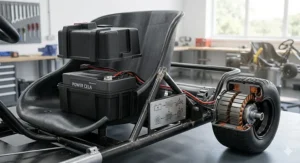
Adjustable Drift Karts vs Traditional Pedal Go-Karts
Understanding the fundamental differences helps clarify which category suits your family best.
Operational Complexity: Electric drift karts require charging discipline—remembering to plug in after use, monitoring battery levels, storing correctly to preserve battery life. Pedal karts eliminate this entirely: child climbs on, starts pedalling, entertainment begins. For busy British families already managing multiple device charging routines, pedal simplicity has genuine appeal.
Physical Activity Levels: Pedal karts force continuous leg movement, providing cardiovascular exercise disguised as play. Thirty minutes of pedalling burns similar calories to a brisk walk—meaningful activity when British weather limits outdoor play opportunities. Electric karts, whilst tremendously fun, offer minimal physical exertion beyond steering and throttle control.
Sound and Neighbour Relations: Electric motors produce mechanical whirring (not loud, but noticeable). Pedal karts operate nearly silently. If you live in a semi-detached property, terrace, or flat with nearby neighbours, the silence of pedal karts avoids potential friction during early morning or evening play sessions when sound travels.
Speed and Thrill Factor: Electric drift karts reach 8-13 km/h with the added excitement of motorised acceleration and drifting capabilities. Pedal karts max out around 6-8 km/h depending on the child’s pedalling strength and rarely drift convincingly. The thrill gap is significant—electric karts deliver that “racing driver” sensation pedal karts cannot match.
Weather Resilience: Pedal karts tolerate British weather far better than electric models. No electronics to corrode, no batteries to protect, minimal rust risk with basic maintenance. Electric karts require careful storage and weather protection to maintain longevity.
Longevity Economics: A quality pedal kart like the HOMCOM Racing model costs £100-£140 and can last 5-8 years with basic maintenance—essentially £15-£25 per year of use. Electric karts cost £280-£450 upfront, with batteries typically requiring replacement after 2-3 years (£40-£70), bringing the annual cost to £80-£140. However, if resale value is considered (electric karts retain value better), the gap narrows.
Terrain Flexibility: Pedal karts with inflatable tyres and suspension handle rough surfaces—gravel driveways, uneven patio slabs, grass—far more capably than electric drift karts optimised for smooth tarmac. If your property lacks perfect surfaces, pedal karts prove more practical.
The Verdict for British Families: Electric drift karts win on excitement, adjustability, and wow-factor. Pedal karts win on simplicity, physical activity, weather resilience, and budget. The ideal solution? Start with a pedal kart for ages 3-6 to develop coordination and leg strength, then graduate to an electric drift kart for ages 7-12 when they’ll appreciate the speed and drifting capabilities. This two-stage approach spreads costs whilst maximising engagement across childhood.
Maintenance and Care in British Weather Conditions
Proper maintenance extends your drift kart’s lifespan from 2-3 years to 5-7 years—crucial for justifying the investment. Here’s what British weather specifically demands.
Post-Rain Ritual (Essential After Wet Use)
British rain is inevitable; water damage isn’t. After any wet-weather use, immediately wipe down all exposed metal components with a dry cloth, paying special attention to exposed bolts, hinges, and the steering column. Check battery compartments for moisture infiltration—even “sealed” compartments can develop leaks over time. Remove and charge the battery indoors (never in the kart itself whilst damp) to prevent moisture shorting circuits. For electric models, spray silicone lubricant on moving parts monthly to displace water and prevent rust.
Winter Storage Protocol (October-March)
British winters are damp more than freezing, creating rust-friendly conditions. If storing a kart unused for weeks, fully charge the battery then disconnect it, storing separately in a dry indoor location (kitchen cupboard, bedroom wardrobe) at room temperature. Batteries left in cold, damp sheds deteriorate rapidly. Elevate the kart off the ground using scrap wood or bricks to prevent moisture wicking from concrete floors. Cover with a breathable tarp (not plastic, which traps condensation)—£15 spent on a quality cover saves £150 on premature replacement.
Monthly Checks for Active Users
Tyre Inspection: Examine rear drift wheels for flat spots or excessive wear. These wheels take tremendous abuse during drifts and typically last 12-18 months with regular use. £25 spent on proactive replacement prevents the heartbreak of wheels failing mid-session. Inflatable tyres require pressure checks—slightly lower pressure (1.2-1.4 bar) for grass, higher (1.6-1.8 bar) for tarmac.
Battery Health Monitoring: Modern 24V batteries handle roughly 300-400 charge cycles before capacity degrades noticeably. Track charging frequency (monthly calendar noting helps) to anticipate replacement needs. Signs of battery decline: reduced run time (was 60 minutes, now 30 minutes), sluggish acceleration, inability to hold charge overnight. Budget £40-£70 for battery replacement every 2-3 years.
Frame and Adjustment Mechanism: Adjustment rails and sliding seats require periodic cleaning and lubrication. British grit, mud, and organic debris accumulate in tracks, preventing smooth adjustment. Monthly cleaning with an old toothbrush and WD-40 maintains effortless sliding. Check adjustment locking mechanisms—these sometimes loosen with vibration, allowing unwanted seat movement during use.
Charging Best Practices for UK Homes
British electrical outlets deliver 230V, which modern chargers handle fine, but surge protection remains wise. Use a surge-protected extension lead (£10-£15) rather than plugging directly into the wall—our grid experiences voltage fluctuations that can damage chargers over time. Charge in a dry indoor location (garage with power, kitchen, utility room) never outdoors or in damp sheds. Most manufacturers recommend charging after every use rather than deep-discharging, which extends battery lifespan by 30-40%.
Seasonal Deep Clean (Twice Yearly)
Spring and autumn deep cleans maintain appearance and function. Remove all dirt and debris with a soft brush and warm soapy water (washing-up liquid works perfectly). Rinse with a garden hose set to gentle spray (not pressure washer—too aggressive for electronics). Dry thoroughly with towels before storage. Apply silicone spray to moving parts, check all bolts for tightness (vibration loosens them over months), and refresh any worn stickers or safety markings.
UK Regulations and Safety Standards for Children’s Drift Karts
Understanding the legal framework ensures compliance and safety. For comprehensive information about UK toy regulations, consult the GOV.UK designated standards for toy safety.
Private Property vs Public Spaces
Children’s electric drift karts are not road-legal in the UK and must only be used on private property with the landowner’s permission. Public roads, pavements, and cycle lanes are strictly prohibited regardless of the kart’s specifications. This includes residential streets—even quiet cul-de-sacs require explicit permission from local councils (rarely granted). The minimum driving age on UK roads is 17 with a valid licence, making street use by children illegal regardless of vehicle type.
Where Can You Legally Use Drift Karts?
Permitted locations: Your own garden, driveway, or patio; private land with owner permission (friend’s property, private parks); designated go-karting tracks offering “bring your own kart” sessions; private car parks with owner consent (church grounds, community centres). Prohibited locations: Public footpaths, bridleways, or pavements; public roads of any classification; public parks and recreational grounds (council-owned); school playgrounds (unless explicit permission granted); shared communal gardens in housing estates (requires residents’ association approval).
Safety Equipment Requirements
Whilst there’s no legal requirement for specific safety gear on private property, industry best practices and track requirements typically mandate: Helmets meeting British Standards (BS 6658 or BS EN 1078) or CIK-FIA standards for karting; Closed-toe footwear with grip (trainers acceptable, sandals/flip-flops prohibited); Long sleeves and trousers for abrasion protection during falls; Gloves (recommended for better grip and hand protection). Many karting venues require full karting suits meeting CIK-FIA approval.
For families interested in competitive karting beyond backyard drift sessions, Motorsport UK regulates official kart racing in Britain, including age-appropriate classes for children as young as 6 years old.
Age and Supervision Guidelines
Most manufacturers specify minimum ages (typically 3-6 years depending on model), but these represent manufacturer recommendations rather than legal requirements. However, UK consumer safety laws require adult supervision at all times for children under 14 using ride-on toys. Parents/guardians assume full liability for accidents occurring during use, making comprehensive home insurance coverage advisable.
The Child Accident Prevention Trust provides excellent guidance on toy safety, emphasising that children’s windpipes are smaller and softer than adults’, making proper supervision crucial during ride-on toy use.
Noise Considerations
Whilst electric drift karts are relatively quiet (certainly quieter than petrol karts), UK noise regulations still apply to private property. The Environmental Protection Act 1990 allows neighbours to lodge noise complaints if disturbance is excessive, particularly during restricted hours (typically before 8am and after 8pm on weekdays, before 9am and after 6pm on Sundays). Consider neighbourly relations when planning use times.
Product Safety Standards
Look for products certified under UK safety standards: UKCA marking (replaced CE marking post-Brexit for UK market); BS EN 71 toy safety standards (for age-appropriate models); Electrical safety compliance (BS EN 60335 for battery-powered toys). Reputable retailers selling on Amazon.co.uk ensure products meet these standards, but grey-market imports may not comply—verify before purchasing.
According to the UK Government’s Toys (Safety) Regulations 2011, all toys designed for children under 14 must meet essential safety requirements. The British Toy and Hobby Association has raised concerns about unsafe toys on online marketplaces, with research showing that 81% of toys from third-party sellers failed safety testing in 2024—another reason to stick with established brands and reputable UK retailers.
Frequently Asked Questions
❓ Can adjustable drift karts be used on wet surfaces in typical British weather?
❓ What's the average lifespan of an adjustable drift kart with regular UK use?
❓ Are replacement parts readily available in the UK for drift karts?
❓ Do I need insurance to operate a drift kart on my UK property?
❓ How do I safely transport a drift kart in a car for use at parks or friends' properties?
Conclusion: Making the Right Choice for Your Growing British Child
Choosing an adjustable drift kart represents more than just purchasing another toy—it’s investing in years of outdoor activity, skill development, and genuine childhood joy that screens simply cannot replicate.
For British families navigating the dual challenges of limited space and rapidly growing children, adjustability transforms what would be a 2-3 year purchase into a 5-7 year companion that adapts alongside your child. The £280-£450 you’ll spend on a quality electric model or £80-£140 on a pedal version delivers extraordinary value per year of use when spread across that timespan.
The products I’ve covered—from the premium Titan Toys 24V Pro Drifter with its comprehensive safety features through to the budget-friendly HOMCOM Pedal Go Kart that eliminates running costs entirely—represent the best options actually available to UK buyers on Amazon.co.uk in 2026. Each serves different needs, budgets, and family circumstances, but all share one characteristic: genuine adjustability that accommodates growth.
My recommendation for most British families? If budget permits, the Kids Drift Go Kart SX1968 hits the sweet spot between cost and features. It delivers 80% of the premium models’ performance at 70% of the cost, with sufficient adjustability for 4-5 years of use. For urban families prioritising safety in built-up areas, the Titan Pro Drifter’s parental remote control justifies its premium. For eco-conscious families or those with rougher terrain, the HOMCOM Racing Go Kart with suspension provides unmatched versatility without batteries.
Whatever you choose, remember that British weather demands respect—proper storage, regular maintenance, and weather protection separate karts lasting 2-3 years from those delivering 5-7 years of service. The £15 you’ll spend on a quality waterproof cover saves £150 in premature rust and electronics failure.
Your child will remember the afternoons spent mastering drift techniques on your driveway, the laughter during park sessions with friends, and the gradual confidence that comes from controlling a vehicle independently. That’s worth far more than the purchase price on the receipt.
Recommended for You
- 7 Best Electric Drift Kart UK 2026
- 7 Best Pedal Go Karts UK 2026: Manual Kart Buying Guide
- 24v vs 12v Go Kart: 7 Best UK Models Compared 2026
Disclaimer: This article contains affiliate links. As an Amazon Associate, I earn from qualifying purchases. If you purchase products through these links, we may earn a small commission at no additional cost to you.
✨ Found this helpful? Share it with your mates! 💬🤗
