In This Article
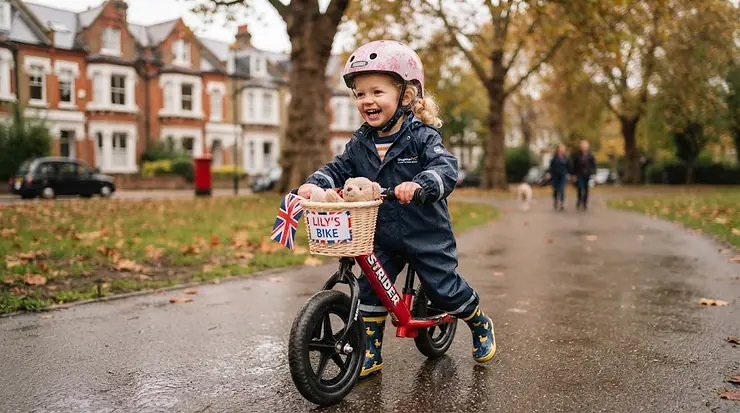
A first balance bike is the small, pedal-free, two-wheeled bicycle that lets a toddler push along with their feet, lift them, and glide — .building steering and balance before pedals ever enter the picture. It also ticks the box on the NHS physical activity guidelines for under-5s, which recommend toddlers get at least 180 minutes of active play a day. If you’ve stood in a garden watching a wobbly eighteen-month-old try to march a tricycle in a straight line, you already understand the appeal. No stabilisers to unscrew later, no white-knuckle “let go of the seat” moment on a pedal bike — just gravity, momentum and a child figuring out, quietly and on their own terms, how not to fall over.
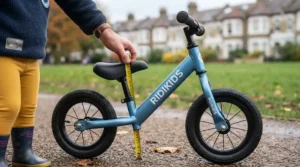
Picking a first balance bike for a genuinely new rider is a slightly different job to picking a bike for an experienced almost-five-year-old who’s outgrown their old one. You’re optimising for confidence rather than speed: a low seat height they can reach flat-footed, a frame light enough that a fall doesn’t feel like a setback, and a build calm enough that the first wobbly steps aren’t ruined by a bike that’s too heavy, too tall, or too twitchy to control.
We’ve spent time digging into real specifications, verified UK pricing bands, and the aggregated sentiment from parents and independent testers across seven genuinely available balance bikes for beginners — from budget-friendly starters under £40 to heirloom-quality builds that’ll outlast two or three siblings. Along the way we’ll walk through sizing, warranty basics that actually matter when a frame cracks in year two, and a first-time buyer checklist you can run through before you click “buy.” No fluff, no invented reviews — just what the specs and the real-world feedback actually tell us.
Quick Comparison Table: First Balance Bikes at a Glance
| Bike | Weight | Best For | Price Range |
|---|---|---|---|
| Strider 12 Sport | 2.9 kg | All-round first-timers, ages 1-4 | £110-£135 range |
| BTWIN Runride 100 | 3.2 kg | Tightest budgets, first trial run | Under £40 |
| Puky LR M | 3.5 kg | Smallest toddlers, low step-through | Around £95-£105 |
| KRIDDO Dual Bearing | 2.6 kg | Value-conscious first buyers | £40-£60 range |
| Chillafish BMXie2 | 3.6 kg | Kids wanting a footbrake early | £70-£90 range |
| Hornit AIRO 12″ | 2.95 kg | Featherweight, longest-lasting build | £140-£155 range |
| Early Rider Bonsai | 3.75 kg | Heirloom quality, hand-me-down families | £160-£190 range |
Looking at the spread above, weight is the detail that separates a good first balance bike from a frustrating one — anything creeping toward 4kg starts to feel unwieldy in a toddler’s hands, no matter how sturdy the frame is underneath. Price doesn’t map neatly onto quality either: the budget-friendly BTWIN Runride 100 and KRIDDO Dual Bearing hold their own against pricier rivals on the one metric that matters most for a brand-new rider, which is sheer manageability. Where the premium picks like the Hornit AIRO 12″ and Early Rider Bonsai earn their keep is in bearing quality, resale value, and warranty depth — details a first-time buyer often only appreciates eighteen months in.
💬 Just one click — help others make better buying decisions too!😊
Top 7 First Balance Bikes: Expert Analysis
Choosing a first balance bike for beginners means weighing four things every single time: seat height range against your child’s inside leg, total weight against your child’s own bodyweight, tyre type against where you’ll actually ride, and — the bit that’s easy to forget — how the bike will resell or hand down once your rider’s ready for pedals. Below, all seven are broken down honestly, specs translated into what they mean in the driveway rather than on a spec sheet.
1. Strider 12 Sport — the best-selling all-rounder for first-timers
The Strider 12 Sport built its reputation on one number: 2.9kg, which for a steel-framed bike is genuinely light. Strider achieves this with a slim tubular frame and foam-filled tyres rather than air, so there’s nothing here to ever go flat mid-ride. The quick-release seat and handlebar clamps mean you can drop the saddle almost to the frame for an eighteen-month-old and then wind it back up over the following two years — this is the detail that makes it a credible “first bike, only bike” purchase rather than something you’ll be replacing by their third birthday.
What most first-time buyers overlook is the sealed cartridge bearing in each wheel, which is the reason this bike rolls with noticeably less resistance than cheaper carbon-steel alternatives — resistance matters enormously for a toddler still working out how to build enough momentum to lift their feet. Reviewers aggregated across UK and US retail listings consistently describe the build quality as reassuringly solid and the assembly as genuinely simple, with the extra-long seat post cited repeatedly as the reason the bike “grows” with a child for years rather than months.
Pros:
- ✅ Among the lightest steel-framed balance bikes on the market
- ✅ Extra-long seatpost extends usable life by a year or more
- ✅ Sealed cartridge bearings roll noticeably smoother than budget rivals
Cons:
- ❌ Foam tyres transmit more bump feel on rough tarmac than air tyres
- ❌ Sits at the pricier end for a first bike some toddlers outgrow fast
Priced in the £110-£135 range, the Strider 12 Sport earns its position as an all-round first buy through longevity rather than flashiness — check current price and stock before committing.
2. BTWIN Runride 100 — best featherweight starter for the tightest budget
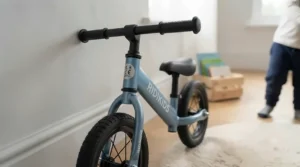
Decathlon’s own-brand BTWIN Runride 100 strips a balance bike back to essentials: no brake, plastic-rimmed wheels, solid EVA foam-hybrid tyres, and a bare 3.2kg total weight. That absence of a brake isn’t a corner cut so much as a deliberate choice — brand-new riders under three rarely have the hand strength or coordination to use one anyway, so Decathlon left it off and kept the bike lighter as a result.
The saddle adjusts across an 11cm range, which on paper sounds modest next to premium rivals, but for a bike this size and this price it’s more than enough to take a child from their very first wobbly pushes through to confident gliding. Aggregated customer feedback on Decathlon’s own site is consistently positive on value, with repeated mentions that the bike resells easily once outgrown — a small but real point in favour of a first purchase you’re not fully certain your toddler will take to straight away.
Pros:
- ✅ One of the lightest balance bikes available at any price
- ✅ Lifetime warranty on frame, stem, handlebar and fork
- ✅ Genuinely low-risk first purchase if you’re unsure your toddler is ready
Cons:
- ❌ No brake, so it won’t grow into a “practising to stop” stage
- ❌ Plastic-rimmed wheels feel less premium underfoot than rubber tyres
At under £40, the BTWIN Runride 100 is the bike we’d point to first if you genuinely don’t know whether your toddler is going to take to two wheels yet.
3. Puky LR M — best low step-through for the smallest toddlers
German brand Puky built its reputation on low-step frames, and the Puky LR M takes that further than almost anything else on this list, with a saddle that drops right down to suit riders with an inside leg from just 30cm — meaningfully lower than most 12-inch rivals. At 3.5kg it’s not the featherweight of the group, but the step-through design compensates by making mounting and dismounting far less of an obstacle for a two-year-old still working out how their legs relate to a bicycle frame.
The banana-shaped saddle is a small but honestly clever touch: its shape stops a small child sliding forward off the nose of the seat the way flatter saddles allow, which matters more than it sounds when you’re dealing with a rider who hasn’t yet learned to grip with their thighs. Independent testing has flagged that the small plastic wheels can feel twitchier on loose surfaces than the larger air-filled tyres found on pricier bikes, and the integrated kickstand, while a nice touch, does add a little extra heft to an otherwise compact bike.
Pros:
- ✅ Lowest realistic step-through height for very small toddlers
- ✅ Banana saddle design reduces forward-sliding for beginners
- ✅ Sub-£100 pricing for a well-established European brand
Cons:
- ❌ Small plastic wheels feel twitchier on gravel or loose ground
- ❌ Integrated kickstand adds weight some riders won’t need yet
Around £95-£105, the Puky LR M is worth prioritising if your toddler is on the smaller side and still finding their feet, quite literally.
4. KRIDDO Dual Bearing — best value pick for budget-conscious first buyers
The KRIDDO Dual Bearing balance bike leans on exactly what its name promises: dual-bearing wheels that reduce rolling resistance noticeably compared with the bushings found on cheaper no-name bikes, at a weight KRIDDO lists around 2.6kg. For a first-time buyer wary of spending big on a toy that might get two rides and then get ignored, this is the sweet spot — genuinely functional engineering at a price that doesn’t sting if it turns out your toddler prefers the sandpit.
The seat and handlebar both adjust across a wide range, so the bike has real headroom to grow rather than fitting for a single season, and the puncture-proof tyres mean zero maintenance beyond a wipe-down. Aggregated reviews across retail platforms note the bike arrives well-packaged and assembles in minutes, with the low weight repeatedly praised by parents who’ll be the ones carrying it home from the park when little legs give out.
Pros:
- ✅ Dual-bearing wheels roll more smoothly than budget bushings
- ✅ Wide seat and handlebar adjustment range for genuine longevity
- ✅ Puncture-proof tyres mean zero ongoing maintenance
Cons:
- ❌ Carbon-steel frame adds a little weight versus alloy rivals
- ❌ Colour and accessory availability varies by retailer and listing
In the £40-£60 range, the KRIDDO Dual Bearing is the pick for parents who want smoother rolling than the absolute entry-level tier, without paying premium-brand prices.
5. Chillafish BMXie2 — best pick for kids who want a footbrake early
The Chillafish BMXie2 takes a different tack to the rest of this list by building in an integrated footbrake as standard, which sits right on the rear footrest so a slightly older or more confident beginner can start learning to control their speed, not just their balance. At 3.6kg it’s built from reinforced plastics rather than metal, which keeps weight down despite the oversized BMX-style tubing, and the airless RubberSkin tyres mean there’s genuinely nothing to inflate or puncture, ever.
What the spec sheet won’t tell you, but aggregated reviewer sentiment does, is that the BMXie2’s wider frame suits toddlers already in at least 2T clothing better than the very smallest beginners — it’s a slightly bigger bike than some rivals on this list, so it rewards a child who’s a touch further along developmentally, even at a young age. The toolless seat adjustment (turn, pull, lock) is consistently flagged as genuinely quick, which matters more than it sounds when you’re trying to raise a saddle two centimetres before nursery pickup.
Pros:
- ✅ Integrated footbrake teaches speed control from the start
- ✅ Airless tyres mean zero punctures, ever
- ✅ Toolless seat adjustment is genuinely fast day-to-day
Cons:
- ❌ Wider frame suits average-to-larger toddlers better than the smallest
- ❌ Some users report the front wheel can develop wobble over time
At £70-£90, the Chillafish BMXie2 rewards families who want their first balance bike to double as a first lesson in braking, not just balance.
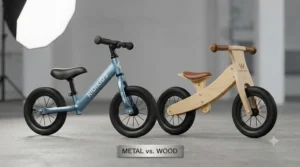
6. Hornit AIRO 12″ — best ultra-lightweight, longest-lasting premium pick
At £140-£155, the Hornit AIRO 12″ is the bike we’d recommend to parents who see this as an investment that’ll outlast one child, not just one summer — a view backed by Cycling UK’s independent review of the AIRO, which specifically praised its lightweight build and lifetime warranty.
The detail that changes the maths on this one is the free lifetime warranty on the frame and forks, which independent reviewers at Cycling UK specifically called out as a reason it’s worth the higher outlay — it effectively means one Hornit AIRO can be handed down through multiple children without the structural risk that usually rules out passing an older bike on. Reviewers also consistently note how straightforward assembly is out of the box, and praise the bike’s resale value, which stays strong precisely because the brand is trusted to hold up.
Pros:
- ✅ One of the lightest 12-inch balance bikes tested by independent reviewers
- ✅ Free lifetime warranty on frame and forks
- ✅ Pneumatic tyres genuinely smooth out rough pavement
Cons:
- ❌ Noticeably pricier upfront than steel-framed rivals
- ❌ Air-filled tyres need occasional pumping, unlike foam alternatives
At £140-£155, the Hornit AIRO 12″ is the bike we’d recommend to parents who see this as an investment that’ll outlast one child, not just one summer.
7. Early Rider Bonsai — best heirloom-quality build for hand-me-down families
The Early Rider Bonsai sits at the premium end for a reason that’s more about material choice than marketing: a birch-plywood monocoque frame paired with aluminium wheels running high-grade ABEC sealed cartridge bearings, at a still-manageable 3.75kg. It’s genuinely a different category of object to the plastic and carbon-steel bikes elsewhere on this list — several independent reviewers describe it as the nicest-built bike they’ve personally owned, which for a toddler’s first bike is either an indulgence or a genuinely smart long-game purchase, depending on your family’s plans.
Because it’s built for durability first, the Bonsai‘s low standover height of 33cm still suits smaller two-year-olds reasonably well despite the premium construction, and the Ritchey-branded finishing kit (bar, stem, grips) is the sort of detail you’d expect on an adult bike, not a toddler’s first ride. Aggregated user feedback flags the wooden frame as beautiful but a touch more prone to dents and scuffs than metal alternatives, and a small number of reviewers mention the seatpost can work loose over time and benefit from an occasional check.
Pros:
- ✅ Genuine heirloom build quality designed to be handed down
- ✅ High-grade sealed bearings for a noticeably smoother ride
- ✅ Low 33cm standover height despite the premium components
Cons:
- ❌ Wooden frame can dent or scuff more easily than metal
- ❌ Sits at the very top of the price range for a first bike
At £160-£190, the Early Rider Bonsai makes most sense for families planning to use one bike across multiple children, where the higher upfront cost amortises over several years of riding.
Balance Bike for Beginners: The First 30 Days
Getting a balance bike for beginners home is only step one — how you introduce it in the first month genuinely shapes how quickly a toddler takes to it. Start indoors or on carpet if the weather’s against you: with no pedals to worry about, a child can practise sitting, steering and dismounting somewhere soft and low-stakes before you ever head outside. Set the saddle so both feet sit flat on the ground with a slight knee bend — too high and a nervous toddler will refuse to get on; too low and they can’t generate the push-off stride that actually builds momentum.
Expect the first few sessions to look like walking with a bike between their legs rather than “riding” in any traditional sense, and resist the urge to push from behind — that robs them of the feedback loop between their own effort and the bike’s movement, which is precisely what teaches balance. Most bikes on this list need genuinely no maintenance beyond an occasional wipe and a bolt check, though air-tyred models like the Hornit AIRO benefit from a monthly pressure check. The single most common early mistake we see is moving to grass or gravel too soon — smooth, flat tarmac or a garden path lets a beginner build speed and confidence far faster than a bumpy lawn ever will.
Real-World Scenarios: Matching the Right First Balance Bike to Your Child
If you’ve got an eighteen-month-old who’s barely walking confidently, an ultra-low, ultra-light option like the Puky LR M or BTWIN Runride 100 makes more sense than anything with a brake or extra hardware — at this stage, simplicity beats features every time, and a lighter bike means fewer tumbles feel like setbacks.
If you’re buying for a cautious three-year-old who’s watched an older sibling ride and wants to copy them straight away, the Strider 12 Sport or KRIDDO Dual Bearing strike a good balance between confidence-inspiring stability and enough adjustability to keep pace with a rapid growth spurt over the next two years.
And if you’re the kind of family that keeps bikes for a second or third child, or you simply want the nicest possible object in the garage, the Hornit AIRO 12″ or Early Rider Bonsai justify their higher price precisely because they’re built to survive being handed down — the warranty and bearing quality do real work over a three-to-five-year ownership window that a budget bike simply isn’t engineered for.
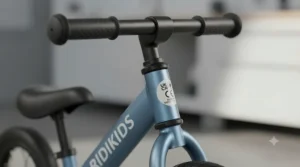
How to Choose a First Balance Bike for Beginners
- Measure the inside leg, not the age. Age ranges on packaging are only a rough guide — a snug-fitting bike a child can flat-foot confidently matters far more than hitting a stated age bracket.
- Prioritise total weight over frame material. A bike under a third of your toddler’s bodyweight is far easier to control and pick back up after a fall than a heavier, sturdier-looking rival.
- Decide on tyres early. Air-filled tyres like those on the Hornit AIRO absorb bumps best but need occasional pumping; foam or airless tyres need zero maintenance but transmit more vibration.
- Check the seat adjustment range. A wide range, as on the Strider 12 Sport, is what actually determines how many years you get from one purchase.
- Look past the sticker price to warranty basics. A lifetime frame warranty, like Hornit’s or BTWIN’s, can make a pricier bike cheaper over its real ownership life than a bargain with no cover at all.
- Decide whether a brake matters yet. Most beginners under three won’t use one meaningfully, so don’t pay extra for a feature the Chillafish BMXie2 offers if your rider isn’t ready for it.
- Think about resale before you buy. Well-known brands with strong aggregated reviews, like Strider, Puky and Hornit, tend to hold resale value noticeably better than unbranded budget bikes.
Common Mistakes When Buying a First Balance Bike
The single most repeated mistake parents make is buying a size or two “ahead” so the bike lasts longer — in practice, an oversized first balance bike is intimidating and hard to control, and toddlers who struggle early often lose interest entirely rather than growing into the bike gracefully. A close second is assuming a heavier, “sturdier-feeling” bike is automatically safer; for a first-time rider, weight relative to their own bodyweight is a far better predictor of how easily they’ll control the bike than the thickness of the tubing.
It’s also worth avoiding cartoon-branded bikes from unfamiliar sellers purely on novelty appeal — independent UK reviewers at Cycle Sprog specifically flag that licensed-character balance bikes are frequently built to a lower standard than plain, purpose-designed models, even at a similar price. Finally, don’t skip checking that a listing includes UKCA or CE marking; it’s a straightforward, low-effort check that confirms the product has actually been tested against UK toy safety regulations rather than simply imported and relisted.
Balance Bike vs Tricycle vs Training Wheels
| Option | Builds Real Balance | Typical Weight | Best For |
|---|---|---|---|
| First balance bike | Yes — core mechanism | 2.6-3.8kg | Learning to balance before pedals |
| Tricycle | No — inherently stable | 4-6kg | Very early independent mobility, under 2 |
| Bike with stabilisers | Partially — delayed | 6-9kg | Children already comfortable pedalling |
A balance bike, a tricycle and a pedal bike with stabilisers all look like “a child’s first set of wheels,” but only one of them actually teaches balance in the mechanical sense that matters for later cycling. A tricycle’s three-point stance means a toddler never has to learn to counter-steer or shift their weight, so while it’s a great early confidence toy, it doesn’t transfer meaningfully to two-wheel riding later. Stabilisers, meanwhile, actively prevent the leaning and steering feedback a child needs to build balance,…which is why so many cycling instructors — and the aggregated experience of parents on Mumsnet’s balance bike reviews — now recommend skipping stabilisers entirely in favour of a proper balance bike first.
Warranty Basics: What UK Balance Bike Guarantees Actually Cover
Warranty basics matter more for a balance bike than most parents expect, because these bikes take genuine abuse — dropped on tarmac, ridden into fences, left out in the rain. In UK law, your statutory rights under the Consumer Rights Act 2015 already entitle you to a remedy if a product is faulty, of unsatisfactory quality, or not as described, regardless of what the manufacturer’s own warranty says, so it’s worth treating any brand warranty as additional cover on top of that baseline rather than a replacement for it.
Among the seven bikes here, coverage varies meaningfully: the Hornit AIRO 12″ and BTWIN Runride 100 both offer a lifetime warranty on the frame and forks, which is genuinely unusual and reflects real confidence in the build. The Strider 12 Sport carries a two-year warranty against manufacturing defects, which covers the period when most toddlers put a bike through its hardest use. For the more budget-oriented picks like the KRIDDO Dual Bearing and Chillafish BMXie2, warranty basics typically mean a shorter, retailer-specific guarantee — usually covering manufacturing faults for a year or so — so it’s worth checking the individual listing rather than assuming parity with the premium brands. Whatever the bike, always keep your order confirmation as proof of purchase; it’s the single document that makes any warranty claim straightforward.
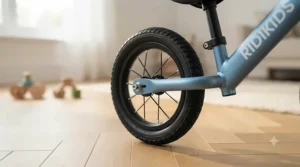
First-Time Buyer Checklist: Safety, Sizing and Regulations
Before you click “buy” on a first balance bike, run through this checklist:
- Inside leg measurement — sit your child on a chair and measure floor to crotch; this beats guessing from age alone.
- UKCA or CE marking — confirm the listing states one of these; it’s a legal requirement for toys sold in the UK and shows the bike’s been tested against the Toys (Safety) Regulations 2011.
- Maximum weight limit — check the bike’s stated rider weight allowance against your child’s current weight, with room to grow.
- Helmet, separately — a first balance bike should always be paired with a correctly fitted helmet from day one, even on quiet paths.
- Assembly requirements — most arrive part-built; confirm you’re comfortable with basic tool assembly or budget time for it.
- Return policy — since you genuinely can’t predict whether a toddler will take to two wheels straight away, check the retailer’s return window before committing.
Working through a first-time buyer checklist like this one takes ten minutes and saves the far more common scenario of buying twice — once for the wrong size, then again for the right one.
Long-Term Cost & Value: Is a Pricier First Balance Bike Worth It?
| Price Tier | Example | Typical Lifespan | Cost Per Year of Use* |
|---|---|---|---|
| Budget | BTWIN Runride 100 | 1-2 years, 1 child | Roughly £15-£25 |
| Mid-range | Strider 12 Sport | 2-3 years, resells well | Roughly £35-£45 |
| Premium | Hornit AIRO 12″ | 3+ years, hands down well | Roughly £35-£50 |
*Estimated ownership cost assuming average resale recovery; actual figures vary by condition and demand.
The maths on a first balance bike rarely favours the cheapest option outright once you factor in resale and durability. A budget bike like the BTWIN Runride 100 is unbeatable value for a genuinely uncertain first try, but it typically won’t resell for much and may need replacing sooner if a second child comes along. Mid-range and premium picks such as the Strider 12 Sport and Hornit AIRO 12″ cost more upfront but tend to hold their value well in the UK’s active second-hand market for kids’ bikes, meaning the real cost per year of ownership often ends up surprisingly close across all three tiers.
Features That Actually Matter (And Those That Don’t)
Weight matters enormously; colour, sound effects and cartoon branding do not — they’re the features marketing leans on hardest precisely because they’re the cheapest to add and the easiest to photograph well. Tyre type matters for ride comfort, but “number of colour options” doesn’t affect how a bike rides at all, and neither does a printed speedometer or fake engine sound, which several bikes on the market now include purely as a novelty. Genuinely useful features, based on aggregated reviewer sentiment across this whole category, are sealed bearings, a wide seat-adjustment range, and a proven warranty — none of which show up prominently on a product’s box art, which is exactly why it’s worth reading past the packaging.
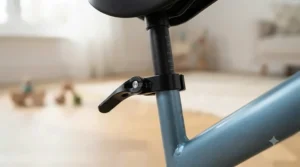
Frequently Asked Questions
❓ What age is right for a first balance bike?
❓ Do I need a brake on a first balance bike?
❓ How do I know what size balance bike to buy?
❓ Is a first balance bike better than stabilisers?
❓ How long does a first balance bike usually last?
Conclusion
Choosing a first balance bike ultimately comes down to matching weight and seat height to the toddler in front of you, not to the flashiest spec sheet online. For most families, a mid-range pick like the Strider 12 Sport balances price, adjustability and proven durability better than almost anything else here, while the BTWIN Runride 100 remains the sensible, low-risk way to find out whether your particular toddler takes to two wheels at all. If budget allows and you’re planning to hand the bike down, the Hornit AIRO 12″ and Early Rider Bonsai are genuinely built to justify their higher price over several years of use.
Whichever you choose, the checklist matters more than the brand name: get the sizing right, confirm the UKCA or CE marking is present, understand the warranty basics before you buy, and pair the bike with a proper helmet from the very first ride. Do that, and almost any of the seven bikes above will do exactly what a first balance bike is supposed to do — quietly turn a wobbly toddler into a confident little rider, one push at a time.
Recommended for You
- Strider Balance Bike Vs Standard Balance Bike: 7 Best Picks; Verdict (2026)
- Strider Balance Bike For Toddlers: 7 Best Picks Tested (2026)
- Strider Balance Bike: 7 Best Picks; Smart Buying Tips (2026)
Disclaimer: This article contains affiliate links. As an Amazon Associate, I earn from qualifying purchases. If you purchase products through these links, we may earn a small commission at no additional cost to you.
✨ Found this helpful? Share it with your friends! 💬🤗
