In This Article
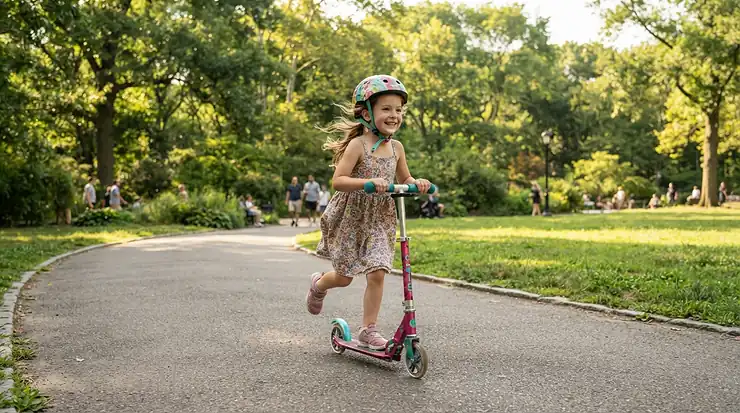
Every parent knows the moment. Your child stops wobbling, stops asking for a push, and starts eyeing the bigger kids gliding past on two wheels. Picking the right 2-wheel scooter for kids at that point isn’t glamorous work. Still, it decides whether the next few years bring joyful school runs or a scooter abandoned behind the coat rack. 🛴
A kick scooter is simply a handlebar, a deck and wheels, driven by pushing off the ground. The two-wheeled version is where most children land somewhere between five and eight. It asks far more of them than a three-wheeler ever did: steering by turning rather than leaning, braking with real intent, and balancing the whole time.
So what’s inside? A proper 2-wheel scooter review of seven real models, built from manufacturer specs, retailer data and published reviews. There are also dedicated sections on balance transition age, wheel size and speed, and kerb/road safety basics, the three topics most buying guides skim past.
One honest note before we roll. I haven’t ridden any of these scooters, so you won’t find invented “I tested it” stories here. You’ll get spec-based reasoning, aggregated reviewer sentiment and clear flags where the evidence runs thin. Prices change constantly, so I use ranges, and you should always check the current price before buying. Let’s go.
Quick Comparison: 2-Wheel Scooter for Kids at a Glance
Short on time? This table puts the seven picks side by side. Wheel sizes and age guides come from manufacturer and retailer listings at the time of research, so double-check the exact listing you buy from.
| Scooter | Wheels | Age / height guide | Price range | Best For |
|---|---|---|---|---|
| Micro Sprite | 120 mm PU | 6+, rider height up to about 152 cm | Check current price (premium tier) | Light, foldable first two-wheeler |
| Globber Flow 125 | 125 mm | 6+ | £50–£70 range | Nervous beginners on a budget |
| Micro Cruiser | 200 mm | About 5–10, up to 146 cm tall | £130–£150 range | Steadier turning for smaller riders |
| Razor A5 Lux | 200 mm | 8+ | £90–£120 range | Older kids who want pace |
| Hudora BigWheel 205 | 205 mm | Listings vary (6+, 7+ or 8+) | Roughly £80–£120 range (check) | Taller riders, carry-strap logistics |
| Liferyder Infinity | 12 in, air-filled | 5–15, 110–160 cm, up to 50 kg | £140–£150 range | Gravel, grass and rough ground |
| Oxelo Mid 7 | 175 mm | 1.25–1.65 m tall | £55–£75 range | Budget big-wheel school runs |
Looking at the comparison above, the Globber Flow 125 is the sensible entry point on cost, while the Micro Sprite and Micro Cruiser charge a premium for build quality and a smaller-child fit. If your child is eight or taller, the 175–205 mm wheels on the Oxelo Mid 7, Razor A5 Lux and Hudora BigWheel 205 change the ride more than any badge. The outlier is the Liferyder Infinity, the only air-tyred model here, which earns its price on rough ground rather than smooth pavements. Whichever 2-wheel scooter for kids you shortlist, check the height guide first, because wheel size and speed matter less than whether the handlebar actually fits your child.
💬 Just one click — help others make better buying decisions too!😊
2-Wheel Scooter Review: The Top 7 Picks, Analysed
Each pick follows the same logic: what the spec means in practice, who it suits, what reviewers keep saying, and roughly what it costs. Where I couldn’t verify something, I say so rather than papering over it.
1. Micro Sprite — Swiss-built first step onto two wheels
The Micro Sprite is the gentlest on-ramp in the premium tier, and weight is the reason. The aluminium frame weighs roughly 2.8 kg on the LED version, light enough for a six-year-old to hoist over a kerb without a parental rescue. Micro quotes a 100 kg rider limit, so a teenager could borrow it too. The 120 mm polyurethane wheels (120/100 mm front and rear on the LED model) make it feel nimble rather than quick, which suits little legs still learning push, glide, brake.
Here’s what the spec sheet won’t shout: Micro recently moved the age guidance to 6 to teen following updated testing, and some older packaging may still say otherwise. If you’re eyeing this for a confident five-year-old, check the exact listing.
Reviewers on retail pages describe a smooth, rattle-free ride and a natural bridge from three wheels. One reviewer did report handlebars and front wheel twisting on their two-wheeler after about two years, even after retightening. Treat bolt checks as routine.
Pros:
- ✅ Light, foldable aluminium frame
- ✅ Smooth ride praised in owner reviews
- ✅ 100 kg rider limit outlasts growth spurts
Cons:
- ❌ Small wheels feel harsh on rough paving
- ❌ Premium pricing against budget rivals
I couldn’t confirm a current UK price, so check the live listing. Expect premium-tier pricing, justified by build quality and longevity rather than speed.
2. Globber Flow 125 — gentle 125 mm wheels for nervous beginners
The Globber Flow 125 suits the child who’s ready for two wheels but not for drama. The 125 mm wheels are small by design, and retailers note they’re easy for newcomers to handle. That’s the right instinct when a six-year-old is still working out how much to lean. The foldable version has a four-position T-bar (roughly 81–96 cm), a push-button fold that lets it stand unaided, and a weight of around 3.5 kg. The listed rider limit is 100 kg and the recommended age is 6+.
The rear brake is longer than on Globber’s three-wheelers, which matters because stopping a two-wheeler is all about foot pressure on the fender. For balance transition age, it’s a comfortable landing spot for a typical six-year-old.
Reviewer sentiment leans positive on looks and build, but there’s a real flag. One buyer of the foldable model complained that deck clearance is only about 2 cm, which tipped their son off at small pavement lips. They also said the fold failed and the company was slow to respond. One review isn’t a verdict, but if your routes are cracked and uneven, check the deck height in photos.
Pros:
- ✅ Small wheels forgive beginner wobbles
- ✅ Four-height T-bar grows with your child
- ✅ Push-button fold at a budget price
Cons:
- ❌ One buyer reported very low deck clearance
- ❌ Small wheels jar on rough surfaces
Expect around £50–£70, depending on version and retailer. It’s strong value, provided you inspect the fold and the clearance.
3. Micro Cruiser — chopper-style bars that calm steering
The Micro Cruiser is the odd one out, and deliberately so. Its chopper-style handlebar made turning feel easier for The Independent’s young tester, even at speed, with less sense of being about to topple. That’s a clever answer to the hardest part of a 2-wheel scooter for kids: steering without leaning. The 200 mm wheels glide over pavements and soak up dips, and there’s a kickstand, a foldable stem and LED wheels powered by the scooting motion. Assembly was quick.
The catch is sizing. The tester felt it suits ages five to ten better than older children, with a maximum height recommendation of 146 cm and handlebars that feel low to taller riders. Two wheels also take practice for younger users, and it’s one of the pricier options.
The Independent gave it 4.5 out of 5, and the wider review pool I could find largely echoes that tone. Based on the spec comparison, I’d call it the best choice for a smaller child who’s anxious about steering.
Pros:
- ✅ Chopper bars steady turning, says one tester
- ✅ 200 mm wheels smooth out bumps
- ✅ Kickstand and LED wheels included
Cons:
- ❌ Expensive against other two-wheelers
- ❌ Low bars once riders near 146 cm
Expect a £130–£150 range. It’s a fair price if steering confidence is your sticking point.
4. Razor A5 Lux — big-wheel pace for 8-plus riders
The Razor A5 Lux is where wheel size and speed start to matter. The 200 mm urethane wheels cover more ground per push and smooth over bumps. The aircraft-grade aluminium build weighs about 3.8 kg, the rider limit is 100 kg, and there’s a retractable kickstand and a fold. Razor’s age guidance is 8+, though one US review site suggested a tall seven-year-old might appreciate the sizing too.
That same site’s child testers (aged 8, 10 and 12) all preferred it to the smaller Razor A2, mostly for the longer, wider deck and higher bars. That’s useful evidence: older kids outgrow small scooters through leg room, not just height. One retail reviewer called it a worthwhile upgrade for a teen who had outgrown their old scooter.
Be realistic about younger riders, though. This is a bigger, faster machine, and the rear fender brake needs a confident stamp. I’d keep it for children who already ride a smaller two-wheeler comfortably.
Pros:
- ✅ Large wheels smooth rough pavements
- ✅ Roomy deck for growing feet
- ✅ Retractable kickstand and 100 kg limit
Cons:
- ❌ Too big for small first-timers
- ❌ Heavier than smaller-wheel rivals
Expect around £90–£120. It’s good value for tweens and teens who’ll ride daily.
5. Hudora BigWheel 205 — 205 mm wheels with a carry strap
The Hudora BigWheel 205 is the practical big-wheeler. The aluminium frame weighs about 4.5 kg, the 205 mm wheels roll over uneven paving, and the handlebar runs from roughly 79 cm up to 104 cm, which gives it a long life for tall children. The rear wheel brake is operated by foot, and an integrated stand plus a shoulder strap make school-gate logistics easier.
Age labelling is inconsistent. Listings I found quote 6+, 7+ or 8+, so treat the minimum handlebar height as the real test. At 79 cm, the bars may sit too high for a smaller child.
Buyer reviews mention smooth rolling over bumps, grippy foam handles and a handy strap. One noted a faint squelching noise from the rear wheel, and another mentioned you must push the unfold lever until it clicks. Those are small gripes, but worth knowing.
Pros:
- ✅ 205 mm wheels roll over rough pavement
- ✅ Built-in stand and shoulder strap
- ✅ Tall handlebar range lasts into teens
Cons:
- ❌ Minimum bar height too tall for small kids
- ❌ Heavier than the Sprite or Razor
European retailers list it at roughly €95–€145, which suggests a £80–£120 range in the UK. Check the live price.
6. Liferyder Infinity — 12-inch air tyres for off-road
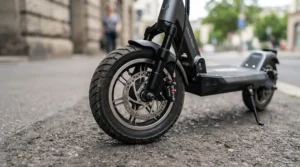
The Liferyder Infinity isn’t trying to be a pavement-only scooter. It rides on 12-inch air-filled tyres, with a large footplate and three handlebar heights (75, 80 and 85 cm). Mumsnet’s reviewer found it handled muddy fields, tarmac and gravel with ease, and The Independent made it their best overall pick at 5 out of 5. It’s designed by two Yorkshire dads, and the footplate stickers come in about 40 designs.
The trade-offs are weight and process. At 5.5 kg it’s the heaviest here, collapsing it needs a tool, and assembly takes longer than average. Mumsnet’s tester concluded the build quality justified the effort. Note the 50 kg maximum rider weight, even though the age range stretches to 15: a taller teen may outgrow it by weight first.
For gravel lanes, bridleways and park paths, the spec reasoning is simple. Air tyres absorb the shocks that make a small solid wheel feel punishing.
Pros:
- ✅ Air-filled 12-inch tyres suit gravel and grass
- ✅ About 40 sticker designs to personalise
- ✅ Testers praise sturdy build quality
Cons:
- ❌ At 5.5 kg, heavy to carry
- ❌ Needs a tool to fold; slower assembly
Expect around £140–£150. It’s worth it only if your child will genuinely ride rough ground.
7. Oxelo Mid 7 — value big wheels from Decathlon
The Oxelo Mid 7 puts two 175 mm PU wheels, ABEC 5 bearings and a rear wheel brake into a budget-friendly frame. Decathlon sizes it by height (1.25–1.65 m) rather than age, even though the label says 9–14. That’s a useful reminder that a tall eight-year-old may fit it fine. It has front and rear mudguards, a stand and a fold. Decathlon says it’s designed for journeys up to about 2 km and complies with EN 14619, the European standard for sport scooters. Parts are guaranteed for two years, excluding wear parts such as wheels, bearings, brake and grips.
If you want a handlebar brake for a younger child, look at its sibling, the Oxelo Mid 5. It’s aimed at ages 6–9 and has front suspension, and Decathlon’s regional listing shows a very high average across thousands of reviews. I couldn’t verify review themes for the Oxelo Mid 7 itself. Availability on Amazon UK may vary, since Oxelo is chiefly a Decathlon line, so check the listing.
Pros:
- ✅ Big 175 mm wheels at a low price
- ✅ Mudguards front and rear for wet days
- ✅ Decathlon states EN 14619 compliance
Cons:
- ❌ Foot-only rear brake
- ❌ Fit suits taller kids despite younger wheels’ appeal
Argos listings suggest a £55–£75 range. It’s excellent value for the school run.
Now let’s compare the practical details side by side.
| Scooter | Weight | Fold & parking | Rider limit | Best For |
|---|---|---|---|---|
| Micro Sprite | About 2.8 kg | Double-button fold; kickstand (LED) | 100 kg | Carrying and cloakrooms |
| Globber Flow 125 | Around 3.5 kg | Push-button fold; stands unaided | 100 kg | Beginners with limited storage |
| Micro Cruiser | Check listing | Foldable stem; kickstand | Height guide up to 146 cm | Younger two-wheel learners |
| Razor A5 Lux | About 3.8 kg | Folds; retractable kickstand | 100 kg | Daily commuters aged 8+ |
| Hudora BigWheel 205 | About 4.5 kg | Folds; stand and shoulder strap | 100 kg | Tall kids needing a strap |
| Liferyder Infinity | 5.5 kg | Folds with a tool, slowly | 50 kg | Off-road families |
| Oxelo Mid 7 | Check listing | Folds; stand | 100 kg | Value-minded school runs |
Reading across the rows, the 2.8–3.8 kg group suits children who’ll carry their own scooter, while the heavier Hudora BigWheel 205 and Liferyder Infinity assume a parent shares the load. A typical 2-wheel scooter review skips weight, yet 5.5 kg versus 2.8 kg is the difference between “child carries it” and “parent carries it”. The Liferyder Infinity‘s 50 kg limit also means heavier riders will outgrow it before they hit the top of its age range.
Your First 30 Days on Two Wheels: A Practical Setup and Maintenance Guide
Most listings stop at the unboxing. Here’s what actually makes the first month go smoothly.
Before the first ride. Check that the steering column and handlebars are locked in place and that every nut and bolt is tight. Do this before every ride in the first month. Set the bars around hip height as a starting point, then adjust once you see your child’s posture.
Gear. RoSPA’s scooter factsheet recommends a helmet (a cycle helmet is probably best) plus knee and elbow pads and wrist protectors. It also advises against using scooters inside indoor shopping centres.
Week by week:
- Week 1: flat, empty car park. Drill “three pushes, glide, brake”, swapping pushing feet.
- Week 2: gentle figure-of-eights to teach steering without leaning.
- Week 3: quiet pavements with you walking alongside.
- Week 4: kerb practice at walking pace, using the techniques in the kerb/road safety basics section below.
Maintenance rhythm. Check bolts weekly, then wheels, bearings and brake monthly. Decathlon names wheels, bearings, brake, grips and handles as wear parts, so expect to replace them eventually.
Common first-month mistakes: bars set too high, skipping pads “just for a quick go”, practising on slopes, and ignoring a wobble that turns out to be a loose clamp.
Real-World Scenarios: Three Families, Three Scooters
These are illustrative profiles, not real people, but they show how the choice plays out.
Maya, six, just off a three-wheeler. The family lives on a smooth estate and Maya rides twice a week, with a budget under £70. The Globber Flow 125 fits: small wheels, a mid-low price and a height range that grows with her. If the budget stretches, the Micro Sprite buys a lighter frame. At this balance transition age, I’d favour small wheels over speed.
Tom, nine, 1.38 m tall. He rides a 1.2-mile pavement route to school daily, and the scooter must fit in a cloakroom. The Oxelo Mid 7 (the budget big-wheeler) or the Razor A5 Lux make sense, because 175–200 mm wheels shrug off the cracked paving. If a carry strap would help morning logistics, the Hudora BigWheel 205 is the third option.
Priya, ten, on a rural lane. Gravel tracks and a grassy bridleway mean smooth wheels will struggle. The Liferyder Infinity is the match, on two conditions: she must be comfortably under the 50 kg limit, and someone must be happy to carry 5.5 kg when she tires.
What Is a 2-Wheel Scooter for Kids?
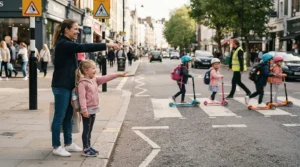
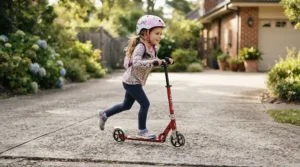
A 2-wheel scooter for kids is a human-powered kick scooter with one front and one rear wheel, a steering T-bar and a foot deck, pushed along by one foot. Unlike three-wheelers it steers by turning the handlebar rather than leaning, so riders must balance, which is why it usually suits children from about five or six upwards.
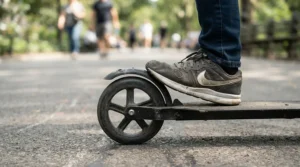
The main parts are the deck (the standing platform), the T-bar (the handlebar and stem, ideally height-adjustable), two wheels, bearings, and a brake. Bearings are often rated on the ABEC scale, where a higher number suggests tighter manufacturing tolerance. Most children’s models use a rear foot brake (a fender you press with your foot), while a few add a handlebar brake for finer control.
Think of it as a bridge between the stability of a three-wheeler and the skills of cycling. It builds balance, steering and braking judgement, but it asks the child to do all three at once.
Balance Transition Age: When Is Your Child Ready?
The honest answer is that balance transition age is a window, not a birthday. Manufacturer guidance clusters around five to six: Liferyder Infinity lists 5+, while Micro Sprite and Globber Flow 125 say 6+, and Razor A5 Lux says 8+. Reviewers commonly say three wheels suit ages 2–5 and two wheels become realistic around 6–8. For a child nearer four, Oxelo Play 5 is built for roughly 95 cm to 1.30 m, with a big front wheel and a small rear one plus both foot and handlebar brakes.
US orthopaedic guidance is more conservative than UK labels, advising that children under eight shouldn’t use scooters at all. That gap shows how much weight rests on parental judgement.
A rule-of-thumb readiness check (mine, not a standard):
- Rides a three-wheeler in a straight line without a steering lock.
- Brakes when asked without being reminded.
- Can glide for a few seconds without wobbling.
- Is tall enough to reach the minimum handlebar height.
If your child ticks most boxes, the move is usually fine. If not, wait a few months.
Wheel Size and Speed: What the Millimetres Really Mean
Wheel size and speed are linked, but not in the simple “bigger is faster” way marketing implies. A larger wheel rolls over a bump at a shallower angle, so it loses less momentum, and each push carries the scooter further.
- 120–125 mm (Micro Sprite, Globber Flow 125): nimble and forgiving for beginners, but you feel every crack.
- 175 mm (Oxelo Mid 7): Decathlon pitches it as better at handling kerbs and rain splashes, suited to trips up to about 2 km.
- 200–205 mm (Micro Cruiser, Razor A5 Lux, Hudora BigWheel 205): noticeably smoother, with more distance per push, but taller decks and more weight.
- 12-inch air tyres (Liferyder Infinity): high ground clearance and genuine off-road ability, at the cost of heft.
Speed also depends on braking. A fast scooter with a rear foot brake needs a child who can stamp confidently, so match wheel size and speed to your child’s skill, not just their height. A beginner on huge wheels often goes faster than they can stop.
Kerb/Road Safety Basics: Before the First Big Ride
Kerb/road safety basics start with a mindset: roads are for crossing, not riding. DfT’s THINK! walking guidance lays out the Green Cross Code. You stop just before the kerb, look all around and listen, let any traffic pass, then cross straight and without running.
For scooter children, I’d add three habits:
- Dismount at crossings. Walk the scooter across, because you can’t brake as fast as you think.
- Respect the kerb edge. A front wheel that meets a drop can stop dead and pitch the rider forward, so teach “slow, straight, step off if unsure”.
- Be seen. Bright clothing helps, and LED wheels add visibility in the dark, but they’re a bonus, not a replacement for care.
Remember the gear from the 30-day guide: helmet, knee and elbow pads, wrist protectors. On pavements, give way to pedestrians and keep to quieter paths. Treat these kerb/road safety basics as a ritual, not a one-off talk.
How to Choose a 2-Wheel Scooter for Kids
Here’s the shortest path to a good decision:
- Check readiness first. Use the balance transition age checklist above. A scooter bought too early gathers dust.
- Measure, don’t guess. Compare your child’s hip and waist height against the handlebar range, not just the age on the box.
- Match wheel size to terrain. Choose 120–125 mm for smooth, short routes, 175–205 mm for daily pavement trips, and air tyres for rough ground.
- Pick a brake your child will use. A rear foot brake is simple and robust, while a handlebar brake gives finer control for younger riders.
- Check weight and folding. If your child carries it, aim for under about 4 kg; if you do, the limit is your own arms.
- Look for standards and spare parts. Decathlon states EN 14619 for the Oxelo Mid 7, and Globber’s retailer lists EN 71 marks. Replaceable parts extend life.
- Budget for gear. A helmet and pads aren’t optional extras.
✨ Ready to Find Your Child’s Perfect Ride?
🔍 Take your search to the next level with these carefully selected scooters. Click any highlighted product name to check current pricing and availability. A well-matched 2-wheel scooter for kids can turn nervous first pushes into confident, joyful journeys!
2-Wheel Scooter for Kids vs 3-Wheel Scooters and Balance Bikes
A 3-wheel lean-to-steer scooter wins early on stability, because the child can ride without worrying about falling. A 2-wheel scooter for kids wins later on speed, manoeuvrability and bigger-wheel comfort, but demands real balance. A balance bike builds the foundation earlier.
| Option | Typical starting point | Stability | Speed potential | Best For |
|---|---|---|---|---|
| 3-wheel lean-to-steer scooter | Around 2–5 years | Very high | Low | First scooter, nervous toddlers |
| 2-wheel scooter for kids | About 5–6 years onward | Moderate; needs balance | Higher | School runs, confident riders |
| Balance bike | Toddlers and preschoolers | Moderate | Low to moderate | Building balance before any scooter |
The table shows why switching too soon backfires: moving from a stable three-wheeler to a speedy two-wheeler skips the middle rung. Most children benefit from a sequence (balance bike or three-wheeler, then a small-wheel 2-wheel scooter for kids, then a big-wheel model). Parents with a tall, athletic seven-year-old might jump a step, but a nervous six-year-old probably shouldn’t.
UK Rules, Standards and Why Non-Motorised Matters
This section deserves its own heading because of one common mix-up. Under GOV.UK’s electric scooter rules, it’s illegal to ride a privately owned e-scooter in public, including pavements, roads and parks. Rented e-scooters from trial schemes can use roads and cycle lanes but never pavements, and renters need a driving licence. A “kids’ electric scooter” can therefore only be used on private land with permission.
Every scooter in this guide is non-motorised, so those rules don’t apply to them. That’s one reason a kick-powered 2-wheel scooter for kids is a simpler purchase.
On standards, Decathlon states that the Oxelo Mid 7 complies with EN 14619 (sport scooters), and Globber’s retailer lists EN 71 toy-safety marks for the Globber Flow 125. Look for a UKCA or CE mark and a clear age and weight limit on whatever you buy, and keep your receipt. Standards don’t guarantee a good scooter, but a missing mark on a cheap unknown brand is a red flag.
Long-Term Cost and Maintenance: Cost-Per-Year Thinking
Sticker price misleads. If a scooter in the £130–£150 range lasts four years (ages 6 to 10) and then passes to a sibling, it works out around £32–£38 a year. A £50–£70 scooter outgrown in two years costs £25–£35 a year. Those figures are rough, but they show that the cheap option isn’t automatically cheaper.
Maintenance is where longevity is won. Decathlon names wheels, bearings, brakes and grips as wear parts, and Decathlon’s page says spare parts can be ordered through its workshops. Micro’s retail pages mention replaceable parts, and one UK reviewer said their Micro scooters were handed down and still looked barely used. For the Liferyder Infinity, remember air tyres need occasional pumping and can puncture.
A simple annual routine saves money:
- Tighten every bolt.
- Check wheels for flat spots and bearings for roughness.
- Replace a worn brake before it fails.
- Wipe the deck and re-check the folding latch.
Add a replacement helmet to the long-term budget too, as children’s heads grow.
FAQ
❓ How much should I spend on a 2-wheel scooter for kids?
❓ Is a hand brake or foot brake better on a 2-wheel scooter for kids?
❓ Can children ride a 2-wheel scooter for kids on the road?
❓ Does a 2-wheel scooter for kids need a helmet?
❓ Which wheel size suits the school run best?
Conclusion
Choosing a 2-wheel scooter for kids comes down to a handful of honest questions. Is your child past the balance transition age? Does the handlebar range fit? Which wheel size and speed suit your routes? And have you covered kerb/road safety basics before the first ride?
For a nervous first two-wheeler on a budget, the Globber Flow 125 is the sensible start. If you want a lightweight, premium build, look at the Micro Sprite, or the Micro Cruiser if steering confidence is the worry. For bigger riders who want pace, the Razor A5 Lux, Hudora BigWheel 205 and Oxelo Mid 7 deliver different strengths at different prices. And if gravel, grass and bridleways are your reality, the Liferyder Infinity is the only one here built for it.
None of this replaces your own judgement of your own child. A good 2-wheel scooter review can narrow the field, but only a few supervised car-park laps will tell you if the fit feels right.
Recommended for You
- 2-Wheel Scooters Under £50: 7 Best Picks For UK Kids (2026)
- Adjustable 3-Wheel Scooter: 7 Best Picks Kids Won’t Outgrow (2026)
- 3-Wheel Scooter For Balance And Confidence: 7 Proven Picks (2026)
Disclaimer: This article contains affiliate links. As an Amazon Associate, I earn from qualifying purchases. If you purchase products through these links, we may earn a small commission at no additional cost to you.
✨ Found this helpful? Share it with your friends! 💬🤗
