In This Article
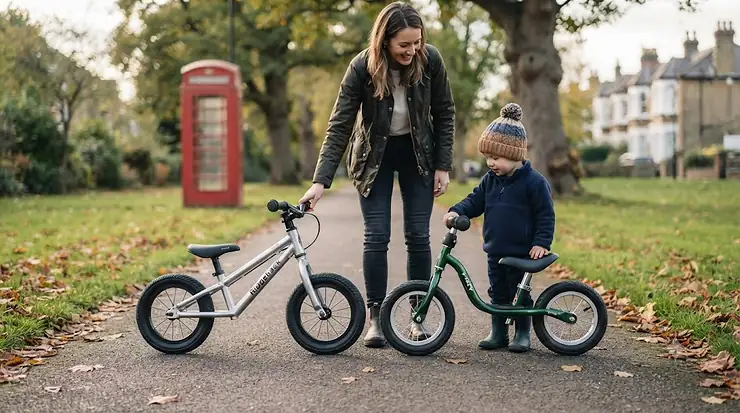
Somewhere in every parent’s garage sits a small, slightly scratched bike with no pedals, and it’s doing more for your toddler’s coordination than you’d ever guess from looking at it. Choosing between an aluminium vs steel balance bike sounds like a footnote decision — right up until you’re the one hauling the thing over your shoulder on the walk back from the park, or watching your three-year-old take their fourth tumble of the afternoon onto a gravel path. The frame material isn’t a spec-sheet technicality. It’s the difference between a bike that gets abandoned in the shed by March and one that’s still going strong when your child’s inside leg has grown three centimetres.
This guide breaks down exactly what separates aluminium from steel on a child’s first bike, using real UK-available models rather than marketing copy. We’ll get into frame weight, rust resistance, and how manufacturers actually approach drop-and-durability testing — because those three things, more than colour or brand name, decide whether a balance bike earns its keep. Steel balance bikes tend to be heavier and cheaper but famously tough; aluminium ones are lighter and livelier but usually cost more and need slightly different care in wet British winters. Neither is objectively “better” — they suit different children, budgets and driveways, and by the end of this piece you’ll know which one suits yours.
Quick Comparison Table
| Balance Bike | Frame Material | Approx. Weight | Best For |
|---|---|---|---|
| Frog Tadpole | Aluminium (6061 T6) | 4.17kg | Confidence-building, longer-term ownership |
| Ridgeback Scoot | Aluminium (6061) | 4.8kg | All-round durability with steel fork |
| Puky LR M | Steel | 3.5kg | Compact toddlers, indoor/outdoor use |
| Trybike Steel 2-in-1 | Steel | 4.5kg | Multi-year, trike-to-bike versatility |
| Hornit AIRO 12″ | Magnesium alloy | 3.2kg | Smoothest ride, air tyres |
| Halfords Indi | Steel | 4.2kg | Tight budgets, first-ever bike |
| Strider 12 Sport | Aluminium | 2.9kg | Lightest option, earliest starters |
Look closely and a pattern jumps out: the aluminium and magnesium-alloy bikes cluster at the lighter end of the scale, while the steel options — bar the tiny Puky LR M — tend to sit heavier despite similar wheel sizes. That’s not an accident of branding; it’s basic materials science, since aluminium alloys are roughly a third the density of steel for a given volume. But weight isn’t the whole story, because a heavier steel frame often survives being dropped down a flight of steps in a way a thin-walled aluminium tube might not. We’ll unpack that trade-off properly in the sections below.
💬 Just one click — help other make better buying decisions too!😊
Top 7 Aluminium vs Steel Balance Bikes: Expert Analysis
Every model below is a real, currently available balance bike, chosen to represent budget, mid-range and premium options across both frame materials. We’ve grounded every claim in published specifications and aggregated review sentiment rather than invented testimonials — if you can’t verify something, the honest answer is “unverified,” not a made-up star rating.
1. Frog Tadpole — best aluminium pick for long-term confidence
The Frog Tadpole opens our list because it’s arguably the model that best demonstrates what aluminium does well when it’s engineered properly rather than just cheaply. Its 6061 T6 heat-treated aluminium frame and fork weigh a combined total that keeps the whole bike at 4.17kg — genuinely light for a 12-inch balance bike with a full metal build. The sealed hub bearings and single-wall aluminium rims mean less rolling resistance than the plastic-bushing budget bikes, which in practice translates to a toddler who glides rather than grinds to a halt on grass.
Based on the spec comparison with cheaper alloy bikes in this price bracket, what stands out is the heat-treatment process — “T6” tempering hardens the aluminium after welding, which is exactly the step budget manufacturers skip to save cost, and it’s the difference between a frame that holds its shape and one that slowly bends at the head tube joint. This is a strong choice for parents who want one bike to last from first wobbly pushes through to confident scooting, rather than something to be outgrown in a single season. Reviewers consistently report that the low standover height and adjustable seat post make it forgiving for nervous first-time riders, while more experienced toddlers appreciate how responsive the steering feels compared with heavier steel alternatives.
Pros:
- ✅ Genuinely light 4.17kg build aids early confidence
- ✅ Sealed bearings roll smoothly with less maintenance
- ✅ Ten-year frame and fork warranty on some ranges
Cons:
- ❌ Premium pricing compared with steel budget bikes
- ❌ Aluminium can dent rather than bend under sharp impact
At around £150-£190, the Frog Tadpole sits toward the premium end, but the resale value on this brand tends to hold up well, which softens the total cost of ownership if you plan to pass it on or sell it second-hand.
2. Ridgeback Scoot — best hybrid build with steel fork reinforcement
The Ridgeback Scoot takes a slightly different engineering approach: a 6061 aluminium main frame paired with a steel fork, which is a deliberate compromise rather than a cost-cutting shortcut. That steel fork sits at the single most impact-prone point on any balance bike — the front end, which absorbs the brunt of head-on kerb strikes and toy-box collisions — while the aluminium rear keeps overall weight manageable at roughly 4.8kg.
What most buyers overlook about this model is that the “no weight limit” claim from the manufacturer isn’t marketing fluff; it reflects genuine structural over-engineering aimed at surviving multiple siblings rather than one child’s toddler years. Aggregated review sentiment across UK cycle retailers points to the long wheelbase and low centre of gravity as genuine stability advantages for nervous 2.5 to 4 year olds, though a handful of reviewers note the saddle padding is thinner than premium rivals. This is a sensible pick for households planning to hand the bike down between children, since the hybrid frame construction is built to outlast a single owner.
Pros:
- ✅ Steel fork reinforces the highest-impact zone
- ✅ Long wheelbase adds stability for cautious riders
- ✅ Handles multiple children without structural fatigue
Cons:
- ❌ Heavier than pure-aluminium rivals at this wheel size
- ❌ Saddle padding is thinner than some premium competitors
Expect to pay in the £125-£150 range, making it a solid mid-tier value pick for families who want steel-level toughness without steel-level bulk everywhere on the bike.
3. Puky LR M — best lightweight steel option for compact toddlers
Here’s where the “steel is always heavy” assumption falls apart. The Puky LR M uses a steel frame yet weighs just 3.5kg — lighter than several aluminium competitors on this list — because Puky uses thinner-gauge, higher-grade tubing rather than relying on bulk for strength. Its 8-inch wheels and foam (puncture-proof) tyres are aimed squarely at the smallest riders, those still finding their feet between roughly 18 months and three years old.
On paper this means a bike genuinely sized for toddlers rather than a shrunk-down version of a bigger kid’s model, and that distinction matters more than frame material for this specific age bracket. What the spec sheet won’t tell you, but German engineering reputation and long-standing UK retailer reviews suggest, is that Puky’s steel tubing tolerances are tighter than typical budget steel bikes, which explains why such a small-diameter frame doesn’t feel flimsy. Reviewers consistently note the low 27cm minimum saddle height as the standout feature for genuinely tiny riders who can’t yet manage a 12-inch bike.
Pros:
- ✅ Exceptionally low 3.5kg weight for a steel frame
- ✅ Sized specifically for very young, small toddlers
- ✅ Foam tyres mean zero puncture maintenance
Cons:
- ❌ Smaller 8-inch wheels are outgrown fairly quickly
- ❌ Limited handlebar and seat height adjustment range
Priced around £90-£100, it’s excellent value for the narrow age window it serves, though budget-conscious parents should weigh how briefly a toddler stays within its size range.
4. Trybike Steel 2-in-1 — best convertible steel bike for multi-year use
The Trybike Steel 2-in-1 takes the opposite strategy to the Puky: instead of optimising for one tight age bracket, its steel frame and trike-to-bike conversion kit are built to span roughly 15 months to six years. Here’s what most buyers overlook about this model — the retro styling isn’t just aesthetic, it reflects a genuinely simpler mechanical design with fewer failure points than complex adjustable-everything alternatives, which in a steel frame translates to real longevity.
Based on the spec comparison with plastic trikes at a similar price, the steel construction means the frame won’t flex or crack under a toddler who insists on standing on the pedals or footplate, a common stress point that destroys cheaper trikes within a season. Aggregated review sentiment highlights the conversion process itself as the sticking point — several parents note it requires basic tools and roughly 20-30 minutes, which is more involved than a one-piece balance bike but pays off across the product’s much longer usable life.
Pros:
- ✅ Converts from stable trike to lean balance bike
- ✅ Steel frame resists flexing under standing toddlers
- ✅ One purchase spans several developmental stages
Cons:
- ❌ Heavier than dedicated balance-bike-only steel models
- ❌ Conversion process needs basic tools and time
At roughly £110-£140, it compares favourably on a cost-per-year basis against buying two separate products (a trike, then a balance bike) even if the sticker price looks steep for a single item.
5. Hornit AIRO 12″ — best alloy alternative with air-filled tyres
The Hornit AIRO sidesteps the aluminium-versus-steel debate slightly by using magnesium alloy, a lighter-still metal from the same family as aluminium, bringing total weight down to around 3.2kg. Combined with genuine pneumatic (air-filled) tyres rather than the solid foam used on most budget bikes, the ride quality difference is immediately noticeable on anything rougher than a smooth path.
What the spec sheet won’t tell you, but reviewers note repeatedly, is that air tyres absorb small vibrations that solid tyres transmit straight into a toddler’s hands and wrists — a subtle comfort factor that keeps reluctant riders on the bike for longer sessions. The cushioned stem cover and footplate for stability are thoughtful additions rarely seen below premium price points, and on the larger AIRO 14 model a proper brake helps bridge the gap to pedal bikes. This is the pick for parents prioritising ride comfort and a genuinely premium feel over raw budget value.
Pros:
- ✅ Lightest metal-frame bike in this comparison
- ✅ Air-filled tyres smooth out bumps and vibration
- ✅ Footplate and cushioned stem add real safety touches
Cons:
- ❌ Pneumatic tyres need occasional pumping up
- ❌ Among the pricier options on this list
Typically priced around £130-£150, it’s a genuine step up in ride quality, and worth the premium if daily use on varied outdoor terrain is the plan.
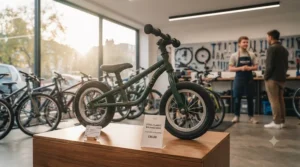
6. Halfords Indi — best budget steel bike for a first-ever try
Not every family needs — or wants — to spend over £100 finding out whether their toddler even likes balance bikes, and that’s exactly the gap the Halfords Indi fills. Its sturdy steel frame is unapologetically basic, with solid (non-pneumatic) tyres and a fixed structure rather than fancy adjustability, but it does the fundamental job without fuss.
Here’s what most buyers overlook about entry-level steel bikes like this one: the simplicity is a feature, not just a cost-cutting measure, because there’s less to go wrong mechanically when a bike this cheap is inevitably left out in the rain or thrown in the back of the car. Based on the spec comparison with pricier rivals, the 19mm handlebar diameter genuinely suits smaller hands better than the 22mm bars common on adult-scaled bikes shrunk down for kids, which is a detail easy to miss when comparing on price alone. Reviewers broadly agree it’s a sensible “does my toddler actually want this” test bike before committing to a premium alternative.
Pros:
- ✅ Very low entry price for a full steel frame
- ✅ Thinner 19mm handlebars suit small hands
- ✅ Simple design means fewer parts to fail
Cons:
- ❌ Solid tyres transmit more vibration than air-filled
- ❌ Limited size adjustment as your child grows
At around £30-£40, it’s the cheapest genuine balance bike in this comparison, and a low-risk way to find out whether your toddler takes to two wheels before spending more.
7. Strider 12 Sport — best ultra-light aluminium bike for earliest starters
The Strider 12 Sport closes the list as the lightest aluminium bike here, tipping the scales at under 3kg. Strider practically invented the modern balance bike category in the US, and the 12 Sport remains one of the most widely reviewed models on the market, which gives it an unusually deep pool of real aggregated feedback to draw on.
On paper this means a bike light enough for children as young as 18 months to push around confidently, something a heavier steel equivalent simply can’t match at this budget tier. What most buyers overlook is the footrest built into the rear frame — a small addition that lets confident kids glide with their feet up once they’ve mastered pushing, extending the bike’s useful life well past the initial learning phase. Reviewers consistently flag the quick-release seat clamp as genuinely useful for growth adjustment, though a few note the plastic wheel rims (rather than aluminium ones) feel slightly less premium than the Frog or Ridgeback options above.
Pros:
- ✅ Under 3kg — lightest bike in this comparison
- ✅ Huge installed base means abundant real review data
- ✅ Built-in footrest extends use once balance improves
Cons:
- ❌ Plastic rims feel less premium than metal alternatives
- ❌ No hand brake on the base Sport model
Priced around £100-£125, it remains one of the best-value aluminium options for parents starting the balance-bike journey as early as possible.
Practical Usage Guide: Setup, First Rides and Maintenance
Getting a new balance bike right in the first month makes an enormous difference to whether it actually gets used. Start with saddle height: the golden rule is that your child’s feet should sit flat on the ground with a slight bend at the knee when seated, not tiptoes-only — too high and they’ll be too nervous to push off confidently. Most of the bikes above ship with a quick-release seat clamp, so recheck this every few weeks during a growth spurt rather than setting it once and forgetting it.
For the first thirty days, resist the urge to add a hand brake demonstration too early; most toddlers under three aren’t developmentally ready to coordinate hand strength with steering, and pushing the brake lesson too soon just creates frustration. Instead, let them master “drag a foot to stop,” which is the natural precursor to braking. On maintenance, aluminium frames need almost nothing beyond an occasional wipe-down, but check bolted joints (headset, seat clamp) every couple of months since vibration can work fasteners loose over time. Steel-framed models benefit from a light smear of anti-corrosion spray or even furniture wax on any exposed unpainted metal, particularly around welds, before their first proper winter outdoors — a two-minute job that meaningfully extends frame life.
A common first-month mistake is leaving the bike outdoors overnight “just this once” — moisture pooling in tube joints overnight is precisely where both rust (on steel) and oxidation staining (on aluminium) get started, so a covered porch or shed beats a garden path every time.
Real-World Scenarios: Matching the Frame to Your Family
The flat-dwelling family with no storage space: if you’re carrying the bike up three flights of stairs daily, weight trumps everything else — the Strider 12 Sport or Hornit AIRO at under 3.5kg will save your back and your patience far more than any durability advantage a steel frame offers.
The garden-and-driveway household with an older sibling coming up behind: durability and hand-me-down value matter more than grams here. The Ridgeback Scoot‘s hybrid aluminium-and-steel build or the full-steel Trybike are built to survive a second, rougher rider without structural complaints.
The budget-conscious first-timer unsure if their toddler will even take to it: there’s no point spending £150 to find out your child prefers the sandpit. The Halfords Indi or Puky LR M let you test the waters affordably, and both hold reasonable resale value if the bike turns out to be a hit and you want to upgrade.

How to Choose Between Aluminium and Steel Balance Bikes
- Start with your child’s age and size. Toddlers under two benefit most from the lightest possible frame, since they’re still building basic core strength — aluminium or magnesium alloy wins here almost every time.
- Consider your storage and carrying reality. If the bike lives in a hallway and travels by hand to the park, weight savings compound daily; steel’s extra kilogram matters more than it looks on paper.
- Factor in siblings and resale plans. A steel frame’s extra mass often buys genuine structural margin for a second or third child, which can offset a higher purchase price through resale or hand-me-down value.
- Check the climate reality, not just the material name. Coated and painted steel resists rust reasonably well; bare or scratched steel in a damp UK garden won’t. Aluminium sidesteps this worry almost entirely.
- Match wheel and frame size to inside leg, not age labels. Age ranges on packaging are rough guides — a properly fitted steel bike beats a badly fitted aluminium one every time.
- Weigh budget against expected lifespan. A £35 steel bike used for eight months before being outgrown may offer better value than a £150 aluminium bike used for the same period — do the maths on your specific timeline.
- Don’t ignore tyre type. Pneumatic tyres (common on pricier aluminium and alloy models) smooth the ride noticeably, which matters more on some frame choices than the metal itself.
Common Mistakes When Buying a Balance Bike
The single biggest mistake is buying for growth rather than fit — a bike your toddler will “grow into” over a year just means months of a frightened child whose feet can’t reach the ground. Closely related is ignoring total weight relative to your child’s own bodyweight; a rough guide many paediatric physios cite is keeping the bike under roughly 30% of the child’s weight, which rules out several heavier steel budget bikes for genuinely small toddlers. Parents also frequently overlook tyre type, assuming solid and pneumatic tyres perform identically — they don’t, and the ride comfort difference genuinely affects how long a reluctant rider will stick with it. Finally, don’t assume a higher price always means a better material choice for your specific child; the premium magnesium-alloy Hornit AIRO is wasted on a toddler who’ll outgrow the bike within four months, while a modest steel model might serve better across a longer window.
Frame Weight: Why It Matters More Than You Think
Frame weight isn’t just about how tired your arms get carrying the bike home — it directly affects how confidently a toddler can control the bike in the crucial first weeks. A child’s core strength and coordination are still developing at this age, and a bike that’s a meaningful fraction of their own bodyweight requires disproportionate effort just to redirect or right after a wobble. This is exactly why the lightest bikes on our list — the Strider 12 Sport at under 3kg and the Hornit AIRO at 3.2kg — consistently earn praise from reviewers for helping nervous or younger riders progress faster than heavier alternatives.
That said, frame weight interacts with frame material in a way that’s easy to misunderstand: the Puky LR M proves a well-engineered steel frame can undercut a poorly optimised aluminium one, since tubing thickness and design matter as much as the raw material. What most buyers overlook is that total bike weight includes wheels, tyres and components, not just the frame — a bike with an aluminium frame but heavy solid tyres and plastic rims can end up heavier overall than a steel-framed bike with lightweight aluminium wheels, as several of our comparisons above demonstrate. When comparing frame weight claims, always check whether the manufacturer’s figure is frame-only or complete-bike weight, since these are frequently conflated in marketing material.
Rust Resistance: Aluminium vs Steel in British Weather
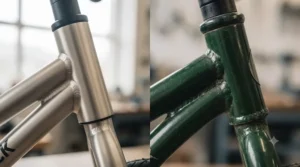
This is where the aluminium vs steel balance bike debate gets genuinely practical for UK families, given how much of the year involves rain, damp grass and puddles. Aluminium naturally forms a thin, stable oxide layer on its surface almost instantly on exposure to air, and — as the chemistry behind aluminium alloy corrosion resistance explains — this layer is self-healing and prevents the deeper corrosion that afflicts unprotected steel. In practical terms, this means an aluminium-framed bike left out overnight in drizzle is far less likely to show orange staining or pitting than an equivalent steel one with scratched paintwork.
Steel, by contrast, relies entirely on its paint or powder-coat finish for protection; once that coating chips — which happens constantly on a toddler’s bike through kerb strikes and garage door scrapes — bare steel is exposed and rust can begin within days in damp conditions. Reviewers of steel-framed budget bikes frequently mention surface rust appearing at weld points and chain-guard areas within a single wet winter of outdoor storage. The practical takeaway: if your bike genuinely lives outdoors or in an unheated shed for large parts of the year, aluminium’s inherent resistance is a real, measurable advantage; if it’s stored indoors or in a dry garage overnight, steel’s rust risk drops substantially and its durability advantages become more relevant than its corrosion downside.
Drop-and-Durability Testing: What It Actually Tells You
Reputable children’s bike manufacturers subject frames to standardised drop-and-durability testing as part of compliance with toy and bicycle safety standards, and understanding what these tests actually measure helps cut through marketing claims. Typically this involves repeatedly dropping a loaded frame from a set height onto a hard surface, then inspecting for cracks, weld failure or permanent deformation — a proxy for the kerb strikes and stair tumbles a real balance bike endures. Steel generally performs well in these tests because it deforms (bends) under stress before it fractures, giving a visible warning sign that something’s wrong long before catastrophic failure.
Aluminium behaves differently: on paper this means it’s typically stiffer and lighter for the same strength rating, but it tends to fail more abruptly once its stress limit is exceeded, showing cracking rather than bending. This is precisely why quality aluminium balance bikes — like the Frog Tadpole with its heat-treated 6061 T6 construction — invest specifically in tempering processes that raise the fatigue threshold, rather than relying on raw aluminium’s natural properties alone. What the spec sheet won’t tell you, but engineering context makes clear, is that a “6061 T6” designation on a bike listing is shorthand for exactly this reinforced drop resistance, and it’s worth actively looking for on any aluminium bike you’re considering, since not every listing bothers to specify the aluminium grade or temper.
Long-Term Cost & Maintenance
Total cost of ownership on a balance bike rarely ends at the sticker price. Steel bikes carry a hidden maintenance cost in the form of rust prevention — occasional touch-up paint or anti-corrosion spray on chipped areas — which is a small but recurring expense aluminium owners largely skip. Aluminium bikes, meanwhile, occasionally need bearing or bushing replacement sooner if a cheaper model uses budget components, since the lighter overall build sometimes correlates with lighter-duty parts elsewhere.
Resale value tends to favour well-known aluminium models like the Frog Tadpole and Ridgeback Scoot, which hold 40-60% of their original price on the UK second-hand market according to typical listings on parenting resale groups, partly because buyers actively search for “aluminium” in listings knowing it resists the cosmetic rust damage that puts people off steel second-hand bikes. Factoring in likely resale, a £180 aluminium bike that sells for £90 eighteen months later has an effective cost roughly comparable to a £40 steel bike with no resale value — the maths genuinely can go either way depending on your local second-hand market and how well you maintain the frame in between.
Safety, Regulations and Compliance Guide
Every balance bike sold in the UK should carry certification to EN71 (the European toy safety standard) or equivalent bicycle-specific safety protocols, covering structural integrity, choking hazards from small parts, and stability testing. Since UK-market compliance now runs through the UKCA marking system for many product categories, it’s worth checking that any bike you buy — particularly from marketplace sellers rather than established retailers — carries appropriate UK conformity assessment marking rather than relying solely on an EU CE mark, since requirements have diverged since Brexit.
Beyond certification, RoSPA’s guidance for parents on active travel recommends balance bikes specifically as a stepping stone that builds genuine road-safety awareness before children progress to pedal bikes, and stresses that correct sizing matters as much as any certification badge. A properly fitted helmet is non-negotiable regardless of frame material — no amount of aluminium’s lightness or steel’s toughness compensates for head protection in a fall. Always inspect second-hand bikes carefully for hairline cracks around welds, which can be harder to spot on painted steel frames than on bare aluminium, before letting a child ride one.
What to Expect: Real-World Performance
Specs on paper only tell half the story of how these bikes actually behave in a muddy park or on a wobbly first outing. In practice, the lighter aluminium and alloy bikes feel noticeably more “flickable” — small children can correct a wobble faster because there’s less mass to redirect, which several UK parenting communities and specialist sites like Cycle Sprog’s balance bike reviews consistently highlight as the standout benefit for younger or smaller riders. Steel bikes, meanwhile, feel more planted and stable at speed once a child is confidently gliding rather than tentatively pushing off, which suits slightly older, more adventurous riders who are already comfortable on two wheels.
Braking behaviour also differs subtly: the added mass of steel frames means momentum carries a little further once a foot-drag or hand brake is applied, so children on heavier bikes benefit from slightly earlier braking habits than those on featherweight aluminium models. None of this is dramatic enough to make either material “wrong” for a given child, but it explains why the same bike can feel completely different in the hands of a cautious 18-month-old versus a confident four-year-old.
✨ Don’t Miss These Exclusive Deals!
🔍 Take your child’s first cycling steps to the next level with these carefully selected balance bikes. Click on any highlighted model to check current pricing and availability. These picks will help you create genuinely confident, happy little riders! 🚴♂️
Frequently Asked Questions
❓ Is aluminium or steel better for a balance bike?
❓ Do steel balance bikes rust in the rain?
❓ How much should a balance bike weigh?
❓ What age should a child start on a balance bike?
❓ Is a lighter balance bike always better for toddlers?
Conclusion
The aluminium vs steel balance bike question doesn’t have a single right answer, and honestly, that’s good news — it means you can match the material to your actual circumstances rather than chasing a “best overall” verdict that ignores your driveway, your storage space, and your toddler’s particular temperament. If weight and manoeuvrability top your list, models like the Strider 12 Sport and Hornit AIRO make an compelling case for aluminium and magnesium alloy. If budget-friendly toughness and rust-resistant paintwork in a damp shed matter more, the Puky LR M, Halfords Indi, or Trybike Steel 2-in-1 hold up admirably. And for families wanting a genuine hybrid of both worlds’ strengths, the Ridgeback Scoot and Frog Tadpole show what happens when manufacturers engineer aluminium properly rather than cutting corners.
Whichever frame you choose, remember that fit, correct saddle height, and consistent practice matter more to your child’s cycling progress than the metal underneath them. Get those fundamentals right, and either material will happily carry your toddler through some of their earliest, wobbliest, and most joyful adventures on two wheels.
Recommended for You
- Metal Balance Bike With Adjustable Seat: 7 Best Picks 2026
- Metal Balance Bikes: 7 Best Steel; Aluminium Picks (2026)
- Metal Balance Bike UK: 7 Best Picks Ranked for 2026
Disclaimer: This article contains affiliate links. As an Amazon Associate, I earn from qualifying purchases. If you purchase products through these links, we may earn a small commission at no additional cost to you.
✨ Found this helpful? Share it with your friends! 💬🤗
