In This Article
A folding Micro scooter is a Swiss-designed kick scooter from the Micro brand whose handlebar collapses against the deck, usually through a one-click folding mechanism. That lets you carry it, drop it in a car boot or tuck it under a café table. The range runs from 1.95kg toddler three-wheelers to adult commuters.
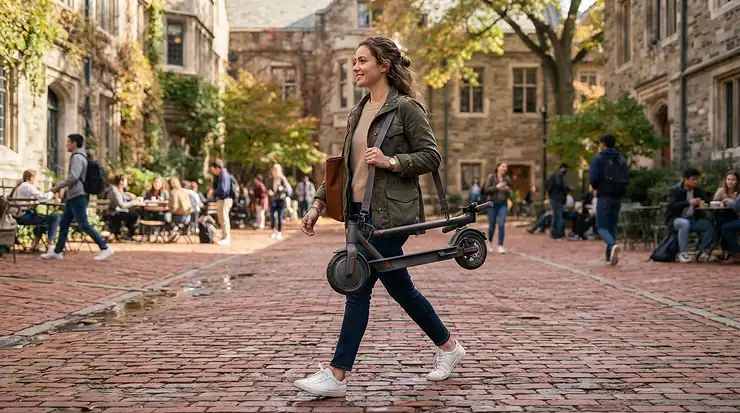
Here’s the thing about scooters: riding them is the easy bit. Carrying them is where the romance dies. Every parent knows the moment. Little legs declare themselves finished, the scooter becomes your problem, and you’re wrestling a T-bar with a shopping bag on the other arm. A well-built folding Micro scooter exists to solve exactly that moment.
The format has a charming origin story. Wikipedia’s kick scooter entry credits Wim Ouboter of Micro Mobility Systems with an early foldable aluminium scooter. Micro’s own history page says he built it because he wanted a quicker way to cover short “micro distances”, such as the walk from his flat to a favourite sausage stand. Decades later, the same idea sits in school playgrounds and on commuter trains across Britain.
This guide ranks seven real models, from toddler to teenager to adult. I’ve worked from published specs, UK retailer listings and independent reviews, and I haven’t ridden any of them, so what follows is analysis, not hands-on testing. We’ll cover how each carry strap works (and which models it doesn’t suit), how small the compact storage size really gets, and how to approach Micro scooter deals sensibly. Prices are ranges at the time of research, so always check the current price.
Quick Comparison: The Best Folding Micro Scooter Options at a Glance
Before the deep dive, here’s the whole line-up on one screen. Weights are manufacturer or retailer figures and can vary slightly by colour and edition.
| Scooter | Ages | Weight | Wheels | Price range | Best For |
|---|---|---|---|---|---|
| Mini Micro Deluxe Foldable | 2–5 | 1.95kg | 3 (120/80mm) | around £90–£120 | Toddlers, pushchair-basket storage |
| Maxi Micro Foldable LED | 5–12 | ~2.5–2.8kg | 3 | around £145–£175 | Stability-first school-age kids |
| Micro Sprite Classic | 5–12 | 2.85kg | 2 (120mm) | around £100–£115 | Light carrying, first two-wheeler |
| Micro Cruiser | 5–12 | ~4.5kg | 2 (200mm) | around £130–£150 | Longer, smoother scoots |
| Micro Sprite Suspension | 8+ to adult | 4.1kg | 2 (145mm) | around £130–£145 | Bumpy pavements, hands-free fold |
| Micro Classic | 8+ to adult | 4.7kg | 2 (200mm) | £165–£180 range | Daily commuting |
| Micro Flex Deluxe | Teens/adults | ~5kg | 2 (200mm) | Check current price | Comfort-first riders |
The Micro Sprite Classic offers the best weight-to-price balance for school-age children. At 2.85kg it’s easy to carry, and it costs less than the Micro Cruiser. If your child’s route is long or the pavements are cracked, the Micro Cruiser‘s 200mm wheels justify the extra weight and money. Budget-minded parents of under-fives should note that the Mini Micro Deluxe Foldable has the smallest compact storage size of the lot, but its lifespan ends around age five.
💬 Just one click — help others make better buying decisions too!😊
Top 7 Folding Micro Scooter Picks: Expert Analysis
Each entry below turns the spec sheet into everyday meaning. Review comments are aggregated themes from retailer-hosted and independent reviews, not invented quotes.
1. Mini Micro Deluxe Foldable — best first scooter that vanishes into a pushchair
The headline here is a one-click folding mechanism on a scooter weighing about 1.95kg, roughly two bags of sugar. This is the model for parents who spend half their outings carrying a scooter their toddler has abandoned.
The three-wheel lean-to-steer design means toddlers steer by tilting, which builds balance without a “which way do I turn the handlebar” decision. The handlebar adjusts from about 49cm to 68cm and the deck is fibreglass-reinforced with a non-slip grip. On paper, that suits ages two to five, and it also explains why the model is outgrown quickly. Based on the spec comparison, the fold is the real purchase here, because it gives a genuinely compact storage size for hallways and boots.
Reviewers on Micro’s UK listings commonly mention suitability for young children and fast delivery, and several are grandparents buying for second birthdays. The light-up wheels on the LED edition get specific praise.
Pros:
- ✅ One-click fold fits pushchair baskets and boots
- ✅ Light enough for small hands to lift
- ✅ Lean-to-steer builds early balance
Cons:
- ❌ Outgrown by around age five
- ❌ Micro’s carry strap guidance excludes three-wheelers
Expect to pay around £90–£120, with foldable versions towards the upper end. For a child who’ll ride daily, that’s a sensible price. If it’s a “might use it” purchase, the non-folding alternatives are cheaper.
2. Maxi Micro Foldable LED — three-wheel stability with a folding stem
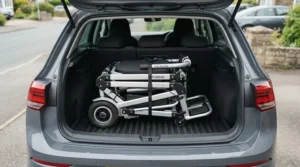
Micro took the fold from its two-wheelers and put it on the best-selling Maxi. The stem collapses against the deck at the touch of a button, so the Maxi now fits a boot, an aircraft overhead locker or a café floor.
Micro’s launch notes list ages 5–12, a rider limit of 70kg, an adjustable handlebar, tilt-and-lean steering and a rear brake. Retail listings add a raised silicone footplate grip and motion-activated LED wheels that need no batteries, and weights of roughly 2.5–2.8kg depending on the listing. In practice, that means a school-age child who still wants three-wheel security can finally have a folding Micro scooter that doesn’t demand a roof rack.
My analytical take is that this suits the nervous scooter-rider, or the child who shares with a younger sibling. Parents who own several Micro scooters often highlight the folding feature as the best bit of the Maxi, and the longevity comments are consistent across listings.
Pros:
- ✅ Three-wheel stability with fold-and-carry convenience
- ✅ Light-up wheels with no batteries to replace
- ✅ Adjustable bar grows with the child
Cons:
- ❌ Wider footprint than a two-wheeler when folded
- ❌ Costs more than non-LED, non-folding versions
Budget around £145–£175. It’s a premium for a three-wheeler, but sensible if you travel often.
3. Micro Sprite Classic — lightest two-wheel pick at 2.85kg
The standout is weight. At 2.85kg with a 100kg rider limit, the Micro Sprite Classic is the featherweight of the two-wheel range, and the one-click folding mechanism plus kickstand make it the “park anywhere” choice.
The aluminium frame, adjustable handlebar (about 65–95cm on retailer listings) and age range of 5–12 make it a natural step up from a three-wheeler. Some retailers list slightly higher weights, up to 3.3kg, so check the exact listing. The 100kg limit means teens and lighter adults can use it too. The trade-off is the smaller wheels, which transmit more vibration over rough paving than 200mm alternatives. Micro says the Sprite has been voted a top two-wheeler by parenting media, but that’s the brand’s claim, not something I could independently verify.
Reviewers describe it as lightweight and easy to fold up and down. One buyer of two for children aged five and eight mentioned wishing they’d chosen the LED edition.
Pros:
- ✅ Very light for confident carrying
- ✅ Kickstand and fold make storage effortless
- ✅ Handlebar adjusts up to age 12
Cons:
- ❌ Smaller wheels feel busier on rough pavements
- ❌ Two-wheel steering needs some balance first
Expect around £100–£115. This is excellent value and arguably the sweet spot of the range.
4. Micro Cruiser — 200mm wheels and chopper-style bars
The big wheels are the story. They roll over cracks and kerb-dips the smaller wheels would feel, which makes the Micro Cruiser the “go further, faster” choice for school-age riders.
Micro describes wide chopper-style handlebars, a lower footplate, a handlebar range of roughly 74–89cm, a 100kg limit and a kickstand with one-click fold. Weight is around 4.5kg on the listing I found. The lower deck means less push effort per stride, and the wider bar gives steadier steering for younger children. Micro frames the contrast neatly: the Sprite is agile, while the Cruiser is built to go further.
Reviewers on Micro’s UK listings praise the smooth ride and the fold. One caution from the accessory pages is that at least one buyer reported the standard carry strap didn’t fit the Cruiser as designed, though they improvised a fix.
Pros:
- ✅ 200mm wheels smooth out rough surfaces
- ✅ Low deck and wide bars feel stable
- ✅ Folds for boot storage
Cons:
- ❌ Noticeably heavier than the lightest two-wheeler
- ❌ Strap compatibility is questionable
Budget around £130–£150. If your child’s route is long, it’s money well spent.
5. Micro Sprite Suspension — front suspension and a hands-free fold
Front suspension and a fold you operate with your foot make this the “bumpy-pavement” pick. The Micro Sprite Suspension is aimed at older children, teens and adults.
Specs include 145mm wheels with ABEC 9 bearings, a 100kg rider limit, a handlebar range of around 78–101cm and an extended rear brake. It weighs 4.1kg. Retailer descriptions say a simple foot nudge folds it, which matters when one hand holds a school bag. The suspension takes the sting out of broken paving, which is the difference between a pleasant commute and a rattly one.
The verifiable review pool I found for this exact model was small. Retailer copy emphasises ride comfort and the hands-free fold, so treat that as indicative rather than proven.
Pros:
- ✅ Suspension dulls pavement vibration
- ✅ Foot-operated fold keeps hands free
- ✅ Strong rear brake for confident stops
Cons:
- ❌ About 1.25kg heavier than the lightest Sprite
- ❌ Carry strap not supported on at least one listing
Expect around £130–£145. That’s good value for the comfort, especially if you’re replacing a scooter that rattles.
6. Micro Classic — the commuter staple with 200mm wheels
This is Micro’s long-running adult-capable model. Micro calls it its best-selling two-wheeler for ages eight to adult, and the Micro Classic pairs 200mm wheels with a low aluminium deck.
The weight is about 4.7kg, the handlebar adjusts from roughly 72cm to 103cm and the rider limit is 100kg. A built-in kickstand and one-click fold complete the package. Large wheels cut effort per push, so a commuter covers more ground with less leg fatigue. The low deck also reduces ankle strain over distance. That 4.7kg is the cost, though: if you regularly climb station stairs, you’ll notice it.
Micro’s review topics for this model centre on quality, ride and wheels. I found few detailed independent reviews, so I’d treat the sentiment as positive but thin.
Pros:
- ✅ Big wheels for an effortless glide
- ✅ Wide handlebar range suits most heights
- ✅ Fold and kickstand for daily use
Cons:
- ❌ Heaviest of the mainstream folding models
- ❌ No suspension on rough pavement
Expect roughly £165–£180. It’s pricey, but cost per use looks fine for a daily commuter.
7. Micro Flex Deluxe — flexible deck that absorbs bumps
Its party trick is a wood-and-fibreglass deck that flexes under you, instead of the metal-reinforced deck on some rivals. The Micro Flex Deluxe is Micro’s premium comfort option.
Honest John’s Kit review praises the 200mm wheels, a handlebar range of 73–103cm, a large foot brake with mudguards and a kickstand. Folding means undoing a latch and pressing two buttons. Micro’s 200mm Flex listing gives a folded size of about 76 × 13.5 × 32cm and a weight near 5kg, a very neat compact storage size for under-seat train stowage. The reviewer also noted the deck is smaller than on the Micro Suspension, with room for a UK size 5 shoe and the other foot resting behind. Bigger feet may find that tight.
Independent verdict: premium build, shortlisted for a Scooter of the Year award, though the reviewer called it expensive and pointed to the cheaper Flex Classic.
Pros:
- ✅ Flexible deck cushions bumps
- ✅ Folds to a slim, train-friendly shape
- ✅ Premium feel and finish
Cons:
- ❌ Compact deck cramps larger feet
- ❌ Expensive versus other folding models
I couldn’t verify a current UK price range, so check the current price. Pay the premium only if ride comfort is your top priority.
Your First 30 Days: Setup, Folding and Maintenance
A new folding Micro scooter rewards ten minutes of care at the start. Here’s a routine that prevents most early problems.
Day one: Check that every bolt and the folding clamp are snug, because a loose clamp is the number-one cause of rattling. Set the handlebar height next. A common rule of thumb is that the grips should land around waist height for children, but fit them to the rider and adjust as they grow.
Practising the fold: On two-wheelers like the Micro Sprite Classic and Micro Classic, the sequence is loosen the clamp, then press and hold the two buttons beside the front wheel, then fold. Practise on a flat, clean surface and keep fingers clear of the hinge. Mini and Maxi models use their own one-click systems, so follow the manual.
Weekly: Wipe the deck and stem, spin each wheel and listen for grinding, and recheck the bolts.
Common first-month mistakes:
- Leaving the clamp loose, which causes rattles and wear.
- Folding on gravel or wet leaves, which clogs the hinge.
- Skipping a helmet. Micro itself recommends wearing one.
If a wheel wears, the maintenance cost is modest: Micro’s 200mm replacement wheel with bearings was listed at roughly £20–£25 at the time of research.

Real-World Scenarios: Matching a Folding Micro Scooter to Your Life
Specs only matter once they meet a real routine. Here are three scenarios.
Scenario 1: The pushchair parent. You have a four-year-old, a baby and a boot already stuffed with essentials. Budget is moderate and use is daily. The Mini Micro Deluxe Foldable fits: it’s light, it folds and the compact storage size slips into a pushchair basket. Plan to replace it around age five.
Scenario 2: The commuting student. You travel a couple of miles by scooter, then catch a train. Budget stretches higher and you’ll use it five days a week. The Micro Classic offers efficiency, while the Micro Flex Deluxe adds comfort if you can afford the premium. Both fold for under-seat storage, but expect to carry 4.7–5kg.
Scenario 3: The family with two school-age children. One is eight, the other eleven, and the school route is cracked tarmac. The Micro Sprite Suspension or Micro Cruiser handle the surface. For the younger child’s lighter carry, the Micro Sprite Classic works when the route is smoother.
A realistic note: no scooter suits everybody. Pick for the rider’s weakest link, whether that’s bumpy paving, carrying weight or storage space.
✨ Ready to Fold, Stash and Go?
🛴 Whether it’s the school run or the station dash, a folding Micro scooter turns “I can’t carry this” into “folded and sorted”. Click any highlighted product name to check current pricing and availability.
How to Choose a Folding Micro Scooter (Step by Step)
Follow these six steps to narrow the field fast.
- Start with age and weight. Under five means a three-wheeler. From five, a two-wheeler becomes realistic. For teens and adults, check the 100kg limit on two-wheel models.
- Match wheel size to the surface. Small wheels suit smooth paths. 200mm wheels suit rough pavements and longer distances.
- Weigh the carry. If you’ll carry it often, every kilogram counts. The Micro Sprite Classic at 2.85kg is far easier than the 4.7kg Micro Classic.
- Check the one-click folding mechanism. Make sure the fold style suits the rider: buttons and clamp, push-button stem or foot-nudge.
- Plan for storage and carry gear. Measure your boot, cupboard and hallway for the compact storage size, then confirm carry strap compatibility before buying one.
- Only then check Micro scooter deals. Price should refine the choice, not make it. A discounted wrong scooter is still the wrong scooter.
A final tip: if your child sits between sizes, favour the model with the wider adjustment range. It will stay useful longer.
The One-Click Folding Mechanism Explained
The one-click folding mechanism is the reason this whole category exists, so it’s worth understanding what you’re buying.
Micro uses several systems. The two-wheelers use a patented double-button design: loosen the clamp, press and hold a button on each side of the front wheel, and the handlebar drops against the deck. Honest John’s review describes the Micro Flex Deluxe the same way. Micro’s stem-fold on the Maxi Micro Foldable LED borrows from this Sprite design, according to the launch notes. The Micro Sprite Suspension adds a foot-operated fold, so you don’t need a free hand.
What matters in practice is the lock. A US Micro retailer page notes the quick-release clamp is there to stop the hinge rattling, and Micro-stockist descriptions mention a double-secured locking arrangement on the Micro Sprite Classic. The one-click folding mechanism adds a hinge, which is a wear point, and a small weight penalty. Micro’s own listings put a foldable LED Mini at about 2.1kg versus 1.95kg for the non-folding Deluxe LED, so roughly 150g.
Bottom line: a one-click folding mechanism is a trade of tiny weight and one extra part for big gains in portability. Keep the clamp tight and it will serve for years.
Carry Strap Guide: Which Micro Scooters It Suits (And Which It Doesn’t)
A carry strap is a small purchase that changes how a folded scooter feels in the hand, and it’s the accessory most likely to disappoint if you skip the compatibility check.
Micro’s UK shop describes an adjustable cotton shoulder strap made from recycled PET with a strong D-clip. It’s pitched for public transport, school collection and hooking over a pushchair. Reviewers use it for exactly that, including one parent whose seven-year-old carries a Sprite with it. That’s the upside: hands-free carrying and less lifting.
The catch is that guidance on carry strap compatibility is inconsistent across listings. Micro’s UK strap pages say it’s not suitable for Mini, Maxi, Cruiser or adult scooters. A US Micro retailer lists the standard strap as compatible with Sprite (excluding Suspension), Classic Matte Silver, Flex and Rocket. A European stockist lists Sprite, Classic and Flex, with exclusions for certain versions.
My advice: treat the product page for your exact model as the final word. If the Micro Cruiser or Micro Sprite Suspension is your target, plan for alternatives such as a small bag or a carry bag set, since the strap may not fit.
Compact Storage Size: Where a Folded Micro Scooter Actually Fits
A scooter’s compact storage size decides whether it lives in the hallway or gets banished to the garage. Here’s what the published numbers say.
| Scooter | Weight | Useful size data | Best For |
|---|---|---|---|
| Mini Micro Deluxe Foldable | 1.95kg | Deck about 51cm long; bar 49–68cm | Pushchair baskets |
| Maxi Micro Foldable LED | ~2.5–2.8kg | Fits boot, plane locker per Micro | Travel trips |
| Micro Sprite Classic | 2.85kg | Bar about 65–95cm | School lockers |
| Micro Cruiser | ~4.5kg | Bar 74–89cm | Car boots |
| Micro Sprite Suspension | 4.1kg | Bar 78–101cm | Hands-free carrying |
| Micro Classic | 4.7kg | Bar 72–103cm | Train commutes |
| Micro Flex Deluxe | ~5kg | Folded about 76 × 13.5 × 32cm (Flex 200mm listing) | Under-seat stowage |
Not every model has a published folded dimension, which is why I’ve shown handlebar and deck data where I couldn’t verify one. Folded sizes shown for the Flex come from Micro’s Flex 200mm listing, so confirm the figure for your exact edition.
The Mini Micro Deluxe Foldable and Micro Sprite Classic are the easiest to stash, and the Micro Flex Deluxe is the slimmest folded profile of the larger models. For shared hallways or small flats, prioritise a slim, light folding Micro scooter over the biggest wheels.

Micro Scooter Deals: How to Shop Smart in 2026
Micro scooter deals exist, but they reward patience and a clear plan. Here’s how to approach them.
Know the baseline. Micro’s UK store lists free delivery on orders over £49, a 28-day free trial and a two-year warranty. Retailers such as Argos, Decathlon, Halfords and John Lewis also list Micro scooters, so compare before you buy.
Look at bundles. Micro’s own UK store showed bundle sets, such as a Sprite with bell and light, or with a carry strap, at a few pounds less than buying the items separately. Bundles can be worthwhile if you’d buy the accessories anyway.
Timing. Retail promotions often cluster around Black Friday, which falls on 27 November 2026, and the run-up to Christmas. I can’t promise any specific Micro scooter deals will appear, so don’t wait on one if your child needs a scooter now.
Avoid false economy. Check current price, delivery terms and the warranty. A suspiciously cheap listing may be an older colour, a different edition or not from an authorised seller.
The sensible order is model first, price second. A good folding Micro scooter keeps its value, and Micro notes that its individual replaceable parts help resale. Prices change constantly, so verify before you click.
Folding Micro Scooter vs Non-Folding Alternatives
Is the fold worth it? Here’s the trade-off, side by side.
| Factor | Folding Micro scooter | Fixed-stem alternative | Best For |
|---|---|---|---|
| Storage | Slim, fits boots and cupboards | Bulkier, stem usually stays up | Folding for small homes |
| Carrying | Folds into a manageable bundle | Awkward to carry | Folding for commutes |
| Weight | Slightly higher (about 150g on a Mini example) | Slightly lighter | Fixed for pure lightness |
| Durability | Extra hinge to keep tight | Fewer moving parts | Fixed for rough use |
| Price | Often a modest premium | Usually cheaper | Fixed for tight budgets |
For most families, the fold pays for itself the first time you carry a tired child’s scooter home. Micro notes that its stunt scooters are not foldable, which makes sense, because trick riding demands a rigid frame. If you ride a scooter at a skate park, a fold isn’t what you want. If you ride to school, to the station or onto the train, it almost certainly is. The Mini Micro Deluxe Foldable, for instance, trades a few grams for a lot of convenience.
Safety, Rules and Standards in the UK
A non-electric kick scooter sits in a much simpler legal position than an electric one. GOV.UK’s electric scooter rules say it is illegal to ride a privately owned e-scooter in public, including on pavements, roads and in parks, and that riders can be fined and given penalty points. A manual folding Micro scooter has no motor, so it doesn’t fall under those rules, as the Honest John review also notes.
Even so, practical safety matters:
- Helmets. Micro recommends children wear one, and I’d extend that to teens and adults riding on roads.
- Visibility. Micro sells bells, lights and reflective accessories, and a front or rear light is sensible at dusk.
- Standards. Micro says its aluminium scooters are assessed against kick scooter safety requirements, including EN 14619. Look for similar standards and UKCA/CE markings on any scooter you buy.
- Local etiquette. Give pedestrians space and slow down on shared paths.
A folding Micro scooter is a low-risk way to travel short distances, but only if the clamp is tight and the rider is protected.
Long-Term Cost and Maintenance
The sticker price of a folding Micro scooter is only half the story. Total cost of ownership looks friendlier than most toys.
Micro’s UK store says every scooter is built from individual parts, so most worn items can be replaced rather than binned. A 200mm replacement wheel with bearings was listed at roughly £20–£25 at the time of research. Combined with the two-year warranty, that supports a long working life and a decent second-hand resale value.
Try a simple cost-per-use calculation. Say a £110 scooter handles 150 school runs a year for three years. That’s 450 trips at about 25p each, and it falls further if a younger sibling inherits it. Compare that with a cheaper scooter that fails in a year and needs replacing. This is an illustration, not a guarantee, but it shows why durability beats a lower headline price.
Micro is a Swiss family-run company, according to Wikipedia’s Micro Mobility Systems entry, founded in 1996, and the brand pitches itself on longevity. Regular tightening, wiping and an annual wheel check will help your scooter live up to it.

FAQ
❓ Is a folding Micro scooter worth the extra over a fixed one?
❓ Which folding Micro scooter is lightest to carry?
❓ Does a carry strap fit every Micro scooter?
❓ When are Micro scooter deals most likely to appear?
❓ Can adults ride a folding Micro scooter?
Conclusion
Choosing a folding Micro scooter comes down to four questions: how old is the rider, how rough is the route, how far will you carry it, and where will it live? Answer those honestly and the shortlist shrinks quickly.
For toddlers, the Mini Micro Deluxe Foldable is the obvious start. For school-age children who want stability, the Maxi Micro Foldable LED earns its premium. If weight matters most, the Micro Sprite Classic is the value pick. The Micro Cruiser and Micro Sprite Suspension suit rougher or longer routes, and the Micro Classic and Micro Flex Deluxe target commuters and adults who prioritise glide and comfort.
Whatever you choose, remember the practical details: confirm carry strap compatibility, measure your compact storage size and treat Micro scooter deals as a bonus rather than a buying reason. Check current prices and availability before you buy, since both change often.
Recommended for You
- Micro Scooter For School Run: 7 Best Picks (2026 Guide)
- Micro Scooter For Toddlers: 7 Best Safe Picks For UK (2026)
- Mini Micro 3-in-1 Vs Mini Micro Deluxe: 7 Best Picks (2026)
Disclaimer: This article contains affiliate links. As an Amazon Associate, I earn from qualifying purchases. If you purchase products through these links, we may earn a small commission at no additional cost to you.
✨ Found this helpful? Share it with your friends! 💬🤗
