In This Article
Stand outside any UK primary school at 8:40 a.m. and you’ll see the same scene on repeat. There’s a tangle of scooters, a few wobbling, a few cruising, and at least one abandoned in a hedge like a tiny act of rebellion. Behind every one of them sits a parent who wrestled with the same question, 3-wheel vs 2-wheel scooter for kids, and hoped they’d called it right.
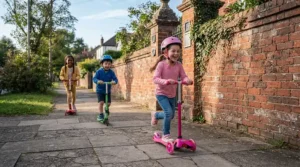
The stakes feel oddly high. Buy two wheels too early and your three-year-old spends a week face-down on the pavement, convinced scooting is a scam. Buy three wheels too late and your seven-year-old treats the thing like a pram. The sweet spot keeps moving, which is why the age-appropriate transition point matters more than any single product.
Here’s the short version: three wheels buy confidence, and two wheels buy freedom. Parent-led resources such as Mumsnet’s parent-tested kids’ scooter guide reflect exactly that split. They sort their picks by age and stage rather than crowning one universal winner.
This guide runs on real specifications, aggregated review themes and UK safety context, not invented test drives. You’ll get seven genuine scooters compared and a plain-English take on stability vs speed. You’ll also see how balance bike progression fits in for kids who’ve already learned to glide, and get a practical framework to use before your thumb reaches the basket button.
What Is 3-Wheel vs 2-Wheel Scooter for Kids?
The 3-wheel vs 2-wheel scooter for kids decision compares two designs. Three-wheelers, usually with two front wheels, steer by leaning and stay upright on their own, which suits roughly ages 2 to 5. Two-wheelers steer with the handlebar like a bicycle and demand real balance, which suits roughly ages 5 and up. Skill matters more than the birthday card.
3-Wheel vs 2-Wheel Scooter for Kids: Quick Comparison
| Feature | 3-wheel scooter | 2-wheel scooter |
|---|---|---|
| Typical age window | Around 2–5 years (larger models stretch to 12) | Around 5 years and up |
| Steering | Lean-to-steer; the bar stays fixed | Handlebar turns, like a bicycle |
| Stability | Self-supporting when stationary | Needs active balance at all times |
| Speed potential | Moderate (wheels typically 80–125mm) | Higher (wheels typically 120mm and up) |
| Folding | Often fixed or removable bar | Often folds; some have kickstands |
| Typical weight | Roughly 1.8–4kg | Roughly 2.3–5kg |
| Best for | Mini Micro Deluxe for toddlers; Maxi Micro Deluxe for bigger beginners | Micro Sprite for confident 5+; Razor A125 GS on a budget |
The table shows the trade in one glance. Three wheels give you a self-supporting platform and an intuitive lean, while two wheels hand over bigger wheels and a more grown-up feel in exchange for balance skill. If your child is under four, the Mini Micro Deluxe category is the safer start. If they’re confidently gliding at five or older, the Micro Sprite category starts to make sense.
💬 Just one click — help others make better buying decisions too!😊
Top 7 Scooters for the 3-Wheel vs 2-Wheel Scooter for Kids Decision: Expert Analysis
1. Mini Micro Deluxe — lightest, most refined toddler start
Weight is the headline here. At just under 2kg, the Mini Micro Deluxe is light enough for a two-year-old to lift, steer and drag out of the hallway unaided. Retailers list it for ages 2–5, rider height 80–110cm, a 35kg limit, an adjustable handlebar, an anodised stem and a silicone-topped deck. That 35kg ceiling is generous for the age band, so the adjustable bar is the feature that stretches its useful life.
The lean-to-steer action is the clever bit. Your child shifts weight instead of twisting a bar, which doubles as quiet early balance training. Based on the spec comparison, this suits families who’ll pay more for a scooter that can survive a sibling, especially as Micro sells replacement parts.
Reviewers consistently rate it highly. Mumsnet’s parent-tested guide names it best overall, and its own review calls it a joy for the school run. The usual caveat across write-ups is that kids tend to phase out of it around age five.
Pros:
- ✅ Very light, so toddlers control it themselves
- ✅ Adjustable handlebar and generous 35kg limit
- ✅ Replaceable parts support hand-me-down use
Cons:
- ❌ Most children outgrow it by about five
- ❌ Premium price versus budget three-wheelers
Indicative price: roughly £60–£90 (check current price). Strong value if a second child is coming, merely good if not.

2. Globber Evo Comfort — ride-on, balance bike, then scooter
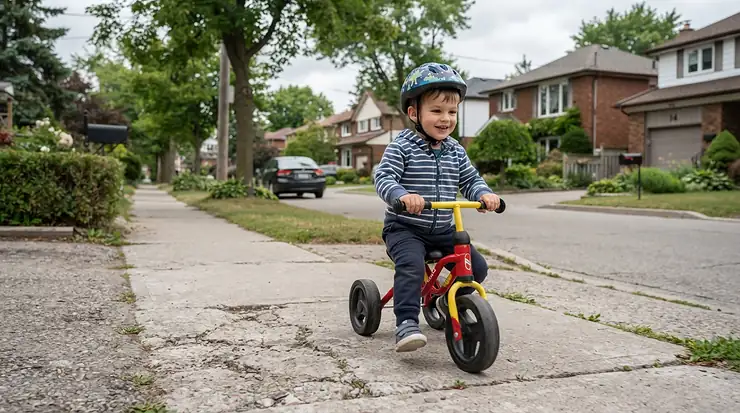
This is balance bike progression in a single frame. The Globber Evo Comfort starts as a ride-on for roughly 15–36 months, becomes a walking bike, then turns into a scooter from age three. Seat modes carry up to 20kg, while scooter mode handles up to 50kg. The seat has three heights (about 32.5–34.5cm), the T-bar adjusts through four heights (67.5–82.5cm), and a steering-lock button fixes the front wheels so a wobbly beginner moves forward in a straight line.
In practice, that lock acts like training wheels for steering, and you switch it off as confidence grows. The honest analysis is that it suits parents who’d otherwise buy a separate balance bike and scooter. It’s less ideal if you want the lightest possible scooter, since it weighs about 2.5kg in scooter mode.
On sentiment, a European retailer listing for the earlier Evo 5-in-1 sat around 4.6 out of 5 from several dozen reviews at the time of research. I couldn’t verify a large UK review pool for the newer Comfort version, so treat that as indicative only.
Pros:
- ✅ Covers ride-on, walking bike and scooter stages
- ✅ Steering lock helps nervous first-timers
- ✅ Adjustable seat and four-height T-bar
Cons:
- ❌ Seat modes cap at just 20kg
- ❌ Extra parts to store between stages
Indicative price: roughly £70–£110 depending on version and LED wheels (prices may vary). Good value if you’d have bought two products anyway.
3. Hurtle 3-Wheeled Scooter — budget sit-or-stand versatility
The standout feature of the Hurtle 3-Wheeled Scooter is its flip-out seat, so a tired toddler can sit while a keen one stands. Listings describe 120mm front and 80mm rear polyurethane wheels, LED wheel lights, a rear brake and a multi-height handlebar running from roughly 65cm to 86cm. Seat capacity is quoted at about 20kg. Rider weight limits vary by version, from roughly 50kg to 60kg, so check the exact listing.
That wide, anti-slip deck forgives clumsy footwork, but the seat version weighs around 4kg, which is noticeably heavier than a Mini Micro Deluxe. It’s a sensible pick for budget-conscious families with a toddler and a patient carrier-bag arm.
Parent reviews on retailer listings frequently mention the light-up wheels, easy assembly and toddlers coping from around two or three. A few note that learning to turn takes time, which is normal for any lean-to-steer design. An Amazon UK review analysis also flagged it as a best-seller with straightforward assembly.
Pros:
- ✅ Removable seat for sit-or-stand riding
- ✅ LED wheels add visibility and appeal
- ✅ Wide deck suits small, unsteady feet
Cons:
- ❌ Around 4kg with the seat fitted
- ❌ Specifications differ between listings
Indicative price: roughly £40–£65 (check current price). Strong value for the feature count, though it lacks the finish of premium rivals.
4. Maxi Micro Deluxe — three-wheel stability for bigger beginners
Staying on three wheels isn’t babyish if your five-year-old isn’t ready. The Maxi Micro Deluxe keeps lean-to-steer but scales everything up. It’s rated for ages 5–12 and tested to 70kg, though the deck is stamped 50kg because EU rules only allow set weight increments. It weighs about 2.6kg, rolls on 120/80mm wheels, and its handlebar spans roughly 68–91cm. The deck is 55cm long and 13cm wide, noticeably roomier than most two-wheelers.
That extra width is the real advantage. Your child’s feet have somewhere to go, so wobbles turn into non-events. The trade-off is image, because some older children decide three wheels look young. Mumsnet’s older-kids pick is the foldable Maxi Micro Deluxe, and the guide lists outgrowing the three-wheel design as the main caveat.
Availability note: John Lewis flagged the standard Deluxe as no longer stocked online, so check current Amazon stock or the foldable variant.
Pros:
- ✅ Wide 55cm deck forgives awkward foot placement
- ✅ Long handlebar range suits taller children
- ✅ Familiar steering for Mini Micro graduates
Cons:
- ❌ Older kids may find three wheels babyish
- ❌ Premium pricing versus basic alternatives
Indicative price: roughly £90–£130 (prices may vary). Good value if your child stays on three wheels for a couple of years.
5. Micro Sprite — the polished first two-wheeler
The Micro Sprite is what most parents picture when they say “proper scooter”. It’s rated for ages 5–12 with a 100kg limit and weighs roughly 2.7–3.1kg depending on version. The aluminium frame folds with a double-button mechanism, there’s a kickstand, and the telescopic bar adjusts from about 63cm to 93cm. Wheels are 120/100mm, the deck is 50cm by 10cm, and it steers like a bicycle.
That narrow 10cm deck is the thing to watch. It rewards good foot placement and punishes sloppy balance, which is exactly why it suits kids who’ve cleared the readiness checks later in this guide. For stability vs speed, it sits firmly on the speed side.
Micro states that the Sprite has been voted best two-wheeler by Mumsnet and The Independent. That’s a brand claim worth verifying on those sites. Roundups I reviewed generally position it as the premium step-up from three wheels.
Pros:
- ✅ Folds quickly and includes a kickstand
- ✅ Bar extends to about 93cm for older kids
- ✅ Replaceable parts extend its lifespan
Cons:
- ❌ Narrow deck is less forgiving than three-wheelers
- ❌ Costs more than basic Razor alternatives
Indicative price: roughly £90–£130 (check current price). Premium, but the folding convenience and growth range justify it for regular school-run use.
6. Razor A125 GS — budget two-wheeler with bigger wheels
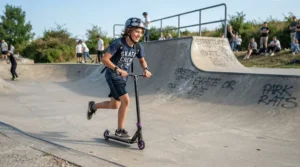
The Razor A125 GS brings 120mm wheels to a budget price, which matters more than it sounds. Larger wheels roll over pavement cracks that stop smaller ones dead. Retail listings describe an aircraft-grade aluminium T-tube and deck, an adjustable handlebar, a folding downtube and a rear fender brake. Max rider weight is 100kg and the scooter weighs about 2.26kg. Tesco lists it for ages 6 and up, although some retailers say 5+.
Based on the spec comparison, this is the sensible choice for a sporty six-year-old moving off three wheels without a premium budget. It’s a no-frills machine, with no lights and no seat, just the essentials done solidly.
Review analyses of Amazon scooter listings repeatedly praise the Razor A family for sturdy aluminium and quick assembly. A recurring complaint is that taller children outgrow it.
Pros:
- ✅ 120mm wheels glide over rougher pavements
- ✅ Light 2.26kg frame folds for carrying
- ✅ Solid aluminium build at a modest price
Cons:
- ❌ Basic feature set with no lights
- ❌ Rear fender brake needs foot technique
Indicative price: roughly £40–£65 (prices may vary). Excellent value for older beginners.
7. Razor A5 Air — pneumatic tyres for rough pavements
The Razor A5 Air sits at the far end of the stability vs speed spectrum. Argos lists it for ages 8 and over, up to 100kg, with pneumatic tyres, anti-rattle handlebars, a durable aluminium frame and an extra-long 34cm deck. It folds, but at about 5.07kg it’s the heaviest scooter here by some distance.
Air-filled tyres smooth out the juddering of cracked UK pavements in a way solid wheels can’t. They also bring tyre pressure and puncture maintenance. This is a scooter for tall, confident eight-year-olds and for older children who’ve outgrown everything else, not for early switchers.
I couldn’t verify a large aggregated review pool for this exact model, so I’d rather say so than guess at sentiment.
Pros:
- ✅ Pneumatic tyres absorb pavement vibration
- ✅ Long 34cm deck suits bigger feet
- ✅ Supports riders up to 100kg
Cons:
- ❌ Around 5kg is heavy to carry
- ❌ Tyres need pressure checks and puncture care
Indicative price: roughly £70–£110 (check current price). Worth it only for the right age and terrain.
Top 7 at a Glance
| Scooter | Wheels | Stated age range | Max rider weight | Indicative price | Best for |
|---|---|---|---|---|---|
| Mini Micro Deluxe | 3 | 2–5 | 35kg | £60–£90 | Toddler’s first scooter |
| Globber Evo Comfort | 3 | Ride-on from 15 months; scooter 3+ | 50kg (scooter mode) | £70–£110 | Balance bike progression |
| Hurtle 3-Wheeled Scooter | 3 | Around 3+ (listings vary) | Roughly 50–60kg | £40–£65 | Budget sit-or-stand |
| Maxi Micro Deluxe | 3 | 5–12 | 70kg tested (50kg stamped) | £90–£130 | Bigger beginners |
| Micro Sprite | 2 | 5–12 | 100kg | £90–£130 | Confident first two-wheeler |
| Razor A125 GS | 2 | 6+ (some say 5+) | 100kg | £40–£65 | Budget two-wheel |
| Razor A5 Air | 2 | 8+ | 100kg | £70–£110 | Rough pavements and speed |
Prices are indicative ranges at the time of research and change constantly. The Hurtle 3-Wheeled Scooter and Razor A125 GS keep costs down, while the Maxi Micro Deluxe and Micro Sprite charge more for finish and longevity. If your child is under five, three of the first four rows are your shortlist. Over six, look further down.
Practical Guide: A 30-Day Plan for the 3-Wheel vs 2-Wheel Scooter for Kids Switch
Think of the switch as a four-week apprenticeship, not a graduation day. Kids who rush it tend to lose confidence, and kids who linger on three wheels tend to get bored.
Week 1: glide drills on the old scooter. Have your child push off, lift the back foot and count a glide of three to five seconds. If they can’t, stay put. Smooth, empty tarmac only.
Week 2: borrow the new feel. Introduce the two-wheeler in ten-minute bursts. Set the bar at roughly waist height with your child standing on the deck, which is Razor’s own sizing guidance. Let them step on and off without pushing.
Week 3: brake and steer. Practise stopping with the rear fender brake, a firm stamp with the back foot. Run slow figure-eights around two cones or shoes.
Week 4: shared route. Take a short, familiar park path with you walking alongside. Add a helmet check at the start of every ride.
Maintenance schedule: check nuts, bolts and the bar clamp monthly, wipe down after wet rides, and check wheel spin. If you’ve chosen the Razor A5 Air, add tyre pressure to the list.
Common first-30-day mistakes include setting the bar too low, skipping the helmet and cramming long sessions. The last one burns kids out faster than any hill.
Real-World Scenarios: Which Scooter Fits Which Child
These are illustrative profiles to show the reasoning, not case studies from real families.
Scenario A: the 2½-year-old on short nursery runs. Budget £60–£90, smooth pavements, daily short trips. The Mini Micro Deluxe fits because it’s light enough for the child to control. If tired legs often mean riding, the Globber Evo Comfort is the better fit, because its seat modes cover the stage before scooting clicks.
Scenario B: the 5-year-old who rode a balance bike from age three. Park paths, weekend use, a budget of £90–£130. Balance skills are likely already there, so the Micro Sprite is a reasonable straight-to-two-wheels choice. If money is tighter, the Razor A125 GS gives you 120mm wheels for far less, though check the age rating against your child.
Scenario C: the cautious 6-year-old who wants to keep up with friends. Mixed pavements, three to four rides a week. The Maxi Micro Deluxe keeps the stability while giving a bigger deck, and the Hurtle 3-Wheeled Scooter works on a tighter budget. Review the plan after a few months of gliding.
Quick extra: a tall eight-year-old tackling cracked pavements is the natural Razor A5 Air rider.
✨ Ready to Find Your Child’s Perfect Scooter?
🛴 Compare the options above and click any highlighted product name to check current pricing and availability. A well-matched scooter turns the school run into the best part of the day, and your child will be glad you took the time.
Problem → Solution Guide: Five Scooter Headaches Fixed
Problem 1: they wobble and bail on two wheels. Step back to glide drills on the three-wheeler for another few weeks. Two-wheel confidence usually arrives suddenly once the glide is long enough.
Problem 2: the three-wheeler suddenly feels babyish. Often the age-appropriate transition point has simply arrived. If they’re not ready for two wheels, a bigger three-wheel deck like the Maxi Micro Deluxe lets them feel older without losing stability.
Problem 3: the scooter is heavy on the school run. Choose folding and lighter. The Razor A125 GS at about 2.26kg and the Micro Sprite are far easier to carry than the Razor A5 Air at about 5kg.
Problem 4: they stop by dragging a foot. Teach the rear brake stamp, and check the brake surface isn’t worn or loose. Drag-stopping chews shoes and wastes control.
Problem 5: the handlebar keeps slipping. Check the clamp first. A bar that creeps low also compromises steering, so tighten it or replace the collar before riding on.
How to Choose 3-Wheel vs 2-Wheel Scooter for Kids: 7 Steps
- Start with skill, not birthday. If your child can hold a one-foot stand for three to five seconds without wobbling, two wheels become realistic. If not, stay on three.
- Check height and weight windows. The Mini Micro Deluxe covers rider heights of 80–110cm and 35kg, while the Micro Sprite reaches 100kg. Don’t buy to “grow into” a scooter, because an oversized one wobbles.
- Decide on steering style. Lean-to-steer is intuitive for toddlers, while handlebar steering rewards older kids.
- Weigh the scooter against your carrying arm. Around 1.8kg versus 5kg is a big difference on a school run.
- Look for adjustable handlebar range. Wider ranges, like roughly 68–91cm on the Maxi Micro Deluxe, buy extra years.
- Inspect the brake. A rear fender or foot brake is standard, but make sure your child can reach and press it comfortably.
- Confirm safety marking and spare parts. Look for EN 71 and the relevant scooter standard, plus replaceable wheels and brakes.
Stability vs Speed: What You Gain and Lose on Each Design
Stability vs speed is the engine room of the 3-wheel vs 2-wheel scooter for kids debate. Two front wheels widen the base so the scooter holds itself up, but the extra contact patches add friction and usually mean smaller wheels. Two wheels drop that drag and often add diameter, so a 120mm-plus wheel rolls over cracks that stall an 80mm one. The cost is that the rider must hold the balance at every moment.
That’s why a Micro Sprite feels exciting and a Mini Micro Deluxe feels safe. Neither is wrong. They suit different stages of skill.
If your child complains that their scooter is too slow, resist the motor aisle. GOV.UK’s electric scooter rules say privately owned e-scooters may only be ridden on private land with the landowner’s permission. They’re not legal on pavements, roads or in parks. A kick scooter with larger wheels gives you speed without breaking the law.
The practical take is simple. If balance is the limit, choose stability. If confidence is high and surfaces are rough, step up to bigger wheels. A Razor A5 Air is the extreme of that, which is why it’s rated 8 and up.
Balance Bike Progression: Where Scooters Fit
Balance bike progression is a useful lens because it explains why some children skip three wheels entirely. Wikipedia’s overview of balance bikes notes they’re aimed at ages two to five and let children learn to balance and countersteer before pedalling. If your child spent a year gliding on one, their balance foundation is probably already in place, and a two-wheel scooter may suit them earlier.
For UK parents, the usual path is balance bike at around two to four, pedal bike at around four to six, with a scooter slotting in anywhere. A Globber Evo Comfort does the first stage in walking-bike mode, then converts to scooter mode.
| Balance bike | 3-wheel scooter | 2-wheel scooter | Pedal bike with stabilisers | |
|---|---|---|---|---|
| Typical start age | Around 2 | Around 2 | Around 5 | Around 4 |
| Balance skill built | Highest | Moderate | High | Low |
| Steering | Handlebar | Lean | Handlebar | Handlebar |
| Stopping | Feet (some have brakes) | Rear foot brake | Rear fender brake | Hand or pedal brakes |
| Portability | Easy | Easy | Folds | Awkward |
| Best for | Globber Evo Comfort in walking-bike mode | Mini Micro Deluxe | Micro Sprite | Families wanting pedalling practice |
Balance bikes build the most transferable skill, and scooters build leg strength and confidence on a standing platform. Used together, they give your child two routes to the same balance foundation, which can shorten the age-appropriate transition point between three wheels and two.
Age-Appropriate Transition Point: How to Know Your Child Is Ready
There’s no magic birthday, but the age-appropriate transition point tends to cluster around four and a half to six. Many makers rate three-wheelers from age two, and two-wheelers are generally listed from around five. One independent roundup notes most children phase out of the Mini Micro Deluxe by about five, while the Maxi Micro Deluxe stretches further.
Look for readiness signals rather than a date:
- Holds a one-foot stand for three to five seconds without wobbling.
- Glides smoothly on the current scooter for several seconds.
- Has used a balance bike, or rides a bike with stabilisers.
- Stops reliably with the rear brake without dragging a foot.
If three of those four tick, trial a two-wheeler in a car park. If your child hesitates, stay put. A confident three-wheel rider is better than an anxious two-wheel one.
Size matters too. A tall five-year-old may fit a Micro Sprite comfortably, while a smaller six-year-old might find the Maxi Micro Deluxe the better stepping stone. Don’t switch because friends did. Kids tend to decide for themselves once the confidence arrives.
Common Mistakes When Buying a Kids’ Scooter
Buying too big. An oversized scooter makes wobbling worse. Match the handlebar to your child’s waist height.
Ignoring weight. A 5kg scooter is brutal when your child abandons it halfway to school.
Choosing fixed-height bars. Adjustable handlebars extend a scooter’s life considerably.
Chasing gimmicks. LED wheels are fun, but they don’t improve steering, stability or brakes. Spend the money on build quality.
Skipping brake checks. Test the rear brake before the first ride and again regularly.
Confusing kick scooters with e-scooters. Electric versions can’t legally be ridden in public, so a motorised “upgrade” often becomes a garage ornament.
Forgetting protective gear. The helmet and pads are part of the purchase price, not an optional extra.
Switching too quickly. The Razor A125 GS is an excellent budget two-wheeler, but it can’t fix a skill gap.
Long-Term Cost & Maintenance
Cost per year of use is the honest way to compare these scooters. A £60–£90 three-wheeler like the Mini Micro Deluxe covers roughly three years of scooting from age two to five, particularly if it’s passed to a younger sibling. A £90–£130 Micro Sprite is rated through age 12, so even four to five realistic years of use brings the annual cost down.
Compare two routes:
- Three-wheeler then two-wheeler: roughly £150–£220 across about eight years, with each scooter matched to the right stage.
- Direct to a budget two-wheeler: a Razor A125 GS at £40–£65 costs less upfront, but risks a tearful false start if your child isn’t ready.
Maintenance is modest. Monthly bolt checks, occasional bearing cleaning and brake wear inspection cover most needs. Parts availability varies by brand, and Micro sells replacement brakes, decks and grips. Add a helmet and pads to your budget, and expect to replace helmets as heads grow.
For the Razor A5 Air, factor in a tyre pump and puncture repair kit. For the Hurtle 3-Wheeled Scooter, check what replacement parts the seller supports. Cheap upfront isn’t always cheap overall.
Safety, Regulations and Compliance Guide for UK Parents
In the UK, children’s scooters fall under the Toys (Safety) Regulations 2011 and should meet the relevant EN 71 requirements, as RoSPA’s scooter factsheet explains. Look for UKCA or CE marking on the box, and be wary of listings with no safety information at all.
The same RoSPA factsheet cites a US estimate that protective clothing could prevent more than 60% of scooter injuries. It recommends a cycle helmet, knee and elbow pads and wrist protectors. It also notes that scooters are hard for drivers to see when children ride them, and that crossing roads on a scooter is dangerous. High-visibility clothing helps, and so does keeping young riders away from traffic.
Practical rules for any scooter:
- Helmet fitted snugly on every ride.
- Ride on smooth, traffic-free surfaces.
- Dismount to cross roads.
- Check bolts and brakes before each outing.
Remember the e-scooter law too. Private e-scooters can only be ridden on private land with permission, so a motorised kids’ scooter isn’t a pavement option.

FAQ
❓ Is a 3-wheel scooter better than a 2-wheel scooter for a 3 year old?
❓ How much should I spend on a first kids' scooter in the UK?
❓ Are 3-wheel scooters with a seat worth buying for toddlers?
❓ Which is better for school runs, a foldable 2-wheel or a 3-wheel scooter?
❓ Do replacement parts make a premium kids' scooter worth the price?
Conclusion
The 3-wheel vs 2-wheel scooter for kids decision isn’t a contest with one winner. It’s a sequence. Three wheels build confidence and early balance, and two wheels deliver speed, freedom and a grown-up feel once the foundations are down. The age-appropriate transition point is the moment your child stops needing the support and starts craving the speed. Watch their glide, their one-foot balance and their braking, and let those signs guide you rather than the calendar.
If you want a refined toddler start, the Mini Micro Deluxe is hard to beat on weight and finish. If you want one product that covers balance bike progression and scooting, the Globber Evo Comfort makes the most sense. Budget families will find the Hurtle 3-Wheeled Scooter and Razor A125 GS the most affordable entry points, while the Maxi Micro Deluxe and Micro Sprite reward longer use. For tall, confident riders on rough pavements, the Razor A5 Air is the stability vs speed extreme.
Whatever you choose, pair it with a well-fitted helmet and pads, check the brakes regularly and keep it away from traffic. Review the choice every six months, because kids change faster than scooters.
Recommended for You
- Light-Up 3-Wheel Scooter: 7 Brilliant Picks For UK Kids (2026)
- 3-Wheel Scooter For Toddlers: 7 Best Safe Picks For UK (2026)
- Top 3-Wheel Scooters Under £30: 7 Brilliant Picks (2026)
Disclaimer: This article contains affiliate links. As an Amazon Associate, I earn from qualifying purchases. If you purchase products through these links, we may earn a small commission at no additional cost to you.
✨ Found this helpful? Share it with your friends! 💬🤗
