
In This Article
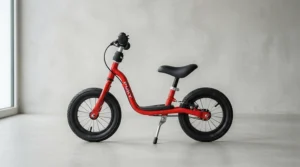
A first balance bike with adjustable handlebars is a pedal-free starter bike whose handlebar height, not just its saddle, can be raised as your child grows. That second adjustment keeps steering comfortable from toddler to preschooler, so a single bike can cover several years rather than one summer.
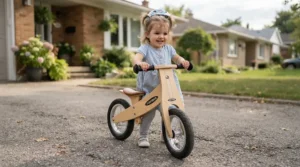
Here’s the thing about toddlers: they treat shoes, trousers and bikes as temporary arrangements. Buy a fixed-height bike at 18 months and, by the time your child is zooming round the park, the bars are somewhere near their ribs and the saddle has become a mild insult. Adjustable handlebars fix that. They’re the unglamorous feature that quietly decides whether you buy one bike or two.
Why go pedal-free at all? Cycling UK’s balance bike buying guide explains that a balance bike teaches the two skills that make cycling possible, balancing and steering. A child who starts on stabilisers has to learn the harder skill, balance, later, and some get frightened when the support disappears.
Think of this as a first balance bike buying guide first and a shopping list second. We compare seven real models, translate every spec into everyday meaning, and flag where tool-free height adjustment, multi-year usability and growing-child value genuinely matter (and where they’re marketing garnish). If you’re hunting for a balance bike for first-time riders, the fit, age and confidence advice further down is for you.
Quick Comparison: First Balance Bike With Adjustable Handlebars at a Glance
Before the deep dive, here’s the cheat sheet. Weights and price ranges come from published specs and review write-ups at the time of research.
| Product | Weight (published) | Price range | Best For |
|---|---|---|---|
| LittleLife Balance Bike | 3.2kg | £60–£75 | Tight budgets that still want adjustable bars |
| Strider 12 Sport | 2.9kg | £100–£125 | Quick, tool-free changes and shared siblings’ bikes |
| Kidvelo Rookie 12 | 2.89kg | £110–£130 | Light frame and a pedal-ready footrest |
| Micro Balance Bike 2in1 | 2.45–2.88kg | Around £100 | Wobbly, cautious beginners |
| Ridgeback Scoot | 4.97kg | £120–£130 | Taller, bigger toddlers |
| Trybike Steel 2-in-1 | 6.3kg | £110–£140 | Families who want a trike first |
| smarTrike Xtend 3-Stage | 8.7kg | Around £300 | One purchase all the way to pedals |
Reading across the table, the Strider 12 Sport and Kidvelo Rookie 12 are the featherweights, while the Ridgeback Scoot, Trybike Steel 2-in-1 and smarTrike Xtend 3-Stage trade lightness for longevity. If you want the cheapest route to a first balance bike with adjustable handlebars, the LittleLife Balance Bike is hard to beat on price alone. The Micro Balance Bike 2in1 costs only a little more and offers a gentler start for nervous riders.
💬 Just one click — help others make better buying decisions too!😊
Top 7 First Balance Bike With Adjustable Handlebars Picks: Honest Analysis
Every entry below draws on published specifications plus aggregated review sentiment from Cycling UK and Mumsnet’s parent testers. No hands-on testing is claimed here, only careful reading of the evidence.
1. LittleLife Balance Bike — best budget way to get adjustable bars
The cheapest ticket on this list to a seat and handlebars that both move, the LittleLife Balance Bike is the sensible-shoes choice of the group.
On paper it’s a 12-inch bike with air-filled rubber tyres, a 3.2kg frame and a 30kg rider limit, pitched at roughly ages two to six. In practice, the pneumatic tyres smooth out cracked pavements and lumpy grass. A rider limit more than double the weight of an average three-year-old (around 14kg, per Cycling UK) means the frame won’t be what your child outgrows first. At 3.2kg it’s a touch heavier than the featherweights, but still easy to carry home when little legs give up.
Based on the spec comparison, this is the one to shortlist when money is tight but multi-year usability still matters. One caveat: the review coverage found doesn’t highlight tool-free height adjustment, so keep basic tools handy.
Mumsnet’s parent tester praised the sleek design, easy assembly and, above all, the long-term value of its adjustability. Reported niggles were minor: tyres arrive uninflated with no pump, the stickers aren’t built to last, and comfort on rougher ground could be better.
Pros:
- ✅ Seat and handlebars both adjustable
- ✅ 30kg rider limit stretches its lifespan
- ✅ Air-filled tyres give a smoother ride
Cons:
- ❌ No pump supplied; tyres arrive flat
- ❌ Stickers wear quickly, say parent testers
Expect roughly £60–£75 at the time of research. For this much adjustability, that’s strong value.
2. Strider 12 Sport — quick-release seat and handlebars
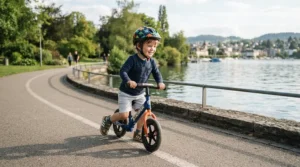
The headline trick is tool-free height adjustment: Mumsnet’s write-up highlights quick-release adjusters on both seat and handlebars, so changes take seconds, even mid-park.
The Strider 12 Sport weighs about 2.9kg, rolls on 12-inch EVA polymer (foam) tyres and is designed for inside legs of roughly 30.5–50.8cm, from around 18 months to five years. That inside-leg range is the sleeper stat. It’s unusually wide, which is what delivers genuine multi-year usability. Foam tyres also mean no punctures and no pump to lose down the back of the sofa.
For a balance bike for first-time riders, frame weight matters more than almost anything. At 2.9kg this is roughly a fifth of a 14kg three-year-old’s body weight. Quick-release clamps also suit households where two siblings share one bike and the saddle gets raised and lowered daily. A separate review notes that an XL seat post exists for the tallest riders.
Mumsnet testers praised the low weight, easy adjustment and comfortable footrest. The main complaint is that foam tyres aren’t ideal on rough surfaces, and parent forum comments point out there’s no brake.
Pros:
- ✅ Quick-release clamps on seat and handlebars
- ✅ Very wide inside-leg range
- ✅ Puncture-proof foam tyres need no maintenance
Cons:
- ❌ Foam tyres struggle on rough ground
- ❌ No hand brake, per parent comments
Around £100–£125 at the time of research. Pay the premium if quick adjustment is your priority.
3. Kidvelo Rookie 12 — featherweight with a pedal-ready footrest
The Kidvelo Rookie 12 puts its integrated footrest exactly where pedals will sit on your child’s next bike. That’s a clever bit of future-proofing.
Cycling UK lists an aluminium alloy frame at just 2.89kg, adjustable seat and handlebar, and a longer-than-average wheelbase. The footrest position means coasting habits transfer neatly to a pedal bike. The generous wheelbase gives growing legs room, which supports multi-year usability, although the very smallest toddlers may find it stretched.
Cycling UK called it sturdy, easy to assemble and great value. Honest caveat: independent review coverage beyond that is thin, so measure your child’s inside leg against the listed seat range rather than trusting age labels. For anyone building a first balance bike buying guide checklist, that fit check should sit at the top.
Buyers who want a light frame and a first balance bike with adjustable handlebars, without paying for a big-name badge, should put this on the shortlist.
Pros:
- ✅ Light 2.89kg aluminium alloy frame
- ✅ Footrest mimics future pedal position
- ✅ Adjustable seat and handlebar
Cons:
- ❌ Long wheelbase may overwhelm tiny toddlers
- ❌ Fewer independent reviews found in research
List price is around £130, with discounts noted near £110, so think £110–£130. Good value if your child’s inside leg suits it.
4. Micro Balance Bike 2in1 — gentle on-ramp for wobbly beginners
Most balance bikes assume your child is brave. The Micro Balance Bike 2in1 assumes they might not be, and offers either two small stability wheels or one standard wheel at the back.
Published details: ages two to five, 2.88kg with stability wheels and 2.45kg without, a chopper handlebar adjusting from 51cm to 53.5cm, and an adjustable seat with a large rubber stopper underneath. The stability wheels bridge the gap between trike and balance bike. Remove them and your child is on a true balance bike.
Here’s what the spec sheet won’t tell you: that handlebar range is only about 2.5cm. The bar fine-tunes rather than grows, so most of the long-term fit comes from the seat. That makes this an excellent balance bike for first-time riders, though less of a long-haul option than some rivals.
Mumsnet’s review, using a three-year-old tester over several weeks on pavements, dropped kerbs and grass, described the bike as compact and great quality.
Pros:
- ✅ Stability wheels for anxious first rides
- ✅ Very light without stabilisers fitted
- ✅ Adjustable chopper bar and seat
Cons:
- ❌ Narrow handlebar adjustment range
- ❌ Stability-wheel mode is quickly outgrown
Around £100 at the time of writing. Fair value for a confidence-builder.
5. Ridgeback Scoot — two seatposts for bigger riders
Some children arrive at the park already tall. The Ridgeback Scoot is built for them, and ships with two seatposts so the bike effectively comes with a growth plan.
Cycling UK weighed it at 4.97kg, the second-heaviest in its group, and described it as relatively long and big. The handlebar is fully adjustable, and it has a bell and a brake. That weight is the story. In the same guide, the gap between the lightest and heaviest bikes was 2.11kg, around 15% of an average three-year-old’s body weight. Heavy for a tiny first-timer, then, but fine for a taller, sturdier child.
The brake is the other talking point. Cycling UK found it quite stiff, and their wider advice is that a lever a child can’t squeeze teaches them brakes are useless. If you buy this, check your child’s hand strength in the shop.
For a first balance bike with adjustable handlebars aimed at a larger two-and-a-half to four-year-old, this makes sense. For a petite 18-month-old, look elsewhere.
Pros:
- ✅ Fully adjustable handlebar
- ✅ Two seatposts supplied for growth
- ✅ Brake and bell included
Cons:
- ❌ Heavy at nearly 5kg
- ❌ Brake lever described as stiff
Around £120–£130 at the time of research. Decent value for taller kids.
6. Trybike Steel 2-in-1 — a trike that morphs into a balance bike
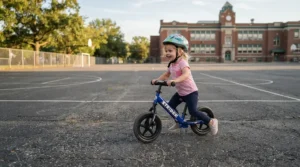
The Trybike Steel 2-in-1 starts life as a stable trike and converts into a balance bike using an included kit, which makes it the most patient purchase here.
Mumsnet lists 15 months to six years, a 6.3kg steel frame, 12-inch pneumatic tyres and adjustable seat and handlebars. The sheer age span is the appeal: this is growing-child value stretched across several developmental stages. The cost is weight. At 6.3kg it’s twice the bike some toddlers can easily manage, so it suits garden and pavement use better than long park carries.
Mumsnet’s parent tester found it sturdy and stable, particularly after conversion. Real-world gripes included a fiddly set-up, lots of hallway space taken in trike mode, and an inability to hook it onto a buggy. Availability varies by retailer, so check current stock on Amazon UK.
Pros:
- ✅ Converts from trike to balance bike
- ✅ Sturdy steel frame with easy-to-pump tyres
- ✅ Adjustable seat and handlebars
Cons:
- ❌ Heavy at 6.3kg
- ❌ Bulky in trike mode; fiddly set-up
The RRP is around £140, with discounts near £111, so expect £110–£140. Worthwhile if you’d otherwise buy a trike too.
7. smarTrike Xtend 3-Stage — premium bike that matures into pedals
If multi-year usability were an Olympic sport, the smarTrike Xtend 3-Stage would be on the podium. It starts as a balance bike, then you remove the footrest and add a chain and pedals.
Mumsnet lists ages three to eight, an 8.7kg frame, 14-inch pneumatic tyres, an extendable magnesium frame, and adjustable saddle and handlebars. The extendable frame is the clever part: the bike literally lengthens as your child grows. But at 8.7kg and 14 inches, this isn’t a two-year-old’s first balance bike. Think of it as the right choice from around three, for sturdier riders.
Mumsnet’s tester described it as good value for money overall, with cost and tricky assembly as the downsides.
Pros:
- ✅ Converts from balance to pedal bike
- ✅ Extendable frame lasts until age eight
- ✅ Adjustable saddle and handlebars
Cons:
- ❌ Costly up front
- ❌ Tricky assembly and heavy at 8.7kg
Around £300 at the time of research. Spread across five years, the maths becomes friendlier, as covered below.
Adjustment Features Compared: Seat, Handlebars and Growth Extras
Not all adjustability is equal. Some bikes move both seat and bars quickly; others only fine-tune one. This table sorts the genuine growth features from the brochure language.
| Product | Handlebar adjustment | Seat adjustment | Growth extra | Best For |
|---|---|---|---|---|
| LittleLife Balance Bike | Adjustable | Adjustable | 30kg rider limit | Budget multi-year buyers |
| Strider 12 Sport | Quick-release | Quick-release | Wide inside-leg range; XL seat post available | Frequent re-fitting |
| Kidvelo Rookie 12 | Adjustable | Adjustable | Long wheelbase | Lightweight growth |
| Micro Balance Bike 2in1 | 51–53.5cm | Adjustable with rubber stopper | Stability-wheel option | Cautious beginners |
| Ridgeback Scoot | Fully adjustable | Two seatposts supplied | Larger frame | Taller toddlers |
| Trybike Steel 2-in-1 | Adjustable | Adjustable | Trike-to-balance conversion | Trike-first families |
| smarTrike Xtend 3-Stage | Adjustable | Adjustable | Extendable frame; pedal conversion | Balance-to-pedal in one |
The Strider 12 Sport wins on speed of adjustment, while the smarTrike Xtend 3-Stage wins on sheer lifespan. The Micro Balance Bike 2in1 has the narrowest handlebar range, so its growth potential comes from the seat. For most families, a first balance bike with adjustable handlebars matters most when the child is between two and four, which is when upper-body proportions change fastest.
First Balance Bike Buying Guide: How to Choose a First Balance Bike With Adjustable Handlebars
The short answer: choose a bike that fits your child’s inside leg today, weighs as little as possible, and has seat and handlebar ranges that stretch for at least two years. Here’s the step-by-step version.
- Measure the inside leg first. Cycling UK advises that your child should sit with knees slightly bent and both feet flat on the floor. Compare that figure against each bike’s minimum seat height.
- Weigh the bike against the rider. Mumsnet suggests keeping the bike under about 30% of body weight, with roughly 3kg a good marker for toddlers. The heaviest bikes here only suit larger, older children.
- Check both adjustment ranges. Ask for numbers, not adjectives. A handlebar that moves 2.5cm is a different animal from one that moves 8cm.
- Test the clamps. Decide whether tool-free height adjustment or an Allen key suits your household. Quick-release is faster, but needs a tightness check.
- Pick tyres for your terrain. Cycling UK notes pneumatic tyres are lighter, more comfortable and roll better over bumps; foam tyres suit pavements and need no maintenance.
- Inspect steering and brake. A ball-bearing headset turns more freely, bulb-ended grips protect hands, and any brake lever must be pullable by small fingers.
- Budget by cost per year. A pricier bike used for four years can cost less annually than a cheap one replaced after one.
Follow those seven checks and you’ll avoid the classic mistake of buying on colour alone.
Tool-Free Height Adjustment: Why Quick-Release Clamps Matter
Tool-free height adjustment sounds like a minor convenience until you’re standing in a car park with a crying toddler and a saddle that’s too low. It means you can raise or lower the seat or handlebars with a lever rather than hunting for an Allen key.
The contrast in the evidence is telling. The Strider 12 Sport is praised for quick-release adjusters on both seat and handlebars. By comparison, Mumsnet notes the Hornit AIRO needs an Allen key to adjust its seat, and that the Early Rider Charger 12″ needs one too, with handlebars that aren’t adjustable at all. Mumsnet’s own tester said a tool-free mechanism would make mid-ride tweaks easier.
That said, quick-release isn’t automatically better. Levers can be nudged loose by enthusiastic small hands, so check tightness before every ride. Bolted clamps hold more firmly but demand a tool in your pocket. Weigh how often you’ll re-fit: if one bike is shared between siblings of different heights, tool-free height adjustment earns its keep daily. If it’s a single child growing slowly, a bolted bike you adjust every few months works fine.
For a first balance bike with adjustable handlebars, the practical lesson is simple: look at how the bars adjust, not just whether they do.
Balance Bike for First-Time Riders: Fit, Age and Confidence
A balance bike for first-time riders needs to do one job brilliantly: make the first ten minutes feel like a win. Mumsnet says children can start from around 18 months and typically use balance bikes until three or four, though some carry on to five.
Getting the fit right
Set the saddle low enough that both feet sit flat. Cycling UK recommends raising it as your child grows, and suggests testing as many bikes as your toddler will tolerate. A seat that’s too high forces tiptoes, which makes steering wobbly and confidence wobblier.
Matching temperament to bike
- Cautious child: the Micro Balance Bike 2in1 with stability wheels gives a safety net.
- Confident or tall child: the Kidvelo Rookie 12 or Ridgeback Scoot offers more room.
- Child still learning to walk steadily: the Trybike Steel 2-in-1 starts as a trike.
First-session rules of thumb
Let your child walk the bike before anything else. Resist the urge to hold the saddle, because the whole point is that they find balance themselves. Keep early sessions short and end while it’s still fun. Good first-time rider habits form in weeks, not days, so patience beats pressure every time.
Multi-Year Usability: Long-Term Cost and Maintenance
Multi-year usability is what separates a bike that survives a summer from one that survives a sibling. Three things limit lifespan: how far the seat and bars can rise, how much rider weight the frame supports, and how well the bike handles being dropped on concrete.
Weight limits matter more than people think. The LittleLife Balance Bike supports 30kg riders, comfortably more than most preschoolers. Warranties tell their own story: Cycling UK notes the Frog Bikes Tadpole carries a five-year warranty, which it flags as handy if you have more than one child, while Mumsnet says a lifetime warranty is available for the Hornit AIRO. Brands that back their frames for years are signalling confidence.
Maintenance is light but not zero:
- Monthly: check clamp tightness and handlebar bolts.
- Pneumatic tyres: check pressure; foam tyres need none.
- After wet rides: wipe down and dry the headset and wheels.
- Before passing on: re-check every bolt and the steering.
Resale value rewards good care. Frog bikes are discussed by Mumsnet forum users as holding their value well. Even budget bikes pass down happily when the frame is sound. A first balance bike with adjustable handlebars that you can hand to a younger sibling is the ultimate multi-year usability win.
Growing-Child Value: Is Paying More Worth It?
Growing-child value is simply asking: how many years of useful riding am I buying? A £60 bike outgrown in 18 months can cost more per year than a £140 bike used for four.
Here’s an illustrative calculation using published age ranges. The years of use are assumptions, not guarantees, and prices are ranges.
| Product | Price range | Assumed years of use | Rough cost per year | Best For |
|---|---|---|---|---|
| LittleLife Balance Bike | £60–£75 | 3 | £20–£25 | Lowest annual cost |
| Strider 12 Sport | £100–£125 | 3 | £33–£42 | Fast adjustment, siblings |
| Trybike Steel 2-in-1 | £110–£140 | 4 | £28–£35 | Trike-to-balance families |
| smarTrike Xtend 3-Stage | Around £300 | 5 | Around £60 | One bike through to pedals |
The LittleLife Balance Bike is cheapest per year, but the smarTrike Xtend 3-Stage replaces both a balance bike and a first pedal bike, so its real comparison is against two purchases. If your child is a confident early rider, they may outgrow the balance stage sooner, which weakens the case for the premium option. Buyers who expect to pass the bike down get far better growing-child value from a sturdier frame.
✨ Don’t Miss These Carefully Selected Picks!
🔍 Take your first balance bike search to the next level with these carefully selected products. Click on any highlighted item to check current pricing and availability. These bikes will help you create confident first rides your family will love!
Balance Bike vs Stabilisers: Which Teaches Riding Faster?
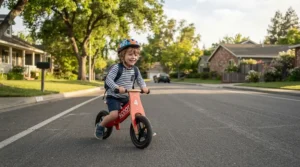
For most families the real question isn’t which balance bike but whether to bother. The evidence leans one way. A 2024 study in the Journal of Functional Morphology and Kinesiology compared 23 children aged roughly three to seven: all 12 on a balance bike reached independent cycling in the programme, versus 8 of 11 on a bike with training wheels. It was a small sample, so treat it as supportive rather than conclusive, but it matches Cycling UK’s practical advice.
| Feature | Balance bike | Bike with stabilisers | Best For |
|---|---|---|---|
| Skill learned first | Balance and steering | Pedalling | Balance bike for first-time riders |
| When support is removed | Nothing changes | Child must learn balance; may feel scared | Balance bike |
| Typical starting age | From around 18 months | Usually older | Balance bike for toddlers |
| Adjustability | Seat and often handlebars | Varies | First balance bike with adjustable handlebars |
In short, balance bikes teach the hard skill first and the easy skill (pedalling) later, while stabilisers do the opposite. The table above shows why the balance route usually feels smoother. If you already own a stabiliser bike, don’t panic; plenty of children learn that way. But if you’re buying new for a toddler, the case for starting pedal-free is strong.
Safety and Compliance: What to Check Before You Buy
Children’s products sold in Great Britain are subject to safety law, and many small balance bikes are sold as toys under the Toys (Safety) Regulations 2011. GOV.UK’s product marking table shows toys can carry either UKCA or CE marking for Great Britain, while Northern Ireland requires CE. Which regime applies to a particular model depends on its design, so ask the seller which standard the manufacturer cites if the listing is unclear.
Practical checks:
- Look for a UKCA or CE mark on the product or packaging, not just the listing.
- Buy from sellers with a UK business address, particularly on marketplaces.
- Be wary of prices far below those for comparable models from known brands.
- Check handgrips are secure, ideally with bulb-ended ends (Cycling UK’s advice).
- Fit a properly sized helmet from the first ride.
Setup and Adjustment Guide: Your First 30 Days
Out of the box, the best first balance bike with adjustable handlebars still needs sensible setup.
Day 1: Build and fit
Tighten every bolt, inflate pneumatic tyres (the LittleLife Balance Bike arrives uninflated with no pump), and set the saddle so both feet sit flat. As a practical rule of thumb, set the handlebars so your child’s arms bend slightly rather than stretch. Check the bars turn freely.
Week 1: Walking, not riding
Let your child walk the bike around the garden. Praise every step. For extra technique, Cycling UK has a video guide to teaching a child to ride a balance bike.
Weeks 2–3: Gliding
Once they’re striding confidently, encourage feet-up glides on a gentle, smooth slope. If your bike has quick-release clamps, like the Strider 12 Sport, check tightness before each session.
Week 4: Readjust
Kids shoot up. Re-measure inside leg and raise the saddle and bars if knees look cramped.
Common first-month mistakes
- Seat set too high, forcing tiptoes.
- Holding the saddle instead of letting balance develop.
- Skipping the pre-ride clamp check.
- Letting the tyres go soft.
Real-World Scenarios: Matching Bikes to Families
Profile 1: The cautious two-year-old
Budget around £100, mostly garden and pavement, used a few times a week. The Micro Balance Bike 2in1 suits best: stability wheels for the wobbly start, light enough to carry, and a first balance bike with adjustable handlebars. The LittleLife Balance Bike is the cheaper alternative if the wobbles settle quickly.
Profile 2: Two siblings, one bike
A three-year-old and a five-year-old taking turns, with daily saddle changes. The Strider 12 Sport is a good fit for its quick-release clamps and wide inside-leg range. Mumsnet’s age guidance suggests the elder child may be near the top of the range, so check the inside leg.
Profile 3: The tall three-year-old at the hilly park
Budget £120–£130, weekend rides, a child with long legs. The Ridgeback Scoot offers a bigger frame, brake and two seatposts, or the Kidvelo Rookie 12 if weight is the bigger worry.
Profile 4: One purchase until pedals
A parent who hates buying things twice and has around £300. The smarTrike Xtend 3-Stage, from age three, delivers multi-year usability from balance bike to pedal bike.
FAQ
❓ What is the best first balance bike with adjustable handlebars for a two-year-old?
❓ How much does a good balance bike for first-time riders cost in the UK?
❓ Should a first balance bike have a brake?
❓ What age should my child move on to a pedal bike?
❓ How can I buy a balance bike safely online?
Conclusion
Choosing a first balance bike with adjustable handlebars comes down to matching one bike to one child, and then to the next three years of their growth. For tight budgets, the LittleLife Balance Bike delivers adjustable seat and bars at the lowest annual cost. The Strider 12 Sport wins on tool-free height adjustment and shared-bike convenience. The Kidvelo Rookie 12 is the lightweight, pedal-ready footrest option, while the Micro Balance Bike 2in1 is the kindest start for a balance bike for first-time riders who need confidence. Taller toddlers will appreciate the Ridgeback Scoot, and families wanting maximum growing-child value should weigh the Trybike Steel 2-in-1 and smarTrike Xtend 3-Stage against buying twice.
Use this first balance bike buying guide as a checklist: measure the inside leg, check the weight, ask for adjustment ranges, and think in cost per year. Do that and you’ll end up with a bike that fits today and still fits when your child is tearing round the park.
Recommended for You
- Balance Bikes For 1 Year Olds: 7 Safe Picks For UK (2026)
- First Balance Bike For Toddlers: 7 Best Picks
- First Balance Bike: 7 Top UK Picks For New Riders (2026)
Disclaimer: This article contains affiliate links. As an Amazon Associate, I earn from qualifying purchases. If you purchase products through these links, we may earn a small commission at no additional cost to you.
✨ Found this helpful? Share it with your friends! 💬🤗
