In This Article
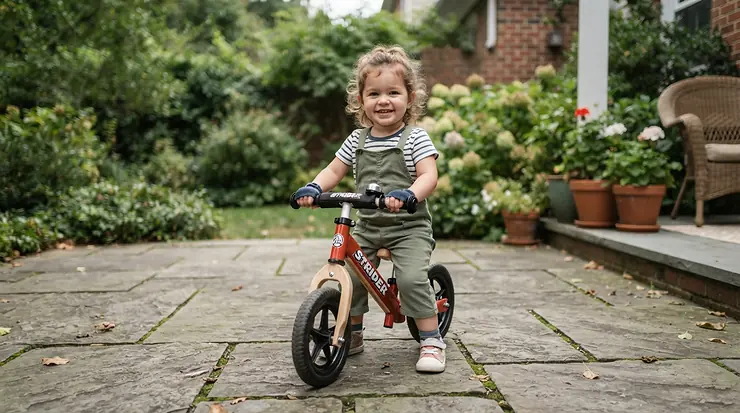
There is a moment, somewhere around the first birthday, when a child discovers that the world is better at ground level, upright and moving. They cruise along the sofa. They shove the laundry basket across the lounge. Naturally, a parent thinks: could they ride something?
Here is the honest answer, and it shapes this whole guide. Most true two-wheeled balance bikes are designed for children from around 18 months, and Which? says the same in its balance bike buying guide. So balance bikes for 1 year olds are a narrow, slightly awkward category. A handful of models start low enough to suit a confident walker at 12 to 18 months, and a few sit in a gentler “mini trike” camp.
I’ve researched seven real options, from a compact three-wheeler to a premium aluminium two-wheeler, using manufacturer specifications and published reviews. I haven’t tested any of them, so what follows is analysis, not anecdote. You’ll see exactly how low each seat goes, what that means in practice, and which one suits your child, floor space and budget.
Along the way we’ll cover how to choose a balance bike for small toddlers, why the smallest available frame sizes matter more than the age on the box, how to judge your child’s supervised early walking stage, and the safety supervision tips that matter most.
Quick Comparison: Balance Bikes for 1 Year Olds at a Glance
Seat height is the number that decides everything, so start there. Price ranges are indicative at the time of research. Check current price before buying.
| Bike | Lowest seat | Weight | Price range | Best for |
|---|---|---|---|---|
| Chillafish Bunzi | 22cm (3-wheel mode) | Check listing | Around £50–£80 | Youngest walkers, indoor use |
| Kinderkraft Cutie | 26cm | 1.8kg | Under £40 | Tight budgets, first scoots |
| woom GO 1 | Around 26cm | Around 3kg | Low-to-mid £200s | Resale value, brake practice |
| Strider 12 Sport | 28cm | Around 3kg | Around £85–£120 | Tool-free growth |
| Chillafish Buzzi | 28cm | Around 2.5kg | Around £45–£70 | Value two-wheeler |
| Hornit AIRO | 29cm | 2.95kg | Around £110–£160 | Air tyres, lightest build |
| Puky LR M | Around 29cm | Around 3.7kg | Around £90–£130 | Tidy turning, durability |
Reading across the table, the Chillafish Bunzi and Kinderkraft Cutie are the only two that realistically suit a child who has only just started walking. Everything else needs a toddler closer to 18 months, with longer legs. If you want one bike that lasts for years, the Strider 12 Sport and Hornit AIRO offer the widest seat ranges, but they will feel big at first.
💬 Just one click — help others make better buying decisions too!😊
Top 7 Balance Bikes for 1 Year Olds: Expert Analysis
1. woom GO 1 — premium pick with a proper brake
The woom GO 1 is a rare 12-inch frame that pairs featherweight aluminium with a hand brake sized for small fingers. It is also sold under the woom ORIGINAL 1 name on some listings.
Woom lists the weight at around 3kg, with a frame built for children between 82cm and 100cm tall. One listing gives a minimum saddle of roughly 26cm, rising to around 35cm. In practice, that low-entry frame lets a child step through rather than swing a leg over, which is half the battle at this age.
My honest take is that many 12-month-olds fall below that 82cm minimum, so this is really a bike for the 18-month mark. It suits families who can pay more upfront and plan to hand it down or resell it. One independent review site noted that these bikes hold their value well.
Review sentiment is strong. Woom’s own page shows a 4.9 average from 111 reviews (brand-owned, so read it with care). Independent testers consistently praise the weight and the step-through geometry. The recurring complaints are the price and a brake lever that may be a stretch for the smallest hands.
Pros:
- ✅ Around 3kg aluminium frame
- ✅ Low step-through entry for tiny riders
- ✅ Hand brake teaches stopping early
Cons:
- ❌ Price sits far above most rivals
- ❌ Brake lever may suit bigger hands
Expect the low-to-mid £200s. Verdict: expensive, but the best resale story here.
2. Hornit AIRO — British-designed, lightest air-tyre option
The Hornit AIRO is the one to look at if you want pneumatic tyres without a heavy frame. The magnesium-alloy frame comes in at 2.95kg, and Cycle Sprog’s own scales put it within a few grams of that claim.
The saddle runs from 29cm to 44cm, and Hornit recommends an inside leg of 30cm to 46cm. That wide range is a long-term bargain. For a one-year-old, though, 29cm is on the tall side, so measure first. Air tyres smooth out pavement cracks that foam tyres pass straight up through small arms, but they can puncture and need an occasional pump.
Who is it for? A tall-ish 18-month-old, or a family that wants one bike to cover the next three or four years. Road.cc called it a superb introduction to two wheels, while noting there is no quick-release on the seatpost and no brake option. One US tester also noted that at the lowest setting, the end of the seatpost sits very close to the ground. They said Hornit offers a shorter post to fix this.
Pros:
- ✅ Just under 3kg magnesium frame
- ✅ Air tyres for a smoother ride
- ✅ Lifetime frame and fork warranty
Cons:
- ❌ Seat adjustment needs a tool
- ❌ No brake option at time of review
Expect around £110–£160. Verdict: excellent long-term value, but not the smallest fit.
3. Strider 12 Sport — tool-free growth with minimal fuss
The Strider 12 Sport is the benchmark many other brands get measured against, and the reason is simple: it adjusts without a toolkit and never needs a pump.
Strider lists a 3.0kg steel frame, a standard seat range of 28cm to 43cm (an XL seatpost stretches higher), and an inseam fit of roughly 31cm to 46cm. The foam tyres are flat-free. Steel explains the weight, which is a touch above the magnesium and aluminium frames in this guide. The built-in footrests give a child somewhere to park their feet once they start gliding.
Measure the inseam before buying. With a 28cm minimum seat, a child needs legs long enough to stand flat-footed, and some 12-month-olds simply aren’t there yet. Reviewers broadly agree that the Sport is a sturdy, proven all-rounder with mini grips and a padded seat. Its main drawbacks are the lack of a brake and the slightly heavier frame.
Pros:
- ✅ Tool-free seat and handlebar adjustment
- ✅ Flat-free foam tyres, zero maintenance
- ✅ Wide seat range for years of use
Cons:
- ❌ Steel frame heavier than rivals
- ❌ No brake for stopping practice
Expect around £85–£120. Verdict: the safe middle-of-the-road choice.
4. Chillafish Buzzi — budget two-wheeler at 2.5kg
The Chillafish Buzzi is a 10-inch balance bike that proves a light frame doesn’t have to cost a fortune.
At around 2.5kg (5.5lb), it is the lightest two-wheeler in this guide. The seat adjusts from about 28cm to 37cm and the handlebar from 48cm to 51cm, with puncture-proof EVA foam tyres and a quick-release seat tab. The 10-inch wheels keep the whole bike compact and low, which helps small riders feel in control.
There is a trade-off, though. The 37cm top end means a child will outgrow it sooner than a Strider 12 Sport or Hornit AIRO. Think of it as a one-to-two-year bike, not a five-year one. It is a sensible choice for a family that wants a real two-wheeler but doesn’t want to spend premium money on something their toddler may outgrow quickly.
One US retailer’s listing shows an average of 4.7 stars from roughly 1,458 ratings. Shoppers mostly highlight value, easy adjustment and the lack of tyre worries. Note this is a US retailer’s data, not UK-specific.
Pros:
- ✅ Around 2.5kg metal frame
- ✅ Puncture-proof EVA foam tyres
- ✅ Quick-release seat adjustment
Cons:
- ❌ Outgrown sooner than 12-inch rivals
- ❌ Lowest seat is 28cm, not tiny
Expect around £45–£70. Verdict: excellent value for a first two-wheeler.
5. Puky LR M — compact German classic for steady turns
The Puky LR M is the “medium” in Puky’s line-up, and its short 50cm wheelbase makes it easy to turn in tight spaces.
Retailer specifications list a seat at around 29cm, a recommended minimum height of 85cm, a 25kg rider limit and puncture-free foam tyres. Weight is quoted at around 3.7kg, which is noticeably heavier than the magnesium and aluminium options. The low step-through platform is a good thing for wobbly legs.
Puky markets the LR M from age two, so for a one-year-old it only makes sense for an unusually tall, confident walker. Where it earns its place is on hard floors and paths, where its stable, tidy handling lets a toddler build confidence. Note that the Medium model has no brake.
A UK-facing retailer listing shows 4.9 from 104 reviews. Buyers tend to praise build quality and fit for younger two-year-olds. Treat that as retailer data rather than independent testing.
Pros:
- ✅ Around 29cm lowest saddle
- ✅ Puncture-free foam tyres
- ✅ Short wheelbase eases turning
Cons:
- ❌ Heavier at roughly 3.7kg
- ❌ Marketed from two years old
Expect around £90–£130. Verdict: dependable, but better for 18-month-olds and up.
6. Chillafish Bunzi — lowest seat, converts from trike to balance bike
The Chillafish Bunzi is the smallest option here, and it works in two stages. Start in three-wheel mode for stability, then switch to two wheels without tools once your child gains confidence.
Chillafish lists a 22cm seat in three-wheel mode and 25cm in two-wheel mode, for ages one to three. The ABS frame carries a built-in handgrip at the back of the seat, plus a hidden storage box. The silent, non-marking tyres suit living rooms and kitchens, and that is genuinely useful for a toddler who will mostly ride indoors for the first few months.
For a child at the beginning of their supervised early walking stage, this is the gentlest bridge into balance riding. The trade-off is lifespan. With an age range topping out at three, it is a transitional product. I couldn’t find enough independent reviews to summarise honestly, so rely on the manufacturer’s specification and check recent buyer comments on the listing.
Pros:
- ✅ Lowest seat height in this guide
- ✅ Tool-free three-to-two-wheel conversion
- ✅ Quiet, non-marking tyres for indoors
Cons:
- ❌ Stated age range stops at three
- ❌ Few independent reviews to lean on
Expect around £50–£80. Verdict: the best fit for the youngest riders.
7. Kinderkraft Cutie — cheapest first scoot at 1.8kg
The Kinderkraft Cutie is a three-wheel mini balance bike, closer to a ride-on toy than a two-wheeler. That is exactly why it suits a very young toddler.
Kinderkraft’s own pages list a 1.8kg steel frame, EVA foam wheels, a seat from 26cm to 28cm, and a handlebar lock with limited steering angle. Weight capacity is the thing to watch. Kinderkraft’s own pages say 15kg, while the Amazon.co.uk listing states 25kg. When the sources disagree, follow the manufacturer’s figure and check the box.
Who is it for? A parent who wants a low-risk, low-cost way to introduce the idea of sitting, scooting and steering. Three wheels teach steering and coordination rather than true balance, so think of it as the warm-up act. I couldn’t verify enough independent review data to summarise sentiment honestly, though the manufacturer offers a ten-year warranty with registration.
Pros:
- ✅ Featherweight 1.8kg steel frame
- ✅ Limited steering protects against tumbles
- ✅ Seat starts low enough for 12 months
Cons:
- ❌ Three wheels teach steering more than balance
- ❌ 15kg limit caps its lifespan
Expect under £40. Verdict: great value as a stepping stone.
Your First 30 Days: A Practical Setup and Introduction Guide
Buying the bike is the easy bit. The first month decides whether your toddler loves it or treats it like a fancy doorstop.
Day one: set it up properly. Measure your child’s inside leg, from crotch to floor in bare feet. The saddle should sit low enough for both feet to rest flat, with a slight bend in the knees. The handlebar should be at roughly chest height. Check every bolt, and on air-tyre models like the Hornit AIRO, check the pressure.
Week one: let them just sit. No pushing, no pressure. Leave the bike in the lounge. Let your toddler climb on, climb off, and carry it around. Five to ten minutes a session is plenty.
Week two: scoot on hard, flat floors. Kitchen floors and smooth hallways work well. The Chillafish Bunzi‘s quiet, non-marking tyres suit this stage nicely.
Week three: head outside. Pick a flat, enclosed paved area with no slopes. Stay within arm’s reach.
Week four: encourage lifting the feet. Don’t force gliding. It arrives on its own once confidence builds.
Maintenance: once a week, check bolts and seat clamps, wipe down foam tyres, and look for wear on grips. Common mistakes in the first 30 days: setting the seat too high, riding on slopes too soon, and treating the bike as a race rather than play.
Real-World Scenarios: Matching the Right Bike to Your Family
Three family profiles show how the spec sheet translates into real choices.
The city flat family. Your 12-month-old has just started walking, you have a hallway and a postage-stamp balcony, and your budget is under £100. The Kinderkraft Cutie (under £40) or Chillafish Bunzi (around £50–£80) fit best. Both are light enough to carry up stairs, quiet on laminate, and low enough for a first-time walker. Use it a few times a week for short sessions, then reassess at 18 months.
The garden and park family. Your child is 18 months, steady on their feet, and you’re planning for a sibling to inherit the bike. A Strider 12 Sport (around £85–£120) or Hornit AIRO (around £110–£160) gives you years of use, and both have wide seat ranges. Expect near-daily use in warmer months.
The resale-minded gift-giver. A grandparent wants to buy something special for an 18-month-old who is on the tall side. The woom GO 1 (low-to-mid £200s) is the premium choice, and its hand brake introduces stopping from the start. The higher spend is easier to justify if you intend to resell it afterwards.
In each case, the best bike is the one that fits the child’s legs today, not the one that looks right on paper.
Problem and Solution: Fixing the Most Common First-Ride Hiccups
“My toddler just walks it like a pushchair.” That is completely normal. Walking while straddling the frame is step one. Keep the seat low, and let them take as long as they need.
“They refuse to sit on it.” Leave the bike in the room for a few days. Let them climb on without any expectation. The Chillafish Bunzi‘s three-wheel mode can be especially reassuring here.
“Their feet slip or toes drag.” Check the seat height. If heels are lifting, it is too high. If knees are bent sharply, it is too low. Closed shoes with grip help, and tidy trainers beat sandals every time.
“It feels heavy or wobbly.” That points to the wrong bike for their size. Compare weights: the Kinderkraft Cutie at 1.8kg is far easier to manage than the roughly 3.7kg Puky LR M for a tiny child.
“They’ve outgrown it already.” Seat ceilings matter. The Chillafish Buzzi tops out at about 37cm, while the Strider 12 Sport and Hornit AIRO stretch much higher. If you expect rapid growth, favour the wider range.
What Are Balance Bikes for 1 Year Olds?
Balance bikes for 1 year olds are pedal-free, low-slung ride-ons that let a toddler sit, scoot and steer using their own feet. In practice they range from three-wheeled mini trikes with 25–28cm seats to true two-wheelers with 26–29cm minimum saddle heights, built for children around 12 to 24 months who are walking confidently.
That definition matters because the category blurs. Some products marketed to one-year-olds are really push-along ride-ons, while others are genuine two-wheel balance bikes that happen to start small. Neither is wrong. The question is what your child needs right now.
A three-wheeler gives wobble-free confidence and teaches steering. A two-wheeler teaches the real skill: leaning and balancing, which is what makes the later move to pedals almost effortless. Most children aren’t ready for the latter until closer to 18 months, which is why this guide includes both types.
If you’re unsure which stage your child is at, the safest approach is to start with the lowest, lightest option that fits, then upgrade when they outgrow it.
How to Choose Balance Bikes for 1 Year Olds
Use this simple checklist, in this order:
- Measure the inseam first. Seat height is the single best indicator of fit, and Which? makes the same point. If your child can’t stand flat-footed with a slight knee bend, the bike is too tall, whatever the age label says.
- Check the lowest seat, not the highest. Many listings brag about the maximum. For balance bikes for 1 year olds, the minimum decides whether the bike works at all.
- Weigh the bike against the child. Anything over about 3kg starts to feel heavy for a small toddler. Lighter frames are easier to lift, steer and recover after a tumble.
- Pick the tyre type for your terrain. Foam tyres (Strider 12 Sport, Chillafish Buzzi) are maintenance-free but firm. Air tyres (Hornit AIRO) ride smoother but need care.
- Decide on a brake. The woom GO 1 has one. Most others don’t. For a 12-to-18-month-old, a brake is a nice-to-have rather than essential.
- Plan the lifespan. Seat ceilings tell you how long the bike lasts. A 37cm maximum means one to two years, while 44cm means closer to four.
- Check safety markings. Look for UKCA or CE marking and the manufacturer’s contact details on the product or packaging.
Balance Bike for Small Toddlers: Getting the Fit Right
A balance bike for small toddlers has to pass three tests: low seat, low weight and low entry. Miss any one and the bike becomes a frustration rather than a toy.
Start with the legs. A one-year-old’s inside leg is often well below 30cm. That immediately rules out many popular models. Among the seven here, only the Chillafish Bunzi (22cm in three-wheel mode) and Kinderkraft Cutie (around 26cm) are realistic for the very youngest walkers. The woom GO 1 comes next at roughly 26cm, though its recommended minimum height of 82cm means many 12-month-olds will have to wait.
Weight matters nearly as much. A toddler who can’t pick up the bike after a wobble will quickly lose interest. That is where the Kinderkraft Cutie at 1.8kg and the Chillafish Buzzi at around 2.5kg have a real edge.
Finally, low entry. A step-through frame lets a child get on and off independently, which builds confidence. If you’re choosing a balance bike for small toddlers, favour designs where the child can simply walk into the frame and sit down.
If your child is somewhere in between sizes, buy for the legs you can measure today, not the legs you hope they will have in six months.
Smallest Available Frame Sizes: What the Numbers Really Mean
The smallest available frame sizes in this category aren’t measured in wheel inches, they’re measured in saddle centimetres. Here is how all seven stack up, from lowest to highest minimum seat:
| Bike | Seat range | Recommended fit | Best for |
|---|---|---|---|
| Chillafish Bunzi | 22–25cm | Ages 1–3 | Youngest riders |
| Kinderkraft Cutie | 26–28cm | From 12 months, up to 15kg | Tiny first scoots |
| woom GO 1 | Around 26–35cm | 82–100cm tall | Premium, growing fit |
| Strider 12 Sport | 28–43cm | Inseam 31–46cm | Long-term growth |
| Chillafish Buzzi | 28–37cm | Around 80–105cm tall | Compact value |
| Hornit AIRO | 29–44cm | Inseam 30–46cm | Taller toddlers |
| Puky LR M | Around 29cm | From 85cm tall | Steady 18-month-olds |
Two things stand out. First, the gap between the Chillafish Bunzi at 22cm and the 29cm bikes is only 7cm, but for a one-year-old that is the difference between standing flat-footed and tiptoeing. Second, wider ranges like the Strider 12 Sport‘s 28–43cm buy longevity, while narrow ranges like the Kinderkraft Cutie‘s buy a snug fit now.
The smallest available frame sizes are a short-term answer for a short-term stage. If you only need the first few months, go small. If you want the bike to last, go for range.
Supervised Early Walking Stage: Is Your Child Ready?
The supervised early walking stage is the window when a toddler can cruise, stand unaided and take their first independent steps, but still needs a grown-up within arm’s reach. It is also the right moment to introduce a very small ride-on.
Walking timelines vary widely. NHS Inform’s guide to development from 2 to 12 months explains that babies first learn to balance, then stand, often pulling up on furniture before taking first steps. It also advises speaking to a health visitor or family nurse if your baby isn’t walking independently by 18 months.
So how do you tell if your child is ready for a ride-on? Look for these signs: they walk steadily across a room without holding on, they can lower themselves into a sit without toppling, and they show curiosity about wheeled toys. If they’re still cruising along furniture, wait.
During the supervised early walking stage, choose the lowest and lightest option, and avoid anything that sets them up to fall from height. UK health guidance also advises against baby walkers, which don’t teach walking and can cause accidents. A low, stable balance bike is a far better use of the same budget.
Balance Bikes vs Tricycles and Walkers: What Each One Teaches
Not every wheeled product is equal. Here is how the main options compare for a young toddler:
| Option | Teaches | Main drawback | Best for |
|---|---|---|---|
| Two-wheel balance bike | Real balance and steering | Needs longer legs | 18 months and up |
| Three-wheel mini balance bike (Kinderkraft Cutie) | Steering and coordination | Less balance practice | Youngest walkers |
| Convertible trike (Chillafish Bunzi) | Gradual move to balance | Short lifespan | Cautious toddlers |
| Pedal bike with stabilisers | Pedalling | Slows learning to balance | Older children |
The table shows a clear progression. Three-wheelers build confidence, two-wheelers build balance, and stabilisers delay the key skill. A convertible like the Chillafish Bunzi sits neatly in the middle.
This progression fits wider child development thinking too. Wikipedia’s overview of gross motor skills notes that motor activity in the second year is considered vital, with few restrictions other than safety. In other words, give toddlers safe opportunities to move.
My recommendation: if your child is truly 12 months, begin with a three-wheeler or convertible, then move to a two-wheeler once they’re steady. If they’re closer to 18 months and tall for their age, a true balance bike is the better investment.
Safety Supervision Tips and UK Regulations
Good safety supervision tips start with where, not what. Flat, enclosed, hard surfaces are best. Avoid slopes, roads, driveways, stairs, ponds and anywhere else a toddler could roll away faster than you can reach them.
Here are the safety supervision tips that matter most:
- Stay within arm’s reach. At this age, one-year-olds can’t judge speed or danger.
- Fit a helmet. A correctly fitted cycle helmet is sensible, even at walking pace.
- Choose closed shoes. They protect toes during scoots.
- Check bolts weekly. Loose seat clamps cause tumbles.
- Never leave the bike unattended with a toddler on it.
- Use steering locks or limiters where fitted, such as on the Kinderkraft Cutie and woom GO 1.
On regulation, new toys sold in Great Britain fall under the Toys (Safety) Regulations 2011, and either UKCA or CE marking is accepted. Labelling should include the manufacturer or importer details, a type or batch number, and any relevant warnings. Bromley Council’s toy safety guidance explains these requirements, and notes that ride-on products typically carry warnings about protective equipment and not being used in traffic.
If you’re buying second-hand, remember that those toys fall under the General Product Safety Regulations 2005 instead. They must still be safe, so check for cracks, loose parts and missing instructions.
Long-Term Cost and Value: What Will It Really Cost?
Sticker price tells only part of the story. A better measure is cost per year of useful life.
The Kinderkraft Cutie (under £40) offers great entry-level value but probably has a life of under a year, given its 15kg limit. Spread that way, it is still cheap. The Chillafish Buzzi (around £45–£70) roughly doubles that useful life with a 37cm seat ceiling.
The Strider 12 Sport (around £85–£120) and Hornit AIRO (around £110–£160) cost more upfront but can serve a child from about 18 months to four or five years. Spread over that period, they are the cheapest per year of use. They are also the most likely to be handed down to a younger sibling, which improves the maths further.
The woom GO 1 (low-to-mid £200s) is the premium choice. Its higher purchase price can be partly offset by resale value, since reviewers have noted it holds its value well, though your results will vary with condition.
Hidden costs are small: a helmet, a pump for air tyres, and perhaps a replacement grip. Overall, buy for the stage your child is in, and buy better if you plan to reuse.
✨ Don’t Miss These Great Picks!
🔍 Take your search for balance bikes for 1 year olds to the next level with these carefully selected options. Click on any highlighted bike to check current pricing and availability. These picks will help you find a safe, confidence-building first ride your toddler will love!
FAQs About Balance Bikes for 1 Year Olds
❓ Can a 12 month old use a balance bike?
❓ Are second-hand balance bikes for 1 year olds a good idea?
❓ Does a one-year-old need a helmet on a balance bike?
❓ How much should I spend on balance bikes for 1 year olds?
❓ What size balance bike does a 1 year old need?
Conclusion
Choosing balance bikes for 1 year olds comes down to one honest question: how long are your toddler’s legs today? If they’re just finding their feet, the Chillafish Bunzi and Kinderkraft Cutie are the gentlest, lowest options. If they’re closer to 18 months, the Strider 12 Sport, Chillafish Buzzi and Hornit AIRO offer proper two-wheel balance practice. For families who value resale and a built-in brake, the woom GO 1 is the polished premium choice, while the Puky LR M suits steady, slightly older toddlers who want a compact, tidy handler.
Whichever you choose, the same principles apply. Fit beats features, so measure first. Lighter is easier for small toddlers. And supervision matters more than any spec sheet. Keep sessions short, surfaces flat and your hands close. The supervised early walking stage is a wonderful window, and the right bike can make it even more fun.
Recommended for You
- First Balance Bike For Toddlers: 7 Best Picks
- First Balance Bike: 7 Top UK Picks For New Riders (2026)
- Strider Balance Bike Vs Standard Balance Bike: 7 Best Picks; Verdict (2026)
Disclaimer: This article contains affiliate links. As an Amazon Associate, I earn from qualifying purchases. If you purchase products through these links, we may earn a small commission at no additional cost to you.
✨ Found this helpful? Share it with your friends! 💬🤗
