In This Article
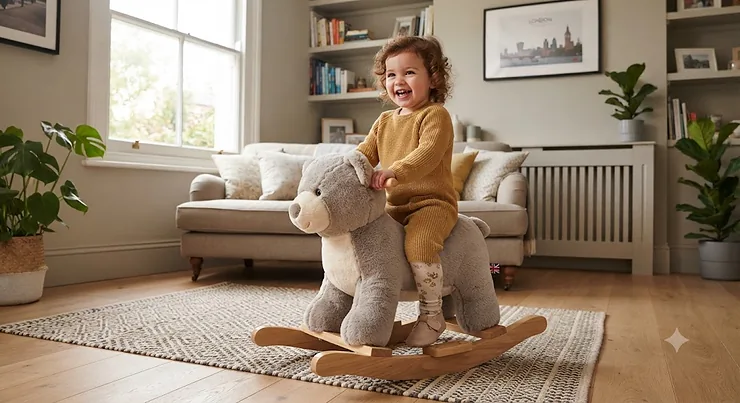
Somewhere between the newborn blur and the “I can climb the sofa, thanks” stage sits a golden window — the toddler who wants to move, but isn’t quite steady enough to be let loose on a scooter. That’s exactly the gap a rocking animal ride-on for toddlers is built to fill. A rocking animal ride-on for toddlers is a stationary, spring-free toy — typically shaped like a horse, unicorn or other animal — mounted on a curved rocker base so a small child can shift their weight forward and back under their own control, safely, indoors, without wheels or motors involved.
It sounds simple. It isn’t trivial. The best models balance three things that are surprisingly hard to get right at once: a base wide enough to resist tipping, a seat snug enough to feel secure, and a rock that’s gentle enough for an 18-month-old but still fun enough that a three-year-old doesn’t abandon it within a fortnight. We dug through real listings, aggregated review sentiment and UK safety standards to shortlist seven genuinely good options — spanning budget plastic rockers through to heirloom-quality wooden ones — plus the buying knowledge to help you pick the right one for your own noisy, wobbly, wonderful toddler. According to NHS physical activity guidelines for children under five, toddlers aged one to two should be physically active for at least 180 minutes every day, and a good rocker earns its keep as one small, safe slice of that.
Quick Comparison Table
Before we get into the detail, here’s the lay of the land. This snapshot covers all seven products we cover below — their build type, rough price range and who each one suits best, so you can jump straight to the section that matches your toddler.
| Product | Type | Price Range | Best For |
|---|---|---|---|
| Little Tikes Rocking Horse | Moulded plastic | Under £60 | Rough, everyday, indoor/outdoor use |
| Qaba Plush Ride-On Rocking Animal | Plush + wooden base | Under £70 | First-time buyers on a tight budget |
| HOMCOM Plush Ride-On Rocking Horse | Plush + wooden base, sound | £60–£90 range | Toddlers 18–36 months wanting sound effects |
| FUNLIO Unicorn Baby Rocking Horse | Soft stuffed plush | £50–£75 range | Youngest riders (6 months+) and gentle nurseries |
| Rock My Baby Rocking Horse | Plush with sound module | £60–£85 range | All-rounder pony for 18 months+ |
| LLparty 4-in-1 Rocking Horse | Convertible rocker/bike | £70–£100 range | Toddlers who’ll outgrow a single-mode toy fast |
| Little Bird Told Me Heritage Rocker | Wood frame + plush fabric | £150–£250 range | Buyers wanting an heirloom-quality gift |
Looking at the spread, there’s a clear split between soft plush rockers built for cuddling and sitting, and the sturdier wood-and-fabric hybrids designed to survive years of enthusiastic bouncing. The Little Tikes Rocking Horse and Qaba Plush Ride-On Rocking Animal anchor the budget end, while the Little Bird Told Me Heritage Rocker sits in a different category entirely — closer to nursery furniture than a toy. Price ranges above reflect typical retail listings at the time of research and will vary, so always check current price before buying.
💬 Just one click — help others make better buying decisions too!😊
Top 7 Rocking Animal Ride-Ons for Toddlers: Expert Analysis
We’ve grouped these by real specs, aggregated review sentiment, and honest use-case reasoning — not just spec-sheet copy-paste. Every product below is a genuine, currently listed item; nothing here is invented.
1. Little Tikes Rocking Horse — toughest build for indoor-outdoor rough play
The standout here is durability: this is moulded plastic, not fabric, so it shrugs off the kind of muddy-shoe, garden-and-back-again use that would flatten a plush rocker within a season. Key specs include easy-grip handles, a stable, wide saddle, and a low centre of gravity, with a footprint of roughly 26 x 29 x 49cm — small enough for a flat or a playroom corner, aimed at children from around 18 months. In practice, that low profile matters more than it sounds; a rocker that sits close to the ground is dramatically harder to tip than a tall one, which is exactly what nervous first-time walkers need. Based on the spec comparison, this is the pick for parents who want a “leave it in the garden, hose it down, don’t worry” toy rather than a precious nursery centrepiece — reviewers consistently report that the moulded plastic wipes clean easily and survives being dragged around by older siblings too. What most buyers overlook is that plastic rockers like this one also work brilliantly outdoors on a patio, somewhere fabric rockers simply can’t go.
Pros:
- ✅ Wipe-clean plastic shrugs off mud, drinks and sun exposure
- ✅ Low, wide base gives strong tip resistance for new walkers
- ✅ Handles double as a natural grip-strength exercise
Cons:
- ❌ No sound or interactive features to hold interest longer
- ❌ Hard seat is less comfortable for long sitting sessions
Sitting comfortably under £60, this is the value benchmark against which every other entry on this list gets measured — a genuinely sound first rocker if plush fabric isn’t a priority.
2. Qaba Plush Ride-On Rocking Animal — cheapest way to try rocking play
What stands out about this range is choice at a low price point — it comes in elephant, giraffe and swan styles, all built on the same wooden-base-plus-plush-shell formula. The wooden base gives genuine rocking stability that pure-plush toys without internal framing can’t match, while the fabric shell means falls and bumps are far more forgiving than plastic. Specs typically include a padded plush seat, an integrated sound module, and a safety belt, aimed at toddlers roughly 18 months to 3 years old. Here’s what to weigh: this is Amazon’s own-brand-adjacent tier, so build quality is decent rather than outstanding, and reviewers commonly flag that stitching and battery doors are the first weak points on heavy daily use. Still, for a first “will my toddler even like this?” purchase, the low price removes a lot of the risk — you’re not out much if it turns out your child prefers ball pits to horses.
Pros:
- ✅ Multiple animal designs at one of the lowest price points
- ✅ Wooden base gives more stable rocking than pure-plush toys
- ✅ Sound module and seatbelt included as standard
Cons:
- ❌ Stitching quality varies more than pricier alternatives
- ❌ Battery compartment is a known early failure point
For budget-conscious buyers specifically weighing up a budget rocking animal ride-on against the pricier options further down this list, this is usually the sensible starting point.
3. HOMCOM Plush Ride-On Rocking Horse — wooden base stability on a budget
The headline feature is the combination most rivals in this price bracket skip: a genuine wooden rocker base under a soft plush seat, with a built-in seatbelt and realistic sound effects. HOMCOM’s listings across horse, bear and pony variants share the same core spec — plush upholstery over a wooden frame, aimed squarely at the 18–36 month bracket, with a seat height low enough for a toddler to climb on unassisted. What that means in practice is a noticeably steadier rock than fully soft-bodied rivals, because the wooden base resists the side-to-side wobble that can make cheaper plush rockers feel tippy. Based on aggregated review sentiment, parents frequently mention that the seatbelt gives real peace of mind during the wobbliest early sessions, and that the sound feature — while not sophisticated — is enough to hold a toddler’s attention for a good ten-minute stretch. On the flip side, the plush covering isn’t machine washable on most listings, which matters if your toddler treats snack time as a full-contact sport.
Pros:
- ✅ Wooden rocker base gives noticeably steadier motion
- ✅ Integrated seatbelt reassures parents during first uses
- ✅ Realistic sound effects extend engagement time
Cons:
- ❌ Plush fabric is spot-clean only, not machine washable
- ❌ Battery-powered sounds need occasional replacement
Sitting in the £60–£90 range, this is our pick for parents who want the security of a wooden base without stepping up to full heirloom pricing.
4. FUNLIO Unicorn Baby Rocking Horse — softest ride for the youngest riders
This one’s standout feature is age range: FUNLIO’s fairy unicorn rocker is rated from 6 months right through to 3 years, making it one of the few on this list genuinely suitable for a baby who isn’t walking yet. Key specs include a fully stuffed plush body (no hard wooden or metal frame beneath the seat), an easy home-assembly process, and CPC and CE safety certification. The softness is the whole point here — because there’s no rigid internal frame, this rocker is closer to a giant cuddly toy that happens to rock than a structural riding toy, which makes it the safer choice for a baby who can sit but can’t yet grip a handlebar with real control. Reviewers consistently note the assembly is straightforward and the fabric is genuinely plush rather than the thin, scratchy kind found on some no-name imports. What the spec sheet won’t tell you, but parents report, is that because it’s all soft fabric, this model doubles as a floor cushion or nap prop once rocking time is over — a nice bit of unplanned versatility.
Pros:
- ✅ Suitable from 6 months, earlier than most rocking toys
- ✅ CPC and CE certified for verified safety compliance
- ✅ All-soft build has no hard edges to bump into
Cons:
- ❌ Softer build means less structured support for older toddlers
- ❌ Less durable long-term than wooden-framed alternatives
At roughly £50–£75, it’s a strong pick specifically for younger siblings or as an early first-birthday gift rather than a toy expected to last to age five.
5. Rock My Baby Rocking Horse — best all-rounder plush pony
The standout advantage is balance — literally and figuratively — between comfort, stability and price. This dark brown horse rocker is built for toddlers from 18 months, with soft stuffed filling over a supportive frame, a realistic sound feature, and CPC certification confirming it meets recognised toy-safety testing. In practical terms, the frame underneath the plush gives it more structural support than a fully-stuffed toy like the FUNLIO unicorn above, while still keeping the soft, huggable exterior that younger toddlers respond well to. On the spec comparison, this sits deliberately in the middle of the pack — not the cheapest, not the most premium, but the one with the fewest obvious compromises. Aggregated review sentiment points to the sound feature and soft filling as the most-praised aspects, with the classic horse design appealing across genders and holding its appeal for longer than more novelty-shaped alternatives. The main criticism reviewers raise is fairly universal across this whole plush category: the fabric needs spot-cleaning rather than a wash, so spills need dealing with promptly.
Pros:
- ✅ Supportive frame beneath soft filling improves stability
- ✅ Classic horse design has broad, lasting appeal
- ✅ CPC certification confirms recognised safety testing
Cons:
- ❌ Spot-clean only fabric requires prompt spill management
- ❌ Sound module runs on batteries not included in some listings
If you only read one entry on this list before deciding, this £60–£85 pony is the safest “can’t really go wrong” recommendation for the classic 18-month-to-3-year window.
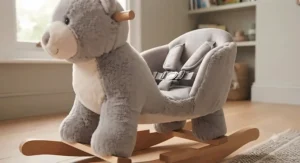
6. LLparty 4-in-1 Rocking Horse — grows with your toddler for years
What makes this one different is longevity through transformation rather than sheer build quality: it converts between a static rocker, a rocking-with-footrest mode, and — via a detachable balance board and push handle — an early balance-bike-style ride-on, aimed at toddlers roughly 1 to 3 years old. That multi-mode design directly answers one of the biggest practical frustrations with single-purpose rockers: toddlers develop fast, and a toy that only rocks can feel babyish to a two-and-a-half-year-old who wants to be pushed around the living room instead. Based on the spec comparison, the trade-off is complexity — more moving parts means more to assemble and more that could eventually wear out, compared to the simpler fixed-rocker designs above. What most buyers overlook is that the “grows with them” pitch genuinely holds up in practice here, because the balance-board mode introduces a completely different kind of movement (weight-shifting while upright rather than seated) that keeps the toy relevant well past the age most single-mode rockers get abandoned.
Pros:
- ✅ Converts through multiple play modes as toddler develops
- ✅ Detachable balance board adds standing-balance practice
- ✅ Push handle mode extends usefulness past rocking stage alone
Cons:
- ❌ More components mean a longer initial assembly
- ❌ Higher price than single-mode rockers of similar size
At £70–£100, the value case rests entirely on getting more months of active use out of one purchase rather than buying two separate toys.
7. Little Bird Told Me Heritage Stable Rocker — premium heirloom built to last
The standout here isn’t a spec at all — it’s intent. This UK-designed range (styles include named models such as Chester & Fred) is built as a “keep it for the grandchildren” purchase, combining a genuine wooden frame with soft, huggable fabric detailing, available in two size options roughly matched to 9 months+ and 12 months+. Specs worth noting: solid wood construction under the fabric, compliance with EN71 and ASTM toy-safety testing, and gift-style packaging that signals this is being bought as a considered present rather than an impulse toy. In practice, the wooden frame gives this a rock quality that’s noticeably smoother and more controlled than lighter plush-only toys — less bounce, more glide — which matters if you’re buying for a nursery where a calmer motion is the goal rather than boisterous play. Reviewers consistently frame this as a design-led purchase: praise centres on craftsmanship and how it looks in a room, alongside genuine functional stability, rather than novelty features like sound effects. The honest trade-off is price — at £150–£250, this is three to four times the cost of the budget entries on this list for what is, mechanically, still “a thing that rocks.”
Pros:
- ✅ Solid wood frame gives smoother, more controlled rocking motion
- ✅ EN71 and ASTM tested for recognised safety compliance
- ✅ Designed as a durable, passable-down heirloom piece
Cons:
- ❌ Premium price is several times the budget-tier options
- ❌ Overkill for buyers who just want a functional first toy
This is the pick specifically for buyers who’ve decided a rocking animal ride-on for toddlers is a long-term family piece, not a toy to be outgrown and binned within a year.
Setting Up and Settling In: A Practical First 30 Days Guide
Getting a new rocker out of the box is the easy part; getting your toddler comfortable and safe on it takes a little more thought. Start by placing it on carpet or a play mat rather than hard flooring — most rocking bases are stable, but a soft landing zone removes any risk from an unexpected tumble during those first wobbly sessions. Check the seatbelt or harness fit before every early use; toddlers grow fast, and a belt that fit snugly at 18 months can be loose by 22 months, quietly reducing the safety margin it’s there to provide.
For the first week, sit or kneel beside your toddler rather than letting them rock unsupervised — not because these toys are inherently unsafe when used as intended, but because confidence and correct grip take a few sessions to build. A common early mistake is leaving a rocker positioned near furniture edges, low tables or stairs; the rocking motion can shift a lightweight toy’s position slightly over repeated use, so it’s worth rechecking placement weekly rather than assuming it’ll stay put. For wooden-based models specifically, tighten any bolts or fixings after the first fortnight of use, since new wood-and-fabric joints can settle slightly once real weight has been applied a few dozen times. None of this is complicated — it’s the same “check it, don’t just assemble and forget it” discipline you’d apply to any piece of nursery equipment.
Real-World Scenarios: Which Rocking Animal Ride-On Suits Your Toddler?
Consider a family in a two-bedroom flat with an energetic 20-month-old and no garden. Space and durability against furniture bumps matter more than premium materials here, which points toward something compact and forgiving like the HOMCOM Plush Ride-On Rocking Horse — small footprint, soft edges, budget-friendly enough that a scuffed sofa leg isn’t a tragedy.
Now picture a household with a large garden, two children aged one and four sharing toys, and a preference for things that survive being dragged outside. That’s the Little Tikes Rocking Horse territory — wipe-clean plastic that doesn’t care about mud, and a low profile sturdy enough for an older sibling’s rougher handling too.
Finally, imagine grandparents buying a first-birthday gift they want to matter — something that’ll still be around, and still look good, when a second grandchild comes along. That’s precisely the case for the Little Bird Told Me Heritage Stable Rocker: higher upfront cost, but bought once, for the room rather than the month.
How to Choose a Rocking Animal Ride-On for Toddlers
Here’s a quick, expert-reasoned checklist for narrowing down the right pick:
- Check the base width first. A wide, low base resists tipping far more effectively than a tall, narrow one — this matters more than almost any other spec for children under two.
- Match the age range honestly. Manufacturer age ranges account for neck and core strength, not just size, so don’t size up early just because a toddler looks big for their age.
- Decide plush vs wood-framed early. Plush suits softer falls and younger toddlers; wood-framed suits a steadier, smoother rock and older, sturdier riders.
- Look for a genuine safety certification. EN71, CE or CPC markings on the listing indicate the toy has been tested against recognised standards, not just described as “safe” in marketing copy.
- Think about cleaning realistically. If your toddler eats near their toys (most do), spot-clean-only plush needs more vigilance than wipe-clean plastic.
- Factor in how long you need it to last. A toy that only rocks may be outgrown by two and a half; a convertible design buys extra months of relevance.
- Set a genuine budget band before browsing. Deciding “under £70” or “£150+ heirloom piece” before you start comparing prevents scope creep once the cute unicorn photos start appearing.
Rocking Horse vs Plush Ride-On: Which Is Actually Better?
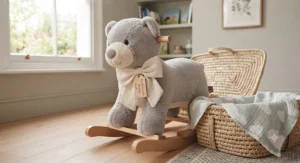
This is one of the most searched comparisons in this category, and honestly, the answer is “it depends what you’re optimising for” rather than a clean winner. A traditional wood-framed rocking horse tends to deliver a smoother, more controlled rocking arc — the rigid structure means the motion is predictable, which some toddlers (and some parents watching nervously) find reassuring. A plush ride-on, by contrast, trades some of that structural precision for softness; falls and bumps are gentler, and the huggable exterior means the toy gets used for cuddling and quiet play even when nobody’s rocking on it.
| Factor | Wooden Rocking Horse | Plush Ride-On | Wheeled Ride-On (with wheels) |
|---|---|---|---|
| Rocking control | Smooth, predictable | Softer, slightly bouncier | Not applicable — rolls instead |
| Fall softness | Lower (rigid frame) | Higher (fully padded) | Lower (hard plastic body) |
| Typical age range | 18 months–5 years | 6 months–3 years | 2–5 years |
| Best For | Steadier, older toddlers | Youngest riders, comfort | Energetic, mobile toddlers wanting active play |
The table makes the trade-off clear: plush ride-ons win on softness and suit younger toddlers, wooden rockers win on control and durability for older ones, and wheeled ride-ons are really a different category of active play rather than a direct rival. If your toddler is still finding their feet, literally, a plush option like the FUNLIO Unicorn Baby Rocking Horse removes more risk from the equation than a rigid wooden frame would at the same age.
Budget Rocking Animal Ride-On: What You Gain and What You Lose
There’s a persistent myth that a budget rocking animal ride-on automatically means compromised safety — it doesn’t. UK toy safety regulations apply regardless of price point, so a £45 rocker sold legitimately on Amazon.co.uk has to meet the same essential safety requirements as a £250 one. What you do trade off at the budget end tends to be secondary: fabric quality, stitching longevity, sound-feature sophistication, and how the toy looks after eighteen months of enthusiastic use rather than whether it’s safe on day one.
| Tier | Price Range | What You Get | What You Sacrifice |
|---|---|---|---|
| Budget | Under £70 | Core rocking function, basic safety features | Fabric longevity, sound quality, design variety |
| Mid-range | £70–£150 | Sturdier base, better fabric, extra modes | Not much — best value zone for most families |
| Premium | £150+ | Heirloom materials, refined craftsmanship | Price justified by longevity, not by extra safety |
Looking at the table, the mid-range tier is genuinely where value peaks for most households — you’re paying for meaningfully better materials and construction, not just a brand name. The LLparty 4-in-1 Rocking Horse sits right in that value sweet spot, delivering multi-mode play without heirloom pricing. Budget picks like the Qaba Plush Ride-On Rocking Animal remain a perfectly sound choice if you’re testing the waters or buying for a toddler who’s already deep into another toy obsession.
Rocking Horse Toys and Toddler Indoor Play
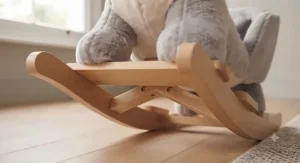
Indoor play has a persistent problem: energetic movement and small living rooms don’t naturally mix. Rocking horse toys solve a genuinely awkward gap in that problem — they let a toddler burn physical energy and practise whole-body movement without needing the running-and-jumping space that most active play demands. That makes them particularly valuable during British winters, when garden time shrinks and toddlers end up spending far more hours indoors than anyone would ideally choose.
Because the motion is contained to one spot, a rocking animal ride-on for toddlers also works well in shared or smaller spaces — flats, playrooms doubling as guest rooms, or nurseries with limited floor area. Pair a rocker with a soft mat underneath and you’ve got a genuinely low-risk indoor activity corner, distinct from screen time and requiring no batteries beyond an optional sound module. It’s worth rotating a rocking toy with other indoor options — soft play tunnels, stacking toys, simple obstacle courses — so it stays a highlight of the day rather than background furniture your toddler stops noticing.
Gross Motor Development: Why Rocking Toys Matter More Than You Think
Rocking might look like simple fun, but it’s doing genuine developmental work. The back-and-forth motion requires a toddler to continuously adjust their core, hips and legs to stay balanced — a repeated, low-stakes practice of the same weight-shifting skill they’ll later need for running, climbing stairs and eventually riding a bike. It’s a form of vestibular stimulation, engaging the inner-ear balance system alongside the muscles doing the physical work, which is part of why toddlers often find rocking instinctively soothing as well as fun.
This lines up with how gross motor skills are formally understood in UK early years frameworks — the gross and fine motor skills early learning goals for young children centre on demonstrating strength, balance and coordination during play, exactly the combination a rocking toy quietly trains. It’s not a substitute for running around outdoors, but as one small, safe, repeatable input into a toddler’s daily physical activity, it earns its place — particularly for children who aren’t yet confident enough for more dynamic ride-on toys with wheels.
Common Mistakes When Buying a Rocking Animal Ride-On
The most frequent mistake is buying for the child’s current age rather than their trajectory — a toy rated 18 months to 3 years might genuinely only get six good months of use if your toddler is already close to the upper end. Reading the full age range, not just the headline minimum, avoids this.
A second common error is prioritising novelty features — sound, lights, extra accessories — over base stability. A quiet, rock-solid base beats a noisy, slightly wobbly one every time from a safety standpoint, and most toddlers forget about sound gimmicks within a fortnight anyway. Third, buyers often skip checking the safety certification entirely, trusting product photography and marketing copy instead; always look specifically for EN71, CE or CPC references in the actual listing description, not just implied by “safe for kids” language. Finally, don’t underestimate storage — a full-size wooden rocker takes up permanent floor space in a way a smaller plush option doesn’t, which matters more than people expect in a compact flat.
Safety, Regulations and Compliance Guide
Every toy legally sold in Great Britain, including a rocking animal ride-on for toddlers, has to meet the essential safety requirements set out in the Toys (Safety) Regulations 2011, the UK’s implementation of toy safety law for products placed on the market in Great Britain. In practice, that covers mechanical safety (no sharp edges, no small parts that could detach and become a choking hazard), chemical safety of materials and dyes, and clear labelling of any age restrictions. When you see “EN71” referenced on a listing, that’s the specific European testing standard most UK toy safety assessments are built around; CPC (Children’s Product Certificate) is the equivalent framework commonly referenced on US-manufactured imports sold into the UK market.
Practically, that means always supervising early use regardless of certification, checking seatbelts and grips for wear every few months, and stopping use immediately if any structural component — a bolt, a seam, a wooden joint — shows signs of loosening. Certification confirms a toy was safe when tested and sold; ongoing safety is still down to reasonable household maintenance and supervision, the same as with any other piece of children’s equipment.
Long-Term Cost and Maintenance
A rocking animal ride-on for toddlers is, refreshingly, one of the lower-maintenance toys in most households. There’s no battery-heavy motor to service on most models (aside from an optional sound module), no chain or gears, and no puncture-prone tyres. Total cost of ownership essentially comes down to the upfront price plus occasional cleaning products for plush versions and, for wooden-framed models, a spot-check of fixings every few months.
Where cost genuinely differs long-term is resale and hand-down value. A well-kept wooden model like the Little Bird Told Me Heritage Stable Rocker tends to hold both function and appearance well enough to pass to a younger sibling or even sell on, partially offsetting its higher upfront price. Budget plush and plastic models rarely hold resale value in the same way, but their lower purchase price means that’s less of a financial loss in absolute terms — the value equation broadly balances out either way, just via different routes.

Frequently Asked Questions
❓ What age is a rocking horse suitable for?
❓ Is a rocking horse or ride-on toy better for toddlers?
❓ How much does a good toddler rocking horse cost?
❓ Are rocking horses safe for 1-year-olds?
❓ Do rocking horses help with balance and coordination?
Conclusion
There’s no single “best” rocking animal ride-on for toddlers — only the best one for your specific child, space and budget. If you want the safest bet for the classic 18-month-to-3-year window, the Rock My Baby Rocking Horse is a genuinely hard-to-fault all-rounder. If money’s tight and you just want to test whether rocking play clicks with your toddler at all, start with the Qaba Plush Ride-On Rocking Animal or the ever-reliable Little Tikes Rocking Horse. And if you’re buying a considered, once-in-a-childhood gift, the Little Bird Told Me Heritage Stable Rocker is built to be remembered rather than outgrown.
Whichever you choose, the fundamentals matter more than the marketing: a wide stable base, a proper safety certification, an honest match to your toddler’s current age and strength, and a design your particular child will actually want to climb onto more than once. Get those right, and the rest — the colour, the animal shape, the sound effects — is genuinely just personal taste.
✨ Don’t Miss These Exclusive Deals!
🔍 Ready to bring some rocking fun home? Click through on any of the picks above to check current pricing and availability before stock runs low. A good rocking animal ride-on for toddlers is one of those rare toys that earns its shelf space every single week — give your toddler theirs today!
Recommended for You
- Wheelybug Cow Ride-On: 7 Best Toddler Picks Compared (2026)
- Wheelybug Bee vs Ladybird: 7 Best Toddler Ride-Ons (2026)
- Best Wheelybug Ladybird 2026: 7 Ride-On Picks + Cheapest Option
Disclaimer: This article contains affiliate links. As an Amazon Associate, I earn from qualifying purchases. If you purchase products through these links, we may earn a small commission at no additional cost to you.
✨ Found this helpful? Share it with your friends! 💬🤗
