In This Article
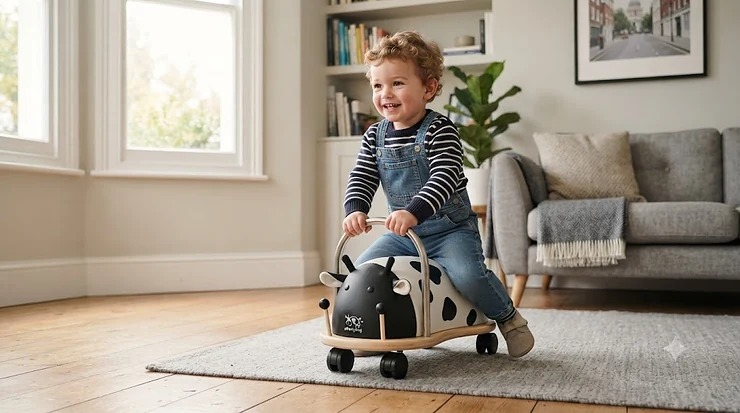
There’s a particular sound every parent of a one-year-old learns to recognise: the squeak-thud-squeak of small feet propelling a plastic cow around the kitchen at 6:45am. A Wheelybug cow ride-on is a padded, wheeled ride-on toy shaped like a cow that toddlers scoot forwards, backwards, sideways and in full circles using their own feet, with no batteries, pedals or assembly required. It’s not a new idea — ride-on toys have quietly encouraged toddlers to move under their own steam for decades — but the Wheelybug’s 360-degree castor wheels do genuinely offer something most rivals don’t: proper spinning, sideways scooting fun that a standard forwards-and-backwards ride-on simply can’t match.
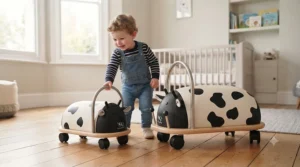
This guide isn’t lifted from a retailer’s product page. We’ve gone through real UK toy brands, aggregated genuine reviewer sentiment, and worked out which ride-ons actually earn a spot in a busy playroom versus which ones look cute in a photo and get abandoned in a fortnight. We’ll cover the Wheelybug Cow itself, how it stacks up against Little Tikes ride-ons specifically, and where farm animal toys and nursery play equipment fit into the wider picture — because most parents buying one ride-on end up thinking about the whole toy collection soon after.
Prices below are shown as ranges rather than exact figures, since pricing on Amazon shifts regularly — always check the current listing price before buying.
Quick Comparison Table
| Product | Type | Age Range | Price Range | Best For |
|---|---|---|---|---|
| Wheelybug Cow Ride-On (Small) | Wooden-base wheeled ride-on | 1-3 years | £55-£70 | First ride-on for early walkers |
| Wheelybug Cow Ride-On (Large) | Wooden-base wheeled ride-on | 3-5 years | £65-£80 | Growing toddlers and preschoolers |
| Wheelybug Ladybird Ride-On | Wooden-base wheeled ride-on | 1-3 years | £55-£70 | Colourful alternative design |
| Little Tikes Scoot ‘N Steer | Plastic foot-to-floor ride-on | 18 months+ | £15-£25 | Budget-friendly first ride-on |
| Battat Cozy Cruisers Cow | Foam rocker/ride-on hybrid | 12 months+ | £30-£45 | Soft, low-to-ground play |
| VTech Gallop & Rock Learning Pony | Electronic learning ride-on | 9 months+ | £35-£50 | Sound and lights engagement |
| Farm Hopper Bounce Ride-On (Cow) | Inflatable bounce ride-on | 3 years+ | £25-£40 | Active, energetic bouncing play |
Looking at the spread, the real split isn’t animal versus animal — it’s mechanism versus mechanism. The Wheelybug Cow Ride-On family wins on genuine multi-directional movement and long-term durability, while the Little Tikes Scoot ‘N Steer wins on price alone for anyone testing whether their toddler is even ready for a ride-on toy. If sound and lights matter more than mobility, the VTech Gallop & Rock Learning Pony covers that gap that none of the wheeled options touch.
💬 Just one click — help others make better buying decisions too!😊
Top 7 Wheelybug Cow Ride-On & Alternatives: Expert Analysis
1. Wheelybug Cow Ride-On (Small) — best first ride-on for early walkers
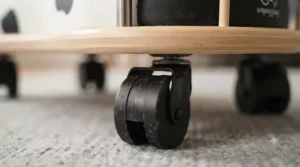
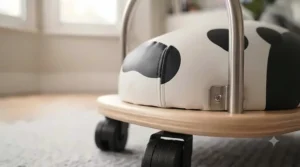
The standout feature is genuine unlimited directional movement — this isn’t a toy that just rolls forwards and backwards like most ride-ons; it spins, scoots sideways and goes round and round on demand. The small Wheelybug Cow Ride-On is built around a poplar plywood base topped with a padded, wipe-clean polyurethane leatheroid body, and its castor wheels are individually rated to 30kg, giving a genuinely reassuring 120kg total safe working load despite the toy itself weighing under 2kg. Based on the spec comparison, the small size is specifically proportioned for riders aged one to three, sitting lower to the ground than the large version so early walkers can get on and off without help. Reviewers consistently note that the spring-loaded horns and sturdy aluminium handle survive genuinely rough toddler handling — pulling, tugging, occasional biting — better than expected for a toy this age group is hard on. What most buyers overlook is that these are handmade rather than mass-injection-moulded, which is exactly why the finish holds up to years of use rather than months.
Pros:
- ✅ True 360-degree movement, not just forwards and back
- ✅ Sturdy build rated for years of daily toddler use
- ✅ Wipe-clean surface handles spills and mess easily
Cons:
- ❌ Noticeably pricier than basic plastic ride-ons
- ❌ Best suited to smooth, level indoor flooring only
Typically priced around £55-£70, this sits at the premium end of the ride-on category, but reviewer sentiment consistently frames it as an investment piece that outlasts cheaper alternatives rather than an impulse buy.

2. Wheelybug Cow Ride-On (Large) — best for growing toddlers and preschoolers
The standout advantage here is simple longevity — the large version is built to the same castor-wheel, multi-directional design as the small Wheelybug, just scaled up for riders aged three and over who’ve outgrown the smaller frame. Based on the spec comparison, the larger base and slightly taller seat height mean an older toddler doesn’t end up with their knees round their ears the way they would on an undersized ride-on, which matters more for comfort and confidence than it might sound. Here’s what to weigh: buying the large size for a genuinely young toddler under two is usually a mistake reviewers flag repeatedly, since the extra height makes mounting and dismounting harder for the smallest riders rather than giving them “room to grow into.” Aggregated feedback describes the large Wheelybug Cow as a natural next step for families who already own the small version and want to keep the same play pattern going as their child grows, rather than starting over with an entirely different toy category.
Pros:
- ✅ Comfortably fits older toddlers and preschoolers
- ✅ Same durable multi-directional castor mechanism as the small size
- ✅ Familiar play pattern for siblings moving up from the small version
Cons:
- ❌ Too tall for very young or short toddlers to mount easily
- ❌ Similar premium price point to the small version
Expect to pay roughly £65-£80, and for households with a toddler solidly in the three-to-five bracket, this is genuinely a better fit than sizing down and hoping they’ll grow into it.
3. Wheelybug Ladybird Ride-On — best colourful alternative design
The hook is straightforward: identical engineering to the Cow, wrapped in the Wheelybug range’s bright red-and-black Ladybird design, which is worth knowing about for parents who want the same proven mechanism without the farmyard theme. The Wheelybug Ladybird Ride-On uses the same plywood base, padded leatheroid body and 360-degree castor wheels as every other animal in the range, since the character design is purely cosmetic and doesn’t change the underlying build quality or weight rating. Reviewers consistently note that the bold, high-contrast colouring appeals particularly to very young toddlers still developing colour recognition, and a common theme in feedback is that siblings sometimes prefer having visually distinct Wheelybugs — Ladybird for one, Cow for another — rather than two identical animals. What the spec sheet won’t tell you, but reviewer patterns suggest, is that the character choice matters far less to durability or play value than picking the correct size for your child’s age, so choosing based on which design your toddler responds to is a perfectly sound approach.
Pros:
- ✅ Identical durable mechanism and build quality to the Cow
- ✅ High-contrast colouring appeals to very young toddlers
- ✅ Good option for siblings wanting visually distinct ride-ons
Cons:
- ❌ Same premium price as other Wheelybug designs
- ❌ Character choice is purely aesthetic, not functional
Pricing mirrors the Cow at around £55-£70 for the small size, so the decision here really comes down to which character your toddler gravitates towards rather than any functional difference.
4. Little Tikes Scoot ‘N Steer Ride-On Toy — best budget-friendly first ride-on
The standout feature is price accessibility — a genuinely low-cost entry point for parents who aren’t yet sure whether their toddler will take to a ride-on toy at all. The Little Tikes Scoot ‘N Steer is a simple foot-to-floor plastic ride-on with a steering wheel and horn, designed for children from around 18 months, and it moves the standard way most ride-ons do: forwards and backwards under the child’s own foot power, without the sideways or spinning motion a Wheelybug offers. Based on the spec comparison, this is honestly the pick for cautious first-time buyers or grandparents’ houses where a toy needs to be inexpensive enough that losing or outgrowing it quickly doesn’t sting. Reviewers broadly describe Little Tikes ride-ons as reliably built for the price point, though the lightweight plastic construction doesn’t have anywhere near the load rating or long-term durability of the Wheelybug’s plywood-and-castor design. For a full breakdown of how these two genuinely differ in daily use, see the dedicated comparison further down this guide.
Pros:
- ✅ Significantly cheaper than wooden-base ride-ons
- ✅ Lightweight and easy for toddlers to push around
- ✅ Good low-risk option for first-time ride-on buyers
Cons:
- ❌ Only moves forwards and backwards, no sideways scooting
- ❌ Lighter plastic build doesn’t match Wheelybug’s durability
At roughly £15-£25, this is one of the cheapest genuinely usable ride-ons on the market, and a sensible starting point before committing to a pricier option.
5. Battat Cozy Cruisers Cow Foam Ride-On — best for soft, low-to-ground play
The standout feature is the low-impact foam build — this isn’t a wheeled ride-on at all, but a soft, rockable foam cow with a removable, machine-washable fabric cover, sitting close to the ground for the youngest toddlers who aren’t steady on their feet yet. Based on the spec comparison, the Battat Cozy Cruisers Cow doubles as a rocker, a lounger, or even a flat play surface, which gives it more flexible use than a fixed-mechanism ride-on, particularly for babies just past their first birthday who aren’t ready for a wheeled toy. Reviewers consistently mention that the washable cover is a genuine practical win for anyone dealing with sticky toddler hands and inevitable spills, something the Wheelybug’s wipe-clean surface handles differently but doesn’t fully machine-wash. What most buyers overlook is that this product sits in a slightly different category to wheeled ride-ons entirely — it’s closer to a soft rocker-slash-floor toy, so comparing it directly on “ride-on” terms alone somewhat undersells its actual play value for the very youngest toddlers.
Pros:
- ✅ Fully machine-washable removable cover
- ✅ Low, stable design suits unsteady early walkers
- ✅ Multi-purpose use as rocker, lounger, or play surface
Cons:
- ❌ No wheels, so it doesn’t roll or scoot like a true ride-on
- ❌ Softer build won’t survive as many years of rough use
Priced around £30-£45, this works best as a gentler, younger-sibling-friendly complement to a proper wheeled ride-on rather than a direct substitute for one.
6. VTech Gallop & Rock Learning Pony — best for sound and lights engagement
The standout advantage is sensory feedback — lights, sounds, and simple learning phrases triggered as the toddler rocks or moves the pony, adding an auditory and educational layer that silent ride-ons like the Wheelybug simply don’t offer. Based on the spec comparison, the VTech Gallop & Rock Learning Pony targets a younger age bracket from around nine months, functioning first as a stationary rocker for babies before converting into more active play as they grow into toddlerhood. Reviewers consistently report that the learning content — numbers, animal sounds, simple phrases — genuinely holds attention longer than a silent toy for this younger age group, though a recurring theme in feedback is that battery-powered sound toys eventually need battery replacement, an ongoing cost a Wheelybug never incurs. Here’s what to weigh: if your priority is early learning engagement over physical mobility and spinning play, this genuinely outperforms a wheeled ride-on for the youngest toddlers, but it doesn’t replace the gross motor benefits a scooting Wheelybug provides once your child is properly mobile.
Pros:
- ✅ Interactive lights, sounds and learning content
- ✅ Works as a stationary rocker for younger babies too
- ✅ Encourages early language and number recognition
Cons:
- ❌ Requires batteries, an ongoing running cost
- ❌ No wheeled movement or true ride-on mobility
Expect to pay around £35-£50, a reasonable spend for a toy that spans two developmental stages rather than one.
7. Farm Hopper Bounce Ride-On Toy (Cow) — best for active, energetic bouncing play
The standout feature is the bounce, not the roll — this is an inflatable, hand-pump-inflated ride-on with gripable ears for older, more physically confident toddlers who want a more energetic play style than gentle scooting offers. Based on the spec comparison, the Farm Hopper Bounce Ride-On Toy suits children who’ve moved past early wobbly walking and are ready for genuinely active, bouncing, core-strengthening play, which is a meaningfully different physical skill to the smooth gliding motion a Wheelybug encourages. Reviewers consistently note that the inflatable build means this toy needs a bit more care than a solid wooden or plastic ride-on — checking for punctures, keeping it away from sharp edges — but that the bouncing motion itself is genuinely popular with more active toddlers who find slower ride-ons less engaging over time. What the spec sheet won’t tell you, but aggregated feedback suggests, is that this works best as a second or third ride-on in a growing collection rather than a first purchase, since it demands more physical coordination than a wheeled scoot-along toy.
Pros:
- ✅ Encourages active bouncing and core strength development
- ✅ Gripable ears give toddlers secure hold points
- ✅ Genuinely different play style to wheeled ride-ons
Cons:
- ❌ Inflatable construction needs more careful handling
- ❌ Requires more physical coordination than scooting ride-ons
Priced around £25-£40 including the hand pump, this is a solid pick for slightly older, more physically confident toddlers rather than a first-time ride-on for a brand-new walker.
Practical Usage Guide: Getting the Most from Your Wheelybug
Setting a Wheelybug up for success starts with the floor, not the toy — it’s designed for smooth, level indoor surfaces, and reviewers consistently note that carpet, especially thick or shag-pile carpet, blunts the whole point of the 360-degree castor wheels. Hard flooring, laminate, or a smooth kitchen floor is genuinely where this toy performs best. In the first 30 days, resist the urge to immediately encourage full spinning play — most toddlers naturally progress from straightforward forwards-and-back scooting to sideways and circular movement on their own within a couple of weeks, and letting that happen at their own pace tends to build confidence faster than actively coaching it.
One optimisation trick that doesn’t make it onto product listings: wiping down the polyurethane body weekly, even without visible mess, prevents the slow build-up of grime in the seams around the padded seat that’s harder to shift once it’s set in. A common mistake in early ownership is storing the Wheelybug somewhere damp, like a conservatory or unheated porch — the wooden base is robust but not designed for genuinely wet or humid conditions long-term, and keeping it in the main living space extends its usable life considerably.
✨ Building a proper toddler play corner this month?
🔍 Compare current prices on the picks above before you order — a few minutes now saves a mismatched size showing up at the door later.
Real-World Scenarios: Matching the Right Ride-On to Your Toddler
The just-turned-one-year-old, newly walking: a small Wheelybug Cow Ride-On or the softer Battat Cozy Cruisers Cow both suit this stage well, since neither demands advanced balance, and the low-to-the-ground design of both means tumbles are gentle rather than alarming.
The budget-conscious first-time buyer: if you’re not certain your toddler will take to a ride-on at all, the Little Tikes Scoot ‘N Steer removes the financial risk of a premium purchase that might sit unused, letting you gauge genuine interest before spending more.
The two-sibling household with an age gap: pairing a small Wheelybug Cow Ride-On for the younger child with a large Wheelybug Ladybird Ride-On for an older sibling keeps the same reliable mechanism across both ages while giving each child their own distinct character.
The physically confident three-year-old who’s bored of everything: the Farm Hopper Bounce Ride-On Toy offers a genuinely different physical challenge to wheeled ride-ons, which is often exactly what’s needed when a toddler has mastered scooting and wants something more energetic.
Problem → Solution: Common Ride-On Toy Headaches Solved
Problem: my toddler can’t get on and off the ride-on by themselves. This usually comes down to size mismatch rather than the toy itself. Check that a small-sized ride-on, like the small Wheelybug Cow Ride-On, matches your child’s actual height and confidence level rather than buying up a size “to grow into.”
Problem: the ride-on skids or struggles on our flooring. Castor-wheel ride-ons like the Wheelybug need smooth, hard flooring to perform properly; on carpet, a foot-to-floor plastic ride-on like the Little Tikes Scoot ‘N Steer or a foam option like the Battat Cozy Cruisers Cow will generally cope better.
Problem: my toddler loses interest within a few weeks. This is often a stimulation issue rather than a build-quality one. Consider whether an interactive option like the VTech Gallop & Rock Learning Pony, with sounds and lights, might hold attention longer for a younger toddler who needs more sensory feedback.
Problem: the ride-on tips or feels unstable. Genuine tipping risk is rare with a properly rated toy used within its safe working load, but always check the specific weight rating against your child’s size, and avoid letting an older, heavier child use a small-sized ride-on meant for a lighter rider.
Problem: siblings are fighting over one ride-on. Rather than buying an identical duplicate, choosing a different character within the same range — a Wheelybug Cow for one child and a Wheelybug Ladybird for another — tends to reduce squabbling more effectively than two of the same animal.
How to Choose a Wheelybug Cow Ride-On for Toddlers
Choosing the right ride-on for a toddler comes down to matching the toy to your child’s actual stage, not their eventual one. Work through these criteria:
- Check the age and size guide against your child’s current height, not their projected growth — an undersized or oversized ride-on is harder and less safe to mount than the “right” size.
- Confirm your flooring suits the mechanism. Castor-wheel ride-ons like the Wheelybug need smooth, hard floors; carpeted homes may get more use from a foam or foot-to-floor alternative.
- Think about noise tolerance. Electronic options like the VTech pony add sound and lights that some households welcome and others actively avoid.
- Consider how many ride-ons the household actually needs. One well-built ride-on per age-appropriate child usually beats several cheaper duplicates.
- Factor in storage space. Wooden-base Wheelybugs are sturdier but bulkier than inflatable or foam alternatives, which matters in smaller flats or shared playrooms.
- Weigh upfront cost against expected lifespan. A pricier, durable ride-on used daily for three years can work out cheaper per month of use than a budget toy replaced twice.
- Ask what skill you want to encourage. Multi-directional scooting, active bouncing, and stationary rocking with sound each develop slightly different physical and sensory skills.
Common Mistakes When Buying Ride-On Toys
The most common mistake is sizing up “for growth” rather than buying for the child’s current stage — an oversized ride-on that’s genuinely hard to mount doesn’t get used, regardless of how much extra time it theoretically offers before being outgrown. A second frequent pattern in aggregated review feedback is buying based purely on animal design rather than mechanism, when the character is almost always the least important variable — a Cow, Ladybird, or Pig from the same range performs identically, so choosing on colour preference alone is a perfectly reasonable, low-stakes decision, but assuming a cheaper plastic imitation with a similar animal shape will match a proven mechanism’s durability is where buyers get caught out.
A third mistake is ignoring flooring entirely. Reviewers who bought a wheeled ride-on for a thickly carpeted playroom consistently report frustration that the toy “doesn’t work properly,” when the issue is the surface, not the product. Finally, some buyers underestimate how much toddlers genuinely test load limits — climbing on with both feet at once, standing rather than sitting, occasionally letting an older sibling pile on too — so checking the stated weight rating against realistic use, not just your toddler’s current weight alone, avoids disappointment later.
Wheelybug vs Little Tikes Ride-On: Which Wins?
This comparison comes up constantly, and the honest answer is that it depends entirely on what you’re optimising for. The Wheelybug Cow Ride-On offers genuine 360-degree movement thanks to its castor wheel design, letting toddlers scoot sideways and spin in circles, not just move forwards and backwards — a Little Tikes Scoot ‘N Steer, by contrast, is a standard foot-to-floor ride-on that moves the conventional way, forwards and back under foot power alone. On build quality, the Wheelybug’s plywood base and padded leatheroid body, individually rated to 30kg per wheel, is built for years of daily use, while Little Tikes’ lightweight plastic construction is solid for the price but doesn’t carry anywhere near the same load rating or expected lifespan.
Price is where Little Tikes genuinely wins outright — at roughly a third of the Wheelybug’s cost, it’s a far lower-risk purchase for testing whether a toddler even likes ride-on toys before committing to a premium option. For households prioritising long-term durability, resale value, and genuinely varied movement, the Wheelybug is worth the extra spend; for a first ride-on, a nursery setting buying multiples on a budget, or simply testing the waters, the Little Tikes option does the job without the premium price tag. Neither is objectively “better” in every scenario — the right choice depends on budget, expected years of use, and how much your toddler will actually benefit from that extra sideways and spinning movement.

Wheelybug Cow for Toddlers: Age, Safety & Development Guide
The Wheelybug Cow’s small size is specifically designed for children aged one to three, which lines up closely with typical UK developmental milestones — most toddlers walk independently somewhere between twelve and eighteen months, and confident, coordinated movement tends to follow over the following year. Ride-on toys like the Wheelybug support exactly this stage of development: commercial ride-on toys, along with bikes, trikes and scooters, are commonly recommended by early years services to help toddlers develop the gross motor skills needed for balancing and moving confidently, which is exactly the age-appropriate value a Wheelybug adds beyond simple entertainment.
Safety-wise, always supervise ride-on play, particularly near stairs, and check the toy periodically for wear on the castor wheels or any loosening at the horn or handle attachment points. UK toys must meet the essential safety requirements set out in the Toys (Safety) Regulations, and checking for a UKCA or CE safety marking on any ride-on toy, Wheelybug or otherwise, is a straightforward way to confirm a product has been through the required safety testing before it reaches a toddler. For toddlers under three specifically, it’s also worth checking that any small detachable parts, like spring-loaded horns, are securely fixed and can’t be pulled free, since choking risk assessments are a core part of what that safety marking actually certifies.
Farm Animal Toys: Building a Themed Play Collection
Farm animal toys extend naturally beyond a single ride-on into a whole themed play world, and toddlers who enjoy the Wheelybug Cow often respond well to matching farmyard figures, picture books, and simple animal-sound toys that reinforce the same characters. Building a themed collection doesn’t need to be expensive or extensive — a handful of plastic farm animal figures alongside the ride-on gives a toddler the chance to connect physical play with imaginative, narrative play, which is a genuinely valuable combination for language development at this age. Rotating farm animal toys in and out of a toy box, rather than leaving everything out permanently, also tends to keep interest fresher for longer, since a “new” toy that’s actually just been put away for a few weeks often gets rediscovered with real enthusiasm.
For families who want variety without buying multiple ride-ons, a mix of stationary farm animal figures, a soft farm animal toy for cuddling, and the single Wheelybug Cow as the “active” piece covers most of what a toddler needs from this theme without cluttering a playroom with several large ride-on toys competing for floor space.
Nursery Play Equipment: Where the Wheelybug Fits
Wheelybugs are a genuinely common sight in UK nurseries and early years settings, and that’s not a coincidence — their build quality and safe working load make them well suited to shared, high-turnover use across multiple children in a way that lighter, cheaper ride-ons often aren’t. Physical activity is treated as a core part of early years provision, and the statutory framework for early years settings in England explicitly recognises that gross and fine motor experiences develop incrementally throughout early childhood, with adults supporting children’s development through games and play both indoors and outdoors, and equipment like the Wheelybug directly supports that requirement in a practical, hands-on way that nursery staff can incorporate into daily free play sessions.
For home use, the same reasoning that makes Wheelybugs popular in nursery play equipment purchasing applies to individual households too: a single well-built ride-on that survives years of genuinely rough daily use, rather than several disposable ones, tends to work out both cheaper and more consistent over time. If you’re setting up a dedicated play corner or nursery-style space at home, pairing one sturdy ride-on with a small selection of complementary farm animal toys mirrors exactly the kind of balanced, low-clutter equipment selection that professional early years settings tend to favour.
Long-Term Value & Durability
A Wheelybug’s higher upfront price makes far more sense once you look at expected lifespan rather than the sticker price alone. Reviewers consistently describe Wheelybugs surviving several years of genuinely heavy daily use, often passing from an older sibling to a younger one, or being resold in good condition on the secondhand market — something a lightweight plastic ride-on rarely manages once its wheels or steering mechanism wear out. Spread across three to four years of regular use, and potentially a second child, the Wheelybug’s cost per month of actual play value often ends up lower than a cheaper ride-on replaced once or twice over the same period.
The Little Tikes Scoot ‘N Steer, by contrast, offers excellent value for its specific purpose — a low-risk first purchase or a toy for occasional use at a grandparent’s house — but isn’t built with the same multi-year expectation in mind, and reviewers generally don’t expect the same longevity from it. Maintenance for both types is minimal: a wipe-down for the Wheelybug’s leatheroid surface, periodic checks of wheel movement and horn security, and keeping either toy away from damp storage conditions that could warp a wooden base or degrade plastic over time.
Features That Actually Matter (And Those That Don’t)
Genuine 360-degree wheel movement matters enormously for play value — it’s the single feature that most clearly separates a Wheelybug from a standard ride-on, and it’s the reason toddlers stay engaged with it for longer than simpler alternatives. Build material matters too: plywood and padded leatheroid genuinely outlasts thin injection-moulded plastic under daily toddler stress. Weight rating matters for safety and peace of mind, particularly in households where an older sibling might climb aboard alongside a toddler.
What matters considerably less than marketing photos suggest: the specific animal character chosen, which is purely cosmetic and doesn’t affect performance, durability, or safety in any way. Elaborate sound and light features add engagement for very young babies but become less relevant once a toddler is confidently mobile and more interested in movement than noise. And while premium packaging or branded accessories look appealing online, they add cost without meaningfully improving the actual riding experience — the wheels, base material, and weight rating are what determine whether a ride-on genuinely performs, regardless of how it’s presented in a listing photo.
Safety & Regulations Guide
Ride-on toys sold in the UK must comply with the Toys (Safety) Regulations, which set essential safety requirements around structural integrity, choking hazards from small parts, and clear age-appropriate labelling. Always check for a UKCA or CE mark on the toy or its packaging before buying, particularly from third-party sellers, since this marking is a manufacturer’s declaration that the product has passed the required safety testing. For ride-on toys specifically, look for a stated maximum weight or safe working load, and don’t exceed it even briefly, since most tipping incidents reviewers report stem from a toy being used well beyond its rated capacity rather than a fundamental design flaw.
Supervision remains the most effective safety measure regardless of how well-built a toy is — keeping ride-on play away from stairs, open doors, and hard furniture edges reduces the risk of a fall turning into a genuine injury. Periodically check castor wheels for debris or wear, and inspect any spring-loaded or detachable parts, like a Wheelybug’s horns, to confirm they remain securely fixed rather than loosening with age and repeated tugging.
Frequently Asked Questions
❓ What age is a Wheelybug Cow ride-on suitable for?
❓ Is Wheelybug or Little Tikes better for a first ride-on toy?
❓ Can a Wheelybug Cow be used outdoors?
❓ How much weight can a Wheelybug Cow safely hold?
❓ Are farm animal ride-on toys good for toddler development?
Conclusion
There’s no single “correct” ride-on for every toddler, but the decision does come down to a few clear priorities. For a durable, genuinely versatile first proper ride-on, the small Wheelybug Cow Ride-On remains the strongest all-round pick, with the Wheelybug Ladybird Ride-On offering identical quality for families who want a different look. Budget-conscious buyers or anyone testing the waters should start with the Little Tikes Scoot ‘N Steer before committing to a premium option. Younger babies benefit more from the soft, washable Battat Cozy Cruisers Cow or the sound-and-lights engagement of the VTech Gallop & Rock Learning Pony, while more physically confident toddlers looking for something different might prefer the Farm Hopper Bounce Ride-On Toy. Whichever you choose, matching the toy to your child’s current stage — not their eventual one — is consistently what determines whether a ride-on becomes a genuine daily favourite or an expensive ornament in the corner of the playroom.
✨ Ready to pick the right ride-on for your toddler?
🔍 Check current prices on the picks above and choose based on your child’s actual size and stage, not just which one looks cutest in the photos.
Recommended for You
- Wheelybug Bee vs Ladybird: 7 Best Toddler Ride-Ons (2026)
- Best Wheelybug Ladybird 2026: 7 Ride-On Picks + Cheapest Option
- Fire Engine Ride-On Toy: 7 Best Picks for 2026 (Tried; Tested Specs)
Disclaimer: This article contains affiliate links. As an Amazon Associate, I earn from qualifying purchases. If you purchase products through these links, we may earn a small commission at no additional cost to you.
✨ Found this helpful? Share it with your friends! 💬🤗
