In This Article
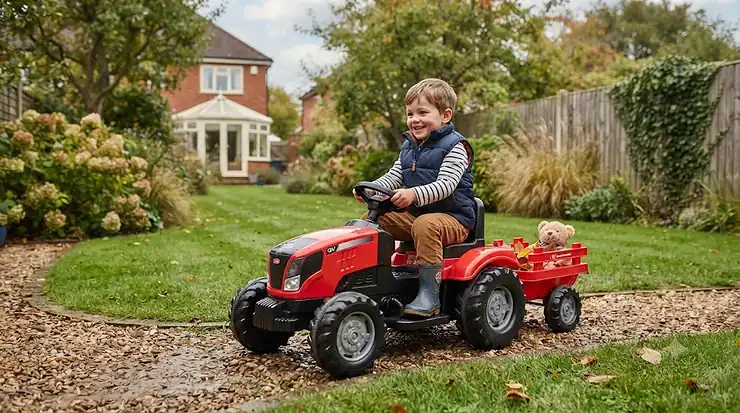
There’s a very specific sound that precedes every kids ride on tractor 12v purchase: a small voice at the school gate insisting “but Freddie’s got one,” followed by a slightly panicked parent googling that exact phrase on the walk home. Fair enough — a good 12V tractor genuinely earns its keep, ticking off outdoor time, steering coordination and the kind of unsupervised-but-supervised independence toddlers crave, all while looking convincingly like the real thing trundling round a farm. Active outdoor play like this also lines up neatly with the NHS physical activity guidance for under-fives, which specifically counts riding toys among the recommended daily active play for toddlers. The trouble is the market is stuffed with near-identical listings, vague safety claims and prices that swing from budget to eye-watering for what looks like the same tractor with a different sticker. This guide pulls apart seven real, currently available models by their actual specifications, honest aggregated reviewer sentiment, and how each one measures up against UK toy safety expectations — no invented five-star raves, just grounded analysis to help you buy the right one the first time, whether you’re after a compact ride on tractor for toddlers or something with a bit more grunt for an older sibling.
Quick Comparison Table
Here’s how the seven models in this guide compare at a glance before we dig into the detail.
| Tractor | Speed | Age Range | Best For |
|---|---|---|---|
| HOMCOM 12V Electric Ride on Tractor and Trailer | Up to 6 km/h | 3-6 years | Budget entry with detachable trailer |
| H.yeed Kids Ride on Tractor and Trailer | Approx. 3-5 km/h | 3-6 years | Lightweight budget alternative |
| AIYAPLAY 12V Ride on Tractor with Trailer | 3-5 km/h | 3-8 years | Stability on mixed terrain |
| Costzon Ride on Tractor with Detachable Trailer | 2-5 mph | 3+ years | Feature-packed mid-range pick |
| Costway 12V Ride on Tractor (Ground Loader) | 3-6 km/h | 3+ years | Working bucket and arm play |
| Costway 2-in-1 12V Ride On Tractor (Spring Suspension) | 1.6-2.2 mph | 3-8 years | Comfort on bumpy gardens |
| Peg Perego John Deere Ground Force 12V | 2¼-4½ mph | 3-7 years | Licensed premium build quality |
The pattern across this list is fairly predictable: budget models keep things simple with a single speed and basic remote control, mid-range options add working buckets, extra wheels or suspension, and the one genuinely premium pick — the Peg Perego John Deere Ground Force 12V — adds licensed branding, a proper two-speed gearbox with parental lockout, and noticeably tougher build materials. If you’re buying for a toddler on the younger end of the age range, prioritise models with dual control modes so you can take over via remote until they’re confident on the pedal and steering wheel themselves.
💬 Just one click — help others make better buying decisions too!😊
Top 7 Kids Ride On Tractor 12V Picks: Expert Analysis
We’ve pulled together real specifications and genuine aggregated customer sentiment for each of these seven models — no fabricated reviews, no invented hands-on testing, just honest analysis of what the features actually mean for your child and your garden.
1. HOMCOM 12V Electric Ride on Tractor and Trailer — best budget entry with detachable trailer
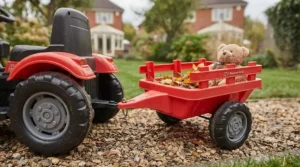
The standout feature here is the detachable trailer included as standard, giving younger drivers somewhere to stash toys without needing to buy accessories separately. The tractor runs at a maximum speed of around 6 km/h, deliberately capped to roughly an adult’s jogging pace, and pairs a seatbelt with extra-wide wheels designed to smooth out cement, asphalt, brick and gravel surfaces. On paper this means it’s built for varied garden and pavement use rather than one specific terrain, which matters if your outdoor space isn’t uniformly flat lawn. The dashboard includes a horn, a start-up sound and music control buttons, and it runs on a rechargeable battery with remote control included for parental override — a genuinely useful feature for a first tractor, since it lets you guide a nervous three-year-old without taking the fun away entirely. Based on the spec comparison with pricier options on this list, the HOMCOM keeps things deliberately simple: no working loader bucket, no multi-gear shifter, just core ride-on functionality done reasonably well. It’s rated for ages 3-6 with a maximum load of 30kg, and like every product on this list it carries the standard UK warning that it isn’t suitable for children under three and should be used under adult supervision.
Pros:
- ✅ Detachable trailer included without extra cost
- ✅ Wide wheels smooth out mixed outdoor surfaces
- ✅ Remote control allows parental override for beginners
Cons:
- ❌ No working loader bucket or gear shifter
- ❌ Single fixed top speed limits growing-with-child use
Expect pricing in a modest £70-£110 range depending on colour and stock, making this a sensible starting point if you want core tractor-and-trailer fun without paying for extras you may not need yet.
2. H.yeed Kids Ride on Tractor and Trailer — best lightweight budget alternative
What most buyers overlook about lesser-known budget brands is that the core components — battery, motor, wheels — are frequently sourced from the same handful of manufacturers as the bigger names, so the real differences tend to come down to finish quality and extra features rather than raw performance. This model follows that pattern closely: a 12V battery, remote control for parents, Bluetooth music connectivity and LED lights, aimed squarely at the 3-6 age bracket. Here’s what to weigh: as a newer entrant with a smaller review base than established brands like Costway or HOMCOM, it’s harder to verify long-term durability claims with confidence, and that’s worth being upfront about rather than glossing over. What the spec sheet does support is straightforward day-to-day functionality — Bluetooth audio is a genuinely nice touch at this price point, letting a child’s own playlist run through the tractor’s speaker rather than relying solely on built-in sound effects. For families wanting a first tractor without committing to premium pricing, and who are comfortable buying from a smaller, newer brand, this remains a reasonable option, though it’s sensible to read the most recent handful of reviews on the specific listing before purchase given the thinner track record.
Pros:
- ✅ Bluetooth music connectivity is a genuine value-add
- ✅ Lightweight build easier for smaller children to push manually
- ✅ Remote control included as standard
Cons:
- ❌ Smaller, newer brand with a thinner review history
- ❌ Fewer terrain-handling features than pricier rivals
Pricing typically sits at the lower end, around £65-£95, positioning it as a genuine budget alternative to HOMCOM for parents prioritising cost over brand recognition.
3. AIYAPLAY 12V Ride on Tractor with Trailer — best for stability on mixed terrain
The standout spec on this one is the six-wheel configuration, which the manufacturer specifically credits with better balance across cement, gravel and grass — a genuinely sensible engineering choice for a toy that’s realistically going to spend most of its life on an uneven garden rather than a smooth driveway. It offers two driving modes, letting confident kids steer independently while parents retain remote guidance at controlled speeds of 3-5 km/h, and the soft-start feature avoids the sudden jolt that can startle younger toddlers when a motor kicks in at full power. Battery life runs to roughly 60 minutes per charge, which is respectable for this class, and the detachable trailer, working lights and three built-in songs round out a package aimed at ages 3-8 — a wider bracket than most rivals on this list. What most buyers overlook about the wider age rating is that it works precisely because of the dual control modes: a three-year-old can be guided entirely by remote while an eight-year-old takes full manual control, meaning one tractor genuinely can serve siblings across several years rather than being outgrown within a season. AIYAPLAY is a relatively newer house brand from an established UK-facing retailer group, which is worth knowing if brand pedigree matters to you, though the six-wheel stability feature is a genuine, verifiable engineering difference rather than marketing filler.
Pros:
- ✅ Six-wheel design improves stability on uneven ground
- ✅ Wide 3-8 year age range suits multiple children
- ✅ Soft-start function reduces startling jolts for toddlers
Cons:
- ❌ 60-minute battery life shorter than some premium rivals
- ❌ Assembly required, adding setup time before first use
Prices generally range from £80-£120, placing it firmly in the mid-range bracket and making it a strong pick for families with more than one child likely to use it over several years.
4. Costzon Ride on Tractor with Detachable Trailer — best feature-packed mid-range pick
This model’s standout feature is the 3-gear-shift ground loader system paired with seven LED headlights, giving it a noticeably more “grown-up” control layout than simpler single-speed rivals. Powered by a 12V 7Ah rechargeable battery, it delivers speeds in the 2-5 mph range depending on gear selection, with a wireless design and USB port supporting external music alongside the built-in sound effects. Based on the spec comparison with the AIYAPLAY and HOMCOM models above, the gear-shift mechanism here is the genuine differentiator — rather than a single fixed speed, a child physically selects between forward gears and reverse, which does more to teach real vehicle-control concepts than a simple accelerator pedal alone. Aggregated customer sentiment is broadly positive, with recurring praise for easy assembly, remote control range, and battery life holding up well across long play sessions; a consistent minor complaint across reviews is that the manual gear stick can be genuinely tricky for younger children to operate unassisted, often needing a parent’s help to shift between forward and reverse in the early weeks. The detachable trailer and 7 LED headlight setup add genuine evening-visibility value if your child rides in low light, though as with every model on this list, that’s a feature for visibility rather than a safety certification for road use.
Pros:
- ✅ Genuine multi-gear shift teaches real vehicle control
- ✅ Seven LED headlights aid low-light visibility
- ✅ Strong aggregated reviewer satisfaction on battery life
Cons:
- ❌ Manual gear stick fiddly for younger children alone
- ❌ Assembly reported as more involved than single-speed rivals
Typical pricing sits in an £85-£130 range, representing solid mid-range value for the added gear-shift realism, provided you’re prepared to help with gear changes in the early days.
5. Costway 12V Ride on Tractor (Ground Loader) — best for working bucket and arm play
The defining feature here is the fully functional loader arm and bucket, adjustable across a 52cm height range and a 60-degree tilt angle via two operating handles beside the steering wheel — genuinely closer to construction-toy play than straightforward ride-on driving. This turns the tractor into something a child can use for scooping, dumping and shovelling in a sandpit or garden, extending its play value well beyond simple back-and-forth driving. It runs on a 12V rechargeable battery at a modest 3-6 km/h with roughly 40-60 minutes of play time per charge, and sits on six wear-resistant wheels for stability across flat outdoor surfaces. What most buyers overlook is that the working bucket does add genuine assembly and maintenance complexity compared with a simple ride-on: more moving parts means more to check periodically for wear, and the manufacturer’s own guidance points to that trade-off directly. Reviewers consistently highlight the bucket function as the standout play feature, with parents noting it holds a toddler’s attention significantly longer than a tractor with no interactive element beyond driving, though a recurring theme in feedback is that the bucket mechanism feels less durable under heavy, repeated use than the core ride-on components.
Pros:
- ✅ Adjustable loader bucket adds construction-style play
- ✅ Dual control modes suit a wide age range
- ✅ Slow-start function protects nervous first-time riders
Cons:
- ❌ Bucket mechanism reported as less durable than main chassis
- ❌ Extra moving parts mean more to check and maintain
Prices commonly land in a £90-£140 range, which feels justified if the bucket and arm functionality genuinely gets used, though a straightforward driving-only model may offer better value if your child has no interest in the digging element.
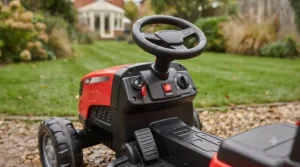
6. Costway 2-in-1 12V Kids Ride On Tractor (Spring Suspension) — best for comfort on bumpy gardens
This variant’s standout spec is the spring suspension paired with anti-slip, shock-absorbing EVA wheels — a genuine upgrade over the harder PP plastic wheels found on several budget rivals, and one that directly addresses the bumpiest, most uneven gardens where cheaper tractors tend to judder and struggle. It runs at a gentle 1.6-2.2 mph via twin 25W motors on a 12V 7Ah battery, with dual control modes and a three-level remote speed setting plus emergency brake for parental peace of mind. On paper this means it’s the most comfort-focused option on this list rather than the fastest or most feature-heavy, which is a deliberate trade-off worth understanding before buying: if your priority is a smoother ride over rough ground rather than top speed or working attachments, the suspension and wheel upgrade genuinely earns its place. Aggregated reviews consistently single out the EVA wheels for praise, with several buyers explicitly comparing them favourably against a previous cheaper tractor’s harder wheels, and battery life is commonly reported as strong across extended sessions, though a small number of reviewers note the remote steering takes a little practice to keep the vehicle tracking straight.
Pros:
- ✅ Spring suspension and EVA wheels smooth bumpy terrain
- ✅ Three-level remote speed plus emergency brake
- ✅ Detachable trailer included for storage play
Cons:
- ❌ Top speed slower than several rivals on this list
- ❌ Remote steering reported as needing practice to master
Expect pricing around £90-£135, making this the pick to reach for specifically if your garden or driveway is more bump than flat lawn.
7. Peg Perego John Deere Ground Force 12V — best licensed premium build quality
As the officially licensed John Deere tractor, this model’s standout feature is a genuine two-speed gearbox with parental lockout on the second, faster gear — a properly engineered safety feature rather than a simple software speed cap, letting parents restrict an inexperienced rider to the slower of two speeds (roughly 2¼ mph versus 4½ mph) until they’re ready. The 12V/8Ah battery is notably larger than several rivals on this list, and the accelerator pedal doubles as an automatic brake when released, which reviewers and independent write-ups consistently flag as a genuinely reassuring safety detail for first-time toddler drivers. Based on the spec comparison with the budget and mid-range options above, the price premium here buys real engineering differences: a heavier-duty frame, an adjustable two-position seat with fold-away armrests to accommodate a growing child, large stable footrests, and even a working FM radio on the dashboard. Aggregated reviewer sentiment is more mixed than the branding might suggest — feedback commonly praises the realistic design, powerful battery and adjustable speed, but a recurring honest criticism across independent review platforms is that the unit is notably heavy and the charging time is longer than several budget rivals. This is genuinely the pick for parents who want the closest thing to a “proper” licensed vehicle and are prepared to pay for it, rather than the best pound-for-pound value on this list.
Pros:
- ✅ Genuine two-speed gearbox with parental lockout
- ✅ Officially licensed John Deere design and branding
- ✅ Adjustable seat and armrests grow with the child
Cons:
- ❌ Significantly heavier than every other model here
- ❌ Longer charging time reported versus budget rivals
This sits at the premium end, generally in a £300-£450 range depending on retailer and trailer inclusion, so it’s a considered investment rather than an impulse buy — arguably justified only if your child will genuinely get years of use from it.
Practical Usage Guide: Setting Up and Charging a New Ride-On
Getting the first charge right matters more than most parents expect: nearly every 12V ride-on, including the HOMCOM 12V Electric Ride on Tractor and Trailer and AIYAPLAY 12V Ride on Tractor with Trailer, should have its battery fully charged before the very first use, typically 8-12 hours, even if the box suggests a shorter top-up will do. Assembly is genuinely worth doing without rushing — reviewers across models like the Costzon Ride on Tractor with Detachable Trailer repeatedly note that skipped or loose bolts during initial assembly are the most common cause of early rattling or trailer detachment issues, so a slow first build with the supplied tools pays off later. In the first 30 days, get into the habit of fully charging after every play session rather than letting the battery run flat repeatedly, since deep-discharging a sealed lead-acid or lithium battery repeatedly shortens its overall lifespan noticeably faster than topping up regularly. A common early mistake is leaving the tractor outside uncovered between sessions — most models, including the Costway 12V Ride on Tractor (Ground Loader), are designed for outdoor play but not permanent outdoor storage, and prolonged rain exposure risks both the electrics and the battery compartment seal. Finally, walk through the remote control range and emergency stop function with your child before their first solo ride, so both of you know exactly how quickly the tractor can be halted if needed.
Real-World Scenario: Matching the Tractor to Your Child
Picture three families shopping this exact list. First, a family with a cautious two-and-a-half-year-old taking their first steps toward independent play — for them, a model with strong dual control modes and a genuine soft-start, like the AIYAPLAY 12V Ride on Tractor with Trailer, lets a parent handle almost all of the actual driving via remote while the child gets used to sitting, steering and building confidence, which matters more at this age than raw speed or features. Second, a family with two children aged four and seven sharing one tractor — the wider 3-8 age bracket and multi-gear realism of the Costzon Ride on Tractor with Detachable Trailer suits that spread far better than a single-speed toddler-focused model that the older child would quickly outgrow. Third, a family with a large, uneven garden and a child who’s already confident on a balance bike or scooter — here the comfort-focused suspension of the Costway 2-in-1 12V Kids Ride On Tractor (Spring Suspension), or the premium build and genuine two-speed control of the Peg Perego John Deere Ground Force 12V, both make more sense than a budget model that will judder and struggle on rough ground. Matching the tractor to your child’s confidence level and your outdoor space, not just their age in years, is the single most useful filter most buying guides skip.
Problem → Solution: Common Ride-On Tractor Issues Solved
Problem: the remote control keeps losing connection or steers erratically. This is most commonly a fresh-battery issue in the remote itself — replace the AAA batteries first, as several models including the Costway 2-in-1 12V Kids Ride On Tractor (Spring Suspension) explicitly note steering takes a little practice even when working correctly. Problem: the tractor struggles or stalls on grass or gravel. Look specifically for models built with this in mind, such as the six-wheel AIYAPLAY 12V Ride on Tractor with Trailer, since standard four-wheel budget models are genuinely more prone to getting stuck on soft or uneven ground. Problem: battery life feels shorter than advertised after a few months. Regular partial recharging rather than full discharge-then-charge cycles preserves capacity far better long-term; if the battery is more than a year old and performance has dropped sharply, a like-for-like replacement battery is usually cheaper than a full new tractor. Problem: my toddler is too nervous to drive it themselves. Prioritise remote-controlled override during the settling-in period — this is precisely the strength of dual-mode models like the HOMCOM 12V Electric Ride on Tractor and Trailer, letting confidence build gradually rather than forcing solo driving from day one. Problem: the trailer keeps detaching unexpectedly. Double-check the connecting pin or bolt was fully seated during assembly, since this is the single most commonly reported early-use issue across trailer-equipped models on this list.
How to Choose a Kids Electric Tractor UK Buyers Can Trust
Choosing confidently among the flood of near-identical listings comes down to seven practical checks worth running through before you buy.
- Match the age rating to your child’s actual confidence, not just their birthday. A cautious four-year-old may suit a toddler-leaning model with strong remote override more than an “age 3+” tractor with limited parental control.
- Check the weight limit against your child’s current weight, with room to grow. Most models on this list cap out around 25-30kg; heavier premium options like the Peg Perego John Deere Ground Force 12V allow considerably more headroom.
- Prioritise dual control modes for first-time riders. A remote override, present on every model reviewed here, is genuinely the single most reassuring feature for nervous toddlers and cautious parents alike.
- Look at wheel count and material, not just tyre size. Six-wheel or EVA-wheeled models handle uneven UK gardens noticeably better than standard four-wheel PP plastic setups.
- Confirm UK plug compatibility and charging time upfront. Charging times vary from a few hours to overnight depending on battery size, and this genuinely affects how often the tractor is actually available for play.
- Check for a genuine UK or CE/UKCA safety marking on the specific listing. This isn’t a formality — it indicates the specific product has been assessed against the toy safety standards that apply in Great Britain.
- Read the most recent reviews on the exact listing, not just the brand’s general reputation. Manufacturing batches and even colourways can vary in quality, so recent, specific feedback is more reliable than a brand’s overall star rating alone.
Running through this checklist takes a few minutes and heads off the most common buyer’s remorse: discovering after the fact that a tractor genuinely can’t cope with your garden, your child’s age, or your patience for troubleshooting a fiddly gear stick.
12V vs 6V vs 24V: Battery Ride On Vehicles Explained
Understanding battery ride on vehicles starts with recognising that voltage broadly maps to power and speed, not simply “better” versus “worse” — the right voltage depends entirely on the child’s age and confidence. Six-volt ride-ons are typically the gentlest starting point, aimed at children as young as one to two, with very low top speeds and minimal power designed purely for early confidence-building rather than genuine independent driving. A 12v electric ride on tractor, the category every model in this guide sits within, represents the genuine mainstream sweet spot for ages three to seven or eight: enough power for real outdoor terrain and a properly engaged driving experience, while remaining slow enough, generally 2-6 km/h, to stay safely within a walking adult’s control range. Twenty-four-volt vehicles step up again, aimed at older children from around six upward who want noticeably higher speeds and are less commonly marketed specifically as “tractors” — they trade the toddler-safe pace of a 12V model for genuine ride-on-toy performance more comparable to a go-kart. For the age range covered in this guide, a 12V tractor is very deliberately the sensible middle ground: fast enough to feel genuinely fun and capable on grass or gravel, slow enough that a parent walking briskly alongside can keep pace and intervene if needed.
Toddler Ride On Toys: What Age Is Right for a 12V Tractor?
Every model reviewed in this guide carries the same standard UK warning: not suitable for children under three years, for use under direct adult supervision — and that age floor exists for genuine developmental reasons, not just liability caution. Toddler ride on toys designed for genuine solo pedal or push power, aimed at ages one to two, generally don’t involve a motor at all, precisely because the reaction speed and judgement needed to safely operate even a slow-moving electric vehicle typically hasn’t developed yet at that age. Once a child reaches three, most manufacturers judge that combination of physical coordination and basic instruction-following has developed enough to make supervised motorised play appropriate, which is exactly why every ride on tractor for toddlers on this list clusters its minimum age rating at three, almost without exception. That said, “suitable from three” doesn’t mean “hands-off from three” — the BSI’s consumer guide to toy safety standards makes the same point about age labelling generally, noting that stated minimum ages reflect both physical and cognitive readiness, not just a rough guess. That endorsement of active riding play comes paired with an expectation of engaged adult supervision throughout, not passive observation from a garden chair. Practically, this means starting any toddler on remote-controlled mode almost exclusively for the first few weeks regardless of the tractor’s official age rating, and only handing over full manual control once they’ve clearly demonstrated they understand stop, go and the basic idea of steering away from obstacles.
Safe Outdoor Toys for Kids: Regulations and What to Check
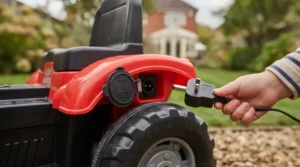
Buying safe outdoor toys for kids in the UK means understanding, even briefly, what’s actually behind the safety markings on the box rather than trusting them blindly. All ride-on toys sold in Great Britain must comply with the Toys (Safety) Regulations 2011, which sets the legal baseline for mechanical, chemical and electrical safety that every listing on Amazon UK is required to meet, regardless of brand size or price point. Electric ride-ons specifically fall under separate battery and electrical safety testing distinct from the mechanical BS EN 71 series that covers most static toys, which is worth knowing if you’re ever comparing a listing’s safety claims against what’s actually being tested. RoSPA’s toy safety guidance recommends checking that any ride-on toy carries a UKCA or CE mark specific to the product listing itself, since counterfeit or third-party listings occasionally misuse marks from genuine products. Beyond the legal minimum, practical safety checks worth doing yourself include verifying the seatbelt clip locks securely, checking the emergency stop or brake function works before every extended outdoor session, and confirming the charging cable and port are kept dry and undamaged, since electrical safety concerns for ride-on toys most commonly arise from wear and water exposure over time rather than manufacturing faults.
Common Mistakes When Buying a Ride-On Tractor
The single most common mistake is buying purely on listed top speed without checking whether that speed is remote-controlled, manual, or both — a tractor that hits 6 km/h only in remote mode behaves very differently in a toddler’s actual hands. A close second is ignoring weight limits entirely, assuming “ages 3-8” automatically means safe for any child within that age bracket regardless of their actual weight, when battery-powered ride-ons genuinely do slow down and strain under loads near or over their rated maximum. Buyers also frequently underestimate assembly time, expecting a ready-to-ride toy out of the box when most models, including the Costzon Ride on Tractor with Detachable Trailer, require a genuine 30-60 minutes of careful bolt-and-panel assembly before first use. Another recurring error is choosing a tractor based on looks or licensed branding alone without checking terrain suitability — a beautifully finished model with standard four-wheel PP plastic wheels will still struggle on the same rough gravel that a less flashy six-wheel model handles easily. Finally, skipping the battery care instructions in the manual, particularly around full initial charging and avoiding repeated full discharges, is the single most common cause of disappointing battery life complaints that could otherwise have been avoided entirely.
Benefits vs Traditional Alternatives
| Option | Typical Cost | Independence Level | Best For |
|---|---|---|---|
| 12V electric ride on tractor (this guide) | £70-£450 | High, with remote override | Ages 3-8, motorised outdoor play |
| Pedal-powered ride-on tractor | £40-£90 | Full physical effort required | Building leg strength, no charging needed |
| Balance bike or trike | £30-£80 | Full physical effort required | Coordination and balance development |
| Push-along walker toy | £15-£40 | Minimal, adult-assisted | Under-2s not yet ready for pedals |
Set against these traditional alternatives, the case for a 12V electric ride-on comes down to the specific combination of independence and control it offers: unlike a pedal tractor, a motorised model with remote override, present across every product in this guide, lets a genuinely young or cautious toddler experience real outdoor “driving” well before they’d have the leg strength or coordination to pedal themselves anywhere meaningful. Against a pedal-powered rival, the trade-off is honest and worth stating plainly: you gain accessibility for younger or less physically confident children at the cost of ongoing battery charging and a meaningfully higher price point, particularly at the premium end represented by the Peg Perego John Deere Ground Force 12V. The NHS activity guidance referenced earlier is a useful reference point here too, since it explicitly counts riding toys as valuable active play regardless of whether they’re pedal or battery-powered, so the choice between them is genuinely about your child’s readiness and your garden terrain rather than one option being inherently healthier than the other.
✨ Ready to pick the right tractor for your child?
🚜 Find Your Family’s Perfect Match Today!Take garden playtime to the next level with a 12V tractor properly matched to your child’s age and confidence. Click through to check current pricing and availability on any of the seven picks above, and get ready for hours of outdoor farm-themed fun.
Long-Term Cost & Maintenance: Battery Life and Value
The honest total-cost-of-ownership picture for a kids ride on tractor 12v purchase involves more than the upfront sticker price. Sealed lead-acid batteries, used in several budget and mid-range models on this list, typically last one to three years of regular use before needing replacement, with a genuine like-for-like replacement battery generally costing a fraction of the original tractor’s price rather than requiring a full new purchase. Lithium-based batteries, increasingly common in newer listings, tend to hold charge more consistently over time and charge faster, though they usually carry a small price premium reflected in the tractor’s overall cost. Beyond the battery, moving parts worth budgeting mental (if not financial) maintenance time for include the working loader bucket on models like the Costway 12V Ride on Tractor (Ground Loader), which involves more hinges and mechanisms than a simple ride-on and is correspondingly more likely to need the odd tightening bolt over time. Comparing cost per year of realistic use, a budget model like the H.yeed Kids Ride on Tractor and Trailer at roughly £70-£95 can represent excellent value if it sees genuine weekly use across two to three years, while the premium Peg Perego John Deere Ground Force 12V only pencils out as good value if it’s built to be handed down between siblings, given its considerably higher upfront cost.
FAQ
❓ What age is a 12V ride on tractor suitable for?
❓ How long does a 12V ride on tractor battery last per charge?
❓ Are 12V ride on tractors safe for toddlers?
❓ What is the difference between 6V, 12V and 24V ride on toys?
❓ Do kids ride on tractors need to be charged before first use?
Conclusion
Choosing the right kids ride on tractor 12v ultimately comes down to matching real specifications, not marketing language, to your child’s age, confidence and garden terrain. For a cautious first-time rider on a tighter budget, the HOMCOM 12V Electric Ride on Tractor and Trailer or H.yeed Kids Ride on Tractor and Trailer offer sensible, uncomplicated entry points with genuine remote override. Families spanning a wider age range or an uneven garden should look hardest at the six-wheel stability of the AIYAPLAY 12V Ride on Tractor with Trailer or the suspension-focused comfort of the Costway 2-in-1 12V Kids Ride On Tractor (Spring Suspension), while anyone wanting genuine construction-style play should weigh up the Costway 12V Ride on Tractor (Ground Loader) against its slightly higher maintenance needs. For families prepared to invest in a tractor built to last across siblings and years, the Peg Perego John Deere Ground Force 12V remains the clearest premium choice, backed by genuinely tougher engineering rather than branding alone. Whichever you choose, checking the specific listing’s UK safety marking, weight limit and age rating against your own child, rather than assuming any “3-8 years” label applies universally, remains the single most useful step in this whole guide.
Recommended for You
- Seated vs Standing Electric Scooter for Kids: 7 Picks (2026)
- Electric Scooter With Seat for 5-8 Year Old: 7 Picks (2026)
- Electric Scooter With Seat For Kids: 7 Best Picks Tested for 2026
Disclaimer: This article contains affiliate links. As an Amazon Associate, I earn from qualifying purchases. If you purchase products through these links, we may earn a small commission at no additional cost to you.
✨ Found this helpful? Share it with your friends! 💬🤗
