In This Article
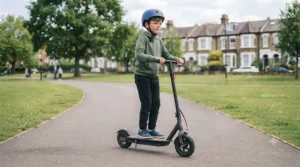
Somewhere in every toy aisle argument between a parent and a very determined eight-year-old, the same question eventually surfaces: seated or standing? It sounds like a small thing, the sort of detail you’d assume doesn’t matter much once the scooter actually starts moving. It matters enormously. A seated vs standing electric scooter for kids decision shapes everything from how long your child rides before their legs give out, to how confidently they corner, to whether the thing spends more time in the shed than the driveway.
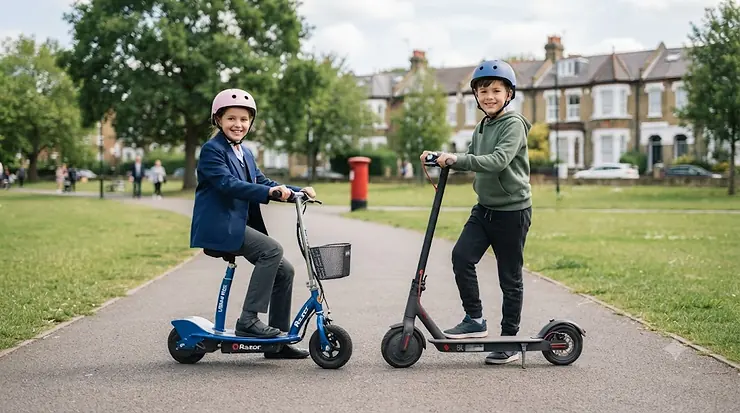
Here’s the plain version, no marketing fluff attached: standing electric scooters put the rider on a flat deck, balancing and steering with their whole body, closer to how a traditional kick scooter feels but motorised. Seated models add a saddle, shifting weight onto the hips rather than the legs, trading a bit of agility for a lot more staying power. Neither is objectively “better” — they solve different problems, for different kids, at different stages of confidence on wheels.
This guide compares seven genuinely available electric scooters, from a budget standing model that costs less than a family meal out, right up to a proper seated cruiser built for older teens. We’ll dig into the electric scooter seat comparison kids actually need before buying, walk through honest seated standing electric scooter pros cons, and settle the sit on vs stand up kids scooter review debate with real specs rather than vibes. One quick but important note before we start: in the UK, privately owned electric scooters — seated or standing, budget or premium — are legal to own but can only be ridden on private land with the landowner’s consent. Keep that in mind as you picture where this thing will actually get used. Prices below are ranges, since Amazon listings move around more than the kids will.
Quick Comparison Table
| Product | Style | Best For | Price Range (approx.) |
|---|---|---|---|
| Razor Power Core E90 | Standing | Budget-conscious first-timers, ages 8+ | £99–£140 |
| Gotrax GKS Lumios | Standing | Younger riders wanting flashy extras | £90–£130 |
| EVERCROSS EV06C | Standing | Mid-range all-rounder, ages 6-12 | £110–£150 |
| Segway Ninebot Zing E10 | Standing | Older kids wanting premium build quality | £200–£260 |
| HOMCOM Kids Electric Scooter with Seat | Seated | Younger riders who tire on standing decks | £75–£95 |
| Razor Power Core E100S | Hybrid (removable seat) | Undecided families wanting both options | £150–£200 |
| Razor E300S | Seated | Teens 13+ wanting genuine cruiser comfort | £350–£550 |
A pattern worth noticing straight away: seated scooters generally cost either less (budget foldable models like the HOMCOM) or considerably more (the Razor E300S, built for bigger riders and real speed) than the standing middle ground. The hybrid E100S splits the difference nicely, which is exactly why it’s the closest thing to a genuinely fair test of which kids scooter style your particular child prefers, without committing to either camp permanently.
💬 Just one click — help others make better buying decisions too!😊
Top 7 Kids Electric Scooters: Expert Analysis
The seven below span the full seated-to-standing spectrum, budget to premium, so whichever way this debate goes in your house, there’s a genuine option waiting.
1. Razor Power Core E90 — best budget standing scooter to test the waters
The headline feature is refreshingly simple: an 85-watt hub motor with no chain, no belt, and nothing to align, which for a first electric scooter matters more than any top-speed figure ever could.
That maintenance-free hub motor also means fewer trips to the garage mid-summer wondering why the thing has stopped working, and the all-steel frame with an airless rear tyre shrugs off the kind of kerb-hopping abuse that would flatten a cheaper standing scooter within a fortnight. Reviewers consistently mention the retractable kickstand as a small but genuinely appreciated touch — nobody wants a scooter permanently lying on its side across the drive. Based on the spec comparison with pricier standing models, what most buyers overlook is that 65-80 minutes of continuous ride time (depending on rider weight) actually outlasts most kids’ attention spans anyway, so paying extra for longer battery life on a first scooter is often money spent solving a problem that doesn’t exist yet.
Who this suits: parents testing whether their eight-year-old will actually stick with electric scooters before spending serious money, and budget-conscious households wanting a genuinely reputable brand rather than an unknown import.
Pros:
- ✅ Maintenance-free hub motor with no chain to adjust
- ✅ Long 65-80 minute ride time on a single charge
- ✅ Trusted brand name with widely available spare parts
Cons:
- ❌ No seated option if your child’s legs tire quickly
- ❌ 12-hour charge time is slow compared with lithium-battery rivals
At the time of research, expect to pay £99–£140, making this one of the most sensible low-risk entry points into standing electric scooters.
2. Gotrax GKS Lumios — best standing scooter for younger riders who want the flash
What sells this scooter to an eight-year-old in about four seconds flat is the neon LED front wheel, which lights up as the scooter moves and, frankly, does more to guarantee daily use than any spec sheet ever will.
Underneath the light show sits an aircraft-grade aluminium frame that’s genuinely lighter than several rivals in this price bracket, and the fire-retardant deck is a small but sensible safety detail rarely mentioned on cheaper alternatives. What the spec sheet won’t tell you, but aggregated buyer feedback suggests, is that the adjustable handlebars (32.5-37 inches) genuinely extend the scooter’s useful life as your child grows, rather than the fixed-height setups common at this price point. On the practical side, one detail worth flagging honestly: this is a standing-only design, so a child who tires quickly on their feet will find no seated fallback here.
Who should care: parents of younger children, roughly six to ten, who respond well to visual novelty and need a scooter that adjusts as they grow rather than needing replacement in a year.
Pros:
- ✅ Neon LED wheel adds genuine daily-use appeal for younger kids
- ✅ Lightweight aircraft-grade aluminium frame
- ✅ Adjustable handlebar height grows with the child
Cons:
- ❌ Standing-only, no seated conversion available
- ❌ Battery life trails behind the pricier standing options on this list
At the time of research, this scooter typically costs £90–£130, positioning it as a genuine budget rival to bigger-name brands.
3. EVERCROSS EV06C — best mid-range standing scooter with genuine safety extras
The standout feature here is the non-zero start function: the scooter must be moving at walking pace before the motor engages, which sounds like a small detail until you consider how many standing-scooter accidents start with an accidental full-throttle lurch from standstill.
Three selectable speed modes (5, 10 and 15 km/h) mean parents can genuinely cap performance for a nervous first-time rider and open it up later as confidence grows, rather than buying a whole new scooter to match improving skill. The LED display showing speed, mode and battery level is a genuinely useful inclusion rather than a gimmick, and the adjustable stem plus handlebar height (76-96cm) covers a decent age range without the wobble some cheaper telescopic designs suffer from. Reviewers highlight the one-step folding mechanism specifically, noting that kids can collapse and carry the scooter themselves without adult help, which matters more on a school run than it sounds.
Who this suits: parents wanting genuine speed-limiting control as their child progresses, and families who need a scooter light enough (22 lbs) for the child to manage independently, folding included.
Pros:
- ✅ Non-zero start prevents accidental sudden acceleration
- ✅ Three speed modes let parents cap performance appropriately
- ✅ One-step fold light enough for kids to manage unaided
Cons:
- ❌ Standing-only design offers no seated option
- ❌ Sits at a higher price point than comparable budget standing scooters
Expect to pay roughly £110–£150 at the time of research, which lands comfortably in “sensible middle ground” territory for a scooter with genuine safety thinking behind it.
4. Segway Ninebot Zing E10 — best premium standing scooter for older kids
Here’s what justifies the price jump: a spring shock-absorption system and a genuinely low centre of gravity, just 10cm off the ground, which translates into meaningfully better stability on grass, dirt paths and the sort of uneven ground that sends cheaper scooters into a wobble.
Three riding modes give real range of ability, from a gentle 10 km/h electric-only setting through to a 16 km/h kick-assisted Turbo mode with genuinely useful energy-recovery braking, a feature rarely seen this far down the price ladder. The under-deck ambient lighting isn’t just cosmetic either, since the coloured glow doubles as a visibility aid at dusk, and the 3M reflective sticker on the rear fender is the kind of unglamorous safety detail that shows genuine engineering thought rather than pure marketing. What the spec sheet undersells is quite how light this scooter is at 8.5kg, noticeably easier for an eight-year-old to lift over a step than most standing scooters at this performance level.
Who should care: parents of confident older children, roughly eight to fourteen, who’ve outgrown a starter scooter and want genuine build quality that will survive several years of daily use rather than one enthusiastic summer.
Pros:
- ✅ Low 10cm ground clearance gives noticeably better stability
- ✅ Three riding modes suit both cautious and confident riders
- ✅ Lightweight at 8.5kg despite the more advanced feature set
Cons:
- ❌ Meaningfully pricier than budget and mid-range standing rivals
- ❌ Some buyers report unclear first-activation instructions out of the box
At the time of research, expect £200–£260, which is a genuine premium but one that reflects real engineering rather than brand markup alone.
5. HOMCOM Kids Electric Scooter with Seat — best budget seated scooter for younger legs
The entire case for this scooter rests on one simple observation: standing still on a moving deck is tiring in a way adults forget, and a seven-year-old’s legs give out long before their enthusiasm does.
The adjustable seat and handlebar height (seat 50-60cm, handlebar 84-96cm) mean this genuinely grows with a child across several years rather than one summer, and the twist-grip throttle paired with a hand-operated rear brake gives a level of control that feels appropriately grown-up without being intimidating. Based on the spec comparison with standing rivals at a similar price, what most buyers overlook is that the folding mechanism, while convenient for storage, adds a small amount of flex to the frame compared with rigid standing designs — a reasonable trade for portability, but worth knowing rather than discovering mid-ride. Reviewers specifically praise how manageable the assembly is, and one detail that reassures rather than alarms: the scooter carries an IP65 water-resistance rating, tolerating light rain without the panic of a soaked circuit board.
Who this suits: parents of younger children who genuinely can’t sustain standing for a full ride yet, and anyone prioritising fold-flat storage in a household without a dedicated garage or shed.
Pros:
- ✅ Seat and handlebar height both adjustable as the child grows
- ✅ IP65 water resistance tolerates light rain without concern
- ✅ Straightforward assembly praised consistently in aggregated feedback
Cons:
- ❌ Folding frame introduces slightly more flex than rigid standing designs
- ❌ Modest 6-8km range compared with pricier seated alternatives
At the time of research, this typically costs £75–£95, making it one of the most accessible genuine seated options on the market.
6. Razor Power Core E100S — best hybrid for families still deciding
If the seated vs standing electric scooter for kids debate in your house genuinely can’t be settled, this is the scooter that ends the argument by refusing to pick a side: a fully removable padded seat lets the same scooter serve both camps.
The Power Core hub motor delivers up to 60 minutes of continuous use with the maintenance-free reliability that’s become something of a Razor signature across this whole list, and the pneumatic front tyre smooths out pavement cracks noticeably better than the airless tyres found on cheaper standing-only rivals. What the spec sheet won’t tell you, but the removable-seat design implies rather loudly, is that this scooter is genuinely aimed at families who suspect their child’s preference will change as confidence grows — starting seated while learning balance, then removing the seat once standing feels natural. Reviewers describe the seat’s removal and refitting process as genuinely tool-light rather than a fiddly ten-minute chore, which matters if the switch happens as often as curiosity demands.
Who should care: families genuinely torn on style, and any household with more than one child sharing a scooter, where a seven-year-old might want the seat while their ten-year-old sibling prefers it off.
Pros:
- ✅ Genuinely removable seat switches style in minutes, not tools-required chore
- ✅ Maintenance-free Power Core hub motor, 60 minutes continuous use
- ✅ Pneumatic front tyre smooths rough pavement better than airless rivals
Cons:
- ❌ Costs more upfront than committing to a single style outright
- ❌ Heavier overall than pure standing scooters due to the seat mechanism
Expect to pay £150–£200 at the time of research, a fair premium for genuinely not having to choose.
7. Razor E300S — best premium seated scooter for teens wanting real cruising comfort
This is where the seated argument stops being about tired legs and starts being about genuine performance: a 250-watt motor, 15mph top speed, and 9-inch pneumatic tyres front and rear built for riders up to 220 lbs.
The quick-change padded seat is removable for stand-up riding if the mood strikes, but the wider deck and frame are unmistakably designed around sitting comfortably for longer stretches rather than balancing on tiptoe. Based on the spec comparison with the smaller E100S, the extra-wide 10-inch pneumatic tyres genuinely change the ride quality on rougher surfaces, soaking up bumps that would rattle a smaller-wheeled scooter uncomfortably. Reviewers with older teens report genuine enthusiasm for the top speed and comfort combination, though it’s worth being candid: several also note the 12-hour charge time and roughly 40-minute ride window feel stingy against the scooter’s premium price tag.
Who this suits: teens aged thirteen and up who’ve outgrown junior scooters entirely and want something closer to genuine personal transport for private land, plus taller or heavier riders the smaller scooters on this list simply weren’t built to carry.
Pros:
- ✅ Genuine 15mph top speed with wide, comfortable pneumatic tyres
- ✅ Supports riders up to 220 lbs, unlike smaller junior models
- ✅ Removable seat still allows stand-up riding when preferred
Cons:
- ❌ Long 12-hour charge time for a relatively short 40-minute ride window
- ❌ Significant price jump over every other scooter on this list
At the time of research, expect to pay £350–£550, reflecting genuine size, power and build quality rather than brand premium alone.
Setting Up Your Child’s First Electric Scooter: A Practical Usage Guide
Getting the first few rides right matters more than people expect, and most of the common mistakes happen in the first thirty days rather than years down the line.
Start on flat, open ground — a driveway or private garden, never a public path — and let your child get comfortable with the brake before introducing full throttle. A common early mistake is twisting the throttle fully from a standstill, which on standing scooters especially can catch a child off balance before they’ve learned to anticipate the surge. For seated models, check the seat height allows knees to bend comfortably rather than locking straight, since an overextended riding position tires legs faster and undermines the entire comfort advantage seated scooters are meant to provide. Charge fully before the first ride and get into a routine of charging after each use rather than waiting until the battery’s flat, which genuinely extends battery lifespan across the scooter’s working life. For maintenance, wipe down tyres and check brake response weekly during heavy use, and store the scooter somewhere dry, since even IP-rated water resistance isn’t the same as genuine weatherproofing over months of exposure.

Which Style Suits Your Child? Real-World Buyer Scenarios
Picture a six-year-old just getting comfortable with balance and coordination, easily tired after ten minutes of standing concentration. The HOMCOM seated option removes the physical fatigue entirely from the equation, letting confidence and enjoyment build without legs giving out halfway through the driveway.
Now picture a ten-year-old who’s been riding a kick scooter for years, confident on two wheels, wanting genuine speed and agility rather than a slower, steadier ride. The Segway Ninebot Zing E10’s low centre of gravity and multiple riding modes match that existing skill level far better than any seated option would, since the whole appeal here is active, responsive control rather than passive cruising.
Finally, picture a household with two children four years apart in age, one still building confidence and one long past needing a seat. The Razor Power Core E100S solves this specific, genuinely common problem by being both scooters in one, switching between seated and standing depending on which child grabbed it first that afternoon.
Common Seated vs Standing Scooter Problems (And How to Fix Them)
A child complaining their legs ache after ten minutes on a standing scooter isn’t being dramatic — that’s simply the physical reality of static balance, and it’s a genuine signal to consider a seated or hybrid model rather than pushing through discomfort. Wobbly, unstable seated rides usually trace back to an incorrectly adjusted seat height rather than a faulty scooter, so check the seat allows a slight knee bend before assuming something’s broken. If a standing scooter feels twitchy or hard to control at speed, the issue is frequently rider stance rather than the machine itself — feet should sit shoulder-width apart along the deck, not bunched centrally. Reduced range on any model, seated or standing, is most commonly cold-weather battery performance rather than genuine battery failure, since lithium and lead-acid batteries alike lose capacity noticeably below around 10°C. Finally, if a removable-seat hybrid scooter feels wobbly with the seat fitted, check the mounting bolts specifically, since a loosely fitted seat post is a far more common cause of instability than any fault in the scooter’s core frame.
How to Choose Between a Seated and Standing Electric Scooter
Which kids scooter style is actually right for your child? In short, standing scooters suit confident, already-coordinated riders wanting agility and speed, while seated scooters suit younger children, longer rides, or anyone who tires quickly balancing on a moving deck.
- Consider your child’s current balance confidence first. A child already comfortable on a kick scooter or bike will usually adapt faster to standing electric models.
- Think about typical ride duration. Short bursts around the garden favour standing; longer sessions favour seated comfort.
- Check the weight and age range carefully. Seated scooters built for teens, like the E300S, aren’t appropriate for younger, lighter children regardless of enthusiasm.
- Factor in storage space. Seated scooters are generally bulkier even when folded, which matters in smaller homes.
- Consider whether siblings will share it. A removable-seat hybrid avoids buying two separate scooters for two different preferences.
- Look at genuine safety features, not just speed. Non-zero start functions and speed-mode limiting matter more for younger or less experienced riders than outright top speed.
- Read aggregated review themes about comfort and durability, not star ratings alone, since genuine buyer feedback about seat comfort or frame flex tells you more than a headline score.
Electric Scooter Seat Comparison Kids Should Actually Care About
Not all seats are created equal, and the electric scooter seat comparison kids’ parents actually need goes well beyond “does it have a seat or not.” The HOMCOM’s fixed-but-adjustable seat prioritises simplicity and low cost, while the Razor E100S and E300S use genuinely padded, quick-change seats designed to be removed and refitted repeatedly without tools or frustration.
Seat height adjustability matters more than cushioning quality in practice, since an incorrectly positioned seat causes far more discomfort than firm padding ever could. Look specifically at how the seat mounts to the frame: bolted, removable seat posts (as on the Razor hybrids) tend to feel more secure at speed than clip-on aftermarket-style saddles sometimes bundled with cheaper scooters.
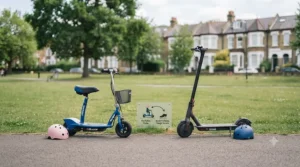
Sit On vs Stand Up Kids Scooter: A Head-to-Head Comparison
| Factor | Sit-On (Seated) | Stand-Up (Standing) |
|---|---|---|
| Physical fatigue | Low, hips bear the weight | Higher, legs bear the weight |
| Agility & control | Reduced, wider turning feel | Higher, more responsive steering |
| Typical age fit | Younger children, or longer rides | Confident, coordinated riders |
| Storage footprint | Larger even when folded | Generally more compact |
| Learning curve | Gentler, more forgiving of wobble | Steeper, rewards existing balance |
Looking at this sit on vs stand up kids scooter review comparison, there’s genuinely no universal winner — a seated model reduces fatigue and forgives wobble, which suits a younger or less confident rider perfectly, while a standing scooter rewards existing balance with sharper control and a smaller footprint in the shed. The honest takeaway is that the “right” answer depends entirely on the specific child in front of you, not on which style photographs better in a toy catalogue.
Kids Scooter Comfort Comparison: Where the Real Differences Show Up
A genuine kids scooter comfort comparison has to separate two different kinds of comfort: physical fatigue over a ride, and ride quality over rough ground. Seated scooters win decisively on the first, since sitting simply demands less muscular effort than balancing. Standing scooters, particularly premium options like the Segway Ninebot Zing E10 with its shock-absorption system, can actually win on the second, since a lower centre of gravity and better suspension smooth out bumps that a higher-seated rider feels more directly through the saddle.
The practical upshot: for smooth pavement and short rides, standing comfort and seated comfort end up fairly close. For longer sessions or rougher ground, seated models pull ahead specifically because they remove the constant micro-adjustments standing balance demands.
Style Electric Scooter for Children: Growing Into the Right Choice
Choosing a style electric scooter for children isn’t a one-time decision, since kids’ preferences and physical capabilities shift noticeably across even a single year. A child who needed a seat at six may well be confidently standing by eight, which is precisely the scenario the removable-seat Razor E100S is built to accommodate without forcing a second purchase.
For older children moving toward genuine independence on private land, standing scooters increasingly make more sense as balance, coordination and confidence catch up with enthusiasm. The most future-proof approach, if budget allows, leans toward hybrid or adjustable models rather than committing hard to one style before you’ve actually watched your child ride.
Safety & Regulations Guide
Whichever style you choose, a few safety fundamentals apply equally to both. According to the Royal Society for the Prevention of Accidents’ guidance on child vehicle safety, a properly fitted helmet alongside knee, elbow and wrist protection meaningfully reduces injury severity for young riders on any wheeled toy, electric or otherwise — and that applies just as much to a seated cruiser as a standing scooter.
The legal side matters just as much as the safety gear. According to official UK government guidance on electric scooter rules, privately owned electric scooters — regardless of seated or standing style, and regardless of the rider’s age — can only be legally ridden on private land with the landowner’s permission; they cannot be used on public roads, pavements or cycle lanes. This applies to every product reviewed in this guide, from the budget Razor E90 through to the premium E300S, so a garden, driveway, or similarly private space is genuinely a legal requirement, not just a sensible suggestion.
Frequently Asked Questions
❓ Is a seated or standing electric scooter better for a 7-year-old?
❓ Do seated electric scooters go slower than standing ones?
❓ Can standing and seated scooters use the same battery or motor?
❓ Are electric scooters with seats legal for kids to ride in the UK?
❓ Which lasts longer, a seated or standing kids electric scooter?
Conclusion
The seated vs standing electric scooter for kids question was never really about which style is objectively superior, because it isn’t one. It’s about matching the scooter to the actual child riding it: their balance, their stamina, their age, and honestly, how much patience they have for wobbling before frustration sets in. Budget standing scooters like the Razor E90 and Gotrax GKS Lumios prove the concept cheaply for confident young riders; the HOMCOM seated option removes fatigue for younger legs; and the Razor Power Core E100S neatly sidesteps the whole argument by offering both in one frame. Whatever you land on, keep it on private land, keep the safety gear on, and let the child’s actual riding style — not the marketing photos — make the final call.
✨ Don’t Miss These Exclusive Deals!
🔍 Take your child’s next ride to the next level with these carefully selected scooters. Click on any highlighted item to check current pricing and availability. These picks will help you find the comfortable, confident ride your child will actually want to use!
Recommended for You
- Electric Scooter With Seat For Kids: 7 Best Picks Tested for 2026
- 48V Electric Scooter for Older Kids and Teens: 7 Picks for 2026
- 48V Electric Scooter for Kids UK: 7 Best Picks for 2026
Disclaimer: This article contains affiliate links. As an Amazon Associate, I earn from qualifying purchases. If you purchase products through these links, we may earn a small commission at no additional cost to you.
✨ Found this helpful? Share it with your friends! 💬🤗
