In This Article
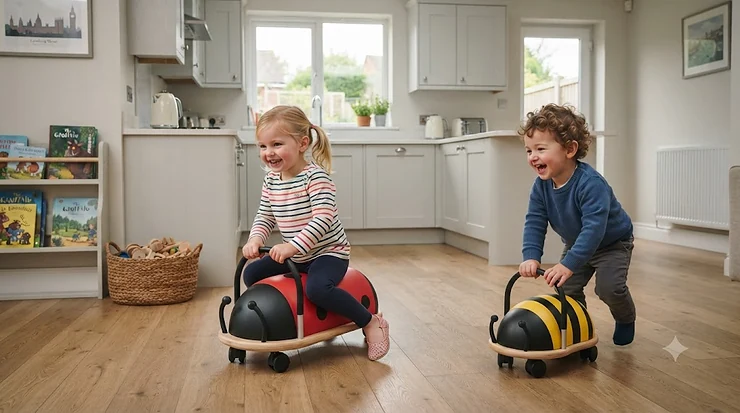
If you’ve spent any time scrolling nursery gift lists or trawling toddler forums at 11pm, you’ll already know the two names that come up again and again: the Bee and the Ladybird. Both are part of the same beloved British ride-on family, both cost roughly the same, and both promise hours of “round and round” chaos in your living room. So when it comes down to wheelybug bee vs ladybird, the honest answer is that the decision has almost nothing to do with performance and almost everything to do with which little face makes your toddler shriek with delight.
That’s not a cop-out — it’s actually useful information, and we’ll explain exactly why below. But we didn’t want to stop at just two toys. Parents rarely make ride-on decisions in a vacuum; you’re usually weighing a Wheelybug against a Scuttlebug in the pram aisle, or wondering whether a Little Tikes classic might last longer in the garden. So this guide pulls together seven genuinely popular toddler ride-ons — budget, mid-range and premium — with real specs, honestly summarised review sentiment, and straight answers about which one suits which child, drawing on independent testing such as MadeForMums’ toddler ride-on toy trials alongside our own product research. Along the way we’ll dig into nursery settings, first-birthday buying, and the small print that Amazon listings tend to skip over entirely.
What Is a Wheelybug Ride-On Toy?
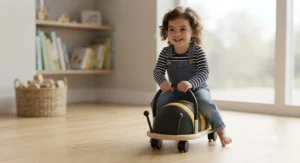
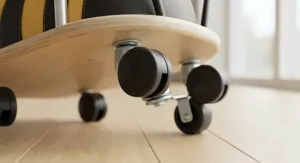
A Wheelybug is a British-made, foot-to-floor ride-on toy built around a plywood base, an aluminium handle, and a padded, wipe-clean vinyl body shaped like an animal — Bee, Ladybird, Cow, Tiger, Pig or Mouse. Multi-directional castor wheels let it move forwards, sideways and in full circles, which is the feature that separates it from simpler push-along trikes.
Quick Comparison: Wheelybug Bee vs Ladybird at a Glance
Before the deep dive, here’s the short version for anyone short on time.
| Feature | Wheelybug Bee | Wheelybug Ladybird | Best For |
|---|---|---|---|
| Design | Black and yellow, cheerful bug face | Bright red with black spots | Whichever colour your child gravitates to |
| Sizes available | Small (1-3yrs) & Large (3yrs+) | Small (1-3yrs) & Large (3yrs+) | Both scale with your child |
| Base & handle | Plywood base, aluminium handle | Plywood base, aluminium handle | Identical construction |
| Weight capacity | 120kg safe working load (four castors at 30kg each) | 120kg safe working load (four castors at 30kg each) | Multi-child households or nursery rotation |
| Price range | Around £70-£100 depending on retailer and size | Around £70-£100 depending on retailer and size | Comparable value either way |
Looking at the numbers, the honest takeaway is that there’s no engineering difference between the Wheelybug Bee and Wheelybug Ladybird — they’re built on identical frames with identical castor systems, so the “vs” in the search term is really a popularity contest, not a performance one. Where it does matter is in resale and hand-me-down value: the Wheelybug Ladybird tends to be the brand’s flagship image (it’s the one used in most marketing), so if you ever plan to sell it on, ladybird-print items in the Wheelybug range often shift slightly faster on the secondhand market. If gender-neutral colour is a priority, the Wheelybug Bee‘s black-and-yellow palette is arguably the safer bet for a first-birthday gift that needs to work for either a boy or a girl.
💬 Just one click — help others make better buying decisions too!😊
Top 7 Toddler Ride-On Toys: Expert Analysis
We’ve researched seven real products spanning the budget, mid-range and premium brackets, so whichever this comparison started for you — a first birthday, a nursery restock, or a garden upgrade — there’s a genuine option below.
1. Wheelybug Bee — the classic gender-neutral first ride-on
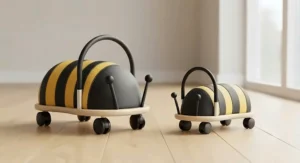
The Wheelybug Bee is the toy that started this whole comparison, and it earns its reputation the hard way: through decades of nursery-floor durability rather than flashy marketing. Built on a plywood base with an aluminium handle, its four multi-directional castors are individually rated at 30kg, giving a combined safe working load of 120kg — which in practice means it’ll happily outlast several siblings, not just one. The Small size (roughly 39cm long, 31cm high) suits children from about a year old, while the Large version, aimed at three-plus, has a slightly taller seat height for growing legs.
Based on the spec comparison with cheaper plastic ride-ons, what stands out is the complete absence of moving battery packs, stickers or “chatty” sound modules — this is a toy built to be chewed, cuddled and sat on for years, not just ridden for a few weeks before the novelty wears off. Reviewers on Amazon UK consistently describe the build quality as noticeably sturdier than budget alternatives, with several noting their child was still using the toy comfortably nearly two years after purchase. A recurring theme in aggregated feedback is that first-time buyers are surprised by the price tag relative to size, but most conclude the durability justifies the cost.
Pros:
- ✅ Handmade wooden base outlasts most plastic ride-ons
- ✅ 360-degree castor movement, not just forward and back
- ✅ Easy-wipe vinyl body copes well with sticky toddler hands
Cons:
- ❌ Smaller footprint than expected for the price point
- ❌ Not designed for rough outdoor pavement use
At around £70-£100 depending on size and retailer, the Wheelybug Bee sits at the premium end of the ride-on market — check current price before buying, as it fluctuates between stockists — but the multi-year lifespan makes the cost-per-use genuinely competitive with cheaper toys that get outgrown in months.
2. Wheelybug Ladybird — the brand’s best-selling design
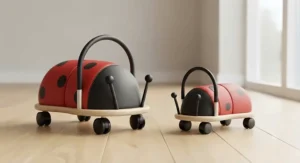
Identical in construction to its bee-striped sibling, the Wheelybug Ladybird swaps the black-and-yellow palette for a glossy red shell with black spots and a pair of springy antennae that toddlers love to grab and chew. Because it shares the exact same plywood base, aluminium handle and 120kg safe working load as every other Wheelybug, the only real variable between this and the Bee is aesthetic preference — and, anecdotally, popularity, since the Ladybird design appears most frequently across the brand’s marketing and award entries.
What most buyers overlook about this specific print is that its high recognisability makes it a strong pick for shared or communal spaces — nurseries, GP waiting rooms, soft-play reception areas — where a familiar, well-loved character reduces the “whose toy is this” squabbling that less iconic designs sometimes trigger. Reviewers consistently note the antennae as a minor durability weak point compared to the rest of the build, with a small number reporting they bend out of shape after prolonged rough handling, though this rarely affects the toy’s core function.
Pros:
- ✅ Most recognisable design in the Wheelybug range
- ✅ Same tough plywood-and-aluminium construction as the Bee
- ✅ Strong secondhand resale value versus less common prints
Cons:
- ❌ Antennae detail can bend with heavy-handed play
- ❌ Slightly higher demand can mean waitlists at peak gift seasons
Priced in the same £70-£100 bracket as the Wheelybug Bee, the value proposition here is essentially identical — buy based on which character your toddler responds to, not on any functional advantage, since there genuinely isn’t one.
3. Wheelybug Cow (Large) — the grown-with-me option for nursery settings
For families or settings that need a ride-on to serve an older toddler or a small group of three-to-five-year-olds, the Large-size Wheelybug — available in the Cow print among others — bridges that gap. At roughly 47.5cm long and 33cm high, it’s noticeably more substantial than the Small size, with a correspondingly taller seat that keeps knees from riding up uncomfortably on bigger children.
On paper this means the Large Wheelybug range effectively doubles the usable age window of the brand, from a wobbly one-year-old right through to a confident four- or five-year-old still enjoying push-along play. What the spec sheet won’t tell you, but nursery staff and parents note anecdotally, is that the Large size’s added stability makes it noticeably better suited to shared rotation in busy playrooms, where several children of varying ages and confidence levels take turns. The trade-off is storage: the Large Wheelybug takes up meaningfully more floor space than its Small counterpart, which matters in compact flats or crowded classroom corners.
Pros:
- ✅ Usable from roughly age three through to five
- ✅ Taller seat height suits longer toddler legs comfortably
- ✅ Same 120kg safe working load as the Small size
Cons:
- ❌ Bulkier footprint, harder to store in small homes
- ❌ Overkill for a first-birthday buy under age two
Typically priced from around £75 up to the £100 mark, the Large Wheelybug is worth the premium specifically for households or settings planning multi-year or multi-child use rather than a single toddler’s first ride-on.
4. Scuttlebug Beetle — the budget-friendly foldable alternative
Where the Wheelybug range leans on wooden craftsmanship, the Scuttlebug Beetle takes the opposite approach entirely: lightweight plastic, a three-wheel tricycle stance, and a genuinely clever three-step folding mechanism that collapses the whole toy down small enough to sling in a pram basket. At around 2kg with a maximum user weight of 20kg, it’s designed for the one-to-three-year age bracket specifically, with front-wheel-only steering and a handlebar lock that stops toddlers over-rotating and toppling.
Based on the spec comparison, the trade-off here is stability versus portability — the three-wheel design and lighter frame make the Scuttlebug Beetle noticeably easier for grown-ups to carry one-handed than the timber-built Wheelybugs, but it also means a shorter usable lifespan before children outgrow the 20kg limit. Reviewers award this toy consistently high marks (aggregated ratings on Amazon UK sit around 4.8 out of 5 across thousands of verified purchases), with the most common praise centring on how quickly toddlers master the steering compared to trikes with pedals, and the most common gripe being that the novelty can wear thin faster than pricier alternatives.
Pros:
- ✅ Folds flat in three steps for pram-basket portability
- ✅ Non-scratch wheels safe for laminate and hardwood floors
- ✅ Genuinely budget-friendly compared to wooden ride-ons
Cons:
- ❌ Shorter usable lifespan than sturdier wooden alternatives
- ❌ Plastic build feels less premium than a Wheelybug
At under £25 in most cases, the Scuttlebug Beetle delivers the strongest pound-for-pound value on this list, particularly for parents unsure whether their toddler will take to ride-on toys at all before committing to something pricier.
5. Scuttlebug XL — the toy that grows past the toddler years
Aimed squarely at the child who’s outgrown the standard Scuttlebug but isn’t quite ready for a pedal bike, the Scuttlebug XL keeps the same folding three-wheel format but scales everything up: a larger frame (around 49cm high, 72cm long), a higher 50kg maximum user weight, and a recommended starting age of two rather than one.
What most buyers overlook about the XL variant is that its 50kg capacity effectively future-proofs it well beyond typical toddler use — some families report children still enjoying it as a scooter-adjacent toy at five or six, long after a standard Scuttlebug would have been retired. Here’s what to weigh: the trade-off for that extended lifespan is reduced portability, since the larger frame doesn’t tuck into a pram basket as easily as the original. Aggregated feedback across retailer reviews highlights the wider wheelbase as a genuine stability improvement over the standard size, particularly on uneven pavement.
Pros:
- ✅ Higher 50kg weight limit extends usable years significantly
- ✅ Wider wheelbase improves outdoor pavement stability
- ✅ Still foldable, despite the larger frame size
Cons:
- ❌ Bulkier to store and carry than the standard Scuttlebug
- ❌ Check current price, as it typically costs more than the original
Check current price at your preferred retailer, as the XL commands a premium over the standard Scuttlebug but remains within the same general budget-friendly tier as the wider Scuttlebug range.

6. Little Tikes Cozy Coupe — the outdoor classic for garden play
No toddler ride-on comparison is complete without the car that’s been a back-garden fixture since the 1970s. The Little Tikes Cozy Coupe is a true foot-to-floor car with a removable floor panel, letting it switch between parent-push mode for younger toddlers and self-propelled “Flintstone” mode once a child’s legs are long enough to reach the ground comfortably. It’s rated for ages roughly 18 months to five years, with a maximum load around 22.7kg (50lb), and features a working horn, clicking ignition, opening fuel cap and rear storage trunk.
Based on the spec comparison with the Wheelybug range, the Little Tikes Cozy Coupe‘s biggest practical advantage is weather resistance — its moulded plastic shell shrugs off rain and garden mud in a way a wipe-clean vinyl Wheelybug simply isn’t designed for, making it the natural choice for families who want a ride-on that lives outdoors permanently. Reviewers consistently flag assembly as the toy’s main weak point, describing the initial build as fiddly, though most agree that once assembled it’s remarkably tough, with some households reporting decades of use across multiple children. On the downside, prolonged sun exposure can cause the bright plastic to fade or discolour over several outdoor seasons.
Pros:
- ✅ Genuinely weatherproof for permanent garden or patio use
- ✅ Removable floor grows with your child’s mobility
- ✅ Decades-long reputation for surviving rough outdoor play
Cons:
- ❌ Initial assembly is widely reported as fiddly
- ❌ Colour can fade with years of direct sun exposure
Usually found in the £60-£90 range at UK retailers (always check current price, as it varies by colour edition and stockist), the Little Tikes Cozy Coupe earns its long-term value through sheer outdoor durability rather than the indoor craftsmanship of a Wheelybug.
7. Beehive Toys Bumblebee Ride-On — the newer budget entrant worth watching
Rounding out the list is a newer name that’s been quietly gaining traction as an affordable alternative for the one-to-two-year bracket: the Beehive Toys Bumblebee Ride-On. It follows a familiar sturdy-frame, minimal-assembly formula aimed at first-time ride-on buyers who want something functional without the wooden-toy price tag.
Because this is a comparatively newer entrant to the market, verifiable independent review data and full published specifications are less extensive than for the more established names on this list — in the interest of honesty, we won’t invent details we can’t confirm. What can be said, based on retailer descriptions and early buyer commentary, is that it’s positioned firmly as a value pick for parents wanting to test whether their toddler enjoys ride-on play before investing in a premium option like a Wheelybug. If durability and long-term resale matter more to you than upfront cost, this is one to research further with the retailer directly before buying rather than one to commit to sight-unseen.
Pros:
- ✅ Genuinely low entry price for first-time buyers
- ✅ Minimal assembly required straight out of the box
- ✅ Sturdy frame reported by early buyers
Cons:
- ❌ Limited independent review data currently available
- ❌ Fewer design variants than the established Wheelybug range
Priced firmly in the budget bracket (check current price, as availability and cost shift more frequently for newer entrants), this is best treated as a low-risk trial buy rather than a long-term investment piece.
Practical Usage Guide: Getting the Most from Your Wheelybug
Buying the toy is only half the job — how you introduce and maintain it shapes how long it lasts. On day one, place the Wheelybug Bee or Wheelybug Ladybird on a flat, smooth surface (carpet works, but hard flooring lets the castors demonstrate their full 360-degree movement, which is genuinely part of the appeal). Resist the urge to immediately show your toddler how it spins — most children discover the “round and round” motion themselves within the first few sessions, and that self-directed discovery is part of what builds confidence and spatial awareness.
For maintenance, the wipe-clean vinyl body only needs a damp cloth with mild soap; avoid soaking the plywood base, as prolonged moisture exposure is the most common cause of premature wear in wooden ride-ons. Check the castor wheels every few months for trapped hair, crumbs or fluff, which can restrict the smooth rotation that makes Wheelybugs distinctive in the first place. The most common first-30-days mistake parents report is allowing the toy outdoors on rough paving — while occasional garden use won’t cause immediate damage, the castors and vinyl are genuinely optimised for smooth indoor floors, and regular outdoor use will shorten the toy’s lifespan considerably faster than indoor play alone.
Real-World Scenarios: Which Ride-On Suits Your Toddler?
The first-birthday gift buyer: if you’re choosing between the Wheelybug Bee and Wheelybug Ladybird purely as a milestone gift for a child who’s just started cruising along furniture, either Small-size option is well matched — the identical 120kg-rated frame comfortably supports a wobbly walker, and the gentle multi-directional movement helps build the balance skills they’ll need before a balance bike.
The budget-conscious parent testing the waters: if you’re unsure whether your particular toddler will actually take to ride-on toys, the Scuttlebug Beetle is the lower-risk entry point — at under £25, it’s a fraction of the cost of a Wheelybug, and its fold-flat design means it won’t dominate your hallway if it turns out to be a passing interest rather than a long-term favourite.
The nursery or childminder setting: for shared, higher-turnover environments, either a Large-size Wheelybug or the Little Tikes Cozy Coupe makes more sense than the Small Wheelybug sizes, purely because of the wider weight capacity and the ability to serve multiple children across a longer age range without needing frequent replacement.
Problem → Solution: Common Ride-On Toy Headaches
Problem: my toddler can’t yet steer or push themselves. Many one-year-olds initially need help getting started. Solution: gently guide the Wheelybug Bee or Wheelybug Ladybird by the handle for the first week or two — the aluminium handle is specifically designed for this parent-assisted phase, and most toddlers transition to independent movement within a fortnight.
Problem: the toy is getting scuffed or dirty fast. Solution: a simple wipe-down routine (see the usage guide above) resolves most cosmetic wear; for the vinyl body specifically, avoid abrasive cleaning products that can dull the surface finish over time.
Problem: siblings are fighting over one ride-on. Solution: rather than buying two identical toys, consider pairing a Wheelybug Bee with a Wheelybug Ladybird, or mixing a Wheelybug with a Scuttlebug Beetle — different characters and different play styles (spinning versus foot-to-floor pedalling) genuinely reduce direct competition for the same toy.
Problem: worried about outdoor durability. Solution: if garden use is a priority, the Little Tikes Cozy Coupe is purpose-built for weather exposure in a way none of the Wheelybug or Scuttlebug ranges are — it’s worth having a dedicated outdoor toy rather than dragging an indoor-optimised ride-on onto the patio.
✨ Don’t Miss These Exclusive Deals!
🔍 Take your search for the perfect toddler ride-on to the next level — click through on any of the highlighted products above to check current pricing and availability, and give your little one hours of genuinely developmental fun.
How to Choose Between the Wheelybug Bee and Ladybird
- Ask which character your toddler already responds to. If they’ve shown enthusiasm for a specific storybook, cuddly toy or nursery display featuring bees or ladybirds, let that steer the decision.
- Consider who else will play with it. In shared or sibling households, the gender-neutral black-and-yellow of the Wheelybug Bee sometimes proves the more versatile choice.
- Factor in resale plans. If you intend to sell the toy on once your child outgrows it, the Wheelybug Ladybird‘s stronger brand recognition can translate into a slightly quicker secondhand sale.
- Check current stock and price at multiple retailers. Prices for both designs hover in a similar £70-£100 band, but availability and delivery times can vary noticeably between sellers.
- Decide on Small versus Large size based on current age, not future-proofing alone. A Small size bought too early is safer than a Large size bought too big, since seat height genuinely affects comfort and confidence.
- Don’t overthink the functional differences. Because both designs share an identical frame, castor system and weight rating, this is one of the rare toy decisions where you can trust your gut on looks alone.
Wheelybug for Nursery Use: What Settings Need to Know
Nurseries and childminding settings weighing up a Wheelybug for nursery use are typically less concerned with which animal design looks cutest and more focused on durability under rotation, cleaning practicality, and whether the toy meets UK safety expectations for group settings. On that front, the brand’s construction genuinely holds up: the 120kg combined safe working load across the four castors comfortably accommodates repeated use by different children throughout a day, and the wipe-clean vinyl surface aligns well with the frequent sanitising routines most Early Years Foundation Stage settings follow.
What the spec sheet won’t tell you, but practitioners note anecdotally, is that the Large size tends to suit mixed-age playrooms better than the Small size, since it comfortably serves the wider three-to-five bracket that most nursery rooms cover in a single group. As with any toy purchased for professional childcare use, settings should independently verify current UKCA or CE conformity documentation from the retailer or manufacturer at point of purchase — Amazon listings don’t always surface this clearly, and it’s worth requesting directly if it isn’t visible on the product page. For more detail on the underlying legal framework, the government’s own guidance on product marking and conformity requirements for toys sold in Great Britain is a useful reference point for anyone buying at scale rather than for a single child.
Wheelybug Range vs Traditional Ride-On Toys
The wider Wheelybug range occupies a distinct niche compared with traditional pedal trikes, battery-powered ride-ons, or plastic foot-to-floor cars like the Little Tikes Cozy Coupe. Where a pedal trike demands a level of coordination many one-year-olds simply haven’t developed yet, and a battery-powered vehicle introduces charging routines and motor noise, the Wheelybug’s appeal lies in its total simplicity: no batteries, no pedals to master, no assembly beyond unboxing.
Based on the spec comparison across categories, the trade-off is speed and outdoor versatility — a Wheelybug won’t cover ground the way a scooter or trike eventually will, and it isn’t built for pavement or park use the way the Little Tikes Cozy Coupe or a Scuttlebug XL are. In practice, most families researching toddler ride-on comparisons end up owning more than one category over time: a Wheelybug or Scuttlebug for the earliest, wobbliest stage indoors, followed later by a pedal trike or outdoor car once balance and confidence catch up. Viewed that way, the “vs” isn’t really a competition — it’s a sequence, and the parent community consensus on Mumsnet broadly reflects that same staged approach to buying ride-on toys across the toddler years.
Common Mistakes When Buying a Toddler Ride-On
The most frequent mistake we see in aggregated buyer feedback is purchasing a Large-size ride-on too early, assuming it will “grow with” a child faster than it actually does — a toddler who can’t comfortably reach the floor loses confidence quickly, which can sour their interest in ride-on toys generally. A second common error is buying based purely on price without checking maximum user weight; a budget option like the Scuttlebug Beetle is excellent value but genuinely unsuitable once a child exceeds its 20kg limit, at which point the Scuttlebug XL or a Wheelybug becomes the better long-term buy. Finally, many parents underestimate storage space — a Large Wheelybug or a Little Tikes Cozy Coupe takes up meaningfully more floor space than product photography suggests, so it’s worth measuring your intended spot before ordering rather than after.
Long-Term Cost & Maintenance: Is the Wheelybug Worth It?
Judged purely on upfront price, the Scuttlebug Beetle wins comfortably at under £25 versus roughly £70-£100 for a Wheelybug Bee or Wheelybug Ladybird. But cost-per-year of use tells a different story. Aggregated review data suggests many Wheelybugs remain in active, sturdy use for two years or more, sometimes passed down to younger siblings afterwards, which can bring the effective annual cost below that of a toy that needs replacing after a single toddler outgrows it. Maintenance costs are close to zero for both — neither requires batteries, replacement parts, or servicing — though the plywood base of a Wheelybug does mean avoiding prolonged damp storage, which isn’t a consideration with the fully plastic Scuttlebug or Little Tikes ranges.
Safety, Regulations & Compliance Guide
All toys legally sold in the UK, including every product covered in this guide, must comply with the Toys (Safety) Regulations 2011, tested against the EN71 series of standards and carrying either a UKCA or CE conformity mark, since the UK government has extended recognition of CE marking alongside UKCA for goods placed on the Great Britain market. In practice, this means checking the product listing or packaging for a visible conformity mark, an appropriate age grading, and clear manufacturer contact details — the absence of any of these on a marketplace listing is a reasonable reason to buy elsewhere. Beyond legal compliance, the NHS guidance on physical activity for children under five recommends toddlers get at least 180 minutes of varied activity daily, and ride-on toys like the ones covered here are a genuinely practical way to help hit that target on wet days when outdoor play isn’t an option.
Frequently Asked Questions
❓ Is the Wheelybug Bee or Ladybird better for a 1 year old?
❓ What age is a Wheelybug ride on for?
❓ Is Wheelybug worth the money compared to cheaper ride-ons?
❓ Can Wheelybugs be used outdoors?
❓ Do nurseries use Wheelybugs for group play?
Conclusion
When it comes down to wheelybug bee vs ladybird, there’s genuinely no wrong answer from a construction or durability standpoint — both share the same plywood base, aluminium handle and 120kg-rated castor system, so this is one toy decision where you can safely let your toddler’s personality (or your own sense of colour) make the final call. Where the real decisions lie is further out: whether a Wheelybug’s indoor-optimised design suits your space better than an outdoor classic like the Little Tikes Cozy Coupe, whether a budget trial with the Scuttlebug Beetle makes more sense before committing to a premium buy, and whether you’re shopping for a single child or planning for nursery-style rotation across several. Whichever of the seven products above you land on, the underlying goal is the same one the NHS points to for under-fives: getting your toddler moving, spinning and building confidence, one round-and-round journey at a time.
Recommended for You
- Best Wheelybug Ladybird 2026: 7 Ride-On Picks + Cheapest Option
- Fire Engine Ride-On Toy: 7 Best Picks for 2026 (Tried; Tested Specs)
- Truck Ride-On Toy: 7 Best Picks for Outdoor Play in 2026
Disclaimer: This article contains affiliate links. As an Amazon Associate, I earn from qualifying purchases. If you purchase products through these links, we may earn a small commission at no additional cost to you.
✨ Found this helpful? Share it with your friends! 💬🤗
