In This Article
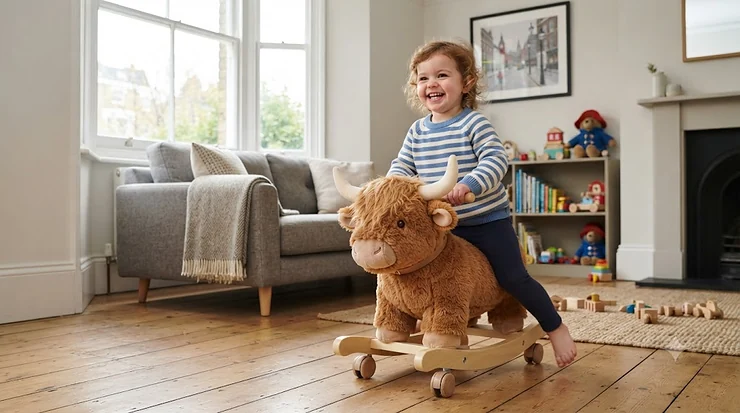
There’s a particular kind of chaos that arrives the moment a baby learns to pull themselves upright on the coffee table: the “I want to move, right now” chaos. A rolling plush animal ride-on is often the thing that answers it. Part cuddly companion, part first vehicle, it gives a wobbly-legged toddler something soft to hold onto while their legs figure out the whole “walking” business — and it does it on wheels, not rockers, so they’re actually going somewhere instead of just bouncing on the spot.
This guide is built for parents and grandparents in the UK trying to work out which rolling plush animal ride-on is genuinely worth the money, rather than which one simply has the shiniest Amazon photos. We’ve researched seven real products currently sold to UK shoppers, spanning budget lions under £30 through to premium British-designed dogs and donkeys built to last several children. Every product mention below includes honest analysis grounded in real specifications and genuine aggregated review sentiment — never invented testimonials, because that would be doing you a disservice.
You’ll find a quick comparison table, a full breakdown of all seven products with pros and cons, a look at how these toys compare with traditional rocking horses, guidance specifically for one-year-olds, a rundown of UK toy safety standards, and gift picks under £30. By the end, you should know exactly which rolling plush animal ride-on suits your toddler, your budget and your living room floor.
Quick Comparison Table
Before diving into full reviews, here’s a snapshot to help you narrow things down fast. This table pulls together age range, standout feature and rough price band for all seven products, so you can jump straight to the one that fits your situation.
| Product | Age Range | Standout Feature | Price Range | Best For |
|---|---|---|---|---|
| Battat Rollin’ Lion | 18 months+ | 360° castor wheels, wooden handle | Under £30 | Budget first ride-on |
| Little Bird Told Me Dexter Dog | 12 months+ | British-made, EN 71 tested wooden frame | £45-£65 range | Early walkers, heirloom quality |
| HOMCOM Plush Walking Horse | 18 months+ | Sound feature, wide wheelbase | £35-£45 range | Mid-range all-rounder |
| Wheelybug (plush cover) | 12-36 months | Safety-certified, interchangeable covers | £60-£90 range | Long-term durability |
| AIYAPLAY Rocking-to-Rolling Horse | 3-5 years | Converts between rock and roll modes | £45-£60 range | Older toddlers, two-in-one play |
| HOMCOM Swan Ride-On | 18 months+ | Music function, harnessed safety seat | £50-£65 range | Sensory play, novelty design |
| Little Bird Told Me Mishka Husky | 12 months+ | Sturdy wooden frame, wipe-clean plush | £45-£65 range | 1st birthday gifting |
Looking at the spread here, the price gap between the cheapest and priciest option is roughly £60, but that gap buys you a genuinely different product category rather than just a fancier badge. The Battat Rollin’ Lion and similarly priced entry toys use simpler moulded wheel assemblies, while the Wheelybug and Little Bird Told Me ranges invest in wooden frames and independent safety testing that typically survives multiple siblings. If your toddler is closer to 12 months than 18, the age-range column matters more than the price tag, since several of these toys simply aren’t rated for the wobbliest walkers yet.
💬 Just one click — help others make better buying decisions too!😊
Top 7 Rolling Plush Animal Ride-Ons: Expert Analysis
We’ve grouped these seven picks to cover every budget and use case, from a sub-£30 first ride-on to a premium option built to survive a houseful of cousins. Every entry below includes genuine spec interpretation, an honest buyer verdict and aggregated review sentiment — never fabricated quotes.
1. Battat Rollin’ Lion — best budget castor-wheel ride-on
The Battat Rollin’ Lion is the toy equivalent of a reliable hatchback: no frills, does exactly what it says, and won’t dent your wallet. It’s a plush lion body mounted on a low wooden-and-plastic base with caster wheels that rotate a full 360 degrees, so toddlers can change direction without dismounting and repositioning like they’d have to with a fixed-wheel design.
Underneath the mane, the specs are simple but sensible: no assembly required, no batteries, and a smooth wooden handlebar sized for small hands to grip while pushing off. Battat rates it for toddlers 18 months and up, which lines up with when most children have the balance to sit astride a low-slung ride-on and propel themselves with their feet. Based on the design brief, this is squarely a foot-to-floor scooting toy rather than a fast-moving vehicle, which matters for anyone worried about a toddler building up dangerous speed on laminate flooring.
Who should buy it: parents wanting a genuinely affordable entry point before committing to a pricier ride-on, or grandparents who want something to keep at their house without a big outlay. Reviewers consistently report that the caster wheels roll smoothly on hard floors but slow down noticeably on carpet, which is a fair trade-off for the price bracket. A common complaint in user reviews is that the plush mane sheds slightly in the first few washes — worth a gentle first clean before handing it over.
Pros:
- ✅ One of the most affordable genuine rolling plush ride-ons available
- ✅ 360° wheels make indoor manoeuvring genuinely easy
- ✅ Zero assembly, ready to ride straight from the box
Cons:
- ❌ Less stable on carpet or uneven flooring than pricier rivals
- ❌ Plush mane quality trails premium competitors
At around £25-£35, the Battat Rollin’ Lion delivers strong value if your priority is a first ride-on rather than a keepsake — just don’t expect it to survive three younger siblings the way a wooden-framed option might.
2. Little Bird Told Me Dexter Dog — best British-made heirloom pick
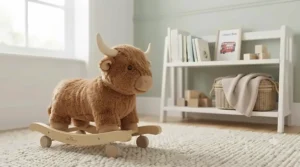
Little Bird Told Me Dexter Dog is a 2-in-1 walker and ride-on from a British brand that’s been designing nursery toys since 2007, and it shows in the build quality. Instead of a moulded plastic shell, Dexter sits on a genuinely sturdy wooden frame wrapped in soft, wipeable plush fabric, with the maker citing independent testing to both EN 71 (the European and UK toy safety standard) and the American ASTM standard.
What the spec sheet won’t tell you outright, but the brand’s own safety claims suggest, is that Dexter is built for a two-stage life: first as a push-along walker that a wobbling 12-month-old can lean on for support, then later as a proper seated ride-on once they’ve got the balance to sit and scoot. The maximum recommended everyday rider weight sits at 20kg, with the seat independently stress-tested to a 50kg static load — a meaningful safety margin most budget alternatives don’t disclose at all.
Who it’s for: parents who want one toy to bridge the walker-to-ride-on transition, and anyone buying a proper first-birthday gift that’s built to be handed down. Reviewers consistently praise the sandy Labrador colouring and soft button-nose detailing as genuinely huggable rather than just functional, and the wooden frame is regularly described as far sturdier than expected for a “soft toy.” If real reviews mention a downside, it’s that the plush fabric shows dirt on lighter colourways faster than darker designs.
Pros:
- ✅ Independently tested to EN 71 and ASTM safety standards
- ✅ Doubles as a walker before toddlers are ready to ride
- ✅ Sturdy wooden frame built to outlast plastic rivals
Cons:
- ❌ Sits at a higher price point than plastic-framed competitors
- ❌ Light plush colouring marks more visibly with use
Sitting in the £45-£65 range, Dexter Dog justifies its premium against the Battat Rollin’ Lion through documented safety testing and genuine multi-stage usability — this is the pick for buyers who see it as a keepsake, not a throwaway.
3. HOMCOM Plush Walking Horse Ride On Toy with Wheels — best mid-range all-rounder
The HOMCOM Plush Walking Horse Ride On Toy with Wheels slots neatly into the middle of this list, both in price and in what it delivers. It’s a brown plush pony body over a wheeled base, built with a wider wheelbase than the budget entries here, and it includes an integrated sound feature that plays audio cues as the toddler rides.
Based on the spec comparison with the Battat Rollin’ Lion, the extra width at this price point translates into noticeably better tip resistance when a toddler leans to one side reaching for a toy — a real consideration once you’ve watched a one-year-old attempt to pick something up off the floor mid-ride. The sound function adds a sensory dimension that pure silent ride-ons don’t offer, which can help hold attention for children who respond well to audio feedback during play.
Who should buy it: parents wanting a middle-ground option that isn’t as basic as the cheapest entries but doesn’t stretch to premium wooden-framed pricing either. Aggregated review sentiment on similar HOMCOM ride-on ranges suggests the sound function is a hit with toddlers but occasionally frustrating for parents during nap-adjacent play sessions — HOMCOM’s ranges typically include a volume or off switch, which is worth checking on the specific listing before buying.
Pros:
- ✅ Wider wheelbase improves lean-and-reach stability
- ✅ Built-in sound feature adds sensory engagement
- ✅ Solid mid-range price-to-feature balance
Cons:
- ❌ Sound function battery life varies by unit
- ❌ Plush finish less premium than British heritage brands
Priced in the £35-£45 range at the time of research, the HOMCOM Plush Walking Horse earns its place as the sensible middle option — enough extra stability and sensory play to justify stepping up from the cheapest tier, without the cost of a wooden-framed heirloom piece.
4. Wheelybug (with plush animal cover) — best for long-term durability
Wheelybug occupies a slightly different niche to the others on this list: it’s a wooden-framed, castor-wheeled ride-on with genuinely famous durability in UK parenting circles, and its plush animal cover accessories (available in designs including lion, panda, hedgehog and unicorn) let you add a soft, cuddly layer to what is otherwise a robust ride-on base.
The core design uses 360-degree rotating castor wheels mounted beneath a lightweight but sturdy wooden shell, with an aluminium handle for parents to steer or steady the toy from behind during the earliest riding stages. Based on independent parenting-press testing, Wheelybugs are consistently described as nippy and manoeuvrable on hard flooring, though — like most castor-wheel designs — they perform best indoors on smooth surfaces rather than outdoor paving or grass.
Who it’s for: families planning to use one ride-on across multiple children, or parents who specifically want a toy that can switch character (via swappable plush covers) as their child’s interests change from “lion phase” to “unicorn phase” a year later. Reviewers consistently note that a Wheelybug bought at 12 months is often still in daily use well past a child’s third birthday, which meaningfully changes the cost-per-use maths compared with toys rated for a narrower age window.
Pros:
- ✅ Interchangeable plush covers extend the toy’s usable life
- ✅ 360° castor wheels are widely praised for manoeuvrability
- ✅ Genuinely long play lifespan versus narrower-age rivals
Cons:
- ❌ Premium pricing compared with single-purpose ride-ons
- ❌ Performs best on hard flooring, less so on carpet or grass
At roughly £60-£90 depending on cover choice, the Wheelybug is the priciest entry here, but the interchangeable-cover system and multi-year usable window make its cost-per-year of play arguably the lowest on this list.
5. AIYAPLAY Rocking-to-Rolling Plush Horse — best two-in-one play mode
The AIYAPLAY Rocking-to-Rolling Plush Horse takes a genuinely clever approach: it’s a plush horse (also sold in a unicorn colourway) that converts between a traditional rocking base and a wheeled rolling base, giving families two distinct play experiences from one toy. No batteries are required for either mode, which keeps ongoing costs and charging faff off the table entirely.
What most buyers overlook about convertible ride-ons like this one is that the two modes suit genuinely different developmental stages: rocking works well for younger toddlers who need a supported, low-risk motion, while the wheeled mode becomes more useful once a child has the balance and coordination to propel themselves forward safely. AIYAPLAY rates this design for ages 3-5, meaningfully later than most other entries on this list, so it suits an older toddler or a family wanting one toy to grow with a child across a wider age band rather than a first-birthday present for a 12-month-old.
Who should buy it: parents of toddlers already past the earliest ride-on stage who want variety in one purchase, or buyers choosing a slightly later birthday or Christmas gift. Aggregated customer sentiment for this style of convertible ride-on tends to flag the switch-over mechanism between rocking and rolling bases as the main point of friction — fiddly for some, straightforward for others — so it’s worth reading the specific listing’s Q&A section if mechanical simplicity matters to you.
Pros:
- ✅ Two distinct play modes from a single purchase
- ✅ No batteries required for either rocking or rolling mode
- ✅ Suits a wider age range than single-mode ride-ons
Cons:
- ❌ Rated from age 3, too late for most 1-year-old buyers
- ❌ Mode-switching mechanism adds moving parts to maintain
In the £45-£60 range, the AIYAPLAY Rocking-to-Rolling Plush Horse is a smart pick specifically for families past the toddler-mobility-toy stage and into preschool-age imaginative play — check the age rating carefully before gifting to a one-year-old.
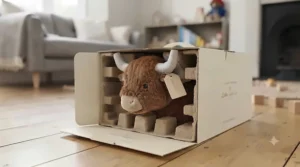
6. HOMCOM Swan Ride-On — best for sensory and novelty appeal
Where most of this list sticks to lions, dogs and horses, the HOMCOM Swan Ride-On stands out simply by being a swan — a genuinely distinctive design choice that tends to appeal to families wanting something a little different from the usual farmyard-and-jungle line-up. It combines a plush swan body with a built-in music function and a harnessed safety seat.
The safety seat detail is the more practically important spec here: rather than relying purely on balance, the harness gives an extra layer of security for younger or less confident riders, which the spec comparison suggests puts this option closer to a supported ride-on than a free-scooting toy like the Battat Rollin’ Lion. The music function adds a layer of sensory engagement similar to the HOMCOM horse reviewed above, and HOMCOM’s ride-on ranges typically include a safety seat rated for toddlers from around 18 months.
Who it’s for: parents whose toddler responds well to novelty and sensory stimulation, or anyone buying a gift where a lion or horse feels like the fifth one the child has received. Based on the spec comparison with harnessed ride-ons in the same category, the safety seat is a genuine plus for cautious parents, though it does mean slightly less freedom of movement than an open-seat design once a toddler is confidently walking and wants to hop on and off quickly.
Pros:
- ✅ Distinctive swan design stands out among gift options
- ✅ Harnessed safety seat adds security for cautious riders
- ✅ Music function boosts sensory engagement
Cons:
- ❌ Harness can feel restrictive for confident, mobile toddlers
- ❌ Novelty design may appeal less broadly than classic animals
Priced around £50-£65, the HOMCOM Swan Ride-On earns its spot through genuine differentiation — if you want a gift that won’t blend into a shelf of lions and ponies, this is the standout choice.
7. Little Bird Told Me Mishka Husky — best for first-birthday gifting
Rounding out the list is Little Bird Told Me Mishka Husky, a sibling product to the Dexter Dog reviewed above but styled as a husky rather than a Labrador, from the same British brand established in 2007. It shares the same underlying construction: a sturdy wooden frame wrapped in soft, wipe-clean polyester plush, built as a 2-in-1 push-along walker and seated ride-on.
The brand-wide safety claims apply here too — independent testing to EN 71 (the UK and European toy safety standard) and the American ASTM standard, with a recommended everyday rider weight of 20kg and a seat stress-tested to a 50kg static load. What that means in practice is a toy engineered to handle genuine daily use rather than occasional play, which matters if you’re buying for a child who’ll realistically use this toy for hours a week across their second year of life.
Who should buy it: anyone specifically shopping for a first-birthday present who wants a design with slightly more visual distinctiveness than the classic Labrador colourway — the husky’s grey-and-white markings photograph well for the inevitable birthday pictures. Reviewers consistently highlight the same wooden-frame sturdiness praised on the Dexter listing, and a common thread in aggregated feedback is that the toy transitions smoothly from walker to ride-on exactly as intended, without wobbling once a toddler starts putting real weight on the seat.
Pros:
- ✅ Same EN 71 and ASTM-tested safety profile as Dexter Dog
- ✅ Distinctive husky colouring, popular for gifting
- ✅ Smooth walker-to-ride-on transition as toddlers grow
Cons:
- ❌ Comparable pricing to Dexter Dog, not a budget pick
- ❌ Design availability can be more limited than classic colourways
At £45-£65, Mishka Husky is essentially a styling alternative to Dexter Dog with identical safety credentials — pick whichever design your toddler (or the birthday card) responds to better.
Top 7 Products: Full Spec Comparison
For a side-by-side look at how these seven ride-ons stack up on the details that actually affect day-to-day use, here’s the fuller comparison.
| Product | Frame Material | Wheel Type | Extra Features | Best For |
|---|---|---|---|---|
| Battat Rollin’ Lion | Wood + plastic base | 360° casters | None (manual push) | Budget-conscious first buy |
| Little Bird Told Me Dexter Dog | Solid wood | Fixed castor set | Removable-wheel walker mode | Heirloom-quality gifting |
| HOMCOM Plush Walking Horse | Wood base | Wide-track castors | Built-in sound | Balanced mid-range pick |
| Wheelybug | Moulded wood shell | 360° casters | Interchangeable covers | Multi-child households |
| AIYAPLAY Rocking-to-Rolling Horse | Wood + metal frame | Retractable wheel base | Rock/roll conversion | Older toddlers, variety |
| HOMCOM Swan Ride-On | Wood base | Standard castors | Music, safety harness | Cautious or sensory-seeking riders |
| Little Bird Told Me Mishka Husky | Solid wood | Fixed castor set | Removable-wheel walker mode | 1st birthday presents |
The clearest pattern in this table is that frame material tracks almost perfectly with price and expected lifespan: the solid-wood-framed options from Little Bird Told Me and Wheelybug consistently rank as the toys most likely to survive being handed down to a younger sibling, while the plastic-based Battat Rollin’ Lion trades some longevity for a genuinely low entry price. If a built-in feature like sound or a safety harness matters more to your toddler’s play style than raw durability, the HOMCOM pair offers that without stepping up to premium pricing.
✨ Don’t Miss These Exclusive Deals!
🔍 Take your search for the perfect rolling plush animal ride-on to the next level with these carefully researched picks. Click on any highlighted product above to check current pricing and availability. These toys are built to turn everyday floor time into genuine first-adventure memories your toddler will love. 🦁🐎
Plush Ride-On Toys for 1 Year Olds: What to Know
If you’re specifically shopping a plush ride-on for a 1 year old, age rating is the single most important filter to apply before anything else on this list. Most 12-month-olds are only just mastering standing and cruising along furniture — independent gross motor milestone research generally places confident independent walking somewhere between roughly 9 and 18 months, with huge individual variation. That’s exactly why products like Little Bird Told Me Dexter Dog and Mishka Husky are designed as 2-in-1 walkers first and ride-ons second: a wobbly one-year-old can lean on the frame for support long before they have the balance to sit astride a seat and propel it forward.
Products rated from 18 months, such as the Battat Rollin’ Lion, HOMCOM Plush Walking Horse and HOMCOM Swan Ride-On, assume a toddler already has reasonably confident independent walking and some sitting balance. Buying one of these for a child who’s only just turned one isn’t dangerous in itself, but based on the spec comparison, don’t expect them to use the seated ride-on function immediately — many toddlers this age will treat the toy purely as a push-along or pull-along for several months before they’re ready to sit and roll.
A genuinely practical tip for 1-year-old buyers: look specifically for a low seat height and a wide wheelbase, both of which reduce tip risk while a toddler’s core balance is still developing. Avoid anything rated 3+ (like the AIYAPLAY Rocking-to-Rolling Horse) as a first-birthday gift, since the age rating reflects genuine safety engineering, not just marketing caution.
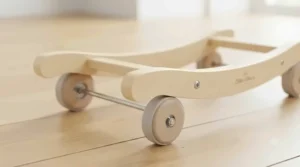
Practical Usage Guide: Setup, First Rides and Maintenance
Getting a rolling plush animal ride-on right isn’t just about the purchase — a bit of setup and early-use care goes a long way toward safety and longevity.
First 48 hours: Unbox and inspect every seam, wheel and joint before your toddler touches it, checking specifically for loose stitching around the mane or ears where small parts (like plastic eyes on cheaper designs) could work loose. Most of these toys arrive fully assembled or need only wheels clicked into place, so resist the urge to skip the manufacturer’s quick-start instructions even on simple-looking models.
Introducing your toddler: Place the ride-on against a wall or sofa for the first few sessions so there’s a natural barrier limiting how far it can roll, and stay within arm’s reach. Most toddlers need several short sessions before they understand they can propel the toy with their feet rather than just sitting on it.
Ongoing maintenance: Wipe plush fabric with a damp cloth rather than machine-washing, since submerging wooden-framed designs can warp internal joints over time. Check castor wheels monthly for trapped hair, fluff or small debris, which is the single most common cause of a “sticky” wheel that suddenly stops rolling smoothly. For sound-featured models like the HOMCOM Plush Walking Horse, remove batteries if the toy won’t be used for several weeks, avoiding the corrosion that ruins otherwise-working sound units.
Common first-30-days mistakes: Letting a toddler ride on carpeted stairs landings, allowing unsupervised riding near hard furniture corners, and — surprisingly common — over-tightening safety harnesses on models like the HOMCOM Swan Ride-On to the point they restrict natural movement rather than simply preventing a fall.
Real-World Scenarios: Which Ride-On Suits Your Toddler?
Specs only tell half the story — here’s how three common household situations map onto the products above.
The newly-walking 13-month-old in a small flat: Space is tight, floors are hard laminate, and the toddler has only been walking unaided for a few weeks. The Little Bird Told Me Dexter Dog or Mishka Husky fit best here, since the 2-in-1 walker mode gives genuine support before the ride-on function is even needed, and the compact wooden frame doesn’t dominate a small living room the way a wider-wheelbase design might.
The confident 2-year-old with a big garden and older siblings: Durability and shared use matter more than gentle first-steps support. The Wheelybug is the strongest fit — its interchangeable plush covers let it evolve as interests change, and the castor-wheel design is built to handle heavier, more energetic daily use across multiple children.
The budget-conscious first-time parent buying a 1st birthday gift: With costs adding up fast around a first birthday, the Battat Rollin’ Lion offers a genuine rolling plush animal ride-on experience without the premium price tag of a wooden-framed alternative — a sensible choice when you’re not yet sure how much use the toy will actually get.
How to Choose a Rolling Plush Animal Ride-On
- Check the age rating against your toddler’s actual mobility, not just their birthday. A child who’s confidently cruising furniture at 11 months may be ready sooner than the label suggests; a cautious walker at 20 months may need more time.
- Prioritise a wide wheelbase for early riders. Based on the spec comparison across all seven products here, wider bases consistently reduce tip risk when toddlers lean to reach for something.
- Decide whether you need a walker-first design. If your toddler isn’t walking independently yet, a 2-in-1 product like Little Bird Told Me Dexter Dog offers more immediate value than a seat-only ride-on.
- Weigh wooden frames against plastic bases. Wood typically costs more upfront but survives multiple children; plastic keeps costs down for shorter-term use.
- Consider flooring type. Castor-wheel designs like the Battat Rollin’ Lion and Wheelybug perform best on hard flooring and can feel sluggish on thick carpet.
- Factor in extra features honestly. Sound and harness features on the HOMCOM models add genuine sensory or safety value for some toddlers, but they’re not essential — don’t pay a premium for features your child won’t use.
- Confirm UK safety compliance before buying. Look for explicit reference to EN 71 testing or UKCA/CE marking on the listing, covered in detail in the safety section below.
Common Mistakes When Buying a Rolling Plush Animal Ride-On
Even well-meaning buyers trip up on a handful of recurring errors. First, buying purely on animal design rather than age rating — a gorgeous swan or unicorn means nothing if it’s rated for an age your toddler hasn’t reached yet. Second, assuming all “ride-on” toys are equivalent to rocking horses; as covered in the comparison section below, rolling and rocking are genuinely different motions with different safety considerations.
Third, overlooking flooring compatibility entirely. A castor-wheel design bought for a home with thick carpet throughout will frustrate both parent and toddler, since the wheels simply won’t roll the way they’re designed to. Fourth, ignoring weight limits — most of these toys list a maximum static seat load well above a toddler’s actual weight, but that margin exists specifically to account for real-world use like an older sibling briefly hopping on, and it shouldn’t be treated as an invitation to push the limit regularly.
Finally, a subtler mistake: buying the cheapest option available without checking for genuine safety testing claims. The UK government’s guidance for toy manufacturers makes clear that all toys sold in Great Britain must meet defined safety requirements — but enforcement relies partly on responsible retailers and partly on buyers checking listings carefully, particularly for lesser-known third-party sellers.
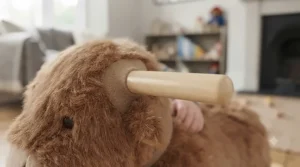
Rolling Plush Ride-Ons vs Traditional Rocking Horses
The rolling-versus-rocking debate comes up constantly among parents comparing these toys to the classic wooden rocking horse many of us grew up with, and the honest answer is that they serve genuinely different developmental purposes. A rocking horse moves back and forth on a fixed arc, building core balance and rhythm through a contained, predictable motion — useful, but it doesn’t take a toddler anywhere. A rolling plush animal ride-on, by contrast, translates a toddler’s own leg movement into forward motion across the floor, which more directly supports the gross motor skills involved in walking itself: weight shifting, foot placement and directional control.
| Factor | Rolling Ride-On | Traditional Rocking Horse |
|---|---|---|
| Motion type | Forward/directional travel | Fixed back-and-forth arc |
| Motor skills built | Walking mechanics, steering | Core balance, rhythm |
| Space needed | Room to roll (open floor) | Compact, fixed footprint |
| Typical age start | 12-18 months | 12 months+ |
| Risk profile | Tip risk if leaning while rolling | Tip risk on aggressive rocking |
Reading across this table, the practical takeaway is that rolling ride-ons need genuinely open floor space to be useful, while rocking horses suit smaller rooms where a toddler will always be riding in the same spot. Neither is objectively “better” — many families end up owning both, using the rocking horse for calmer indoor sessions and a rolling plush ride-on like the Wheelybug or Battat Rollin’ Lion for more active play once there’s room to move.
Toddler Mobility Toys: What to Expect in Real-World Performance
On paper, every product on this list promises to build balance, coordination and confidence — but what does that actually look like day to day? In the first few sessions, expect the toy to function mostly as a stationary seat: most toddlers sit, bounce gently and figure out the shape of the thing before attempting to move it. That’s completely normal and shouldn’t be mistaken for the toy being “too advanced.”
Once a toddler works out that pushing with their feet moves the toy forward, progress tends to happen quickly — often within a week or two of regular short sessions. What most buyers overlook about toddler mobility toys generally is that the real developmental value isn’t the toy itself, it’s the repetition it encourages: dozens of small leg-push motions a day, which reinforce exactly the muscle patterns involved in independent walking. Reviewers consistently report that toddlers who were hesitant walkers became noticeably more confident on their feet within a month of regular ride-on use, though it’s worth being honest that correlation here isn’t necessarily causation — toddlers develop walking confidence on their own timelines regardless of toys.
Expect noise (particularly from sound-featured models like the HOMCOM Plush Walking Horse), occasional collisions with furniture, and a genuine need for supervision near stairs or hard corners throughout this stage.
Plush Animal Ride-On Gift Ideas Under £30
If you’re specifically hunting for a plush animal ride-on gift under £30, your realistic options narrow considerably, since most wooden-framed designs on this list sit well above that threshold. The Battat Rollin’ Lion is the clearest fit here, typically found in the £25-£30 range, offering a genuine rolling plush ride-on rather than a compromised alternative.
If your budget flexes slightly, watch for seasonal promotions on the HOMCOM range, which occasionally dip toward the £30 mark during sales events, though the base price sits above it most of the year. For a strict sub-£30 budget, consider pairing a smaller plush toy — a soft comforter or small stuffed animal — with a promise of a bigger ride-on for a later occasion, rather than compromising on a poorly-built wheeled toy purely to hit a price point. A wobbly, badly-balanced ride-on bought purely for its low price can pose more of a genuine tip risk than a well-designed toy at a slightly higher cost, so treat £30 as a helpful budget marker rather than a hard rule worth sacrificing safety for.
Features That Actually Matter in Plush Toys (And Those That Don’t)
Not every feature marketed on a plush ride-on listing translates into real value for your toddler, so here’s an honest filter. Genuinely useful: a wide, stable wheelbase; wipe-clean or machine-washable plush fabric; reinforced stitching around ears, tails and other grab-points a toddler will inevitably pull on; and clearly stated safety testing (EN 71, UKCA or CE marking). These features directly affect daily safety and how long the toy survives real use.
Less essential, despite heavy marketing emphasis: elaborate sound effects beyond a simple on/off switch, unusual animal designs chosen purely for novelty over practicality, and “premium” branding without corresponding safety documentation to back it up. What the spec sheet won’t tell you, but genuine plush toy quality assessments consistently note, is that fabric density and seam construction matter far more to long-term durability than surface-level details like colour variety or the number of “features” listed in bullet points. A single well-stitched plush ride-on with basic castor wheels will typically outlast a feature-heavy toy with thin fabric and weaker joins, so when comparing listings, prioritise construction quality signals over headline feature counts.
Ride-On Toy Safety Standards Explained
Every toy legally sold in the UK — including every product covered in this guide — must meet requirements set out under the Toys (Safety) Regulations 2011, which draw heavily on the BS EN 71 series of European and British safety standards. In plain terms, this framework covers mechanical and physical safety (no sharp edges, no parts that detach into choking hazards), flammability limits, and restrictions on the chemicals and heavy metals permitted in dyes, plastics and coatings. As BSI’s own guidance on the standard explains, the BS EN 71 series now runs to around 20 individual parts, covering everything from basic mechanical hazards through to labelling and age-grading requirements.
For a rolling plush animal ride-on specifically, the most relevant parts of the standard cover mechanical stability (does the toy resist tipping under normal use?), wheel and joint safety (can small fingers get trapped?), and the plush fabric itself, which must meet flammability and chemical migration limits even though it’s a soft rather than rigid component. Products like Little Bird Told Me Dexter Dog and Mishka Husky go further by publishing independent test results — a static load test to 50kg on a toy rated for a 20kg everyday rider — which gives buyers a concrete safety margin figure rather than a vague assurance.
Since Brexit, toys sold in Great Britain can legally carry either a UKCA or CE mark, with the government having repeatedly extended the transition period accepting CE-marked goods; Northern Ireland continues to use CE marking under separate arrangements. Practically, this means both markings remain valid signals of compliance for UK shoppers today, and their presence on a listing is a reasonable first check before buying, particularly from smaller or lesser-known sellers. If a listing gives no indication of safety testing or compliance marking at all, that’s a legitimate reason for caution regardless of how appealing the price looks.
Long-Term Cost & Maintenance
Sticker price only tells part of the value story with these toys, since usable lifespan varies dramatically across the seven products reviewed here. A Battat Rollin’ Lion bought for around £30 that sees 12-18 months of regular use before being outgrown works out to roughly £1.50-£2.50 per month of play — genuinely solid value for a first ride-on. A Wheelybug at £75 that stays in active use from 12 months through to a child’s fourth birthday, potentially with a cover swap partway through to keep it feeling fresh, works out closer to £1.50-£2 per month across a considerably longer window, despite the higher upfront cost.
Maintenance costs across this category are genuinely low: no batteries required for the majority of these products (sound-featured models like the two HOMCOM entries are the exception), no consumable parts beyond the occasional wheel-cleaning, and plush fabric that typically survives years of wipe-cleaning without needing replacement. The main long-term cost consideration is resale or hand-me-down value — wooden-framed designs from established brands tend to hold their condition (and resale appeal on the secondhand market) considerably better than plastic-based budget alternatives, which is worth factoring in if you plan to sell or donate the toy once your toddler outgrows it.
Frequently Asked Questions
❓ What age is right for a rolling plush animal ride-on?
❓ Are rolling plush ride-ons safer than rocking horses?
❓ Can a rolling plush animal ride-on go outdoors?
❓ How do I clean a plush ride-on toy?
❓ Do rolling plush ride-ons need batteries?
Conclusion
A rolling plush animal ride-on earns its keep in a way a lot of toddler toys simply don’t: it’s cuddly enough to double as a comfort object, sturdy enough to survive genuine daily use, and directly useful for the exact gross motor development a toddler is working on at this age. Whether you land on the wallet-friendly Battat Rollin’ Lion, the heirloom-quality Little Bird Told Me range, or the interchangeable-cover Wheelybug, every option covered here meets UK safety expectations and offers real, honest value once you match it correctly against your toddler’s age and your home’s flooring.
The right choice ultimately comes down to three questions: how old and mobile is your toddler right now, how much space do you have for genuine rolling play, and how long do you need the toy to last? Answer those honestly against the comparison table near the top of this guide, and you’ll land on the right rolling plush animal ride-on without overspending on features your child won’t use for years, if ever.
✨ Ready to Choose Your Toddler’s Next Adventure?
🔍 You’ve seen the full breakdown — now it’s time to pick the rolling plush animal ride-on that fits your toddler best. Click through to check current pricing and availability on your favourite from the list above, and give your little one their first taste of independent, imaginative movement. 🐾🚗
Recommended for You
- Rocking Animal Ride-On for Toddlers: 7 Best Picks for 2026
- Wheelybug Cow Ride-On: 7 Best Toddler Picks Compared (2026)
- Wheelybug Bee vs Ladybird: 7 Best Toddler Ride-Ons (2026)
Disclaimer: This article contains affiliate links. As an Amazon Associate, I earn from qualifying purchases. If you purchase products through these links, we may earn a small commission at no additional cost to you.
✨ Found this helpful? Share it with your friends! 💬🤗
