
In This Article
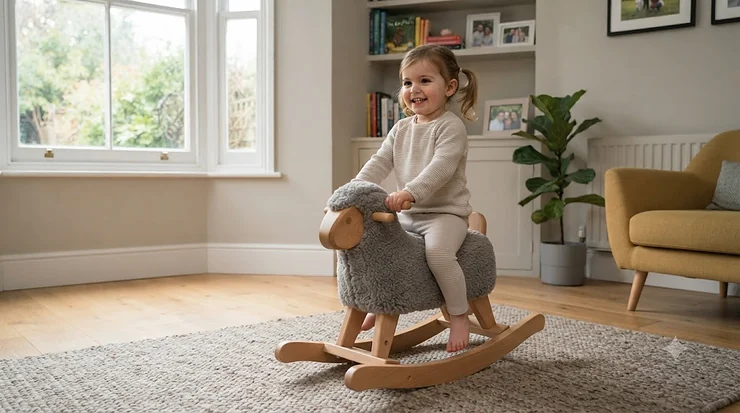
There’s a particular kind of chaos a wooden animal ride-on brings into a living room — the thud-thud-thud of little wheels crossing a hallway, the delighted shriek when a rocking donkey tips just far enough back to feel exciting. It’s one of those toys that looks simple on the box and turns out to matter quite a lot, both for how long it survives the average toddler and for what it actually does for their developing balance and confidence.
This guide looks at seven real products currently sold through amazon.co.uk, from classic wheeled wooden ride-ons to plush-covered rocking animals, spanning budget nursery buys to premium heirloom-quality pieces. We’ve grounded every recommendation in genuine specifications, aggregated review sentiment, and the practical realities of choosing nursery equipment that needs to survive daily use — not in invented five-star praise. Along the way we’ll cover what actually makes a wooden ride-on safe for a toddler, how plush-covered designs compare to bare wood, and where a rocking animal wins out over a wheeled one depending on your home.
By the end you should know exactly which wooden animal ride-on suits your child’s age, your floor space, and your budget, with honest pros and cons rather than marketing gloss.
Quick Comparison Table
| Ride-On | Best For | Price Range |
|---|---|---|
| Wheelybug Toddler Wooden Ride-On (Small) | First wheeled ride-on, ages 1-3 | around £45-£60 |
| Wheelybug Toddler Wooden Ride-On (Large) | Older toddlers and preschoolers | around £55-£70 |
| Little Bird Told Me Bojangles Donkey Ride-On | Nursery decor and gift-giving | around £40-£55 |
| Bigjigs Toys Patterned Rocking Horse | Classic rocking play, low floor space | around £40-£55 |
| Bigjigs Toys FSC Certified Rabbit Rocking Horse | Budget-friendly first rocker | around £30-£45 |
| HOMCOM Plush Ride On Donkey Rocker | Budget plush option with sound | around £30-£45 |
| Little Bird Told Me Norbert Rocking Donkey | Premium keepsake nursery piece | around £45-£60 |
Looking across the table, the split isn’t really budget versus premium in the way you’d expect — it’s wheeled versus rocking, and wood-forward versus plush-forward. Wheeled ride-ons like the Wheelybug range suit toddlers who are already confidently mobile and want to scoot around a room, while rocking animals suit a slightly wider age range and take up a smaller, more contained footprint, which matters a great deal in a typical UK nursery or living room. None of these seven are dramatically overpriced for what they offer; the real decision is which style of play, and how much floor space, actually fits your home.
💬 Just one click — help others make better buying decisions too!😊
Top 7 Wooden Animal Ride-Ons: Expert Analysis
1. Wheelybug Toddler Wooden Ride-On (Small) — the multi-directional classic
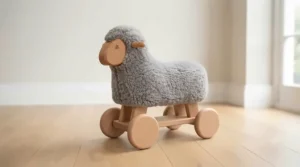
What separates the Wheelybug from most ride-ons is its castor arrangement: instead of fixed wheels that only go backwards and forwards, multi-directional castors let it glide sideways and spin in full circles, which genuinely changes how a toddler plays with it. Underneath the interchangeable plush cover sits a solid wooden base and body, padded with sponge and wrapped in tough, wipeable polyurethane, so the wood is doing the structural work while the cover handles comfort and washability. Based on the spec comparison with fixed-wheel alternatives, this makes the small Wheelybug (sized for 1-3 years) noticeably better suited to toddlers still developing balance, since the unrestricted movement lets them discover cause and effect without needing steering skills they haven’t developed yet. Reviewers consistently report that the sturdy wooden frame survives years of sibling hand-me-down use without the wobble or creak that cheaper plastic ride-ons develop, though a recurring comment is that the plush cover shows wear faster than the frame underneath it and benefits from spot-cleaning rather than machine washing.
Pros:
- ✅ Multi-directional castors allow genuine 360-degree movement
- ✅ Solid wooden frame holds up to years of daily use
- ✅ Grippable handlebar doubles as an early push-along aid
Cons:
- ❌ Plush cover wears faster than the wooden frame
- ❌ Small size is outgrown by around three years old
At around £45-£60, the Wheelybug Toddler Wooden Ride-On (Small) remains one of the most recognisable and reliably built options for a toddler’s first proper ride-on.
2. Wheelybug Toddler Wooden Ride-On (Large) — the size-up for confident movers
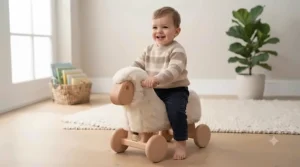
This is the same construction philosophy as the small Wheelybug, scaled up for children aged roughly 2.5 to 5 years — a genuinely useful variant rather than a cosmetic resize, since the seat height and overall proportions change enough to keep an older toddler comfortable rather than perched awkwardly on a toy built for a one-year-old. The wooden base and body construction stays identical in principle: sturdy timber core, sponge padding, tough wipeable polyurethane, and the same multi-directional castors underneath. What most buyers overlook about sizing up rather than buying a second small one is that the large Wheelybug still suits a child at the younger end of its range comfortably, so families often get a longer usable window out of it than the age bracket alone suggests. Aggregated review sentiment highlights the same durability strengths as the small version, with particular praise for how well it holds up outdoors on patios as well as indoors, though several reviewers note the larger size needs meaningfully more storage space than a household might expect.
Pros:
- ✅ Genuinely different proportions, not just a scaled-up small version
- ✅ Performs well on both indoor floors and outdoor patios
- ✅ Same durable wooden-and-castor construction as the small size
Cons:
- ❌ Takes up considerably more storage space than the small version
- ❌ Less suited to children still developing basic balance
Priced around £55-£70, the Wheelybug Toddler Wooden Ride-On (Large) is the sensible next step once a child has outgrown the small size but still loves the free-rolling play style.
3. Little Bird Told Me Bojangles Donkey Animal Ride-On — best for nursery styling and gifting
Bojangles leans harder into character and presentation than the Wheelybug range, and it shows in the details: crinkly ears, a rattly tail, and a stylised leatherette seat sit on top of the same fundamentally sound engineering — a sturdy wooden frame with a softly padded body and multi-directional castors underneath. Here’s what to weigh: the sensory extras (crinkle and rattle) genuinely add engagement value for younger toddlers who respond well to textured, noisy play, which is a meaningful practical difference from the plainer Wheelybug design rather than just aesthetic dressing. This is squarely aimed at families who want a ride-on wooden animal for nursery display as much as active play, since Little Bird Told Me products are designed with a cohesive nursery look in mind and typically arrive in branded gift packaging with a carry handle. Reviewers consistently note the seat comfort and overall build quality as strong points, with a common theme in feedback being that the toy looks noticeably more “designed” than mass-market alternatives, though a few mention the leatherette seat can feel a touch firm compared with fully upholstered options.
Pros:
- ✅ Sensory crinkle ears and rattly tail add engagement for younger toddlers
- ✅ Presentation-focused design suits nursery decor and gifting
- ✅ Wooden frame and multi-directional castors match proven ride-on engineering
Cons:
- ❌ Leatherette seat is firmer than fully upholstered alternatives
- ❌ Premium presentation adds cost over plainer equivalents
At roughly £40-£55, the Little Bird Told Me Bojangles Donkey Animal Ride-On suits parents who want a wooden ride-on that doubles as a genuinely attractive piece of nursery equipment.
4. Bigjigs Toys Patterned Rocking Horse — the classic rocking alternative
Where the previous three are wheeled, this is a proper rocking horse, and the shift in play style matters more than it might seem. A rocking motion is self-limiting in a way wheels aren’t — it can’t roll away down a hallway or off a rug edge — which makes it a genuinely different fit for smaller rooms or homes with stairs nearby. The plush-covered body sits on a wooden rocking base, with sturdy, easy-grip handles and a soft-padded saddle and reins that give a toddler something secure to hold onto as they rock. On paper this means a slightly more contained, lower-risk play pattern than a free-rolling ride-on; in practice, aggregated review sentiment backs this up, with parents frequently mentioning it as a good choice for toddlers who aren’t quite steady enough on their feet yet to safely manage a wheeled ride-on. Bigjigs, a UK toy company founded in 1985, sources materials responsibly, and reviewers consistently praise the rocking mechanism’s smoothness and the saddle’s comfort, though a handful note the horse requires adult assembly on arrival.
Pros:
- ✅ Rocking motion is naturally contained compared with free-rolling wheels
- ✅ Sturdy grip handles and padded saddle suit less steady toddlers
- ✅ Established UK toy brand with responsibly sourced materials
Cons:
- ❌ Requires adult assembly when it first arrives
- ❌ Takes up a fixed footprint rather than being easily moved aside
At around £40-£55, the Bigjigs Toys Patterned Rocking Horse is the pick for households prioritising contained, lower-energy play over free-roaming mobility.
5. Bigjigs Toys FSC Certified Rabbit Rocking Horse — best budget-friendly first rocker
This is the most affordable genuinely wood-framed option on this list, and the FSC certification is worth taking seriously rather than treating as a box-ticking label — it means the timber has been sourced from responsibly managed forests, verified by an independent certification body rather than simply claimed by the manufacturer. Built with a safety guard that keeps a toddler securely positioned on the rabbit’s back, this rocker is designed explicitly as a first rocking toy for children from 12 months, aimed at building balance, coordination and leg strength through the simple back-and-forth motion. What the spec sheet won’t tell you, but reviewers note repeatedly, is how reassuring the safety guard feature is for parents of children just past their first birthday who are still working on balance — it noticeably reduces the chance of a sideways tip that plainer rocking designs don’t guard against as effectively. Aggregated feedback highlights strong value for the price point and praises the finish quality relative to cost, though some reviewers mention the rabbit design’s smaller proportions mean it’s outgrown a little sooner than larger rocking horses.
Pros:
- ✅ FSC certification confirms responsibly sourced timber
- ✅ Safety guard adds reassurance for children with developing balance
- ✅ Genuinely strong value relative to build quality
Cons:
- ❌ Smaller proportions mean it’s outgrown sooner than larger rockers
- ❌ Fewer sensory or character details than pricier alternatives
Priced around £30-£45, the Bigjigs Toys FSC Certified Rabbit Rocking Horse is the strongest choice for budget-conscious parents who still want genuine wooden construction.
6. HOMCOM Plush Ride On Donkey Rocker — most affordable plush rocking option
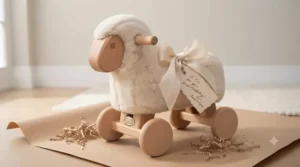
This sits at the more budget-friendly end of the plush rocking category, built around a wood base seat with a plush donkey body layered on top, plus a built-in sound feature and a safety belt — two additions not present on several pricier rivals on this list. The safety belt is the standout practical feature for anyone specifically weighing up plush ride-on animal safety for toddlers, since it adds a genuine restraint point that a bare saddle-and-reins design doesn’t offer, which matters more for children at the younger, less steady end of the 18-36 month age range this rocker targets. Based on the spec comparison with unbelted rockers, the added sound feature also gives younger toddlers an extra sensory hook that can extend engagement time, though it inevitably means batteries to manage and occasional noise fatigue for parents. Reviewers consistently note the price-to-feature ratio as strong, with the safety belt and sound function both drawing specific praise, though a recurring complaint is that the plush covering shows wear at pressure points faster than the sturdier wooden-framed alternatives further up this list.
Pros:
- ✅ Integrated safety belt adds genuine restraint for younger toddlers
- ✅ Built-in sound feature extends sensory engagement
- ✅ Strong value relative to feature set at this price point
Cons:
- ❌ Plush covering wears at pressure points faster than wood-forward designs
- ❌ Requires batteries for the sound function
At around £30-£45, the HOMCOM Plush Ride On Donkey Rocker is the most budget-accessible option for parents who specifically want a belted, sound-featured rocking design.
7. Little Bird Told Me Norbert Rocking Donkey — the premium keepsake pick
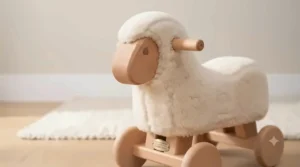
Norbert sits at the top of this list on presentation and finish, pairing a soft plush seat with proper wooden rockers rather than the more common all-plush or all-wood approaches seen elsewhere. What most buyers overlook about this combination is that it solves two problems at once — the wooden rockers provide the stable, controlled rocking motion that pure plush rockers sometimes lack, while the plush seat and sensory fabrics add the tactile comfort that bare wooden rocking horses don’t offer a very young toddler. Designed for 1-year-olds and toddlers, this is positioned as much as a memorable first-birthday or keepsake gift as an everyday plaything, and the branding reflects that: nursery-specialist design, careful material choices, and presentation that holds up as a piece of room decor between play sessions. Reviewers consistently rate the build and finish highly, describing it as noticeably more premium-feeling than comparably priced alternatives, though a small number mention that assembly instructions could be clearer and that the price sits toward the top end for what is, functionally, a rocking toy.
Pros:
- ✅ Combines wooden rockers with a plush, sensory-rich seat
- ✅ Strong keepsake and gift-giving appeal with premium finish
- ✅ Suits toddlers from 12 months with a stable rocking motion
Cons:
- ❌ Assembly instructions could be clearer according to reviewers
- ❌ Priced at the top end for a rocking-only design
At around £45-£60, the Little Bird Told Me Norbert Rocking Donkey is best suited to parents prioritising finish, gift appeal and long-term keepsake value over budget.
Top 7 Wooden Animal Ride-Ons: Specs at a Glance
| Ride-On | Play Style | Age Range | Best For |
|---|---|---|---|
| Wheelybug (Small) | Wheeled, multi-directional | 1-3 years | First wheeled ride-on |
| Wheelybug (Large) | Wheeled, multi-directional | 2.5-5 years | Older, confident movers |
| Little Bird Told Me Bojangles | Wheeled, sensory extras | 12 months+ | Nursery styling and gifting |
| Bigjigs Patterned Rocking Horse | Rocking | 18 months+ | Contained rocking play |
| Bigjigs FSC Rabbit Rocking Horse | Rocking, safety guard | 12 months+ | Budget first rocker |
| HOMCOM Plush Donkey Rocker | Rocking, belted, sound | 18-36 months | Budget belted rocker |
| Little Bird Told Me Norbert | Rocking, wood + plush | 1 year+ | Premium keepsake |
The clearest pattern here is that safety features and play style vary more meaningfully across this category than price does. A belted rocker like the HOMCOM Plush Ride On Donkey Rocker and a guarded rocker like the Bigjigs Toys FSC Certified Rabbit Rocking Horse both sit at the more affordable end yet offer restraint features that some pricier wheeled options don’t include at all, simply because wheeled and rocking designs solve different safety problems. Families choosing between these should weigh play style and containment needs at least as heavily as budget, since the cheapest option here isn’t necessarily the least safety-conscious one.
✨ Don’t Miss These Exclusive Deals!
🔍 Take your search for the right wooden animal ride-on further with these carefully selected picks. Click on any highlighted item to check current pricing and availability. These toys will help your toddler build balance, confidence and hours of happy playtime!
Practical Usage Guide: Setup, First Weeks and Maintenance
Most wooden animal ride-ons arrive part-assembled or need a handful of screws tightened before first use — check every fixing point, particularly around the seat and any axle or rocker joints, since a loose connection is the most common early complaint across aggregated reviews and takes moments to fix with a screwdriver. Place the ride-on on a stable, flat surface for the first few sessions so your toddler can get used to the movement pattern, whether that’s the free-rolling motion of a wheeled design like the Wheelybug Toddler Wooden Ride-On (Small) or the back-and-forth rock of the Bigjigs Toys Patterned Rocking Horse.
For ongoing maintenance, wipe plush covers and seats with a damp cloth rather than fully soaking them, since excess moisture can seep into the wooden frame underneath and cause warping over time — a detail manufacturers rarely spell out clearly. Check castor wheels or rocking joints every few months for accumulated dust, hair, or grit, which builds up quickly on hard flooring and gradually stiffens smooth movement if left uncleaned. If your model includes a sound feature, such as the HOMCOM Plush Ride On Donkey Rocker, remove batteries during long storage periods to avoid corrosion damaging the internal mechanism.
Common first-30-days mistakes include letting a toddler climb onto a wheeled ride-on unsupervised near stairs or hard furniture edges before they’ve developed enough control over the multi-directional movement, and storing a plush-covered ride-on in a damp area like a garage or conservatory, which accelerates mould risk in the padding far faster than indoor storage.
Real-World Scenarios: Matching the Right Ride-On to Your Toddler
Picture a family with a spacious open-plan living room and a toddler who’s already confidently walking and eager to move fast. The Wheelybug Toddler Wooden Ride-On (Small), or its Wheelybug Toddler Wooden Ride-On (Large) sibling for an older toddler, suits this environment well — the multi-directional castors reward a room with enough clear floor space to actually use them, and a confident walker gets more out of the free-rolling play pattern than a more contained rocking motion would offer.
Contrast that with a family in a smaller flat, perhaps with a younger toddler around 12-18 months who’s still finding their feet. Here a rocking option like the Bigjigs Toys FSC Certified Rabbit Rocking Horse or the belted HOMCOM Plush Ride On Donkey Rocker makes more practical sense — the fixed footprint suits limited space, and the contained, self-limiting rocking motion (plus, in the HOMCOM’s case, an actual seatbelt) suits a toddler who benefits from a more supported first experience with a ride-on toy.
Finally, consider a family shopping specifically for a memorable first-birthday gift rather than an everyday plaything, perhaps for a grandchild or godchild. The Little Bird Told Me Norbert Rocking Donkey or Little Bird Told Me Bojangles Donkey Animal Ride-On fit this brief particularly well — both brands design explicitly around gift presentation and nursery aesthetics, meaning the toy doubles as a decorative keepsake between play sessions rather than looking purely functional.
How to Choose a Wooden Animal Ride-On for Your Toddler
A wooden animal ride-on is a children’s toy built around a sturdy timber frame, typically shaped as an animal, that a toddler either sits on and pushes along using wheels or rocks back and forth on using a curved wooden base, designed to support balance, coordination and confident movement.
Choosing the right one comes down to a few practical questions:
- Check your child’s current balance stage. Confident walkers generally suit wheeled ride-ons better; toddlers still finding their feet often do better starting with a contained rocking design.
- Measure your available floor space honestly. Wheeled ride-ons need clear room to roll in multiple directions; rocking horses need only their own fixed footprint.
- Look for restraint features if your toddler is on the younger side. A safety belt, as included on the HOMCOM Plush Ride On Donkey Rocker, adds meaningful reassurance for less steady riders.
- Verify the frame material, not just the surface covering. A genuinely solid wooden base, as found under the plush covers of the Wheelybug Toddler Wooden Ride-On (Small), outlasts thinner or hollow constructions considerably.
- Consider maximum weight and age guidance together. Manufacturers list both for good reason, and outgrowing a ride-on on weight often happens before age alone would suggest.
- Check certification markers like FSC and EN 71. These indicate responsibly sourced materials and independently tested safety compliance rather than manufacturer self-declaration alone.
- Read aggregated review sentiment on durability specifically. A ride-on that looks charming in photos but loosens or squeaks within months is a worse long-term investment than a plainer, sturdier alternative.
Plush Ride-On Animal Safety for Toddlers: What Actually Matters
Given how many products in this category pair a wooden frame with a plush or leatherette covering, it’s worth being specific about what genuinely affects plush ride-on animal safety for toddlers rather than treating all soft coverings as equally safe. The seams and stitching quality matter more than most parents initially expect — loose threads or poorly finished seams can present a snagging or small-parts risk over time, and it’s worth checking these periodically rather than assuming a covering is maintenance-free once purchased.
Restraint features, where included, genuinely change the safety profile for younger or less steady toddlers. The HOMCOM Plush Ride On Donkey Rocker‘s integrated safety belt and the Bigjigs Toys FSC Certified Rabbit Rocking Horse‘s safety guard both serve this purpose, holding a child more securely in position during rocking motion than an unrestrained saddle-and-reins design. Fabric flammability and dye safety are governed by the same EN 71 toy safety standard that covers mechanical construction, so a genuinely compliant plush ride-on animal will meet the same testing regime regardless of whether the outer covering is fabric or bare wood. Reviewers consistently note that wipe-clean or spot-clean coverings, rather than fully machine-washable ones, tend to hold their shape and safety-relevant stitching better over repeated cleaning cycles, which is worth checking before buying if hygiene between uses is a priority for your household.
Wooden Toys vs Plastic Ride-Ons: Is the Extra Cost Worth It?
It’s a fair question, given that plastic ride-on toys are often available at a noticeably lower price point. The honest comparison depends heavily on what you’re prioritising.
| Factor | Wooden Ride-Ons | Plastic Ride-Ons |
|---|---|---|
| Best For | Long-term durability, heirloom or hand-me-down use | Lower upfront cost, very light portability |
| Structural stability | Generally more rigid, less flex under weight | Can flex or creak under heavier toddlers |
| Environmental profile | Renewable material, often FSC certified | Petroleum-based, harder to recycle fully |
| Aesthetic and resale value | Holds decorative and resale appeal longer | Fades and scratches more visibly over time |
| Weight | Heavier, less easy to move between rooms | Lighter and easier to relocate |
On paper, wooden toys carry a higher upfront cost; in practice, the structural rigidity of a solid wooden frame — as found in every product on this list — tends to outlast plastic equivalents by a meaningful margin, particularly once a toddler’s weight increases toward the upper end of a ride-on’s rated capacity. What most buyers overlook about wooden construction specifically is its resale and hand-me-down value: a well-maintained wooden ride-on frequently gets passed to younger siblings or resold, effectively lowering its true cost-per-use over several years, something plastic ride-ons rarely achieve once visibly faded or cracked. The genuine trade-off is weight and portability — wooden ride-ons are heavier to shift between rooms — which matters more in smaller flats than in houses with dedicated play space.
Nursery Equipment: Where a Ride-On Fits Among Your Other Essentials
A wooden animal ride-on is one piece within a broader category of nursery equipment, and it’s worth placing it in context against the cots, changing tables and highchairs most parents budget for first. Unlike safety-critical nursery equipment such as cots or car seats, a ride-on toy isn’t subject to the same mandatory British Standard testing regime for sleep or restraint safety, but it does fall under general toy safety law. The Toys (Safety) Regulations 2011, the UK’s implementing legislation for toy safety, sets the essential safety requirements every ride-on sold in the UK must meet before reaching a shop shelf or online listing, covering everything from small-parts risk to structural stability under normal use.
Budgeting for a ride-on alongside other nursery equipment is worth doing early rather than as an afterthought purchase, since well-built wooden options in the £30-£70 range represent a genuine investment comparable to smaller furniture pieces rather than a disposable toy. Storage is the other practical nursery equipment consideration worth planning for — rocking designs like the Little Bird Told Me Norbert Rocking Donkey need a permanent floor footprint, while wheeled options like the Wheelybug Toddler Wooden Ride-On (Large) need clear, obstacle-free space to actually use rather than simply store.
Toddler Ride-On Materials: What’s Actually Underneath the Surface
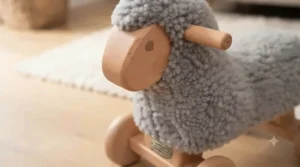
Marketing copy in this category often emphasises the visible outer covering — plush fabric, leatherette seats, painted patterns — while saying comparatively little about the structural materials doing the real work. Toddler ride-on materials worth checking specifically include the core timber (solid wood versus composite or hollow construction), the padding layer between frame and covering (sponge foam is standard and generally durable), and the covering itself (polyurethane-coated fabric wipes clean far more easily than uncoated textile).
FSC certification, present on the Bigjigs Toys FSC Certified Rabbit Rocking Horse, is a materials credential worth taking seriously rather than treating as marketing language — it confirms the timber came from a forest managed to recognised sustainability standards, independently verified rather than self-declared. Castor and wheel materials matter more than they might seem too: metal or reinforced plastic castors, as used across the Wheelybug range, roll more smoothly and resist cracking under repeated weight-bearing use than the thinner plastic wheels found on some budget alternatives. For plush-covered designs, checking whether the covering is removable and washable, as with the Wheelybug’s interchangeable design, meaningfully affects long-term hygiene and hence how long the toy remains genuinely pleasant to use.
Common Mistakes When Buying a Wooden Ride-On for a Nursery
The most frequent mistake is buying strictly by age recommendation without checking the weight limit, which matters more for larger or heavier toddlers who may exceed a ride-on’s rated capacity well before reaching the upper end of its stated age bracket. A closely related error is overlooking floor space requirements for wheeled designs specifically — a family in a smaller home sometimes buys a Wheelybug Toddler Wooden Ride-On (Large) expecting the same experience as the small size, only to find there isn’t enough clear room to make the most of its multi-directional movement.
A third common mistake is assuming all plush-covered options offer equivalent restraint and safety features, when in practice some, like the HOMCOM Plush Ride On Donkey Rocker, include an integrated safety belt while others rely on a plainer saddle-and-reins design. Fourth, many parents underestimate maintenance needs, treating a wooden ride-on wooden animal for nursery use as effectively maintenance-free once purchased, then being surprised when accumulated grit stiffens castors or moisture causes covering wear faster than expected. Finally, buying purely on price without checking aggregated review sentiment on long-term durability sometimes means replacing a budget ride-on within a year, when a slightly pricier, better-built alternative would have lasted considerably longer.
Safety and Development: What UK Guidance Says
Riding, rocking and pushing toys like these directly support the gross motor development toddlers are working on during their second and third years — balance, coordination, and leg strength all get meaningful practice through this kind of play. According to guidance from an NHS children’s therapy service, toddlers benefit from repeated practice of physical skills, and playing alongside others or with encouraging adults nearby supports that development particularly well, which is worth bearing in mind when introducing a new ride-on rather than simply leaving a toddler to it unsupervised.
On the regulatory side, safety compliance for products like these sits under the EN 71 standard series covering mechanical, physical and chemical safety, alongside the UK’s own toy safety legislation discussed above. Supervision remains important regardless of a product’s safety certification, particularly during the first few weeks with a wheeled ride-on, since toddlers are still learning how much force and direction control they have over a genuinely free-rolling toy. Checking a product listing for explicit EN 71 or UKCA compliance markers before buying, rather than assuming all toys sold on general marketplaces meet the same standard, remains a sensible habit for any nursery equipment purchase.
Frequently Asked Questions
❓ What age is a wooden animal ride-on suitable for?
❓ Are wheeled or rocking wooden ride-ons safer for toddlers?
❓ How do I clean a wooden ride-on with a plush cover?
❓ Is a wooden ride-on better than a plastic one for a toddler?
❓ Do wooden ride-on toys need to meet UK safety standards?
Conclusion
Choosing the right wooden animal ride-on comes down to matching play style and safety features to your toddler’s stage and your available space, rather than simply picking the most charming design in photos. For confident, already-mobile toddlers with room to move, the Wheelybug Toddler Wooden Ride-On (Small) and its larger sibling remain reliably well-built choices, while families wanting a more contained, self-limiting play pattern will likely prefer the Bigjigs Toys FSC Certified Rabbit Rocking Horse or the belted HOMCOM Plush Ride On Donkey Rocker.
For gift-giving or nursery styling specifically, the Little Bird Told Me Bojangles Donkey Animal Ride-On and Little Bird Told Me Norbert Rocking Donkey both combine genuine build quality with presentation that holds up as room decor between play sessions. None of these seven is universally “best” — the honest recommendation is to weigh your floor space, your toddler’s current balance stage, and whether restraint features matter for your family, ahead of chasing the lowest price or the cutest face.
Recommended for You
- Rolling Plush Animal Ride-On: 7 Best Picks for 2026 (Tried; Tested Research)
- Rocking Animal Ride-On for Toddlers: 7 Best Picks for 2026
- Wheelybug Cow Ride-On: 7 Best Toddler Picks Compared (2026)
Affiliate disclosure: This article contains affiliate links. As an Amazon Associate, I earn from qualifying purchases. If you purchase products through these links, we may earn a small commission at no additional cost to you.
✨ Found this helpful? Share it with your friends! 💬🤗
