In This Article
Here’s what the shop assistant rarely says out loud: the Mini Micro 3-in-1 vs Mini Micro Deluxe debate is a slightly rigged fight. The seated 3-in-1 is, in effect, a Deluxe wearing a ride-on costume. Strip off the seat, swap the bars, and the Deluxe is what’s left. So the real question isn’t “which is better?” It’s “when does my child start, and do I want to pay for the early years?”
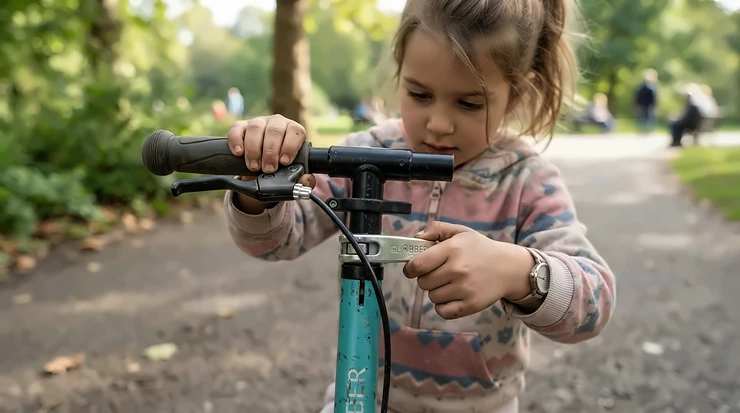
Timing matters more than any spec. The seated Micro line is pitched at children from about 12 months. The standard Deluxe is aimed at two- to five-year-olds who can already stand and push. Add an adjustable handlebar, light-up wheels on some versions and a naming scheme that shifts between retailers (3in1, 3in1 Deluxe, Mini2Grow), and it’s no wonder parents end up with forty tabs open. Mumsnet’s parent-tested kids’ scooter round-up for 2026 names the Mini Micro Deluxe as its best overall pick, so the bar for comparison is high.
This guide compares seven real scooters: four from the Micro family and three rivals. It uses published specs, retailer listings and aggregated review themes. I haven’t had these scooters in my hands, so you won’t find invented test stories. You’ll get honest analysis of what the numbers mean on the pavement. Along the way you’ll find seat attachment/removal steps, a plain-English guide to convertible scooter stages, and a straight look at LED wheel variants. Prices are ranges only, because they move constantly.
Quick Comparison: Mini Micro 3-in-1 vs Mini Micro Deluxe at a Glance
If you only have two minutes, start here. The table compares the seated Micro with the standard Deluxe using Micro’s UK specification tables and retailer listings. Where sources disagree, I’ve flagged it rather than quietly picking a winner.
| Feature | Mini Micro 3in1 Deluxe | Mini Micro Deluxe |
|---|---|---|
| Starting age | From around 12 months (seat on) | From around 2 years |
| Max rider weight | 20 kg with seat; up to 50 kg seat-free per Micro’s European listing | 35 kg on most UK listings |
| Scooter weight | Roughly 1.95–3.1 kg depending on setup | Roughly 1.95 kg |
| Handlebar | Short O-bar, then adjustable T-bar (up to about 68 cm) | Adjustable T-bar (around 49–68 cm) |
| Seat | Yes, clip-on and removable | No |
| Typical price range | Around £85–£110 | Around £70–£95 |
| Best For | Starting at 12–18 months | Confident 2–5-year-olds |
Read across the rows and the pattern is plain: the real difference is the seat. If your child will use it for a year or more, that premium of roughly £15–£25 buys genuinely useful early mileage. If they’re already two and steady on their feet, the Mini Micro Deluxe gives you the same deck, wheels and adjustable handlebar for less. Treat weight limits as the hard ceiling, because the seat’s 20 kg limit arrives long before the standing limit does.
💬 Just one click — help others make better buying decisions too!😊
Top 7 Picks in the Mini Micro 3-in-1 vs Mini Micro Deluxe Debate: Expert Analysis
Seven scooters, one job: getting a small person moving without tears. Four come from Micro itself in different guises. Three are rivals that tackle the same problem a little differently. Prices are ranges at the time of research (October 2026), so check current price before you commit.
1. Mini Micro 3in1 Deluxe — seat-to-scooter classic for early starters
The 3-in-1 earns its name by changing shape with your child: a clip-on seat first, a short O-bar scooter next, then a full T-bar Deluxe. Micro’s UK comparison table lists it for 12 months to five years, with a 20 kg limit while the seat is on. Scooter weight runs from about 1.95 kg to 3.1 kg depending on setup. In practice, that’s a seat-on build light enough to lift up a kerb, and a seat-off scooter that’s roughly two bags of sugar.
Based on the spec comparison, this suits families who’ll start at 12–18 months and want one purchase to last until school age. A Dutch retailer’s guidance suggests the low seat position from about 12 months and the higher one from around 18. If your child is already two and steady, you’ll likely never use the seat, and the premium buys nothing. Check listings carefully, as names vary (Mini Micro 3in1 Deluxe, Mini Micro 3in1 Deluxe Plus), and some bundles add a push bar and footrests.
Parent forums and Micro’s own store consistently praise the build quality, smooth ride and easy spares. A recurring caveat is that lean-to-steer surprises buyers expecting turning handlebars.
Pros:
- ✅ Starts at 12 months, no second purchase
- ✅ Seat height adjusts as legs lengthen
- ✅ Converts into the full adjustable Deluxe
Cons:
- ❌ Seat and O-bar become storage clutter
- ❌ Costs more than the Deluxe alone
Expect around £85–£110 depending on colour and LED options. It’s good value if the seat gets a year or more of use.
2. Micro Mini2Grow Deluxe LED — four stages from 12 months to six years
This is Micro’s newer UK take on the convertible idea: a parent-guided trike, an independent ride-on, a toddler scooter, then a grown-up scooter. Micro lists it for 12 months to six years. The page quotes 50 kg for standing use, while the seated modes are capped at 20 kg in its comparison table. Scooter weight runs from 2.18 kg to 3.48 kg depending on configuration. You also get 120 mm front and 80 mm rear PU wheels, plus an embossed silicone deck for grip.
The standout is the parent-steering handle. When little legs wander towards a puddle, you decide where the Micro Mini2Grow Deluxe LED goes. The catch is compatibility. Micro says only the stem made for this product should be used, so it won’t swap parts with a standard Mini Micro Deluxe. One reviewer also found that two colours of the “same” model had different seat styles (fixed versus height-adjustable), so check the listing for your colour.
Micro’s own store shows roughly 4.6 out of 5 from about 150 reviews. That’s manufacturer-hosted, so expect a friendly crowd. Themes are quality, bright lights and a smooth ride.
Pros:
- ✅ Four stages in one purchase
- ✅ Parent handle for pavement strolls
- ✅ Battery-free LED wheels
Cons:
- ❌ Bulkier and heavier in early stages
- ❌ Stem isn’t interchangeable with standard Deluxe
Expect around £100–£125. It’s strong value if you’ll genuinely use all four stages.
3. Mini Micro Deluxe — the benchmark preschool scooter
Mumsnet’s best-overall pick earns its reputation by doing less than the convertibles, and doing it superbly. Micro’s UK guide pitches it at ages two to five with a 35 kg limit. The handlebar adjusts, and the stem is anodised against corrosion. Mumsnet’s reviewer lists the weight at about 1.95 kg, while Coach’s round-up says 1.8 kg. Either way, a two-year-old can wrestle it upright unaided, which matters more than any brochure claim.
Mumsnet’s testers found the Mini Micro Deluxe hard to tip and noted compliance with EN 71 and ASTM F963. The same review mentions its “hefty” price tag but argues that aftercare and replaceable parts justify it. Handlebar ranges are quoted differently across sources, from around 43 cm up to 68 cm, which likely reflects different generations. Check the box.
Parents are warm about it. Mumsnet’s own write-up says users couldn’t speak more highly, and forum posters describe riding theirs into the ground.
Pros:
- ✅ Featherweight and easy for toddlers to manage
- ✅ Adjustable handlebar grows with your child
- ✅ Spares widely available
Cons:
- ❌ No seat, so no use before about two
- ❌ Pricier than budget three-wheelers
Expect around £70–£95. It’s the safest buy for steady two-year-olds.
4. Mini Micro Deluxe LED — light-up wheels without batteries
Everything good about the Deluxe, plus front wheels that glow as they roll. Micro describes motion-powered induction wheels cast in clear 120 mm PU, so there’s nothing to charge or replace. The footplate is reinforced fibreglass with a silicone-injected anti-slip logo. European listings mention reflectors beside the rear wheel and a removable handlebar. UK retailers list 35 kg, 1.95 kg and rider heights up to about 110 cm.
On paper, the lights are a delight first and a visibility aid second. Manufacturers say they help others see small riders in dim light, but I’d treat that as a bonus, not a safety system. Autumn school runs and dusk walks are where the Mini Micro Deluxe LED earns its premium. In July sunshine, you’re paying for sparkle.
Micro’s own store is glowing. A small sample of ratings aggregated on a price-comparison site was noticeably more modest, so read recent reviews for your colour.
Pros:
- ✅ Battery-free glowing front wheels
- ✅ Grippy silicone-detail deck
- ✅ Removable handlebar for transport
Cons:
- ❌ Costs more than plain Deluxe
- ❌ Lights only work while moving
Expect around £70–£95, with some retailer listings reaching the top of that range.
5. Globber Go Up Comfort Lights — widest seat, longest growth runway
Globber’s convertible plays a different tune: heavier, taller, and more forgiving. Retailer listings give 15 months and up, with ride-on and walking-bike modes capped at 20 kg and scooter mode at 50 kg. The seat has three heights (32.5–34.5 cm), and a four-height T-bar reaches about 82.5 cm. Wheels are 121 mm at the front and 80 mm at the back. A patented steering-lock button keeps the front wheels pointing straight for wobbly first rides, and the battery-free LED wheels flash red, green and blue. Listings also use the name Evo Comfort Lights.
That extra size has a trade-off. At roughly 4 kg, the Globber Go Up Comfort Lights is about double a Mini Micro Deluxe, so carrying it up steps is a real consideration. Taller children benefit, though: Mumsnet posters note Globber handles extend further, while another found one too big for a small child. Retailers market it up to nine-plus years, which is optimistic for a three-wheeler. Reviewers in UK round-ups praise value and smooth riding.
Pros:
- ✅ Extra-wide, adjustable seat
- ✅ Steering lock helps first rides
- ✅ Taller bar outlasts preschool years
Cons:
- ❌ Roughly double the weight of a Micro
- ❌ Can be large for small two-year-olds
Expect around £100–£140 for the Go Up family at the time of research. Check current price, as this varies.

6. Scoot & Ride Highwaykick 1 — tool-free seat conversion
The lesser-known contender wins on convenience. Retailer listings describe a ride-on seat for ages one to five that adjusts from 22.5 cm to 29 cm, with 20 kg seated and 50 kg standing limits. Adjusting the seat or switching to scooter mode reportedly needs no tools. It has three wheels, two at the front and one behind, and PU wheels. Boxed weight is around 3.7 kg.
Tool-free changeovers sound minor until you’re standing in a café doorway with a tired toddler and a Allen key you’ve left at home. The Scoot & Ride Highwaykick 1 is also built around the seat from the start, so it behaves like a proper ride-on rather than a scooter with an accessory. European reviewers praise easy assembly and quick switching between seat and scooter. They also note that steering is by body weight, like a scooter. I found a smaller UK review pool than for Micro, so treat sentiment as indicative.
Pros:
- ✅ Tool-free seat height and mode changes
- ✅ Low seat starting at 22.5 cm
- ✅ Covers one to five years
Cons:
- ❌ Smaller UK review pool than Micro
- ❌ Heavier than a Mini Micro Deluxe
Expect around £100–£125. It’s a smart pick for families who change modes often.
7. Globber Primo Foldable Lights — budget fold-flat starter
Not a convertible, but the budget benchmark. Mumsnet names the Globber Primo Foldable its best budget scooter, praising quick assembly and the fold. It has three wheels, a three-height T-bar, 120 mm front wheels, a patented steering-lock button and dynamo-powered front lights flashing red, green and blue. Max load is 50 kg. European listings pitch it at three-plus and riders around 100–110 cm, and a UK retailer warns it isn’t for under-threes. One spec sheet shows roughly 2.5 kg.
The fold is the point. The Globber Primo Foldable Lights tucks into a car boot or under a café table, which a Mini Micro Deluxe can’t do (you can remove its handlebar, but not fold it). Mumsnet’s reviewer is honest that it isn’t as lightweight as the Micro. If you want a seat or a pre-two start, look elsewhere on this list.
Pros:
- ✅ Folds flat for boots and buses
- ✅ Lowest-priced pick in this round-up
- ✅ Steering lock for nervous beginners
Cons:
- ❌ No seat or ride-on mode
- ❌ Not suitable for under-threes
Expect around £55–£80. Check current price, as the lights-only and foldable versions differ.
Top 7 at a Glance
| Scooter | Starting age | Seat? | LED? | Weight limit | Price range | Best For |
|---|---|---|---|---|---|---|
| Mini Micro 3in1 Deluxe | 12 months+ | Yes | Some versions | 20 kg seated | £85–£110 | Starting at 12–18 months |
| Micro Mini2Grow Deluxe LED | 12 months–6 years | Yes, plus parent handle | Yes | 20 kg seated; 50 kg standing | £100–£125 | Maximum runway |
| Mini Micro Deluxe | 2–5 years | No | No (LED version separate) | 35 kg | £70–£95 | Steady two-year-olds |
| Mini Micro Deluxe LED | 2–5 years | No | Yes | 35 kg | £70–£95 | Dusky school runs |
| Globber Go Up Comfort Lights | 15 months+ | Yes | Yes | 20 kg seated; 50 kg standing | £100–£140 | Taller children, long runway |
| Scoot & Ride Highwaykick 1 | 1–5 years | Yes | No | 20 kg seated; 50 kg standing | £100–£125 | Tool-free changeovers |
| Globber Primo Foldable Lights | About 3+ | No | Yes | 50 kg | £55–£80 | Budget and boot space |
Seated models cost roughly £15–£40 more than Deluxe-only options, and that premium buys months of use, not years. If your child is under 18 months, only the Mini Micro 3in1 Deluxe, Micro Mini2Grow Deluxe LED, Globber Go Up Comfort Lights and Scoot & Ride Highwaykick 1 make sense. For steady twos, the Mini Micro Deluxe and Mini Micro Deluxe LED are the leaner buys, with Globber Primo Foldable Lights as the budget fallback for three-plus.
Seat Attachment/Removal: A Practical Step-by-Step Guide
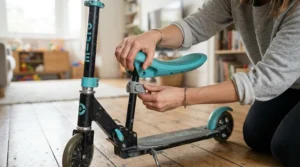
Manufacturer pages describe the changeover fairly consistently across Micro’s seated models, though parts differ by generation. Treat this as a map and the manual in the box as the law. Here’s the typical journey for seat attachment/removal on a Micro convertible.
- Start seated (about 12 months). Seat on, short handle or O-bar fitted, and seat height set so your child’s feet touch the floor, as Micro’s European listing advises. On the Micro Mini2Grow Deluxe LED, stage one also includes the parent-steering handle.
- Drop the parent handle (about 18 months). Once they push themselves along, removing the handle turns the seat into an independent ride-on.
- Remove the seat (about two years). When your toddler wants to stand, seat removal leaves a toddler scooter with a short bar.
- Fit the T-bar (about three years). The adjustable T-bar completes the Mini Micro Deluxe experience. Micro’s US guidance says to tighten the clamp with the supplied tool before riding.
- Store the extras. Keep the seat and O-bar for a sibling or resale. Micro stresses replaceable parts.
Common Mistakes in the First 30 Days
- Setting the seat too high. Feet should reach the floor.
- Keeping the seat on past 20 kg. That’s the listed ceiling for the seated modes.
- Mixing parts. Micro says only use the stem made for the Micro Mini2Grow Deluxe LED.
- Skipping the helmet. Micro recommends one for every ride.
Once seat attachment/removal becomes routine, it takes minutes rather than a morning.

Real-World Scenarios: Three Families, Three Choices
These are illustrative profiles, not case studies of real buyers. They show how the specs translate into decisions.
The Flat-Dwelling First-Timers
Their baby is 14 months old, they live in a city flat and walk to the park four or five times a week. Budget is around £100–£125. The Micro Mini2Grow Deluxe LED fits, because the parent handle lets them steer along busy pavements while the stages cover the next five years. The bulk is a nuisance in a small hall, so they’d need to plan storage.
The Hand-Me-Down Household
Their child is a steady 2.5-year-old doing a daily nursery run, and budget is under £80. The Mini Micro Deluxe is the sensible pick, with the Mini Micro Deluxe LED a worthwhile upgrade for dark winter afternoons. If funds are tighter and the child is three, the Globber Primo Foldable Lights at the budget end saves money and boot space.
The Gift-Buying Grandparents
They’re buying for a 15-month-old, travelling by car, and the scooter will see weekend use. Budget runs to £100–£140. The Globber Go Up Comfort Lights gives a wide seat and long runway. The Scoot & Ride Highwaykick 1 is the pick if fast, tool-free adjustments matter more than size. Either way, check current price and confirm the seller’s returns policy before ordering.
Problem → Solution Guide: Fixes for Common Scooter Headaches
My toddler is wobbly and won’t stand. Stay in seated mode for longer. The Globber Go Up Comfort Lights steering lock and the parent handle on the Micro Mini2Grow Deluxe LED are made for this stage.
The handlebar doesn’t turn. That’s lean-to-steer, not a fault. One reviewer on Micro’s own store was baffled for ages before realising. Teach “lean, don’t turn” and the confusion usually fades.
Bearings squeak or rust. One UK round-up expert advised keeping scooters indoors, because damp rusts bearings. Dry them after wet rides and store them in the hall, not the shed.
The handlebar twists or loosens. One Mumsnet parent described a stem twisting on a Micro. Tighten the clamp with the supplied tool, and use Micro’s spares service or warranty (their store lists two years; check the seller’s terms if buying elsewhere).
Storage is tight. The Mini Micro Deluxe LED has a removable handlebar. The Globber Primo Foldable Lights folds. Pick whichever fits your hallway or boot.
✨ Don’t Miss These Exclusive Deals!
🔍 Take your first scooting adventures to the next level with these carefully selected scooters. Click on any highlighted item to check current pricing and availability. These picks will help you create confident, happy rides your little one will love!
What Is Mini Micro 3-in-1 vs Mini Micro Deluxe? (The Short Answer)
Mini Micro 3-in-1 vs Mini Micro Deluxe is the choice between a convertible toddler scooter with a removable seat, which suits children from around 12 months, and the standard stand-on preschool scooter with an adjustable handlebar for ages two to five. Both share the same lean-to-steer deck, so the real difference is the starting age and the seat.
Decoding the Names
Naming is the real confusion. Here’s the cheat sheet:
- Mini Micro 3in1 Deluxe (and Mini Micro 3in1 Deluxe Plus): the seated, three-stage model.
- Mini2Grow: Micro’s newer four-stage line, which adds a parent-guided trike stage.
- Mini Micro Deluxe: the stand-on scooter for ages two to five, with an adjustable handlebar.
- Original Mini Micro: Micro’s own guide describes a fixed handlebar, a 20 kg limit and ages three to five, so it’s a step down.
Retailers mix these labels freely, so always confirm the stage list, weight limits and included parts before buying.
How to Choose: Mini Micro 3-in-1 vs Mini Micro Deluxe in 6 Steps
- Start with confidence, not birthdays. A steady walker who loves pushing things is ready to stand. A cruiser who still holds your hand may need the seat.
- Check weight and height ceilings. Seated modes cap at 20 kg across the models here, so a tall toddler can outgrow the seat early.
- Be honest about seat use. If you expect under a year in seated mode, the extra cost rarely pays back. If it’s 12 months or more, it usually does.
- Weigh handlebar range. Micro’s Deluxe handlebar grows with your child. Globber’s taller bar suits taller kids, but may be too big for small twos.
- Decide whether LED matters. It’s lovely for dusk school runs, less so if you scoot in daylight. See the LED section below.
- Budget for the life cycle. Divide price by years of realistic use (see the cost table below).
Quick Decision Framework
- If your child is under 18 months, choose a seated model (Mini Micro 3in1 Deluxe, Micro Mini2Grow Deluxe LED, Globber Go Up Comfort Lights or Scoot & Ride Highwaykick 1).
- If they’re two and steady, choose the Mini Micro Deluxe or Mini Micro Deluxe LED.
- If they’re three-plus and budget rules, choose the Globber Primo Foldable Lights.
Convertible Scooter Stages: What Each Stage Really Gives Your Child
Convertible scooter stages look neat on a diagram. In real life they’re about readiness, not birthdays.
The 3-in-1 Route
Micro’s seated 3-in-1 runs through three stages. First is the seated ride-on, used from about 12 months. Next is a toddler scooter with a short O-bar, once the seat is off. Last is the full T-bar Mini Deluxe from around three. Retailer age bands overlap deliberately (seat-only 12 months to three years; seat-off one to three; T-bar three to five), because children move at their own pace.
The Mini2Grow Route
The Micro Mini2Grow Deluxe LED splits that into four. There’s a parent-guided trike from 12 months, an independent ride-on from 18 months, a first Mini Micro scooter from two, and a grown-up Mini Micro for three to six. The extra stage gives you early control and more runway, but also more parts and more weight.
Why It Matters
NHS guidance for under-fives sets at least 180 minutes of activity a day and lists riding a bike as a great example of active play. Scooting isn’t named, but it plausibly belongs in the same bracket. A scooter that keeps your child moving through each stage helps you reach that daily target, and a good set of convertible scooter stages avoids buying again at 18 months.
LED Wheel Variants: Features That Actually Matter (And Those That Don’t)
Light-up wheels now come in several flavours, and they’re not interchangeable.
- Wheel-only LED: the Mini Micro Deluxe LED has motion-powered front wheels and no batteries.
- Mini2Grow LED: the Micro Mini2Grow Deluxe LED has touch-sensitive bright white wheels, and Micro’s feature list also mentions lights in the handlebar.
- Add-on handlebar: the Mini Micro Deluxe Magic Upgrade Kit is a touch-sensitive light-up handlebar costing around £25. It takes two AA batteries (not included) and fits 3in1 Deluxe and Mini Micro Deluxe scooters, including LED ones.
- Rocker-style: Micro’s Mini Micro Deluxe Rock & Go LED appears in its comparison table at around £140–£150, listed at 5.4 kg with a 45–77 cm handlebar.
- Rival lights: Globber’s wheels flash red, green and blue on the Globber Go Up Comfort Lights and Globber Primo Foldable Lights.
Are They Worth Paying For?
Micro’s own prices hint at the premium. The Micro Mini2Grow Classic (no LED) sits around £100, against roughly £120 for the Micro Mini2Grow Deluxe LED. That’s about £20 for lights plus a silicone-embossed deck. Coach’s round-up notes that bold colours and dynamo-powered light-up wheels appeal to this age group, and their guide to the best scooters for kids is worth a skim for a second opinion.
My take: LED wheel variants are a great “wow” feature and a modest visibility aid. If you scoot at dusk, they’re worth it. If you scoot at lunchtime, spend the money on a helmet instead.
Mini Micro Scooters vs Balance Bikes and Trikes
Parents often wonder whether a scooter is the right first set of wheels at all. Mother & Baby points out that scooters are easier than a first bike but allow more momentum than a trike. Mumsnet adds that three-wheelers don’t need the balance of two-wheel scooters, which makes them ideal for toddlers.
| Option | What it builds | Balance demand | Portability | Best For |
|---|---|---|---|---|
| Mini Micro 3in1 Deluxe | Standing balance after a seated start | Low, rising | Light; seat adds bulk | Toddlers starting at 12–18 months |
| Mini Micro Deluxe | Lean-to-steer coordination | Low–moderate | Very light (about 2 kg) | Steady two-year-olds |
| Globber Go Up Comfort Lights | Ride-on, walking-bike and scooter skills | Low to moderate | Heavier (about 4 kg) | Taller children, long runway |
| Traditional trike | Pedalling and steering | Very low | Bulky | Cautious toddlers who like sitting |
| Balance bike | True two-wheel balance | Higher | Moderate | Children heading to a pedal bike |
The table is my analysis rather than lab data, but the trade-offs are consistent across sources. A Mini Micro Deluxe teaches steering by leaning, which is a skill that transfers to bikes. A trike keeps feet off the floor but doesn’t build balance. If you want a hedge, the Globber Go Up Comfort Lights removes the T-bar to become a walking bike.
Long-Term Cost & Maintenance: Price Per Year of Scooting
A scooter’s sticker price tells you little. Dividing by realistic years of use tells you more. These are illustrative figures assuming the child uses it for the full window.
| Scooter | Price range | Usable window | Illustrative cost per year | Best For |
|---|---|---|---|---|
| Mini Micro 3in1 Deluxe | £85–£110 | 12 months–5 years (about 4 years) | Roughly £21–£28 | Early starters |
| Micro Mini2Grow Deluxe LED | £100–£125 | 12 months–6 years (about 5 years) | Roughly £20–£25 | Maximum runway |
| Mini Micro Deluxe LED | £70–£95 | 2–5 years (about 3 years) | Roughly £23–£32 | Dusky school runs |
| Globber Primo Foldable Lights | £55–£80 | About 3–6 years (about 3 years) | Roughly £18–£27 | Tight budgets |
The seated models look pricier but can undercut the Deluxe per year of use, provided you use every stage. Resale helps too. Micro stresses replaceable parts and a two-year warranty on its own store, while used Mini Micro items on Vinted were listed from about £10 to the mid-£40s at the time of research, depending on condition. Maintenance is simple: keep it dry, tighten the clamp, and swap worn wheels rather than the whole scooter.
Safety, Regulations and Compliance: What UK Parents Should Check
Scooters for young children fall under toy safety rules. In Great Britain, the Toys (Safety) Regulations 2011 guidance on GOV.UK sets the essential safety requirements, and the government has extended recognition of CE-marked goods. Look for a UKCA or CE mark and manufacturer contact details on the product or packaging.
Beyond the legal minimum, Micro’s UK store says its ride-ons are assessed against EN 71, REACH, EN 62115 and RoHS. Mumsnet’s reviewer also notes the Mini Micro Deluxe complies with EN 71 and ASTM F963. Those are manufacturer and reviewer statements, so check the labelling on your actual product.
Read the warnings, too. Retail listings for the Globber Primo with lights say it isn’t suitable for under-threes, shouldn’t be used in traffic, and needs protective equipment and adult supervision. On bearings, Coach suggests lower ABEC ratings limit speed for little ones, while Micro lists ABEC 9 on the Micro Mini2Grow Classic. For toddlers, I’d weigh a reliable rear brake and close supervision above the bearing grade.
FAQ
❓ How much does a Mini Micro Deluxe cost in the UK?
❓ Can I add a seat to a Mini Micro Deluxe later?
❓ What weight limit applies when the seat is on?
❓ Do LED wheels on a Mini Micro need batteries?
❓ Is a second-hand Mini Micro Deluxe worth buying?
Conclusion
So, which wins? Neither, really, because they’re the same scooter at different moments. If your child is 12–18 months and you want one purchase for years, the Mini Micro 3in1 Deluxe or the four-stage Micro Mini2Grow Deluxe LED earns its premium. If they’re a steady two-year-old, the Mini Micro Deluxe is the lean, proven choice, with the Mini Micro Deluxe LED for dusky routes.
Rivals have their place. The Globber Go Up Comfort Lights suits taller children and long runways. The Scoot & Ride Highwaykick 1 wins on tool-free changeovers. The Globber Primo Foldable Lights keeps budgets and boots happy. Whatever you choose, treat weight limits as ceilings, buy a helmet, and check current price and returns terms before ordering.
✨ Don’t Miss These Exclusive Deals!
🔍 Take your Mini Micro 3-in-1 vs Mini Micro Deluxe shortlist to the next level with these carefully selected scooters. Click on any highlighted item to check current pricing and availability. These picks will help you create confident, happy rides your family will love!
Recommended for You
- Mini Micro Vs Maxi Micro: 7 Best Scooters Compared (2026)
- Micro Scooter For 3 Year Old: 7 Proven Picks (2026)
- First Balance Bike With Adjustable Handlebars: 7 Best Picks (2026)
Disclaimer: This article contains affiliate links. As an Amazon Associate, I earn from qualifying purchases. If you purchase products through these links, we may earn a small commission at no additional cost to you.
✨ Found this helpful? Share it with your friends! 💬🤗
