
In This Article
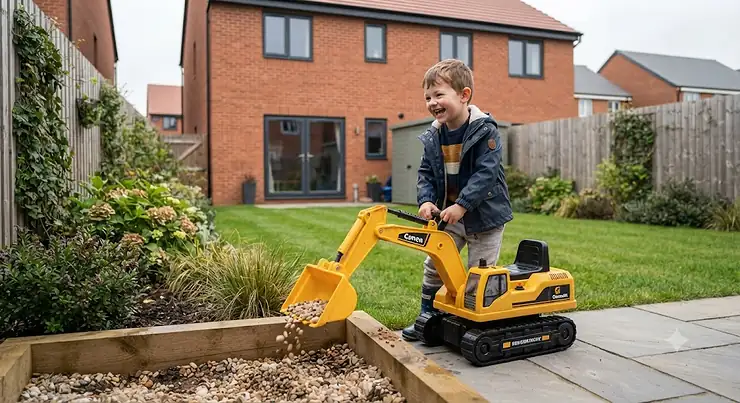
There’s a very specific kind of chaos that arrives with a ride on excavator toy in the house — gravel migrating indoors, “beep beep” sound effects at 6am, and a toddler who now refers to the flower bed as “my site.” A ride on excavator toy is a wheeled construction-themed ride-on with a movable digging arm and bucket, designed to let children scoop, dump, and steer while seated, either by foot power, pull-cart action, or a small electric motor. It’s one of those rare toys that manages to be both a physical workout and an imagination engine, and it’s why construction-themed ride-ons have quietly become a fixture of British gardens and playrooms.

We’ve spent time digging (sorry) through real listings, manufacturer specifications and aggregated review sentiment for genuine products sold to UK families, rather than repeating a manufacturer’s marketing copy back at you. Whether you’re weighing up a no-power pull-along for an 18-month-old or a 12V remote-controlled digger with a rotating cab seat for a determined five-year-old, this guide breaks down seven real options across budget, mid-range and premium price brackets. We’ll cover kids ride on excavator digger picks for toddlers right through to childrens ride on excavator models with genuine cab seat digger toys engineering, plus the rotating excavator toys and kids operator seat vehicles that let older children drive rather than just scoot.
Active, physical play like this also does more than fill an afternoon — NHS physical activity guidance for children under five recommends toddlers get around three hours of activity spread across the day, including outdoor play, so a toy that gets a small person up, steering and scooping genuinely earns its keep. Let’s get into the products.
Quick Comparison Table
| Product | Power Type | Age Range | Price Range | Best For |
|---|---|---|---|---|
| HOMCOM Ride On Excavator Pull Cart | No power (foot-to-floor / pull cart) | 18-48 months | around £70-£90 | First-ever digger for toddlers |
| Costway No-Power Ride On Excavator | No power (manual) | 3 years+ | under £90 | Budget pretend play |
| Rolly Toys CAT Excavator Digger | No power (hand levers) | 3-5 years | £80-£110 range | Classic hand-operated digging |
| Rolly Toys rollyDigger KUBOTA | No power (sit-in cab) | 3-5 years | £110-£150 range | Premium cab-seat build quality |
| Costway 6V Ride On Excavator | 6V battery | 3-8 years | £120-£160 range | First electric ride-on |
| Costway 12V Ride On Excavator with Remote Control | 12V battery + 2.4G remote | 3-8 years | £180-£230 range | Parents wanting override control |
| JOYLDIAS 360° Rotating Ride On Excavator | 12V/12AH battery + remote | 3-8 years | £250-£320 range | All-terrain rotating cab seat |
Looking across the table, the split is fairly clean: no-power diggers under £150 suit toddlers who need supervised, low-speed pretend play, while the 6V and 12V electric models step up to genuine “drive it yourself” territory for children old enough to manage a pedal and steering wheel. The JOYLDIAS 360° Rotating Ride On Excavator sits at the top for a reason — a rotating cab and rugged track-style wheels are specialist features that the budget diggers simply can’t replicate. Prices shown are indicative ranges only; always check current pricing on Amazon before buying, since these fluctuate with stock and promotions.
💬 Just one click — help others make better buying decisions too!😊
Top 7 Ride On Excavator Toys: Expert Analysis
1. HOMCOM Ride On Excavator Pull Cart — best 2-in-1 starter for toddlers
The HOMCOM Ride On Excavator Pull Cart earns its spot as the safest entry point into the category, mostly because it doesn’t move under its own power at all. Specification-wise, it measures roughly 87cm long and 58cm tall, has a weight capacity of around 30kg, and combines a foot-to-floor scooter base with a manually operated front bucket that lifts and dips. Based on the spec comparison with pricier electric models, what stands out here is the anti-rollover device at the rear, which stops the toy tipping backwards when an eager toddler leans into the digging motion — a genuinely useful detail rather than a marketing add-on. This is squarely aimed at the youngest end of the market, roughly 18 to 48 months, where a motor would be more risk than benefit; parents of a slightly older, more mobile toddler who wants to walk-and-scoot rather than pedal will get the most from it. Reviewers consistently report that assembly is quick (typically under 20 minutes) and that the under-seat storage is a genuinely used feature rather than a throwaway spec, with several noting their toddler uses it to cart toys around the garden. On the flip side, some review threads mention the plastic wheels can feel a little noisy on patio slabs, and a handful of buyers wished the digging arm extended slightly further for more realistic scooping.
Pros:
- ✅ Anti-rollover device suited to first-time toddler users
- ✅ Doubles as a pull cart for parent-assisted play
- ✅ Under-seat storage genuinely gets used for toys
Cons:
- ❌ Plastic wheels can be noisy on hard surfaces
- ❌ Digging arm reach is limited compared with pricier models
Priced in the £70-£90 range, this is one of the more affordable ways into the category, and for an 18-month-old who just wants a scoot-and-dig toy rather than a “drive,” it represents strong value.

2. Costway No-Power Ride On Excavator — best budget pretend-play digger
The Costway No-Power Ride On Excavator takes a similar no-battery approach but leans harder into pretend-play theatrics, shipping with a safety helmet and three plastic “rocks” to scoop. Built from PP plastic with PE wheels, it’s rated to hold roughly 25kg and includes an adjustable digging bucket operated via a hand lever, alongside a horn and engine sound effects that run on three AA batteries (not included). What most buyers overlook about this model is that the sound effects run independently of the ride function, meaning the toy stays fully playable even if those batteries die — a small but sensible piece of engineering. It’s a strong pick for a child around three years old who wants to role-play as a construction worker without any actual motor to manage, and the accompanying helmet gives the whole experience a bit more theatre than a bare-bones digger. Aggregated review sentiment is broadly positive on durability and ease of assembly, with several reviewers specifically praising how sturdy the frame feels for the price bracket; a recurring complaint, however, is that the sound module can stop working within the first few months, and a smaller number of buyers noted the seat is snug for children closer to five.
Pros:
- ✅ Comes with helmet and rocks for immersive pretend play
- ✅ Sound effects work independently of ride function
- ✅ Sturdy PP plastic frame for the price point
Cons:
- ❌ Sound module reliability is a recurring review complaint
- ❌ Seat runs snug for children nearer five years old
At under £90, this sits right alongside the HOMCOM option on price but trades the pull-cart function for more elaborate pretend-play extras, so the choice really comes down to which play style your child prefers.
3. Rolly Toys CAT Excavator Digger — best hand-lever 360° classic
German manufacturer Rolly Toys has been making pedal and static ride-on toys since the 1950s, and the Rolly Toys CAT Excavator Digger is the brand’s answer to a fully manual, hand-operated digger. The seated base rotates a genuine 360 degrees, moved by two hand-operated levers that control the digging arm and bucket independently — closer to how a real excavator’s joysticks work than the single-lever setups on cheaper alternatives. On paper, this means a child develops proper bilateral coordination (using both hands for two different jobs at once), which is a step up developmentally from a single scoop-and-dump mechanism. It’s built for the 3-5 age bracket and made from CAT-licensed durable resin plastic designed to withstand sand, gravel and being dragged around a garden for years rather than months. Reviewers consistently highlight the rotation mechanism as smoother and more durable than budget alternatives, crediting the automatic arm-locking safety feature that stops the bucket swinging unexpectedly. The trade-off is that, because there’s no seat belt or powered movement, some parents note their child outgrows the “sit and dig” novelty faster than expected once they’re used to being driven around by an electric model.
Pros:
- ✅ Genuine 360° rotation with two independent hand levers
- ✅ CAT-licensed durable resin build for years of outdoor use
- ✅ Automatic arm-locking mechanism improves safety
Cons:
- ❌ No powered movement, so appeal can fade for older children
- ❌ No seat belt, which some parents prefer as standard
In the £80-£110 range, the Rolly Toys CAT Excavator Digger is a strong middle-ground buy for anyone prioritising rotation and lever realism over speed or electric drive.
4. Rolly Toys rollyDigger KUBOTA — best premium cab-seat design
Sitting above the CAT model in Rolly Toys’ own range, the Rolly Toys rollyDigger KUBOTA is built specifically for children aged 3 to 5 and adds axle-pivot steering to the same durable resin plastic body, which Rolly Toys describes as optimising the turning radius for easier manoeuvring in tight garden spaces. Here’s what to weigh: this is still a no-power, sit-in model, so the “cab seat” is a genuine moulded operator seat rather than a saddle, giving a more authentic driving posture and a slightly higher weight allowance than the entry-level diggers in this list. The licensed KUBOTA branding and colour scheme mean it tends to appeal strongly to fans of real construction machinery, and the cab-style seating puts it firmly in cab seat digger toys territory rather than the more basic straddle-and-scoot designs. Reviewers note that the whisper-quiet tyres (a detail Rolly Toys specifically engineers across its range) make a genuine difference to noise levels on patios and driveways compared with the harder plastic wheels found on cheaper competitors. The main downside flagged in aggregated feedback is the price relative to a no-power toy, and a small number of buyers mention the digging arm has a shorter reach than the fully electric options further up this list.
Pros:
- ✅ Genuine moulded operator cab seat, not a saddle
- ✅ Axle-pivot steering improves manoeuvrability
- ✅ Whisper-quiet tyres reduce noise on hard surfaces
Cons:
- ❌ Premium price for a toy with no powered movement
- ❌ Digging arm reach shorter than electric alternatives
At £110-£150, this is a build-quality purchase rather than a features purchase — you’re paying for German engineering and cab-seat comfort rather than motors or remote control.
5. Costway 6V Ride On Excavator — best first electric digger
Stepping into powered territory, the Costway 6V Ride On Excavator is a genuinely useful stepping stone for a family not yet ready to commit to a 12V system. A single 6-volt motor drives the rear wheels, giving enough torque to handle grass, dirt and uneven paving without the higher top speeds of larger electric ride-ons. Based on the spec comparison, the smaller motor is actually the point here: 6V systems generally run at a gentler pace than 12V equivalents, which reviewers consistently note makes this a sensible choice for a first “real” ride-on rather than a pull-along, particularly for a child around three years old who’s still learning cause and effect with a forward/reverse lever. Four large, wear-resistant wheels and a wide seat with a high backrest add genuine comfort for longer play sessions, and the horn function adds a bit of theatre without needing a separate battery compartment. On the review side, buyers regularly praise the battery life and how straightforward setup is, though a handful mention the charging time (roughly 8-12 hours for a full charge) can catch first-time electric ride-on buyers off guard.
Pros:
- ✅ Gentle 6V motor is forgiving for first-time electric users
- ✅ Wide seat and high backrest suit longer play sessions
- ✅ Handles grass, dirt and paving without stalling
Cons:
- ❌ Charging time of 8-12 hours needs planning around
- ❌ Top speed is limited compared with 12V alternatives
In the £120-£160 bracket, this represents the natural next step up from the no-power diggers above, without jumping straight to remote control complexity.
6. Costway 12V Ride On Excavator with Remote Control — best parent-controlled electric
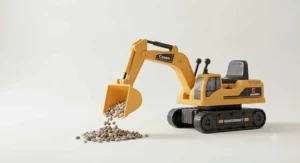
The Costway 12V Ride On Excavator with Remote Control doubles the voltage of the 6V model and, crucially, adds a 2.4GHz parent remote alongside the child-operated steering wheel and foot pedal. What most buyers overlook about this model is that it isn’t just “faster” — the dual operating modes mean a nervous three-year-old can be steered safely by a parent while they learn, then graduate to independent driving once confident, all on the same toy. Top speed sits around 1.6-2.2mph with a soft-start function designed to prevent sudden lurches, a detail that matters more than it sounds on a ride-on this size. The adjustable digging bucket is controlled via a separate lever from the drive controls, so children genuinely operate the excavator function and the driving function independently, closer to real machinery than the single-lever toys further down the budget scale. Aggregated review sentiment is strongly positive on the remote control feature specifically, with multiple reviewers describing it as reassuring for use near driveways or slopes; the main recurring criticism is that assembly is more involved than the no-power models, generally taking closer to 30-45 minutes.
Pros:
- ✅ 2.4GHz parent remote adds a genuine safety override
- ✅ Independent bucket and drive controls feel authentic
- ✅ Soft-start function prevents sudden acceleration
Cons:
- ❌ Assembly is noticeably more involved than manual models
- ❌ Higher price point than single-mode electric alternatives
At £180-£230, this is the toy to pick if remote-control safety is your priority over pure speed or all-terrain ability.
7. JOYLDIAS 360° Rotating Ride On Excavator — best all-terrain rotating cab seat
Topping this list, the JOYLDIAS 360° Rotating Ride On Excavator is built around a 12V/12AH battery — noticeably larger than the Costway 12V unit above — paired with track-design wheels rather than standard tyres, which reviewers consistently note handle grass, gravel and uneven garden terrain with far less wheel-spin than smooth-tyred competitors. The standout feature, and the reason it justifies its premium price, is the fully rotating cab seat: rather than a fixed seat with a rotating bucket, the entire cab pivots, which is a genuinely rare feature among rotating excavator toys at this price point and gets closer to how a real excavator operator’s seat behaves. Two operating modes (child-driven via pedal and wheel, or parent-controlled via remote) carry over from the Costway 12V model, but this version adds Bluetooth audio, an AUX port and a microphone jack, positioning it as much as an entertainment piece as a construction toy. Reviewers frequently mention the track-style wheels as the standout practical benefit, particularly families with uneven or sloped gardens, while a smaller number of buyers flag that the additional electronics mean there’s simply more that can go wrong long-term compared with the simpler Costway units.
Pros:
- ✅ Fully rotating cab seat, not just a rotating bucket
- ✅ Track-design wheels handle grass and gravel confidently
- ✅ Bluetooth audio adds genuine entertainment value
Cons:
- ❌ More electronics mean more potential points of failure
- ❌ Sits at the top of the price bracket in this list
At £250-£320, this is the toy for a family that wants the closest thing to a genuine kids operator seat vehicle, with rotation, remote control and all-terrain wheels all in one package.
Practical Usage Guide: Getting the Most from Your Ride On Excavator
Getting a new ride on excavator toy out of the box is only half the job — how it’s set up and used in the first few weeks genuinely affects both safety and how long it lasts. Start by checking every bolt and fastener before the first ride, even on “ready to go” no-power models; vibration during transit can loosen fixings, and this is precisely the kind of check manufacturer instructions and safety leaflets stress but that’s easy to skip in the excitement of a new toy. For electric models, a full 8-12 hour initial charge before first use is standard practice and helps establish the battery’s full capacity early on, rather than running it flat on a partial charge in the first week. A common mistake in the first month is letting children operate the digging bucket at full extension on hard surfaces like patios or driveways — the mechanism is designed primarily for softer ground like grass, sand or bark chippings, and repeated hard-surface digging accelerates wear on the pivot points. Store electric ride-ons somewhere dry between uses; damp garages and sheds are the single biggest cause of premature battery and motor corrosion reported in aggregated review feedback across this category. Finally, establish a simple “boundaries” rule early — no riding near steps, driveways with traffic, or ponds — since ride-on toys of any kind carry tipping and collision risks that are entirely preventable with consistent supervision from day one.
Real-World Scenarios: Which Digger Suits Your Child?
The cautious 18-month-old: If your child is still finding their feet and mainly interested in copying older siblings, a no-power option like the HOMCOM Ride On Excavator Pull Cart makes the most sense. There’s no motor to manage, the anti-rollover design forgives clumsy movements, and the pull-cart function means a parent can guide the toy around the garden while the toddler focuses purely on the digging motion.
The construction-obsessed three-year-old: For a child who already knows every truck by name and wants to properly “operate” machinery, either the Rolly Toys CAT Excavator Digger or the Costway 6V Ride On Excavator fits well, depending on whether hand-lever realism or genuine motorised movement matters more to your household. Budget-conscious families with a smaller garden will likely get more mileage from the Rolly Toys pick, since it needs no charging and the 360° rotation keeps play varied in a confined space.
The confident five-to-eight-year-old with a big garden: Here, the JOYLDIAS 360° Rotating Ride On Excavator earns its premium price tag. The track wheels genuinely cope with uneven lawns and gravel paths that would leave smaller-wheeled toys stuck, and an older child has the coordination to use the independent bucket and drive controls without constant supervision — while the parent remote still offers a safety net for use near a driveway.
What Is a Ride On Excavator Toy?
A ride on excavator toy is a wheeled, construction-themed children’s ride-on featuring a movable digging arm and bucket, designed for seated pretend or active play. Models range from foot-powered pull-carts for toddlers to fully electric, remote-controlled diggers with rotating cab seats for children up to around eight years old.
How to Choose a Ride On Excavator Toy
Working through the right pick doesn’t need to be complicated if you focus on a handful of genuinely decisive factors, in roughly this order of importance:
- Age and weight limit first. Every model in this guide lists a minimum age and maximum weight; treating these as hard limits rather than guidelines avoids both safety risks and a child quickly outgrowing the toy.
- Power type matches confidence level. No-power diggers suit toddlers still learning cause and effect, while electric models with a parent remote suit a child ready for genuine independence but who still needs an adult safety net.
- Terrain at home. Standard wheels are fine for patios and smooth garden paths; track-style wheels like those on the JOYLDIAS model earn their keep on grass, gravel or sloped gardens.
- Rotation type. Decide whether a rotating bucket (cheaper, common on hand-lever models) or a fully rotating cab seat (rarer, found on premium electric models) matters more for realistic play.
- Storage and charging space. Electric ride-ons need a dry space to charge and store between uses; if that’s not available, a no-power model sidesteps the issue entirely.
- Noise tolerance. If close neighbours or thin walls are a factor, models with “whisper-quiet” tyres or manual-only operation avoid motor noise altogether.
- Budget against expected lifespan. A cheaper no-power digger may need replacing sooner as a child’s coordination improves; a pricier electric model with adjustable speeds can often grow with the child for longer.
Before buying, it’s worth reading through the official GOV.UK guidance on buying toys safely, produced by the Office for Product Safety and Standards — it’s a genuinely quick read that covers age labelling and warning symbols in more depth than any single product listing will.
Kids Ride On Excavator Digger: Toddler-Specific Considerations
For the youngest riders, a kids ride on excavator digger needs to prioritise stability over speed or features. Toddlers between 18 and 36 months have a notably higher centre of gravity relative to their base compared with older children, which is precisely why anti-rollover devices, wide wheelbases and low seat heights matter far more at this age than motor power or rotation range. The HOMCOM Ride On Excavator Pull Cart and Costway No-Power Ride On Excavator both address this by keeping the child low to the ground and removing any motorised movement from the equation entirely — there’s simply less that can go wrong. What most parents overlook at this age is that the digging function itself is often secondary to the toddler; the appeal is usually the seat, the wheels and the sense of “driving,” with the bucket becoming genuinely interesting only from around age two and a half onwards. A sensible approach is to budget for a second, more advanced digger once your toddler ages into the 3-5 bracket, rather than trying to find one toy that spans both stages.
Childrens Ride On Excavator: What Changes as They Get Older
The jump from toddler to a genuine childrens ride on excavator model, roughly ages three to five, is where independent operation starts to matter. This is the age bracket where the Rolly Toys CAT Excavator Digger, Rolly Toys rollyDigger KUBOTA and Costway 6V Ride On Excavator all sit comfortably, because children in this range have developed enough hand-eye coordination to genuinely operate a lever-controlled bucket or a basic forward/reverse motor without constant hand-holding. Reviewers consistently note a noticeable shift in how children play with these models compared with toddler diggers — rather than simply sitting and being pushed, children this age actively narrate their play, assign construction “jobs” to the toy, and often use it alongside other outdoor toys like sand pits or building blocks. Beyond age five, attention typically shifts toward the electric, remote-controlled options with independent bucket and drive controls, since the novelty of a static or hand-lever digger tends to wear thin once a child has the coordination to manage genuine steering.
Cab Seat Digger Toys vs Traditional Static Diggers
There’s a meaningful design split within this category between cab seat digger toys, where the child sits in a proper moulded operator seat with a rotating or fixed cab, and traditional static diggers, which are essentially a seat bolted to a fixed base with a hand-operated arm. The Rolly Toys rollyDigger KUBOTA exemplifies the cab-seat approach: axle-pivot steering and a genuine driving posture make it feel closer to real machinery, and reviewers note that older children within the age range specifically value that authenticity. Traditional static diggers, by contrast, tend to be cheaper to manufacture and therefore cheaper to buy, since they don’t need the pivot mechanisms or reinforced seating that a true cab design requires. On paper, this means a straightforward trade-off: cab-seat models cost more but deliver a more realistic and typically more durable play experience, while static diggers are a lower-cost way to test whether a child’s interest in construction toys will stick before investing further.

Rotating Excavator Toys: Why 360° Matters
Not every excavator toy that claims “rotation” means the same thing, and this is worth understanding before you buy. On budget models, “rotation” usually refers to the bucket or digging arm pivoting on a fixed base — genuinely useful for varied digging angles, but the child’s seat itself stays static. On premium rotating excavator toys like the JOYLDIAS 360° Rotating Ride On Excavator, the entire cab and seat rotate together, which is a meaningfully different (and mechanically more complex) feature. What the spec sheet won’t tell you, but reviewers note repeatedly, is that full-cab rotation genuinely changes how children play: rather than reaching or twisting to dig in different directions, they physically turn to face their target, which is both more realistic and noticeably easier for younger children to manage without overreaching. The Rolly Toys CAT Excavator Digger sits in between — its base rotates the full 360 degrees along with the seat, delivering much of the premium experience at a fraction of the price, just without the motorised drive of the JOYLDIAS model.
Kids Operator Seat Vehicles for Different Ages
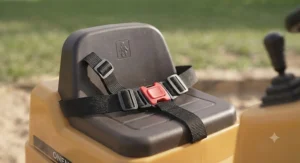
The broader category of kids operator seat vehicles spans everything from a basic straddle seat to a fully enclosed, remote-controlled cab, and matching the seat design to your child’s age and coordination genuinely matters more than most buying guides suggest. For toddlers, a low, wide, foot-to-floor seat like the one on the HOMCOM Ride On Excavator Pull Cart minimises tipping risk and keeps rescue easy for a supervising adult. For the 3-5 bracket, a proper moulded cab seat with a backrest, as found on the Rolly Toys rollyDigger KUBOTA, supports longer play sessions without the back and leg fatigue that a basic saddle-style seat can cause. For children five and up who are ready for genuine electric operation, seats with an integrated safety belt and wider footwells, like those on the Costway 12V Ride On Excavator with Remote Control and JOYLDIAS 360° Rotating Ride On Excavator, become far more important, since higher speeds and independent steering introduce risks that simply don’t apply to a static or hand-lever toy.
Common Mistakes When Buying a Ride On Excavator Toy
A recurring pattern in aggregated review feedback across this category is buyers focusing on the flashiest feature — remote control, rotation, sound effects — while overlooking the basics that actually determine whether a toy gets used regularly. The single most common mistake is buying for the child’s current age rather than their age in six months’ time; a toy that’s a perfect fit today can be outgrown embarrassingly quickly, particularly for children between three and five who develop coordination rapidly. A second frequent error is underestimating storage and charging needs for electric models — several reviewers specifically mention buying a 12V ride-on without a dry space to charge it, leading to batteries left out in sheds and degrading faster than expected. Buyers also commonly skip checking the intended play surface against the toy’s wheel type; standard wheels on a bumpy lawn lead to frustration and premature wear, whereas track-style wheels on a smooth patio are simply unnecessary expense. It’s also worth being aware of current UK regulation: the Toys (Safety) Regulations 2011 set the legal baseline every toy sold in the UK must meet, so checking for a UKCA or CE mark on the listing before purchase is a genuinely useful five-second check that catches a surprising number of non-compliant marketplace listings.
Long-Term Cost & Maintenance
Total cost of ownership varies more than the upfront price alone suggests. No-power models like the HOMCOM Ride On Excavator Pull Cart and Rolly Toys CAT Excavator Digger have effectively zero ongoing running costs beyond occasional wheel or bolt replacement, making them genuinely cost-effective over a two-to-three-year play lifespan. Electric models introduce two recurring costs worth budgeting for: replacement batteries (typically needed after 18-24 months of regular use, based on aggregated review timelines) and, less commonly, motor or remote-control unit repairs once the toy is out of warranty. The JOYLDIAS 360° Rotating Ride On Excavator, with its larger 12AH battery and additional electronics, carries a higher replacement-parts risk simply because there are more components that can fail, though its rugged track wheels typically outlast standard tyres on the cheaper electric models. A sensible rule of thumb from a value perspective: if you expect fewer than two years of regular use, a no-power or 6V option delivers better cost-per-use; for a child likely to use the toy across several summers, the higher upfront cost of a 12V remote-controlled model tends to even out.
Safety, Regulations & UK Toy Standards Guide
Every product in this guide is intended for outdoor and indoor pretend play under adult supervision, and UK toy safety rules exist specifically to reduce risk around exactly this kind of active ride-on toy. RoSPA’s toy safety advice explains that the CE or UKCA mark is a manufacturer’s claim that the toy meets relevant health, safety and environmental requirements, and it’s worth checking for this mark on the product listing itself rather than assuming it’s present. Age labelling matters more than it might seem — a toy rated for 3+ carries warnings and construction standards specific to that age group, and using a toy below its stated minimum age is one of the more common (and avoidable) causes of injury reported in UK product safety data. For electric ride-ons specifically, always follow the manufacturer’s charging guidance exactly, store batteries in a dry location, and never allow children to charge or handle batteries unsupervised. Riding surfaces matter too: keep any ride-on toy away from driveways with vehicle access, steps, slopes and open water, regardless of how slow or “toy-like” the motor feels, since even low-speed electric ride-ons carry genuine tipping and collision risk on the wrong terrain.
Frequently Asked Questions
❓ How fast does an electric ride on excavator toy go?
❓ What age is a ride on excavator toy suitable for?
❓ Do kids ride on excavators need a licence or registration?
❓ How long do batteries last on an electric digger toy?
❓ Can two children share one ride on excavator toy?
Conclusion
Choosing the right ride on excavator toy really comes down to matching power type, seat design and terrain to your child’s actual age and your garden, rather than chasing the model with the most features. For a first toy, the no-power options from HOMCOM and Costway are safe, low-cost ways to test genuine interest. For a child ready for realistic hand-operated play, the Rolly Toys pair delivers durable, German-engineered rotation and cab-seat comfort. And for families wanting the full electric, remote-controlled, rotating-cab experience, the Costway 12V Ride On Excavator with Remote Control and JOYLDIAS 360° Rotating Ride On Excavator both deliver genuine independence with a parental safety net built in. Whichever you choose, checking the UKCA/CE mark, respecting the stated age and weight limits, and supervising play near any driveways or slopes will keep the fun exactly where it should be — safe, active, and refreshingly low-tech compared with a screen.
✨ Don’t Miss These Exclusive Deals!
🔍 Take your search for the perfect ride on excavator toy further with these carefully selected products. Click on any highlighted item to check current pricing and availability. These picks will help you create genuine construction-site fun your family will love!
Recommended for You
- Ride On Digger Toy: 7 Brilliant Picks for UK Kids in 2026
- JCB Ride On Tractor: 7 Best Picks for Kids in 2026 (UK)
- 7 Best JCB Ride On Dumper Toys UK 2026: Pedal & Electric
Disclaimer: This article contains affiliate links. As an Amazon Associate, I earn from qualifying purchases. If you purchase products through these links, we may earn a small commission at no additional cost to you.
✨ Found this helpful? Share it with your friends! 💬🤗
