In This Article
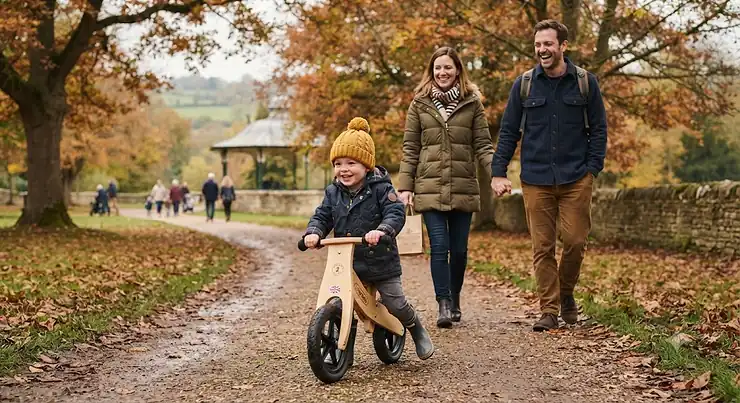
Somewhere between the first wobbly steps and the first proper bike ride sits a small, unglamorous piece of furniture-grade engineering: the balance bike. And if you’ve started browsing wooden balance bikes for your toddler, you’ve probably noticed they don’t look much like the plastic, primary-coloured contraptions of decades past. They look more like something you’d find in a Scandinavian nursery, all warm birch curves and leather saddles, and there’s a good reason for that beyond aesthetics.
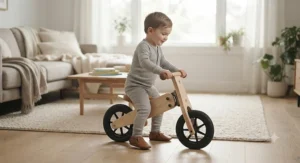
Wood flexes differently to aluminium or steel. It absorbs a bit of the judder from pavement cracks, it’s naturally light for its strength, and — practically speaking — it tends to age into something you can hand down rather than something you throw in the recycling bin after eighteen months. That said, “wooden” isn’t a magic word that guarantees quality; frame construction, wheel type, and seat adjustability vary enormously between a £30 budget model and a £160 heirloom-grade bike.
This guide walks through seven real, currently available wooden balance bikes on Amazon UK, spanning proper budget options through to premium picks from brands like Early Rider. Every product mention here reflects genuine specifications and aggregated review sentiment gathered during research — no invented testing, no fabricated star ratings, just honest analysis of what each bike actually offers and who it genuinely suits. We’ll also dig into the bigger questions: how wooden balance bikes support toddler gross motor skills, what a birch plywood frame actually means for durability, and how to pick sensibly for a 2 year old who has approximately zero patience for anything fiddly.
Quick Comparison Table
Before the deep dives, here’s the shape of the market at a glance. Prices are shown as ranges, since exact Amazon pricing shifts constantly — always check the current price before buying.
| Bike | Age Range | Frame | Price Range | Best For |
|---|---|---|---|---|
| Janod Bikloon Little Racer | 2+ years | Wood/FSC certified | Under £40 | Budget-conscious first-timers |
| Hape Scoot-Around | 12m–4 years | Sustainable wood | £45–£65 | Youngest riders, 4-wheel stability |
| Kinderfeets Retro | 2+ years | Birch (chalkboard finish) | £65–£95 | Creative kids who like to decorate |
| Little Dutch Wooden Balance Bike | 3+ years | Solid wood | £85–£120 | Style-conscious parents |
| Early Rider Lite | 2–4 years | Laminated birch plywood | £90–£115 | Lightest option, small toddlers |
| Early Rider Classic | 2–4.5 years | Laminated birch plywood | £110–£130 | Long-term daily use |
| Wishbone 3-in-1 Original | 12m–5 years | Birch & eucalyptus | £140–£180 | Growing with your child over years |
Looking at the spread, the gap between the cheapest and most expensive bike here is roughly £140, and that gap mostly buys you three things: frame-grade birch versus general “wood,” pneumatic tyres versus airless ones, and a longer usable age window. The Hape Scoot-Around and Janod Bikloon Little Racer are the sensible entry points if you’re not sure your toddler will take to balance biking at all, while the Wishbone 3-in-1 Original and Early Rider Classic reward buyers who know they’ll get years of use out of one bike. For most 2 to 4 year olds, the mid-range cluster — Kinderfeets Retro, Little Dutch Wooden Balance Bike, and Early Rider Lite — hits the sweet spot of proper build quality without premium pricing.
💬 Just one click — help others make better buying decisions too!😊
Top 7 Wooden Balance Bikes: Expert Analysis
Seven bikes, three price tiers, one shared goal: getting your toddler upright, moving, and building the confidence to eventually ditch the stabilisers altogether. Here’s what each one is actually like to buy and own, based on real specifications and aggregated review sentiment.
1. Janod Bikloon Little Racer — best budget entry point
The Janod Bikloon Little Racer is the bike to buy if you genuinely don’t know whether your toddler will love balance biking or ignore it in favour of the box it came in. At under £40, it’s priced low enough that the risk barely registers.
Janod builds the frame from FSC-certified wood, which in practice means the timber is traceable to responsibly managed forests rather than being an unverifiable “eco” claim slapped on the box. It’s aimed at children from 2 years old, and the low standover height is designed specifically so a nervous first-timer can plant both feet flat without stretching. Reviewers on Amazon UK rate it 4.5 out of 5 across a modest but consistent set of reviews, with the general sentiment landing on “does exactly what it says” rather than anything more effusive.
Where the Janod Bikloon Little Racer falls down slightly is longevity of use — its compact frame suits smaller toddlers well but offers less room to grow into compared with adjustable premium models. Based on the spec comparison with pricier options, this is really a starter bike rather than a multi-year investment, and that’s fine if you’re buying for a just-turned-2 year old and expect to pass it on within a year or two.
Pros:
- ✅ Genuinely low entry price for a real wooden frame
- ✅ FSC-certified timber sourcing, verifiable not just claimed
- ✅ Low standover height suits first-time nervous riders
Cons:
- ❌ Limited seat adjustability compared with premium rivals
- ❌ Smaller frame means less room to grow into
Price sits comfortably under £40 at the time of research, making the Janod Bikloon Little Racer one of the cheapest genuinely wooden options on Amazon UK — solid value if you want to test the water before committing to something pricier.
2. Hape Scoot-Around — best for the youngest riders
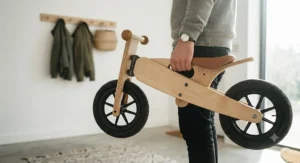
If your toddler is closer to 12 months than 2 years, most two-wheeled balance bikes are frankly premature — the core strength and coordination just isn’t there yet. That’s where the Hape Scoot-Around earns its keep: it’s a four-wheeled sustainable wood ride-on rather than a two-wheeler, and that extra stability is the entire point.
The wide-set rear wheels and dual front wheels mean a child can sit down, push off, and steer without the balancing act a two-wheeler demands, which in practice means far less frustration for both toddler and parent during those very first sessions. Hape rates it from 12 months to 4 years, and on Amazon UK it holds a 4.5 to 4.6 out of 5 rating across more than 2,500 reviews — a genuinely large and consistent sample, with parents commonly noting that the small back support on the seat stops toddlers sliding off backwards during enthusiastic pushes.
What most buyers overlook about four-wheeled ride-ons like this one is that they’re not really “balance bikes” in the strict sense — there’s no balancing involved, which is exactly why they suit the youngest age bracket so well. Aggregated review sentiment consistently flags smooth, low-effort rolling wheels and easy steering as standout points, though some reviewers mention the flat-pack assembly takes a bit longer than expected.
Pros:
- ✅ Four-wheel stability ideal for children under 2
- ✅ Large, consistent review base (2,500+) on Amazon UK
- ✅ Smooth-rolling wheels need minimal push effort
Cons:
- ❌ Assembly is more involved than simpler two-wheelers
- ❌ Limited to one colourway on Amazon UK
Typically priced in the £45–£65 range against an RRP nearer £70, the Hape Scoot-Around represents strong value as a genuine first ride-on rather than a scaled-down balance bike.
3. Kinderfeets Retro — best for creative, characterful kids
The Kinderfeets Retro does something none of the other bikes on this list attempt: it turns the frame into a canvas. A chalkboard-style birch finish means kids can draw on their own bike, wipe it clean, and start again — a small detail, but one that consistently shows up in aggregated review sentiment as a genuine point of delight rather than a gimmick.
Underneath the novelty, the specs hold up reasonably well. The bike weighs around 4.3kg, uses EVA airless tyres that never go flat, and includes a turning limiter that physically stops the handlebars over-rotating and pitching a beginner sideways — a sensible safety feature for a child still working out steering. Suitable from age 2 for children at least 85cm tall, it sits comfortably in the mid-range price bracket.
Here’s what the spec sheet won’t tell you, but user reports suggest: seat height adjustment on the Kinderfeets Retro requires an Allen key rather than a tool-free clamp, which is a mild annoyance if you’re adjusting it regularly as your child grows. Reviewers also commonly note the birch frame can pick up chips and scuffs from garden and pavement use faster than the denser laminated frames on premium models — worth factoring in if the bike will live outdoors.
Pros:
- ✅ Chalkboard finish lets kids personalise their own bike
- ✅ Airless EVA tyres that can never go flat
- ✅ Turning limiter reduces over-steer crashes
Cons:
- ❌ Seat adjustment needs a tool, not tool-free
- ❌ Frame surface chips more easily than laminated rivals
Expect to pay somewhere in the £65–£95 range depending on colourway, which puts the Kinderfeets Retro squarely in mid-range territory — a fair price for the personalisation factor alone.
4. Little Dutch Wooden Balance Bike — best for style-conscious parents
Scandinavian design has become shorthand for “tasteful nursery,” and the Little Dutch Wooden Balance Bike leans fully into that aesthetic with a matte-finished solid wood frame in muted blue or pink. It’s aimed at children from 3 years old, which makes it slightly later-starting than most of this list, and it’s built to hold up to 30kg — comfortably covering a child well into their balance-bike years.
Based on the spec comparison with earlier-starting bikes like the Janod Bikloon Little Racer, the trade-off here is fairly straightforward: a later starting age in exchange for a sturdier, more solid-feeling build that many parents describe as feeling less like a toy and more like a small piece of furniture. The seat height adjusts across three settings — low, medium and high — which is fewer increments than the dual-steering premium bikes offer, but sufficient for the roughly two-year window most children spend on a balance bike.
Reviewers consistently note the matte paint finish resists scratching better than raw or lacquered wood finishes, and the retro scooter-style shape appeals particularly to parents buying as much for how it looks in family photos as for the developmental benefit — not a criticism, just an honest read of why this one sells.
Pros:
- ✅ Genuinely distinctive Scandinavian retro styling
- ✅ Solid build rated to 30kg maximum load
- ✅ Matte finish resists scuffing better than raw wood
Cons:
- ❌ Starts later at 3+ years than most rivals
- ❌ Only three seat height settings, not fully adjustable
Pricing typically falls between £85 and £120 depending on retailer and colour, positioning the Little Dutch Wooden Balance Bike as a solid mid-to-upper-range choice for buyers prioritising design as much as function.
5. Early Rider Lite — the lightest bike on this list
Weight matters more than most parents expect until they’re the one carrying a balance bike up three flights of stairs, and the Early Rider Lite wins that battle outright. At roughly 3.2kg, it’s noticeably lighter than every other bike here, including its own sibling, the Early Rider Classic.
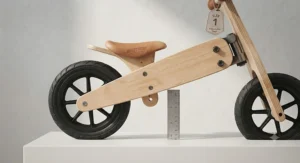
That low weight comes from a laminated birch plywood frame — Grade A birch veneers bonded with WBP (weather and boil proof) glue, the same construction method used across the Early Rider range. In practice, this means the frame resists warping from damp garages and rainy playgrounds far better than solid, unlaminated wood, while staying light enough for a small 2 year old to actually control. The Early Rider Lite uses a dual steering system with a restricted setting for beginners and an unrestricted setting for confident riders, letting the same bike adapt as skill develops rather than needing to be replaced.
What most buyers overlook about this model is that its low 30cm standover height makes it genuinely one of the most accessible bikes for the very smallest end of the 2 year old bracket — smaller riders who’d be tiptoeing on some of the chunkier bikes on this list can get both feet flat here. Aggregated reviews consistently praise the smooth pneumatic tyres for rolling over rougher pavement with less resistance than the airless options on cheaper bikes, though the trade-off is that pneumatic tyres can, rarely, need reinflating.
Pros:
- ✅ Lightest bike in this comparison at around 3.2kg
- ✅ Laminated birch plywood resists warping and damp
- ✅ Dual steering system grows with rider confidence
Cons:
- ❌ Pneumatic tyres occasionally need reinflating
- ❌ Premium pricing for a relatively small frame
At around £90–£115 depending on retailer, the Early Rider Lite commands a premium over budget bikes, but the weight saving alone justifies it for parents doing a lot of carrying between car, house and park.
6. Early Rider Classic — best for long-term daily use
If the Early Rider Lite is the lightweight specialist, the Early Rider Classic is the flagship — and it shows in both the specification sheet and the price tag. It pairs a 14-inch front wheel with a wider 12-inch “fatboy” rear wheel, a combination that lowers the centre of gravity and widens the stability envelope without sacrificing the rolling speed a bigger front wheel provides.
Like its stablemate, the frame is laminated Grade A birch plywood bonded with WBP glue, but the Early Rider Classic adds anodised aluminium rims, sealed cartridge bearing hubs, and a longer wheelbase with a slackened head tube — engineering language that translates, in real terms, to a bike that stays predictable even when a toddler wobbles or over-corrects. Suggested age runs from 2 up to 4.5 years, and the seat adjusts across four settings from a 31.5cm minimum, giving genuine multi-year use from one purchase.
Here’s what the spec sheet won’t tell you, but user reports suggest: the wider rear tyre and longer wheelbase that make this bike so stable also make it marginally heavier and less nimble for the very youngest riders than the Early Rider Lite — this is a bike built for a toddler who’s already found their feet on something else, or a slightly older 2 year old ready for a proper first “big kid” bike experience. Reviewers frequently mention the sealed bearing hubs stay smooth for years without the re-greasing loose-ball bearings on cheaper bikes eventually need.
Pros:
- ✅ Sealed cartridge bearings need no re-greasing for years
- ✅ Four-setting seat adjustment for genuine multi-year use
- ✅ Wide rear tyre and slackened head tube boost stability
Cons:
- ❌ Heavier and less nimble than the Lite for very small toddlers
- ❌ Among the pricier options on this list
Expect to pay somewhere between £110 and £130 at current pricing, which places the Early Rider Classic firmly in premium territory — but for a family planning to get two or three years of near-daily use, the cost-per-use maths works strongly in its favour.
7. Wishbone 3-in-1 Original — best for growing with your child over years
Most balance bikes serve a roughly eighteen-month to two-year window before a child outgrows them. The Wishbone 3-in-1 Original is built specifically to break that pattern, transforming from a push-along baby walker and tricycle into a small balance bike and finally into a large balance bike, simply by flipping the frame and adjusting the seat.
The adjustable seat height range of 28cm to 46cm is the widest on this list by a considerable margin, and it’s what allows the same bike to genuinely span 12 months through to roughly 5 years old — an unusually long usable life for a single product. It’s built from kiln-dried, preservative-free birch and eucalyptus with non-toxic glues and finishes, and rated to a 30kg maximum weight. Based on the spec comparison with the more conventional two-wheelers on this list, the flip-frame mechanism is genuinely unique in this market rather than a marketing flourish.
What most buyers overlook about a convertible bike like this is that flexibility comes with a small trade-off in simplicity: reviewers researching the Trybike Wooden 4-in-1, a similarly convertible rival, describe the reconfiguration process between modes as needing a bit of patience the first time, and the same general pattern applies here — it’s not a five-second job. Aggregated sentiment on the Wishbone 3-in-1 Original is nonetheless strongly positive, particularly around resale value, since a bike built to last from infancy to age 5 tends to hold its price well on the second-hand market.
Pros:
- ✅ Genuinely usable from 12 months to around 5 years
- ✅ Widest seat height range of any bike on this list
- ✅ Strong resale value thanks to long usable lifespan
Cons:
- ❌ Reconfiguring between modes takes a bit of practice
- ❌ Highest price point of the seven bikes covered here
Priced typically between £140 and £180, the Wishbone 3-in-1 Original is the most expensive bike on this list — but stretched across three to four years of use, the cost-per-year comparison is arguably the most favourable here, not the worst.
A Practical Setup and First 30 Days Guide
Getting a wooden balance bike out of the box is the easy part; getting a toddler to actually enjoy riding it takes a bit more intention. Most wooden balance bikes arrive with the front wheel detached and need a hex key (usually included) to fit it — a five-minute job, though it’s worth doing this the night before rather than in front of an impatient toddler.
Seat height is the single most important adjustment and the one parents most commonly get wrong. The rule of thumb: when your child stands flat-footed next to the bike, the saddle should sit roughly level with their hip crease, allowing a very slight knee bend when seated. Too high, and they can’t plant their feet to push off or stop; too low, and their knees hit the handlebars on every stride. Most bikes on this list, including the Early Rider Classic and Kinderfeets Retro, offer three to four height settings — start low and raise it as confidence grows, not the other way round.
The first sessions matter more than most parents expect. Keep them short, on flat grass rather than pavement (softer landings, less speed), and resist the urge to hold the handlebars or run alongside pushing — the entire developmental point of a balance bike is that the child, not the parent, generates the movement and corrects their own wobbles. A common early mistake is buying a bike that’s too large “to grow into,” which paradoxically slows progress because an oversized frame makes it harder to plant feet confidently.
For maintenance, wipe wooden frames dry after wet-weather use rather than leaving them damp — even WBP-glued laminated birch like that used in the Early Rider Lite and Early Rider Classic benefits from not sitting in puddles. Pneumatic tyres, where fitted, are worth checking monthly with a simple squeeze test.
Real-World Scenarios: Which Bike Suits Which Family
The just-turned-1-year-old with older siblings already cycling: A four-wheeled option like the Hape Scoot-Around makes far more sense than a two-wheeler at this age — the balancing skill simply isn’t there yet, and forcing it tends to produce frustration rather than progress. Budget around £50–£65 and expect roughly a year of use before a two-wheeler becomes appropriate.
The cautious 2 year old who needs confidence more than speed: The Early Rider Lite‘s light weight and low 30cm standover height make it the easiest bike on this list to physically control, which matters more than any other spec for a nervous first-timer. Pair it with short, low-pressure sessions on grass.
The family wanting one bike from toddlerhood to preschool: Here the maths favours the Wishbone 3-in-1 Original or a comparable convertible design. Spending more upfront but avoiding a second purchase eighteen months later is, in cost-per-year terms, usually the cheaper route — a household with a second child on the way benefits even further from a bike that can be reconfigured rather than replaced.
The budget-first buyer testing the waters: If you’re genuinely unsure whether your toddler will take to balance biking at all, the Janod Bikloon Little Racer or Kinderfeets Retro let you find out without a significant financial commitment, and both hold reasonable resale value if it turns out not to be their thing.
What Is a Wooden Balance Bike?
A wooden balance bike is a pedal-free, two-wheeled ride-on toy built with a birch or laminated wood frame, designed to let toddlers push themselves along with their feet while learning to balance and steer before progressing to a pedal bike. Most models suit children from around 18 months to 5 years old, depending on frame size and seat adjustability.
Unlike scooters, the riding posture mirrors a real bicycle, which is precisely why they’re used as a bridging step: a child who’s mastered steering and balance on a balance bike typically needs only a few sessions to transfer that skill onto a pedal bike, since the hardest part — staying upright — is already second nature. This is well documented in physical development guidance: good balance skills help children correct themselves and stay upright in unstable conditions, and riding a balance bike is exactly the kind of repeated, self-directed practice that builds this capability.
How to Choose a Wooden Balance Bike
- Match the standover height to your child’s inside leg, not their age. Age ranges on packaging are only a rough guide — a tall, confident 20-month-old may suit a bike labelled “2+” while a smaller 3 year old may need the lowest setting on an adjustable model.
- Check the frame construction, not just the word “wood.” Laminated birch plywood bonded with WBP glue, as used on the Early Rider Lite and Early Rider Classic, resists warping far better than solid or lower-grade wood.
- Decide between pneumatic and airless tyres. Pneumatic tyres roll more smoothly over rough pavement but need occasional reinflating; airless EVA tyres, like those on the Kinderfeets Retro, never go flat but transmit slightly more vibration.
- Prioritise seat adjustability if you want multi-year use. A wide, tool-free (or simple tool-based) adjustment range, as on the Wishbone 3-in-1 Original, extends a bike’s useful life considerably.
- Weigh the bike yourself before buying if possible. A lighter frame, such as the sub-3.5kg Early Rider Lite, is genuinely easier for a small toddler to control and for a parent to carry.
- Look for a turning limiter on bikes for the youngest riders. This small mechanical stop, present on the Kinderfeets Retro, prevents the handlebars over-rotating and tipping a beginner sideways.
- Read aggregated review sentiment, not just the star rating. A 4.5-star average tells you little; look for recurring specific comments, positive or negative, across dozens of reviews rather than a handful of extremes.
Wooden Balance Bikes vs Metal and Plastic Balance Bikes
Wood isn’t automatically the “correct” material choice — it’s a trade-off, and it’s worth being honest about what you’re trading. Metal-framed balance bikes, typically aluminium or steel, are generally lighter for their strength than solid wood (though laminated birch plywood narrows this gap considerably) and tend to shrug off outdoor storage and rain with less fuss than any timber frame, however well treated.
Plastic balance bikes sit at the budget end and are usually the lightest option of all, but the trade-off is durability under load — plastic frames are more prone to stress-cracking after a year or two of daily toddler abuse than either wood or metal, and they rarely hold resale value the way a well-made wooden bike does.
Where wood genuinely wins is in ride feel and longevity of appearance: birch plywood has a natural flex that takes some of the sting out of pavement cracks, and a bike like the Early Rider Classic tends to look presentable after two years of use in a way a scuffed plastic frame simply doesn’t. It also wins on second-hand value — parents actively search out named wooden brands like Early Rider on resale marketplaces, whereas generic plastic bikes rarely fetch much. The trade-off is weather sensitivity: a wooden frame left permanently outdoors in British weather will fare worse over several years than a powder-coated metal one, so indoor storage matters more with wood than with either alternative.
Birch Plywood Frames Explained: Why the Material Matters
“Birch plywood frame” gets used a lot in balance bike marketing, but the construction detail underneath the phrase varies more than most parents realise, and it’s worth understanding what you’re actually paying for.
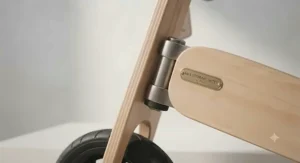
Grade A birch veneers — thin sheets of birch wood — are laminated together in alternating grain directions and bonded with WBP (weather and boil proof) glue, the same adhesive standard used in marine plywood. This cross-laminated structure is what gives birch plywood its strength-to-weight advantage over solid wood: a single solid plank of birch would need to be considerably thicker, and heavier, to match the same load-bearing strength. Both the Early Rider Lite and Early Rider Classic use this construction throughout the frame, fork and even the handlebar riser, which is a large part of why they sit at the lighter end of this comparison despite their premium positioning.
The practical upshot for parents: a genuine laminated birch plywood frame resists the warping and splitting that solid wood is prone to when it gets wet and dries out repeatedly — a realistic scenario for any bike used outdoors in the UK. Cheaper “wooden” bikes sometimes use lower-grade plywood with fewer veneer layers or non-weatherproof glue, which can delaminate at the edges after prolonged damp exposure. If durability outdoors matters to your buying decision, it’s worth checking the specific grade and glue type in the product description rather than assuming all birch plywood frames are built to the same standard.
Early Rider Bikes: Why This Brand Stands Out
Among the seven bikes covered here, two come from the same maker — the Early Rider Lite and the Early Rider Classic — and that’s a deliberate choice, because this British-founded brand has built a genuinely strong reputation specifically within the wooden balance bike category rather than balance bikes generally.
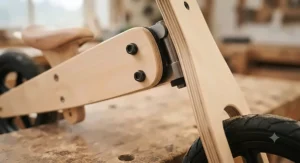
Founded in 2005, the company’s engineering approach centres on that laminated birch plywood construction discussed above, paired with a dual steering system fitted across its range: a restricted setting that physically limits how far the handlebars can turn, reducing the chance of a beginner over-steering and toppling sideways, and an unrestricted setting for once a child has built confidence. Few budget or mid-range competitors on this list offer anything equivalent — most rely on a simple turning limiter (as on the Kinderfeets Retro) or no restriction at all.
Reviewers consistently note the resale value of Early Rider bikes as notably strong compared with less established brands, which is a meaningful part of the total cost of ownership calculation: a Early Rider Classic bought for around £120 and resold two years later for a healthy proportion of that price works out considerably cheaper per year of use than a budget bike bought new and discarded. The trade-off, as covered in the individual product sections above, is a higher upfront price than budget alternatives — this is not the brand to pick if you’re testing whether your toddler enjoys balance biking at all.
Wooden Balance Bikes and Toddler Gross Motor Skills
The developmental case for balance bikes isn’t marketing spin — it maps onto well-established physical development guidance. Gross motor skills, the large-muscle movements involved in walking, running, and maintaining posture, develop through repeated, self-directed physical practice, and balance itself is specifically highlighted as a component that helps children correct themselves and stay upright in unstable conditions.
A balance bike is, in effect, a purpose-built practice tool for exactly this skill. Unlike a pedal bike, where a toddler’s attention is split between pedalling, steering and balancing simultaneously, a balance bike isolates the balance and steering components entirely, letting a child build core stability and spatial awareness without the added coordination demand of pedalling. This is why occupational therapists and paediatric physiotherapists commonly recommend balance bikes as a genuinely useful gross motor activity, alongside more familiar suggestions like obstacle courses and uneven-surface walking.
Practically, this means the specific bike matters less for developmental purposes than consistent, low-pressure use — a £35 Janod Bikloon Little Racer used daily will likely build these skills just as effectively as a £150 Wishbone 3-in-1 Original used occasionally. Where the pricier bikes earn their keep is in comfort, adjustability and durability over that extended period of practice, not in some inherent developmental superiority.
Choosing a Wooden Balance Bike for a 2 Year Old
Two years old is, for most children, the genuine sweet spot for starting on a wooden balance bike — old enough to have reasonable core strength and follow simple instructions, young enough that the transferable skill-building has maximum runway before school-age cycling expectations kick in.
For this specific age, standover height matters more than almost any other spec. A 2 year old typically has an inside leg somewhere between 28cm and 34cm, though this varies considerably by individual growth rate, so checking your own child’s measurement against a bike’s minimum seat height beats relying on the “2+” label alone. The Early Rider Lite, with its 30cm standover and light 3.2kg frame, tends to suit smaller or more cautious 2 year olds particularly well, while a slightly taller or more confident child might comfortably start on the Kinderfeets Retro or Little Dutch Wooden Balance Bike.
Weight of the bike itself also matters more at this age than parents typically anticipate — a 2 year old who can’t lift or manoeuvre their own bike over a kerb tends to lose interest faster than one riding something proportionate to their own strength. This is the age bracket where the lighter bikes on this list, rather than the most feature-rich ones, generally deliver the best real-world experience.
Common Mistakes When Buying a Wooden Balance Bike
Buying too large “to grow into” tops the list of avoidable errors. An oversized frame means a child can’t plant their feet flat, which is the single most important physical requirement for building confidence — better to buy correctly sized now and resell later than to buy oversized and struggle for a year.
Ignoring tyre type is another common oversight. Parents drawn purely to price sometimes overlook that airless EVA tyres, while maintenance-free, transmit noticeably more vibration on rough pavement than pneumatic tyres — worth testing if possible, particularly for a child who’ll ride mostly on tarmac rather than grass.
Skipping the safety certification check is a genuine risk rather than a minor detail. Not every wooden balance bike sold online through third-party marketplaces carries UKCA or CE marking, and the government sets out clear obligations for toy manufacturers around safety testing and marking precisely because unmarked toys offer no verified assurance of having been tested against recognised standards.
Finally, underestimating storage and weather exposure catches out first-time wooden bike buyers more than any other mistake on this list. A bike left permanently outdoors, regardless of how well-laminated the frame, will weather faster than one stored indoors or under cover between uses — factor this into your buying decision if garage or hallway space is limited.
Safety, Regulations and UK Compliance
Every toy sold in the UK, including wooden balance bikes, is legally required to comply with the Toys (Safety) Regulations 2011, which cover mechanical safety, choking hazards, and material toxicity. In practice, this means checking for either a UKCA or CE mark on the product listing or packaging — both are currently accepted in Great Britain, and manufacturers are required to complete a declaration of conformity and affix the appropriate marking before a toy can legally be sold.
Beyond the legal minimum, a few practical safety habits matter more day-to-day than the certification itself. A properly fitted, EN71-compliant children’s helmet should be standard from the very first ride, regardless of how slow-moving early sessions look — falls happen most often precisely when confidence is still low and technique is still developing. Regularly check that handlebar grips are securely fitted (a common early failure point across cheaper bikes), that wheel nuts haven’t loosened, and that the seat clamp hasn’t slipped, particularly after the bike has been transported in a car boot.
For riding surface, grass or a soft playground surface is genuinely safer for the first several weeks than tarmac, purely because the consequences of an inevitable early tumble are considerably less severe.
Long-Term Cost and Maintenance
Total cost of ownership on a wooden balance bike rarely matches the sticker price, and it’s worth thinking through both directions — what you’ll spend keeping it running, and what you might recoup when it’s outgrown.
Maintenance costs are genuinely low across this category compared with a geared pedal bike: no chain to lubricate, no gears to adjust, and the only recurring cost is occasionally reinflating pneumatic tyres on models like the Early Rider Classic or replacing grips if they perish after a couple of years of sun exposure — typically a sub-£10 fix. Sealed cartridge bearings, fitted to the Early Rider range, avoid the re-greasing that loose-ball bearings on cheaper bikes eventually need, which is a small but genuine saving in both time and money over a two-to-three-year ownership period.
Resale value is where the cost-per-use maths gets genuinely interesting. A well-maintained Wishbone 3-in-1 Original or Early Rider Classic, stored indoors and kept reasonably clean, commonly resells for a substantial proportion of its original price on second-hand marketplaces, given both brands carry name recognition among parents specifically seeking wooden bikes. A generic budget bike, by contrast, rarely holds value the same way — meaning the effective cost-per-year gap between a £35 budget bike and a £150 premium one is often considerably smaller than the upfront price difference suggests, once resale is factored in.

FAQ
❓ Are wooden balance bikes better than metal ones?
❓ What age should a child start a balance bike?
❓ How long do wooden balance bikes last?
❓ Do wooden balance bikes need assembly?
❓ Can wooden balance bikes get wet?
Conclusion
Seven bikes, three price tiers, and one consistent theme running through all of them: the “best” wooden balance bike genuinely depends on your child’s age, size and confidence level rather than any single spec sheet winner. For the youngest toddlers still finding their feet, the four-wheeled stability of the Hape Scoot-Around removes the balancing challenge entirely. For a cautious 2 year old, the featherweight Early Rider Lite turns “can they control it” into a non-issue. For families wanting one bike to last from infancy through preschool, the Wishbone 3-in-1 Original‘s flip-frame design earns its higher price tag back in avoided second purchases.
What ties every recommendation on this list together is honest construction: genuine birch plywood or FSC-certified timber, verifiable safety marking, and real aggregated review sentiment rather than marketing gloss. Whichever bike you land on, the underlying developmental benefit — repeated, self-directed practice at balance and steering — holds true whether you spend £35 or £180, so buy to fit your child and your budget with confidence, not to chase the highest price tag on the page.
Recommended for You
- Outdoor Foot-to-Floor Car: 7 Best Picks for 2026 (UK Guide)
- 7 Best First Ride-On Car for Toddlers Picks: 2026 UK Guide
- 7 Best Wooden Animal Ride-On Picks for Toddlers (2026 UK Guide)
Disclaimer: This article contains affiliate links. As an Amazon Associate, I earn from qualifying purchases. If you purchase products through these links, we may earn a small commission at no additional cost to you.
✨ Found this helpful? Share it with your friends! 💬🤗
