In This Article
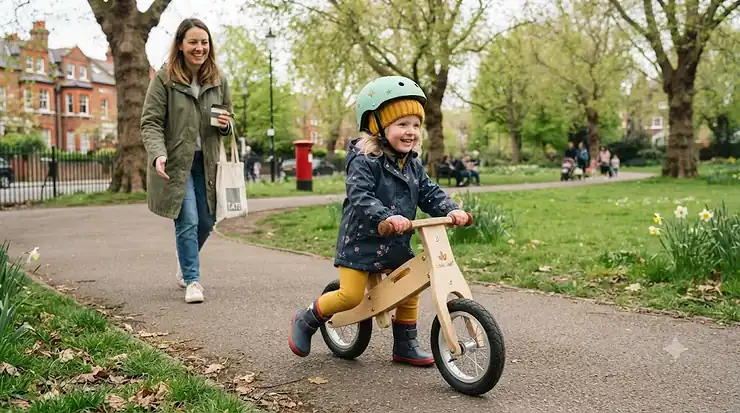
Watching a toddler wobble, then glide, then suddenly tear off across the garden on two wheels — no stabilisers, no fuss — is one of those small parenting wins that never quite gets old. A wooden balance bike is a pedal-less first bike with a solid timber frame, designed to let a child push along with their feet, lift them off the ground for longer stretches, and build real balance before pedals ever enter the picture. It’s the toy equivalent of teaching someone to swim before handing them armbands.
If you’ve started browsing amazon.co.uk for a wooden balance bike, you’ve probably noticed the market splits fairly cleanly into two camps: mass-produced plastic and metal models built for speed of manufacture, and timber-framed bikes built for looks, longevity and a slightly nicer feel in small hands. Wood flexes less than you’d think, holds paint and varnish beautifully, and — when it’s FSC-certified birch or beech — tends to be genuinely durable rather than just pretty. All toys sold in the UK, wooden ones included, must comply with the Toys (Safety) Regulations 2011, which is worth keeping in mind as you compare listings, because compliant products should carry a CE or UKCA mark and clear age guidance.
This guide rounds up seven genuinely available wooden balance bikes on the UK market, from budget starter models under £70 to premium birch builds that are designed to be handed down between siblings. Whether you’re comparing a Kiddimoto against a Kinderfeets, weighing up a wooden balance bike vs stabiliser bike for your child’s first ride, or just want to know what the EN71 safety standard actually means on a product label, you’ll find the honest, sourced answer here rather than a rewritten spec sheet.
Quick Comparison Table
| Product | Price Range | Age Range | Best For |
|---|---|---|---|
| Kiddimoto Kurve | £90–£140 | 18 months–5 years | All-round quality and style |
| Early Rider Classic | £110–£180 | 2–4 years | Long-term durability |
| Wishbone Original 3-in-1 | £130–£190 | 1–5 years | Growing with one bike |
| Trybike Steel 2-in-1 | £110–£150 | 15 months–6 years | Trike-to-bike transition |
| Kinderfeets Classic | £90–£140 | 2 years+ | Creative chalkboard play |
| Janod Little Bikloon | £60–£85 | 2–4 years | Budget-friendly starter |
| BIKESTAR Wooden 10 Inch | £30–£70 | 2 years+ | Lightest, cheapest entry point |
Looking at the spread above, the gap between the cheapest and priciest options here isn’t really about safety — every bike on this list is built to meet the same UK regulatory bar — it’s about materials, hardware and how many years of use you’re likely to squeeze out of the frame. Budget picks like the BIKESTAR Wooden 10 Inch Edition and Janod Little Bikloon make sense for parents who aren’t sure their toddler will take to balance biking, while premium options like the Early Rider Classic and Wishbone Original 3-in-1 earn their price with hardware built to survive a second or even third child.
💬 Just one click — help other make better buying decisions too!😊
Top 7 Wooden Balance Bikes: Expert Analysis
1. Kiddimoto Kurve — the UK’s award-winning all-rounder
The curved frame isn’t just a design flourish — it lowers the standover height, which makes mounting and dismounting far less of an ordeal for a nervous two-year-old. Kiddimoto is a Somerset-founded brand that’s been building balance bikes since 2003 and has picked up industry awards along the way, and the Kurve range is available in both wooden and metal-framed versions with a wide choice of prints. Specced with soft rubber grips, a padded seat and a steering limiter that stops the front wheel spinning a full 360 degrees, it’s built around the reality that toddlers fall — a lot — and the bike needs to absorb some of that. Based on the design brief, this is a bike aimed squarely at parents who want their child’s first bike to actually look good in family photos, not just function. What most buyers overlook about the Kurve is that the steering limiter matters more than any spec sheet number, since it’s the single feature most likely to prevent a nasty faceplant during the first few wobbly weeks. Reviewers on Trustpilot consistently rate the finish and build quality highly, describing the paintwork as “far better than expected,” though a handful mention the handlebar grips needing an occasional firm push to stay seated. Assembly is widely reported as straightforward, with most parents having it road-ready in under fifteen minutes.
Pros:
- ✅ Sturdy birch-effect frame with reassuringly rigid steering
- ✅ Trustpilot reviewers repeatedly praise the paintwork and finish
- ✅ Adjustable seat suits toddlers through several growth spurts
Cons:
- ❌ Handlebar grips occasionally need pushing back into place
- ❌ Sits at the pricier end for a first bike
At around £90–£140 depending on the design chosen, the Kiddimoto Kurve isn’t the cheapest wooden balance bike here, but the brand’s UK track record and consistent review sentiment make it a fair value pick for parents who want one bike done well.
2. Early Rider Classic — birch-built for the long haul
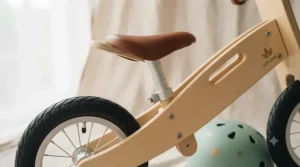
This is the bike that arguably started the premium wooden balance bike category back in 2005, and it still shows in the details. Carved from marine-grade birch with a 14-inch front wheel and notably fat tyres, the Classic is rated to handle riders up to roughly 125 pounds — a weight limit that means it can genuinely outlast a single child. The sealed wheel bearings are worth calling out specifically: unlike the loose-ball bearings found on cheaper balance bikes, they don’t need periodic re-greasing, which is the kind of maintenance detail Amazon listings rarely mention but genuinely affects how the bike feels after a year of garden use. On paper, this positions the Classic as the bike for parents thinking several years and possibly several children ahead, rather than a single toddler phase. Early Rider’s own product pages show a strong review average on related models in the range, with buyers frequently citing the lightweight frame and smooth ride quality as standout points, though independently verified review volume for the Classic specifically is smaller than for mass-market brands, so treat the sentiment as directionally positive rather than exhaustively proven.
Pros:
- ✅ Marine birch frame rated to a generous weight limit
- ✅ Sealed wheel bearings avoid regular re-greasing chores
- ✅ Fat tyres smooth out kerbs and rougher pavements
Cons:
- ❌ Premium pricing compared with mainstream high street brands
- ❌ Replacement parts mainly sourced direct from Early Rider
Typically priced in the £110–£180 range, the Early Rider Classic is a considered investment rather than an impulse buy, but the weight rating and bearing quality genuinely justify the premium for families planning to keep it in the family for years.
3. Wishbone Original 3-in-1 — grows from trike to bike
Few balance bikes attempt what the Wishbone does: start life as a stable three-wheeled trike for a barely-walking one-year-old, then convert to a low two-wheeler, then flip the frame entirely to become one of the tallest balance bikes on the market for a five-year-old. That’s three distinct products squeezed into one kiln-dried, preservative-free birch frame, held together with non-toxic glues. The practical upshot is a seat height that adjusts from 28cm right up to 46cm, covering a genuinely unusual age span for a single purchase. Here’s what to weigh: the trike stage alone can justify the price for parents of a wobbly toddler who isn’t ready for two wheels, while the tall bike stage means you’re not shopping again at age four. Independent reviewers who’ve tested the Wishbone describe it as particularly well suited to more cautious toddlers thanks to the tricycle option, though they also note the longer wheelbase makes it slightly less nimble for adventurous riders who want to whip round corners at speed, and the seat shape runs a touch narrow compared with rivals.
Pros:
- ✅ Converts from trike to low bike to tall bike
- ✅ Kiln-dried birch built to be repaired, not replaced
- ✅ One purchase can realistically last ages one to five
Cons:
- ❌ Narrower seat feels snug for some toddlers at first
- ❌ Longer wheelbase suits cautious riders more than daredevils
Expect to pay in the £130–£190 range for the Wishbone Original 3-in-1; given it effectively replaces three separate bikes, the cost-per-year of use compares favourably against buying and reselling smaller bikes as your child grows.
4. Trybike Steel 2-in-1 — a trike that becomes a balance bike
Don’t let the name mislead you — despite “Steel” in the title, the Trybike’s charm is the vintage-look wooden-effect finish paired with genuine spoked steel wheels, sealed cartridge bearings and extra-wide rubber tyres that feel closer to a proper small bicycle than a toy. Designed in the Netherlands, it ships as a trike with an included conversion kit that strips it back to a two-wheeled balance bike once your toddler is ready. That two-stage approach means parents get a stable starting point for a fifteen-month-old who’s still finding their feet, with a genuine upgrade path built in rather than a bolt-on afterthought. What the spec sheet won’t tell you, but the component list suggests, is that cartridge bearings and wide tyres translate to a noticeably smoother roll than the basic bushings found on entry-level wooden bikes — useful on anything other than dead-flat pavement. Verified customer review volume specifically for the Trybike is smaller in the UK than for higher-turnover brands, so while retailer listings show consistently positive ratings, it’s worth reading a handful of individual reviews before committing rather than relying on the star average alone.
Pros:
- ✅ Genuine trike-to-bike conversion via an included kit
- ✅ Spoked steel wheels with sealed cartridge bearings feel premium
- ✅ Vintage colourways stand out from plastic high street rivals
Cons:
- ❌ Steel frame adds weight versus pure wooden alternatives
- ❌ Independently verified UK review volume is still fairly limited
At roughly £110–£150, the Trybike Steel 2-in-1 sits in the middle of the pack, and the built-in trike stage makes it particularly good value for parents starting from walking age rather than balance-bike age.
5. Kinderfeets Classic — doubles as a chalkboard canvas
The chalkboard-finish frame is the feature that gets Kinderfeets noticed in parenting forums, and it’s a genuinely practical one — kids can chalk their name, doodles or racing numbers straight onto the birch frame and wipe it clean afterwards. Beyond the novelty, the bike uses a low step-through frame with footpegs, airless biodegradable EVA tyres that never go flat or need pumping, and a turning limiter to stop the handlebars over-rotating mid-ride. Based on the spec comparison with rivals here, the low step-through design in particular stands out for genuinely nervous first-time riders, since it removes the awkward leg-swing-over moment that trips up a lot of two-year-olds. Aggregated review data paints a mixed but broadly positive picture: user ratings sit strongly in favour (one buyer’s guide reports a 96 out of 100 user score), while at least one independent expert review scored it lower, noting it doesn’t quite match rivals at the same price point on outright ride quality. It’s worth noting UK stock runs mainly through Amazon and specialist importers rather than dedicated UK retailers, so availability and exact pricing can shift.
Pros:
- ✅ Chalkboard-finish frame doubles as a drawing surface
- ✅ Airless biodegradable tyres never need pumping up
- ✅ Turning limiter helps prevent low-speed handlebar spills
Cons:
- ❌ One independent tester rated performance below its price bracket
- ❌ UK stock runs mainly through Amazon and specialist importers
Pricing for the Kinderfeets Classic typically falls in the £90–£140 range depending on the retailer, making it a solid mid-range pick if the chalkboard feature and airless tyres appeal more than outright ride refinement.
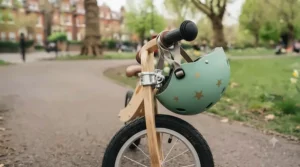
6. Janod Little Bikloon — vintage looks, starter budget
Janod is a well-established French toymaker, and the Little Bikloon is its entry-level wooden balance bike aimed at two-to-four-year-olds who are just starting out. The frame uses FSC-certified basswood plywood, paired with a polyurethane seat and inflatable rubber tyres rather than the solid foam wheels found on some rock-bottom competitors — a detail that meaningfully softens the ride over cracked pavements and kerbs. The 2-year to 4-year age recommendation reflects a genuinely smaller frame than the premium options on this list, which is exactly the point: this is a first bike built for a first attempt, not a five-year investment. Reviewers consistently note the vintage colour palette as a highlight, and with over 200 ratings on Amazon UK averaging 4.4 out of 5 stars, it has one of the larger genuinely verifiable review pools of any bike on this list — a useful sanity check when a listing’s star rating is the main signal you have to go on. The trade-off for the accessible price is fewer premium touches: no sealed cartridge bearings, no steering limiter, and a frame that a taller four-year-old may outgrow faster than the pricier options here.
Pros:
- ✅ FSC-certified wood keeps the entry price genuinely low
- ✅ Over 200 Amazon UK ratings average a strong 4.4 stars
- ✅ Inflatable tyres soften pavement cracks better than solid ones
Cons:
- ❌ Smaller frame suits younger toddlers more than tall four-year-olds
- ❌ Fewer premium touches than pricier birch-built rivals
Priced around £60–£85, the Janod Little Bikloon is one of the best-value genuinely wooden options here, backed by a review pool large enough to trust.
7. BIKESTAR Wooden 10 Inch Edition — the featherweight starter
German brand BIKESTAR built its name on lightweight kids’ vehicles, and the Wooden 10 Inch Edition is its answer to parents who want the smallest, cheapest possible entry into balance biking. The frame is genuinely light — light enough that a two-year-old can lift and reposition the bike themselves without help, which matters more than it sounds, since a bike a toddler can’t manage on their own tends to gather dust in the hallway. Smooth-rolling 25.4cm (10-inch) tyres and a steering stop-limiter round out the safety basics, while the impact-resistant paintwork is designed with the reality of toddler crashes in mind. Here’s what to weigh: at 10 inches, the wheels are the smallest on this list, which suits a shorter toddler well but means less growing room than the 12-inch options above — this is genuinely a starter bike rather than a multi-year one. Verified UK-specific customer review volume for this exact edition is limited compared with the Janod or Kiddimoto, so treat retailer star ratings with some caution and check recent reviews on the specific listing before buying, since BIKESTAR sells numerous similar-looking variants.
Pros:
- ✅ Ultra-light wooden frame is easy for tiny riders to lift
- ✅ Steering stop-limiter guards against over-rotated handlebar falls
- ✅ Genuinely budget-friendly entry point into balance biking
Cons:
- ❌ 10-inch wheels suit shorter toddlers rather than growing five-year-olds
- ❌ Impact-resistant paintwork can chip with heavy daily outdoor use
At roughly £30–£70, the BIKESTAR Wooden 10 Inch Edition is the cheapest genuinely wooden option on this list, and a sensible low-risk way to find out whether your toddler takes to balance biking before spending more.
Top 7 Wooden Balance Bikes: Specs & Price Comparison
| Product | Frame Material | Wheel Size | Weight | Best For |
|---|---|---|---|---|
| Kiddimoto Kurve | Wood/steel blend range | 12″ | ~3kg | Style-conscious families |
| Early Rider Classic | Marine birch | 12″/14″ | ~4.5kg | Multi-year, multi-child use |
| Wishbone Original 3-in-1 | Kiln-dried birch | 12″ | 3.8kg (bike mode) | One bike, five years of use |
| Trybike Steel 2-in-1 | Wood-effect/steel | 12″ | 6.3kg | Trike-first families |
| Kinderfeets Classic | Birch | 12″ | ~4kg | Creative, low step-through riders |
| Janod Little Bikloon | FSC basswood plywood | 12″ | Light | Budget-conscious starters |
| BIKESTAR Wooden 10 Inch | Wood | 10″ | Very light | Youngest, smallest riders |
The clearest pattern in this table is that weight and wheel size do most of the work in determining who a bike suits: the sub-4kg, 10–12 inch bikes like the BIKESTAR Wooden 10 Inch Edition and Kiddimoto Kurve favour younger, smaller toddlers who need to lift and manoeuvre the bike themselves, while the heavier, larger-wheeled Trybike Steel 2-in-1 and Early Rider Classic trade a little manageability for a longer usable lifespan. If longevity per pound spent is your main concern, the convertible options — Wishbone Original 3-in-1 and Trybike Steel 2-in-1 — generally offer the best cost-per-year, since they’re built to change shape as your child grows rather than being outgrown outright.
Setting Up Your Wooden Balance Bike: First 30 Days
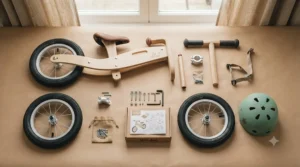
Most wooden balance bikes arrive part-assembled, and the first job is fitting the front wheel, handlebars and seat post — usually a fifteen to twenty-minute task with an Allen key, which most brands include. Before your child rides, set the seat height so their feet sit flat on the ground with a slight bend at the knee; too high and they’ll struggle to push off, too low and they’ll waddle rather than glide. In the first week, expect a lot of walking rather than riding — most toddlers need several sessions just getting comfortable steering while both feet stay on the ground, and that’s completely normal rather than a sign the bike is too advanced.
A common early mistake is rushing the “feet up” stage before a child has genuinely mastered steering while walking the bike; let them set the pace rather than encouraging lifted feet too soon, since a wobble at speed is far more likely to end in a graze. For maintenance, a quick monthly check of the wheel bolts and seat clamp is sensible on any wooden balance bike, since wood expands and contracts slightly with temperature and humidity, and hardware can work loose. Wipe the frame down after wet-weather rides rather than leaving it to air-dry outdoors, and store it under cover where possible — even well-varnished birch will dull faster with constant rain exposure than metal or plastic rivals would.
Which Wooden Balance Bike Suits Your Child? Three Real Scenarios
The cautious eighteen-month-old. If your toddler is still finding their feet and two wheels feels like a stretch, a convertible trike option removes the pressure entirely. The Wishbone Original 3-in-1 or Trybike Steel 2-in-1 both let a child ride confidently on three wheels first, building steering and pedal-free propulsion skills before the balance challenge of two wheels is even introduced.
The budget-first family with an unproven rider. Not every toddler takes to balance bikes immediately, and spending £150 upfront on an unknown is a real risk for some households. Starting with the Janod Little Bikloon or BIKESTAR Wooden 10 Inch Edition — both comfortably under £85 — lets you test the waters without a big outlay, and either can be resold reasonably easily if it turns out not to click.
Recent peer-reviewed research on cycle-learning pathways found that children who progressed from a balance bike straight to a pedal bike learned to ride independently around 1.8 years earlier on average than children who went through a stabiliser stage first, which is a meaningful head start for any of the scenarios above.
The sibling household planning for years of use. If you’re buying for a two-year-old with a younger sibling coming up behind them, durability per pound matters more than initial price. The Early Rider Classic‘s sealed bearings and generous weight rating, or the Kiddimoto Kurve‘s reinforced steering limiter, are built with exactly this kind of repeated, multi-child use in mind.
Wooden Balance Bike vs Stabiliser Bike: The Full Comparison
| Factor | Wooden Balance Bike | Stabiliser Bike |
|---|---|---|
| Skill learned first | Balance and steering | Pedalling |
| Weight for toddler | Lighter, no drivetrain | Heavier, extra wheels |
| Transition to pedal bike | Typically smoother | Often requires re-learning balance |
| Typical starting age | 18 months+ | 3–4 years+ |
| Best For | Early independent balance | Confidence pedalling early |
Cycling UK — the UK’s national cycling charity — puts it plainly: bikes with stabilisers can make a child feel like they’re balancing when they’re actually leaning on the extra wheels, a habit that then has to be unlearned once the stabilisers come off. A balance bike sidesteps that problem entirely by teaching steering and balance from the very first ride, with pedalling added later once those fundamentals are already secure. That said, it isn’t universal — some children with balance or mobility differences genuinely get on better with stabilisers initially, and a child desperate to copy an older sibling on “a real bike” may need more encouragement to stick with balance biking first. For the majority of toddlers, though, the evidence and the parenting community consensus point firmly in one direction: balance first, pedals later.
How to Choose a Wooden Balance Bike
- Match the seat height range to your child’s inside leg measurement, not their age — age guidance on packaging is only ever a rough starting point, and inside leg length varies hugely between toddlers of the same age.
- Weigh the bike itself before you buy, ideally under 3.5kg for a first-time rider — a bike your child can’t lift themselves gets abandoned fast.
- Check for a steering limiter, which stops the handlebars spinning a full circle and causing an awkward low-speed tumble.
- Look at the tyres, not just the frame — inflatable or foam tyres absorb far more shock than hard plastic wheels on real pavements.
- Confirm the CE or UKCA safety mark is visible on the listing, which signals compliance with UK toy safety law rather than just a manufacturer’s word.
- Think one step ahead, not five — a convertible or 3-in-1 design earns its higher price if you genuinely expect years of use, but a simple budget bike is entirely sensible for a first trial run.
- Read recent, dated reviews rather than the overall star average, since balance bike quality control can vary between production batches more than the headline rating suggests.
Common Mistakes When Buying a Wooden Balance Bike
The single most common misstep is buying “up” for growing room, choosing a bike sized for a five-year-old for a barely-two-year-old on the logic that it’ll last longer. In practice, an oversized balance bike is simply harder to control, and a child who can’t get their feet flat on the ground will often lose confidence faster than one on a well-fitted, slightly-too-small bike. A close second is fixating on the headline star rating without reading what reviewers actually say — a 4.7-star product with three reviews tells you far less than a 4.3-star product with two hundred, and it’s worth reading a handful of the most recent write-ups specifically for mentions of hardware faults rather than general praise.
Parents also frequently underestimate assembly time and end up building the bike the morning of a birthday, only to discover a missing Allen key or an unclear instruction diagram; building it a few days ahead removes that stress entirely. Finally, several buyers report being caught out by “wooden-effect” branding on what’s actually a plastic or metal frame — always check the material specification field on the listing itself rather than relying on the product photography, since a warm wood-tone paint job photographs identically to genuine timber.
Wooden Balance Bike Safety and EN71 Compliance: What UK Parents Need to Know
Every toy sold in the UK for children under 14, wooden balance bikes included, must comply with the BS EN 71 series of standards, which covers everything from mechanical strength and choking-hazard small parts through to flammability and the migration of restricted chemicals from paints and coatings. In practice, this means a compliant bike shouldn’t develop sharp edges or shed small detachable parts under normal play, and any paint or varnish on the frame has been tested against limits for substances like lead and other heavy metals. According to Wikipedia’s overview of toy safety, EN 71 compliance is what allows a toy to legally carry the CE mark across the EU, and the UK retained an equivalent framework — now also recognised via the UKCA mark — after leaving the EU.
For a wooden balance bike specifically, look for a visible CE or UKCA mark on the packaging or product listing, along with a stated age range and maximum rider weight — both are required disclosures under UK toy safety law, not just helpful extras. It’s also worth noting that the EN 71 framework splits into several parts, with EN 71-1 covering mechanical and physical properties being the most directly relevant part for a balance bike’s frame, wheels and steering mechanism, while chemical migration limits apply chiefly to paint and finish. A genuinely compliant bike from an established brand will typically reference these standards directly in its product documentation rather than leaving safety claims vague.
Long-Term Cost & Maintenance of a Wooden Balance Bike
| Cost Factor | Budget Bike (£30–£85) | Premium Bike (£110–£190) |
|---|---|---|
| Upfront cost | Lower | Higher |
| Typical usable lifespan | 1–2 years / one child | 2–5 years / multiple children |
| Bearing maintenance | Basic bushings, occasional stiffness | Sealed bearings, low upkeep |
| Resale value | Modest | Often strong, especially convertible models |
| Best For | Trial runs, single-child use | Long-term, multi-child households |
Run the numbers over a realistic ownership period and the premium options frequently come out ahead on cost-per-year despite the higher sticker price, particularly if you’re planning for a second child. A £180 Early Rider Classic or Wishbone Original 3-in-1 that lasts three years across two siblings works out cheaper per year of use than replacing a £60 budget bike that only lasts a single toddler phase before being outgrown or worn out. That said, if you’re genuinely unsure your child will take to balance biking at all, spending less upfront on a Janod Little Bikloon or BIKESTAR Wooden 10 Inch Edition is the more sensible financial decision, since resale on a lightly-used budget bike is still generally straightforward on local marketplaces.
✨ Don’t Miss These Exclusive Deals!
🔍 Take your child’s first ride to the next level with these carefully selected wooden balance bikes. Click on any highlighted product to check current pricing and availability on Amazon. These bikes will help your toddler build genuine, lasting confidence on two wheels!
Frequently Asked Questions
❓ What age is a wooden balance bike suitable for?
❓ Is a wooden balance bike better than a plastic one?
❓ Do wooden balance bikes meet UK safety standards?
❓ How much does a good wooden balance bike cost?
❓ Can a wooden balance bike get wet or be left outside?
Conclusion
A wooden balance bike is one of those purchases that genuinely earns its keep — not because any single model here is flawless, but because the fundamentals of balance-first learning are well supported by both cycling professionals and the research literature, and a well-chosen timber frame tends to age far more gracefully than its plastic equivalents. If you want the safest bet on all-round quality and UK brand support, the Kiddimoto Kurve is hard to beat. Families planning years of multi-child use should look hard at the Early Rider Classic or the Wishbone Original 3-in-1, while anyone unsure whether balance biking will even click with their toddler should start with the low-risk, low-cost Janod Little Bikloon or BIKESTAR Wooden 10 Inch Edition.
Whichever you choose, remember that fit and seat height matter more than brand prestige, and that a bike your toddler can actually lift and manoeuvre themselves is the one that gets ridden every day rather than left in the shed. Take your time comparing the options above against your child’s age, confidence and your own budget, and you’ll land on a first bike that does exactly what it’s meant to: build real, lasting confidence on two wheels.
Recommended for You
- Wooden Balance Bikes UK: 7 Best Picks for 2026 (Expert Guide)
- Outdoor Foot-to-Floor Car: 7 Best Picks for 2026 (UK Guide)
- 7 Best First Ride-On Car for Toddlers Picks: 2026 UK Guide
Disclaimer: This article contains affiliate links. As an Amazon Associate, I earn from qualifying purchases. If you purchase products through these links, we may earn a small commission at no additional cost to you.
✨ Found this helpful? Share it with your friends! 💬🤗
